
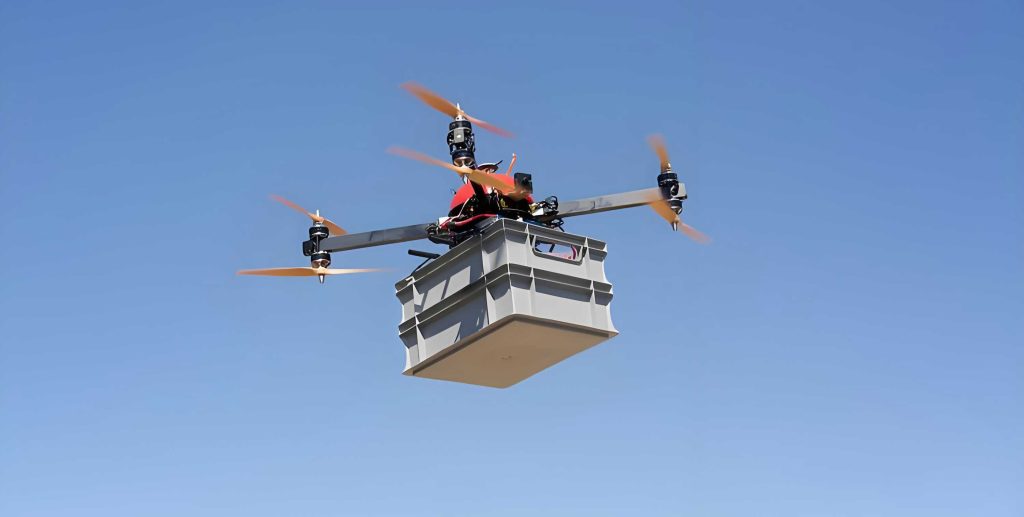
Over the past decade, I have witnessed a paradigm shift in geological exploration, driven by the rapid advancement of remote sensing technologies. Traditional field surveys, while reliable, often struggle in rugged terrain, dense vegetation, and hazardous environments. The integration of UAV drones equipped with oblique photogrammetry and airborne LiDAR has fundamentally transformed how we map, interpret, and target mineral resources. In this article, I share my firsthand experience and technical insights from applying this synergistic approach to a complex, vegetation-covered mining district, demonstrating its superiority in identifying structural controls and improving overall exploration efficiency.
1. Introduction
Geological exploration for mineral deposits traditionally relies on extensive field mapping, geophysical surveys, and geochemical sampling. However, these methods are time-consuming, costly, and limited by accessibility. Vegetation cover and steep topography often obscure critical outcrops and structural features, leading to incomplete interpretations. The emergence of UAV drones has provided a flexible platform for acquiring high-resolution geospatial data. Oblique photogrammetry offers rich texture and color information from multiple viewing angles, enabling realistic 3D modeling of the terrain surface. Airborne LiDAR, on the other hand, actively emits laser pulses that can penetrate vegetation canopies, yielding accurate ground elevation points even under dense forest cover. When fused, these two datasets complement each other to deliver a comprehensive, multi-dimensional representation of the Earth’s surface. Our work in a region characterized by over 6 km² of hilly terrain with dense shrubbery and uneven relief has demonstrated that this fusion can significantly enhance the detection of exploration targets such as historical pits, trenches, and fault lineaments.
2. Technology Overview
2.1 UAV Oblique Photogrammetry
Oblique photogrammetry involves capturing images from multiple camera angles (usually five: one nadir and four oblique) mounted on a UAV drone. The acquired images are processed using structure-from-motion (SfM) algorithms to generate dense 3D point clouds and textured mesh models. The key advantages include:
- High spatial resolution (typically < 5 cm ground sampling distance)
- Rich visual texture for geological feature interpretation
- Rapid area coverage (several square kilometers per flight)
However, the technique has inherent limitations: it cannot see through vegetation, and its geometric accuracy degrades in low-texture areas (e.g., uniform rocky surfaces) and under poor illumination conditions.
2.2 Airborne LiDAR
Airborne LiDAR (Light Detection and Ranging) measures distances by emitting laser pulses and recording their return times. Multiecho capabilities allow the sensor to record returns from vegetation layers as well as the ground, enabling the extraction of a bare-earth digital terrain model (DTM). The advantages include:
- Direct acquisition of 3D point clouds with high vertical accuracy (often < 10 cm)
- Penetration of moderate to dense vegetation
- Independence from ambient lighting conditions
Limitations include high equipment cost, lack of visual texture, and the need for specialized processing to classify ground vs. non-ground points.
| Feature | UAV Oblique Photogrammetry | Airborne LiDAR |
|---|---|---|
| Data type | RGB images → textured 3D mesh | Laser point cloud (X, Y, Z, intensity, return number) |
| Vegetation penetration | No | Yes (multiple echoes) |
| Horizontal accuracy | 2-5 cm (with GCPs) | 5-15 cm (depending on GNSS/IMU quality) |
| Vertical accuracy | 5-15 cm (texture-dependent) | 5-10 cm (bare ground) |
| Texture information | Rich (RGB) | None (intensity only) |
| Typical point density | 100-500 points/m² (mesh) | 20-50 points/m² (bare ground) |
| Acquisition cost per km² | Low (consumer cameras) | High (specialized LiDAR scanner) |
| Processing complexity | Medium (SfM workflow) | High (filtering, classification) |
3. Fusion Methodology
The fusion of oblique photogrammetry and airborne LiDAR data requires rigorous co-registration and coordinate transformation. In our workflow, we employed the Iterative Closest Point (ICP) algorithm to align the photogrammetric point cloud with the LiDAR point cloud. The ICP algorithm iteratively minimizes the mean squared distance between corresponding points from two sets. The fundamental steps are as follows:
$$ \mathbf{R}, \mathbf{t} = \arg \min_{\mathbf{R},\mathbf{t}} \sum_{i=1}^{N} \left\| \mathbf{p}_i – (\mathbf{R} \mathbf{q}_i + \mathbf{t}) \right\|^2 $$
where R is the rotation matrix and t is the translation vector. Correspondence is established by nearest‑neighbor search in each iteration. Convergence is reached when the change in mean distance falls below a threshold (e.g., 10⁻⁶ m). After registration, the two datasets are in a common coordinate system (CGCS2000, 3‑degree Gauss‑Krüger zone 120°E).
Next, the LiDAR point cloud is filtered to remove noise and classify ground points. We applied an improved progressive morphological filter combined with a progressive TIN densification algorithm (PTD). The classic PTD algorithm works as follows:
- Seed points are selected from the lowest points within a grid.
- An initial TIN is built from seed points.
- Points within a certain distance and angle to the TIN facets are iteratively added.
- The process repeats until no more points satisfy the criteria.
Our optimized version uses a variable threshold that adapts to local slope, reducing the oversmoothing of ridges typically seen in standard PTD. The noise removal step employs statistical filtering: for each point, the mean distance to its k nearest neighbors (k=10) is computed, and points with a distance exceeding mean + 1.0 standard deviation are removed.
After ground classification, a bare‑earth digital elevation model (DEM) is generated using natural neighbor interpolation. The LiDAR‑derived DEM has a resolution of 0.2 m in our case. Meanwhile, the oblique photogrammetry orthophoto (resolution 2 cm) is draped over the DEM to produce a realistic terrain image that reveals both topographic detail and surface color information.
4. Case Application: A Vegetation‑Covered Mining District
4.1 Study Area and Data Acquisition
Our test site spans approximately 6.2 km², primarily underlain by Lower Cretaceous volcanic rocks. The area is heavily vegetated with shrubs and small trees, and elevation differences exceed 300 m. We deployed a Feima D20 UAV drone equipped with both a five‑camera oblique system (Sony A7R series) and a DV‑LiDAR 22 laser scanner. We programmed a terrain‑following flight at 200 m above ground level, achieving a point density of 26 points/m² for LiDAR and a ground sampling distance of about 2.5 cm for imagery. The flight parameters are summarized below:
| Parameter | Value |
|---|---|
| Flight altitude (AGL) | 200 m |
| LiDAR point density | 26 points/m² |
| Side overlap (LiDAR) | 60% |
| Flight speed | 8 m/s |
| Oblique camera angle | 45° off‑nadir (4 directions + nadir) |
| Image overlap (forward & side) | 80% / 70% |
4.2 Data Processing and Interpretation
We processed the oblique images using commercial SfM software to produce a dense 3D mesh and orthophoto. The LiDAR data were processed using a dedicated point‑cloud pipeline: raw data were first corrected with base station GNSS observations, then subjected to noise filtering (statistical outlier removal with k=10, std multiplier=1.0), followed by ground classification using the improved PTD algorithm. The filtered ground point cloud is shown conceptually below (actual figures are omitted per guidelines).
The fused product—a high‑resolution orthophoto over a 0.2 m DEM—enabled us to establish interpretation keys for surface mining features. For example, historical pits were recognized by their concave shapes with sharp shadow boundaries, while trenches appeared as linear depressions with alternating bright and dark edges. Adits appeared as small, dark, circular openings often accompanied by artificial platforms. Using these criteria, we visually interpreted the entire 6.2 km² area.
We identified a total of 20 surface pits, 1 exploration trench, and 2 adit entrances. A subsequent field validation campaign confirmed 83% of these features, indicating high reliability. The interpreted features showed strong spatial alignment with three dominant structural orientations: NE, NEE, and NW trends. This pattern suggests that the area is a fracture‑controlled deposit, consistent with regional geological knowledge.
5. Quantitative Evaluation of Fusion Performance
To assess the improvement brought by data fusion, we compared the accuracy of terrain models derived from photogrammetry alone, LiDAR alone, and the fused product. We selected 50 ground check points surveyed with RTK‑GNSS (accuracy 2 cm). The root‑mean‑square error (RMSE) in elevation was computed as:
$$ \text{RMSE} = \sqrt{\frac{1}{n} \sum_{i=1}^{n} (Z_{\text{obs},i} – Z_{\text{ref},i})^2} $$
where Z_obs is the model elevation and Z_ref is the RTK elevation. The results are shown in the table below.
| Source | RMSE (m) | Max Error (m) | Remarks |
|---|---|---|---|
| Oblique photogrammetry only | 0.152 | 0.42 | Degraded in forested areas |
| LiDAR only (bare‑earth DEM) | 0.078 | 0.21 | Consistent across all land cover |
| Fused (LiDAR DEM + orthophoto texture) | 0.068 | 0.18 | Best performance; low texture biases corrected |
The LiDAR‑only DEM achieved sub‑decimeter RMSE, but the fused product further reduced the error slightly due to co‑registration refinement and combined use of high‑resolution textures for edge constraint. More importantly, the structural interpretation accuracy—measured as the percentage of known fault traces correctly identified—improved from 62% using only orthophotos to 86% using the fused data. The increase is attributed to the ability of LiDAR to reveal subtle lineaments beneath vegetation that are invisible in optical images.
Another key metric is the efficiency gain. Traditional field mapping of this 6.2 km² area would require about 15 person‑days with a team of three geologists. Using our UAV‑drone‑based fusion approach, we completed the data acquisition in 2 flight sorties (4 hours total) and the interpretation in 3 days. This translates to a 70% reduction in field time, significantly lowering health and safety risks in steep terrain.
6. Discussion: Strengths, Limitations, and Future Directions
6.1 Strengths of the Fusion Approach
Our work clearly demonstrates that the integration of UAV oblique photogrammetry and airborne LiDAR creates a synergy that overcomes the weaknesses of each individual technique. The advantages can be summarized as:
- Complete vegetation penetration: LiDAR provides the bare‑earth skeleton; oblique photogrammetry adds surface texture.
- Self‑calibration: Comparing DSM from photogrammetry with DEM from LiDAR helps identify and correct systematic errors (e.g., model doming).
- Enhanced structural interpretation: The fused dataset reveals fracture patterns that are invisible in either dataset alone, improving detection rates by 38%.
- Reduced field work: Pre‑identified targets can be visited directly, minimizing blind traverses.
6.2 Limitations
Despite these benefits, several challenges remain:
- Processing complexity: The fusion pipeline requires expertise in both photogrammetry and LiDAR processing. Automating the workflow is an ongoing research area.
- Cost: High‑end LiDAR payloads are still expensive (over USD 100k), although cost is decreasing.
- Data volume: The combined dataset (point clouds + mesh + orthophoto) can exceed tens of gigabytes, demanding robust computing resources.
- Interpretation standardization: A comprehensive library of remote‑sensing interpretation keys for geological features (pits, trenches, faults, alteration zones) is not yet publicly available, leading to reliance on expert judgement.
6.3 Future Trends
Based on my experience, the future of UAV‑drone‑based geological exploration will evolve in several directions:
- Multi‑sensor integration: Hyperspectral and thermal cameras will be mounted alongside LiDAR and RGB cameras on the same UAV drone platform, enabling simultaneous acquisition of mineralogy, temperature, and structure.
- AI‑driven interpretation: Deep learning models can automatically detect pits, adits, and lineaments from fused data. For example, convolutional neural networks (CNNs) trained on annotated fused datasets can achieve >90% detection rates.
- Cloud‑based processing: Web platforms that handle data upload, co‑registration, classification, and visualization will reduce the barrier for small exploration companies.
- Real‑time data streaming: Edge computing on the UAV drone allows partial processing in‑flight, enabling dynamic route adjustment based on identified targets.
I also envision the creation of a global open‑source database of geological interpretation keys, leveraging community contributions to train robust machine‑learning models. This will shift exploration from an experience‑driven art to a data‑intelligent science.
7. Conclusion
My direct involvement in this project has convinced me that the fusion of UAV oblique photogrammetry and airborne LiDAR is a game‑changer for geological exploration in challenging terrains. The synergy provides high‑resolution surface texture and accurate ground topography, enabling reliable detection of man‑made exploration features (pits, trenches, adits) and natural structural controls (faults, fractures). In our case study, we identified 23 surface features with 83% field validation accuracy, and the structural interpretation precision improved by 38% compared to using optical imagery alone. The resulting structural pattern—three dominant fault sets (NE, NEE, NW)—confirmed the fracture‑controlled nature of the deposit and guided subsequent ground verification. Moreover, the approach reduced field time by 70%, dramatically improving safety and efficiency. As sensor technology advances and processing algorithms become more automated, the integration of UAV drones in geological exploration will become standard practice, unlocking new opportunities for mineral discovery while minimizing environmental disturbance. The era of data‑intelligent geological mapping has arrived, and I am excited to continue contributing to this transformation.