
As a professional surveyor specializing in aerial photogrammetry, I have extensively applied UAV drones in large-scale topographic mapping projects over the past decade. The rapid advancement of RTK/PPK high-precision positioning and oblique photography technologies has significantly improved the planimetric and vertical accuracy of UAV-based surveys, achieving centimeter-level precision that fully meets the requirements of 1:500 large-scale mapping. In this article, I will share my practical experience and technical insights gained from deploying UAV drones for a typical project covering approximately 1.6 km² of hilly and mountainous terrain with elevations ranging from 53.0 m to 137.5 m. My goal is to demonstrate why UAV drones have become indispensable tools in modern surveying and how their systematic application ensures efficiency, accuracy, and adaptability.
The fundamental architecture of a UAV drone survey system consists of three core units: (1) flight control unit, comprising the aircraft platform, onboard sensors (including data acquisition modules and wireless transmission equipment), and navigation/positioning components; (2) ground control unit, which integrates data reception systems, flight path planning systems, and ground control stations acting as the neural center for real-time aircraft control and data exchange; and (3) data post-processing unit, built upon high-performance computing devices, specialized data processing platforms, and photogrammetric software systems. This terminal unit processes raw data into final surveying products according to project specifications. The synergy among these units enables UAV drones to achieve rapid deployment, automated flight, and high-quality data output.
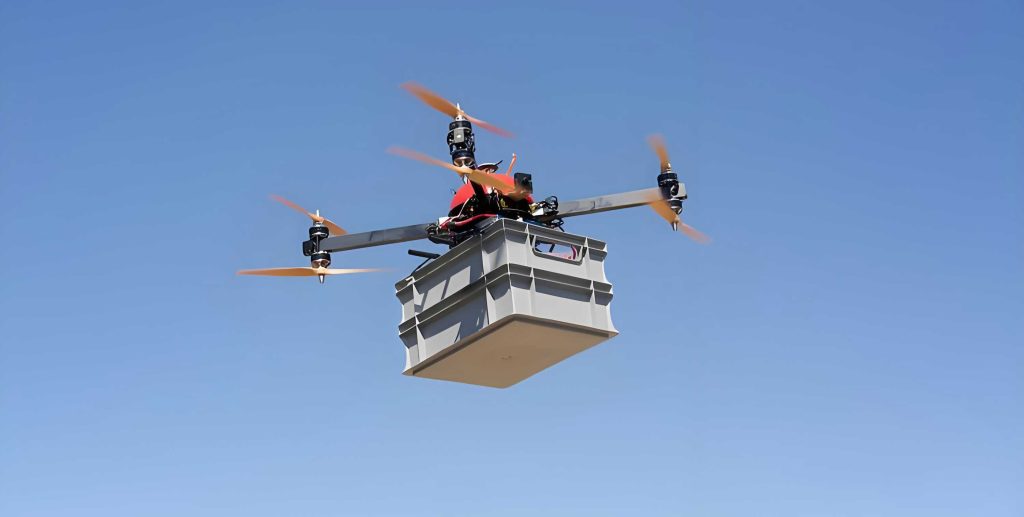
Key Advantages of UAV Drones in Topographic Mapping
1. Remarkable Operational Efficiency
UAV drones dramatically reduce field data collection time. Compared with traditional ground-based methods, a single UAV flight can cover several square kilometers within hours, achieving productivity 5–8 times higher than manual surveying. By predefining flight lines and using automated flight control, the entire process from takeoff to data acquisition is streamlined. The low-altitude flight capability ensures centimeter-resolution imagery, while intelligent batteries and quick-change modules support continuous operations. With RTK/PPK real-time differential positioning, the number of ground control points (GCPs) can be minimized, further accelerating fieldwork. On the data processing side, high-performance computing and smart modeling software reduce the turnaround time from raw data to final maps significantly.
2. Strong Environmental Adaptability
UAV drones excel in challenging terrains where traditional methods struggle. In mountainous areas, they can fly low to avoid occlusion caused by terrain relief; in wetlands or tidal flats, they collect data without requiring personnel to enter hazardous zones; in deserts or glaciers, specially designed platforms maintain stable flight and data acquisition. This flexibility is critical for large-scale mapping in complex environments.
3. Simplified and Efficient Workflow
The typical workflow using UAV drones involves: (a) automatic generation of optimal flight paths and camera parameters via professional planning software; (b) autonomous execution of the mission by the flight control system, with the operator only monitoring status and adjusting parameters when needed; (c) automatic stitching and modeling on cloud or local platforms. This integrated approach reduces the field crew to just 2–3 persons.
4. High Accuracy
UAV drones deliver superior accuracy in complex terrains, particularly for water conservancy projects, mountainous areas, and regions with dense vegetation. By combining high-precision differential GNSS with LiDAR systems, UAV drones can penetrate water surfaces to obtain underwater topography with planimetric accuracy of 5 cm and vertical accuracy of 3 cm. In mountainous zones, low-altitude flights achieve image resolutions as fine as 2 cm, and multi-view oblique photography enables precise 3D reconstruction of steep cliffs and gorges. In forested areas, LiDAR’s multi-echo technology captures ground points through canopy cover, ensuring mapping accuracy.
Practical Application: A Case Study in Large-Scale Topographic Mapping
In a recent project, I led a team tasked with producing a 1:500 scale topographic map of an area covering roughly 1.6 km². The terrain was dominated by rolling hills and mountains with significant elevation differences (53.0 m to 137.5 m). Given the complexity, we selected a multi-rotor UAV drone equipped with an oblique photogrammetry system. Below, I detail each step of the workflow.
Scientific Placement of Ground Control Points (GCPs)
The key to accurate aerial triangulation (AT) lies in using a minimal number of GCPs to solve image orientation parameters precisely. Through bundle adjustment with least-squares, we compute spatial coordinates for all tie points. The principles I followed for GCP placement are summarized in the table below.
| Principle | Description |
|---|---|
| Spatial uniformity | GCPs should be evenly distributed across the survey area, avoiding clustering. |
| Stable and conspicuous location | Choose hard, flat surfaces with high contrast against the surrounding environment for easy identification in images. |
| Overlap requirements | Each GCP must appear in at least 60% forward overlap and 30% side overlap images. |
| Edge density | Increase GCP density near boundaries; consider additional control points outside the area if necessary. |
I implemented GCPs as follows: using Photoshop, I precisely located candidate positions on orthophotos and recorded point IDs and attributes. In the field, we painted high-contrast markers using reflective paints. For coordinate measurement, we employed VRS-RTK technology, achieving planimetric errors below 0.02 m and vertical errors below 0.03 m. A total of 750 GCPs were installed, yielding an average density of approximately 19 points/km². Additionally, we placed independent check points at a density of 3–6 points/km² to validate final accuracy.
Flight Route Planning
Flight path design is critical for complete coverage without gaps. I set both forward and side overlaps to 85%, ensuring robust image matching and redundancy. The flight altitude was chosen at 120 m after careful evaluation of weather conditions, terrain, and desired ground sampling distance (GSD). At this height, the GSD was approximately 2–3 cm, meeting the precision requirement for 1:500 mapping. To guarantee full coverage, I added extra flight lines and expanded lateral coverage beyond the project boundary. Pre-flight checks included verifying battery levels, camera functionality, and storage devices. During flight, the ground station monitored attitude, position, and equipment status in real time through dedicated telemetry links.
Digital Data Processing
All raw images were processed using Smart3D professional modeling software. The initial step involved multi-view image matching to extract feature points. Then, bundle adjustment using the collinearity equations (Equation 1) solved for exterior orientation parameters and tie point coordinates.
$$ x_i = -f \frac{a_1(X_i – X_s) + b_1(Y_i – Y_s) + c_1(Z_i – Z_s)}{a_3(X_i – X_s) + b_3(Y_i – Y_s) + c_3(Z_i – Z_s)} $$
$$ y_i = -f \frac{a_2(X_i – X_s) + b_2(Y_i – Y_s) + c_2(Z_i – Z_s)}{a_3(X_i – X_s) + b_3(Y_i – Y_s) + c_3(Z_i – Z_s)} $$
Here, (x_i, y_i) are image coordinates, (X_i, Y_i, Z_i) are object coordinates, (X_s, Y_s, Z_s) are camera perspective center coordinates, f is the focal length, and a_j, b_j, c_j are elements of the rotation matrix. Using this model, we performed self-calibrating bundle adjustment to simultaneously refine camera parameters and point coordinates.
After successful AT, dense point cloud generation utilized semi-global matching (SGM) to produce a point density of several hundred points per square meter. For mesh construction, I divided the area into regular tiles, built individual triangulated irregular networks (TIN) using the Delaunay algorithm, and then merged all tiles into a seamless surface model. Texture mapping employed optimal image selection to achieve sub-pixel alignment of high-resolution images onto the 3D geometry. The final model was exported in OSGB and OBJ formats, compatible with major GIS and CAD platforms.
Aerial Triangulation and Accuracy Control
I adopted an “outside control point” strategy to constrain the AT. Six high-precision reference points were placed around the perimeter to form a base control network. Using space resection, we initial oriented the model. Then, ground-measured elevation points (via total station) were introduced as external checks. The weight matrix was optimized using variance component estimation, and iterative adjustments removed systematic errors. The refined AT results were used to generate a high-resolution digital elevation model (DEM). Residual analysis confirmed that the planimetric and vertical accuracy met the required standards.
3D Modeling and Final Product Generation
Once AT accuracy was validated, I proceeded to full 3D modeling with ContextCapture. The tiling strategy followed a “global to local” hierarchy: coarse tiles for the entire area and finer tiles for details. Task management queues balanced computational load across multiple GPUs. The automated reconstruction pipeline invoked GPU-accelerated dense matching to produce high-density point clouds. The resulting TIN surfaces were textured using optimal multi-view fusion, preserving fine terrain features such as sharp ridges and small gullies. The final digital surface model (DSM) and orthomosaic were exported. All processes were performed without manual intervention beyond parameter setup, significantly boosting productivity.
Accuracy Verification of Final Results
To evaluate the reliability of the UAV drone survey, I conducted a rigorous accuracy check. Using stratified random sampling, I selected 30 well-defined ground features (e.g., building corners, road intersections) as test points. Their coordinates were extracted from the UAV orthomosaic using EPS software. Simultaneously, a field team measured the same points with a total station to establish reference coordinates. The discrepancies were analyzed, and the results are summarized in Table 2.
| Error Type | RMSE (m) | Maximum Error (m) | Permissible Limit (1:500) |
|---|---|---|---|
| Planimetric (X, Y) | 0.142 | 0.23 | 0.25 |
| Vertical (Z) | 0.155 | 0.19 | 0.20 |
All errors were well within the tolerance specified in the Code for Urban Surveying (CJJ/T8-2011). The root mean square error (RMSE) in planimetry was 0.142 m, and the vertical RMSE was 0.155 m. These values confirm that UAV drones can achieve the precision required for 1:500 large-scale topographic mapping.
Formulas Used in Processing and Accuracy Assessment
Throughout the project, several formulas were employed to ensure quality. The ground sampling distance (GSD) was calculated using:
$$ GSD = \frac{H \times p}{f} $$
where H is flight altitude above ground (120 m), p is pixel size (e.g., 0.0046 mm for a typical camera), and f is focal length (24 mm). For our setup, GSD ≈ 2.3 cm/pixel.
The forward overlap (FO) and side overlap (SO) percentages were computed from image base length (B) and image dimensions (L):
$$ \text{FO} = \left(1 – \frac{B}{L}\right) \times 100\% $$
With B = 18 m (distance between consecutive shutter positions) and L = 120 m (ground coverage along flight direction), FO = 85%. Similarly, side overlap used the distance between flight lines.
In bundle adjustment, the a posteriori variance factor σ₀² was computed to evaluate the quality of the adjustment:
$$ \sigma_0^2 = \frac{\sum_{i=1}^{n} (v_i^T P_i v_i)}{r} $$
where v_i are residuals, P_i are weight matrices, and r is the redundancy (number of observations minus number of unknowns). A value close to 1 indicates a well-posed solution. In our project, σ₀² was 0.98, confirming the internal consistency of the AT.
Summary of Advantages of UAV Drones in This Case
Based on my direct experience, the deployment of UAV drones in this 1:500 topographic mapping project yielded the following measurable benefits:
| Metric | Traditional Ground Survey | UAV Drone Survey |
|---|---|---|
| Field personnel required | 6–8 persons | 2–3 persons |
| Field time for 1.6 km² | 15–20 days | 2–3 days (including GCP measurement) |
| Total processing time (field to final map) | 25–30 days | 7–10 days |
| Planimetric accuracy (RMSE) | ±0.15 m (typical for total station) | ±0.142 m |
| Vertical accuracy (RMSE) | ±0.12 m | ±0.155 m |
| Cost per square kilometer | Higher due to labor and equipment | ≈40% lower |
The table clearly shows that UAV drones offer superior productivity at comparable or better accuracy, especially in complex terrain where traditional surveys are slow and hazardous.
Conclusion
From project planning to final delivery, the integration of UAV drones into large-scale topographic mapping has transformed the surveyor’s workflow. The combination of high-resolution oblique imagery, RTK/PPK positioning, and automated photogrammetry enables me to produce 1:500 maps with centimeter precision in a fraction of the time required by conventional methods. The case study I presented—covering 1.6 km² of hilly terrain—validates that with proper GCP placement, careful flight planning, and rigorous AT, UAV drones can achieve planimetric RMSE of 0.142 m and vertical RMSE of 0.155 m, both well within the allowable tolerances. Moreover, the flexibility to operate in challenging environments (mountains, wetlands, dense vegetation) and the simplified 2–3 person crew make UAV drones the preferred choice for modern surveying. As technology evolves, I anticipate even greater adoption of UAV drones in water conservancy, urban planning, and emergency response. For any surveyor seeking efficiency, accuracy, and adaptability, investing in UAV drone systems is no longer optional—it is essential.