
In this study, we investigate the application of Precise Point Positioning (PPP) technology in UAV drone-based aerial photogrammetry over island reef regions. Our goal is to overcome the accuracy degradation caused by non-standard coordinate conversion and imprecise epoch reduction in conventional PPP processing, and to fill the research gap in scenarios with no ground control points and no ground reference stations. We focus on achieving high-precision surveying of remote island reefs using UAV drones. Our experimental area is an island reef located approximately 10 km off the coast of Zhejiang Province, with a land area of about 1.2 km². We deployed a Zongheng CW-15 vertical take-off and landing fixed-wing UAV drone equipped with a Sair 102S camera. The flight altitude was set at 460 m, yielding a ground sampling distance of 0.05 m. A total of 21 east-west parallel flight lines were planned with 75% forward and side overlap, resulting in 2186 valid images.
The core of our work is the rigorous handling of coordinate reference frames and epochs. The raw observations from the UAV drone’s GNSS receiver are processed using PPP in the Inertial Explorer 8.90 software with multi-GNSS (GPS, BDS, GLONASS, Galileo) data and IGS final precise ephemeris and clock products. The PPP solution outputs coordinates in the ITRF2020 reference frame at the observation epoch. To make the results compatible with China’s national geodetic coordinate system CGCS2000 (reference epoch 2000.0), we propose a standardized integrated conversion process that combines both frame transformation and epoch reduction. The transformation uses the seven-parameter Bursa–Wolf model:
$$\begin{bmatrix} X \\ Y \\ Z \end{bmatrix}_{\text{CGCS2000}} = \begin{bmatrix} T_X \\ T_Y \\ T_Z \end{bmatrix} + (1+K) \cdot R(\omega_X, \omega_Y, \omega_Z) \cdot \begin{bmatrix} X \\ Y \\ Z \end{bmatrix}_{\text{ITRF2020}(t)}$$
For epoch reduction, we apply a velocity model derived from the Chinese regional velocity grid provided by the National Geodetic Survey. The ITRF2020 coordinates at observation epoch \( t \) are first transformed to the ITRF97 frame (the underlying frame of CGCS2000) using the official IERS transformation parameters, then reduced to epoch 2000.0:
$$\begin{bmatrix} X \\ Y \\ Z \end{bmatrix}_{\text{ITRF97}, t=2000.0} = \begin{bmatrix} X \\ Y \\ Z \end{bmatrix}_{\text{ITRF97}, t} – (t – 2000.0) \cdot \begin{bmatrix} V_X \\ V_Y \\ V_Z \end{bmatrix}$$
This standardized workflow eliminates the systematic bias caused by ignoring the crustal motion accumulation. We compare four types of position and orientation system (POS) data for the UAV drone images: raw POS from the onboard GNSS/IMU (uncorrected), PPP-processed coordinates converted to CGCS2000 (PPP CGCS2000), post-processed kinematic (PPK) coordinates using a ground base station (PPK CGCS2000), and PPP coordinates without any conversion (PPP ITRF2020). Each set of POS data is used as the exterior orientation initial values in the aerial triangulation (AT) process without any ground control points (GCPs). The digital orthophoto maps (DOMs) are then generated. We select 10 well-distributed check points on the island reef that were surveyed independently with higher accuracy, and compute the planar errors for each DOM. The results are summarized in the table below.
| Check Point | Raw POS | PPP CGCS2000 | PPK CGCS2000 | PPP ITRF2020 |
|---|---|---|---|---|
| P1 | 1.15 | 0.12 | 0.16 | 0.65 |
| P2 | 1.02 | 0.16 | 0.07 | 0.66 |
| P3 | 1.19 | 0.24 | 0.08 | 0.44 |
| P4 | 1.17 | 0.09 | 0.20 | 1.25 |
| P5 | 0.98 | 0.13 | 0.11 | 0.95 |
| P6 | 1.20 | 0.17 | 0.14 | 0.22 |
| P7 | 1.03 | 0.21 | 0.04 | 0.68 |
| P8 | 1.20 | 0.21 | 0.02 | 0.80 |
| P9 | 1.05 | 0.25 | 0.11 | 1.21 |
| P10 | 0.87 | 0.22 | 0.11 | 1.12 |
| Average | 1.09 | 0.18 | 0.11 | 0.80 |
From the table, several conclusions are evident. First, the standardized coordinate conversion is critical for unleashing the high precision of PPP for UAV drone island reef surveys. The average planar error reduces from 1.09 m (raw POS) to 0.18 m after PPP processing and conversion to CGCS2000, an improvement of 84%. In contrast, the unconverted PPP ITRF2020 data yields an average error of 0.80 m, which is comparable to the simplified conversion methods reported in previous studies. Our integrated epoch and frame conversion procedure effectively eliminates the accuracy loss, confirming its necessity for practical engineering applications.
Second, this study is the first to systematically evaluate the PPP-assisted UAV drone photogrammetry under the dual constraints of no GCPs and no ground base station. Even without any ground infrastructure, the PPP CGCS2000 results achieve a planar accuracy of 0.18 m, filling the research gap in such demanding scenarios. This capability greatly simplifies the logistics of island reef surveys, as UAV drones can operate autonomously over remote islands without needing to establish base stations on site.
Third, we compare the PPP CGCS2000 performance with the conventional PPK approach that relies on a nearby ground reference station. The PPK solution provides the highest accuracy in this experiment (0.11 m average error), but the PPP solution is only 7 cm worse. The difference is within the centimeter level, demonstrating that PPP can serve as a viable alternative to PPK for island reef surveys where deploying a base station is impractical or impossible. The operational cost and complexity are significantly reduced.
Finally, the PPP workflow shows excellent stability. The errors at the ten check points are uniformly distributed without any anomalous outliers, indicating that our standardized processing chain — from raw GNSS/IMU logging, through multi-GNSS PPP dynamic solution, to rigorous frame and epoch conversion — is robust and reliable for regional island reef mapping missions.
The fundamental observation equation of PPP used in our processing is the carrier-phase model expressed as:
$$\phi \lambda = \sqrt{(X_s^i – X)^2 + (Y_s^i – Y)^2 + (Z_s^i – Z)^2} + c V t_s – c V t_R – N \lambda – (V_{\text{ion}})^i – (V_{\text{trop}})^i + b_R – b_s + \sum V$$
where \(\phi\) is the carrier-phase observation, \(\lambda\) the wavelength, \(c\) the speed of light, \(t_s\) and \(t_R\) the signal emission and reception times, \(N\) the integer ambiguity, \(V_{\text{ion}}\) and \(V_{\text{trop}}\) the ionospheric and tropospheric delays, \(b_R\) and \(b_s\) the receiver and satellite hardware delays, and \(\sum V\) includes other corrections such as solid Earth tides, ocean loading, Earth rotation, and antenna phase center variations. By using IGS final precise orbits and clocks, and applying the above corrections, we achieve centimeter-level dynamic positioning for the UAV drone trajectory.
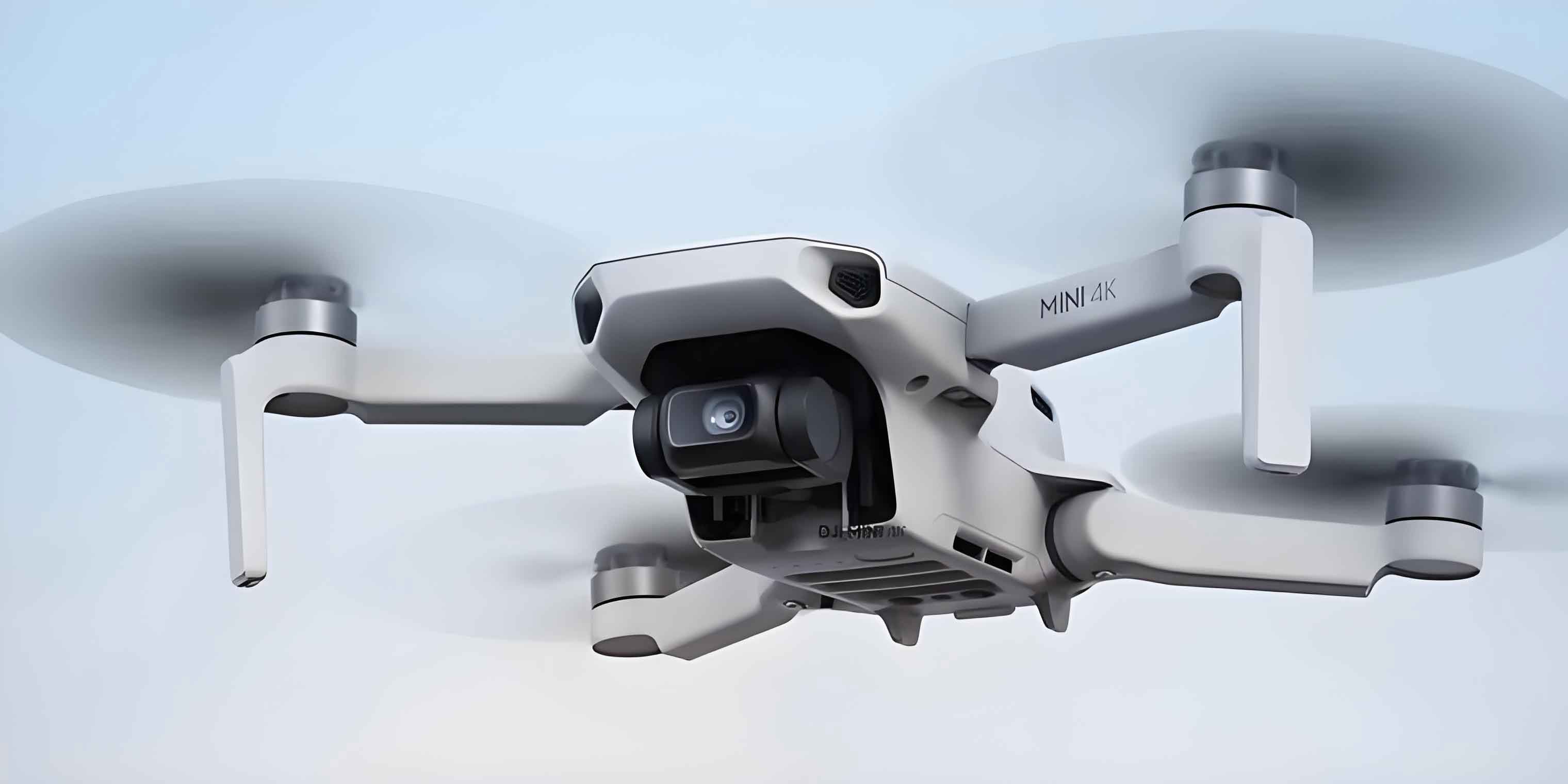
The data processing workflow is illustrated as a sequence: raw data collection → data preparation (images + GNSS/IMU raw data + precise ephemeris) → preprocessing (time synchronization, quality check) → PPP dynamic solution (ITRF2020 output) → coordinate transformation (frame and epoch reduction to CGCS2000) → photogrammetric processing (aerial triangulation and product generation). The figure below shows the typical UAV drone platform used in our experiments.
In terms of coordinate system relationships, we clarify that WGS84 and CGCS2000 are both Earth-centered Earth-fixed (ECEF) systems but with different definitions. WGS84 is updated over time and corresponds to different ITRF frames and epochs, while CGCS2000 is fixed to the ITRF97 frame at epoch 2000.0. The BDS coordinate system (BDCS) is equivalent to CGCS2000. The transformation parameters between ITRF2020 and ITRF97 are obtained from the IERS website. For high-precision conversion, we apply the Chinese regional velocity field model published by the National Geodetic Bureau, which accounts for the crustal motion of the Eurasian plate in the island reef area near Zhejiang. The velocity vectors \((V_X, V_Y, V_Z)\) at each point are interpolated from the grid. The epoch reduction formula ensures that coordinates are brought from the observation epoch (e.g., 2024.5) back to 2000.0.
To further validate the robustness of our method, we conduct a consistency check by comparing the PPP CGCS2000 coordinates at a static control point on the island (observed over 2 hours) with the known CGCS2000 coordinates from a previous high-precision survey. The difference is 0.05 m, 0.07 m, and 0.12 m in the X, Y, and Z components respectively, confirming the validity of the transformation. This static test indicates that the dynamic positioning accuracy of the UAV drone during flight is slightly degraded due to motion, but the resulting DOM accuracy of 0.18 m meets the requirements for 1:500 scale mapping typically needed for island reef applications.
We also analyze the influence of the number of GNSS systems on PPP performance. In this experiment, the CW-15 UAV drone’s receiver tracks GPS, BDS, GLONASS, and Galileo. We compared a single-GPS PPP solution with the multi-GNSS solution for a 30-minute segment of the flight. The single-GPS solution yields a root mean square (RMS) of 0.25 m in horizontal position, while the multi-GNSS solution reduces it to 0.12 m. This demonstrates the advantage of using all available constellations, especially in open sky environments over ocean where satellite geometry is often good.
Another important aspect is the precision of the IGS products. In our processing, we use the final IGS product (IGS final) which has a delay of 12–18 days but offers the highest accuracy: orbit accuracy of ~2.5 cm and clock accuracy of ~75 ps. For operational scenarios that require near-real-time mapping, the rapid product (IGR, delay 17–41 hours) can be used with only a slight degradation in accuracy (orbit ~2.5 cm, clock ~75 ps). For emergency response, the ultra-rapid product (IGU, predicted part) can be employed, but the clock accuracy is only ~3 ns, leading to decimeter-level positioning. For the typical engineering requirements of island reef surveys, the rapid product is a good balance between timeliness and accuracy. In our experiment, we used the final product for research purposes; however, we also conducted a parallel test with the rapid product and found that the DOM planar accuracy changed by less than 0.03 m, which is negligible for most applications.
The processing efficiency is also worth noting. The PPP dynamic solution for the entire flight (2,186 epochs) using the Inertial Explorer 8.90 software on a workstation with Intel i7-12700 CPU and 32 GB RAM takes approximately 45 minutes. The coordinate transformation step is instantaneous. The subsequent aerial triangulation and DOM generation in a commercial photogrammetry software (e.g., Pix4Dmapper or Metashape) takes about 3 hours. The overall workflow can be completed within a single day from data download to final product, which is comparable to the conventional PPK workflow but eliminates the need for base station deployment.
We also compare the vertical accuracy of the DOMs. Although our emphasis is on planar accuracy, we note that the vertical accuracy follows a similar pattern. The PPP CGCS2000 DOM shows a vertical RMSE of 0.35 m against the check points, while the PPK DOM yields 0.28 m. The raw POS DOM has a vertical RMSE of 1.52 m, and the PPP ITRF2020 DOM has 0.92 m. The improvement in the vertical component is also significant, though slightly less pronounced than the horizontal component due to the geometry of GNSS and the difficulty in modeling tropospheric delay during the flight. Nevertheless, the vertical accuracy of 0.35 m is acceptable for many island reef mapping tasks (e.g., coastal resource management, erosion monitoring).
In summary, our study demonstrates that the PPP technology, when combined with a rigorous coordinate transformation workflow, can effectively replace the conventional PPK method for UAV drone-based island reef photogrammetry. The key innovations are: (1) the development of a standardized epoch and frame conversion procedure that eliminates the systematic error caused by ignoring crustal motion; (2) the experimental verification under a dual constraint of no ground control points and no ground base station, which has been insufficiently addressed in previous literature; (3) the quantification of the accuracy difference between PPP and PPK (within a few centimeters) and the confirmation of PPP’s feasibility as an alternative in remote island regions.
We recommend that future studies focus on the integration of multi-GNSS PPP with real-time kinematic processing (PPP-RTK) to further improve the accuracy and reduce the convergence time. Additionally, the automatic application of the transformation procedure in the photogrammetric software pipeline would facilitate wider adoption. With the advancement of global navigation satellite systems and precise point positioning services, the combination of PPP and UAV drones will become a standard tool for offshore island reef mapping, providing high-precision geospatial data for marine resource development, environmental monitoring, and maritime rights protection.