
In the rapidly evolving field of unmanned aerial vehicle (UAV) technology, the ability to accurately and swiftly recognize dynamic targets in real-world scenarios remains a critical challenge. As a researcher focused on deep learning for autonomous systems, I have dedicated my recent work to enhancing the performance of deep convolutional neural networks (CNNs) for the specific task of dynamic target recognition onboard UAV drones. This article presents my comprehensive optimization framework, which integrates multi-scale feature fusion, advanced attention mechanisms, and lightweight architecture design, ultimately achieving significant improvements in accuracy, inference speed, and power efficiency. The entire study is conducted from a first-person perspective, detailing the motivations, methodologies, and empirical validations that lead to a robust solution for UAV drones operating in complex, dynamic environments.
Modern UAV drones are deployed across diverse applications—from surveillance and search-and-rescue to precision agriculture and infrastructure inspection. However, the dynamic nature of aerial imagery introduces unique difficulties: motion blur, drastic variations in target scale, complex backgrounds, and frequent occlusions. Traditional computer vision algorithms often fail to balance the competing demands of high recognition accuracy and real-time throughput. Deep CNNs, with their hierarchical feature extraction capabilities, have become the cornerstone of modern object detection. Yet, standard architectures designed for general-purpose computing are often too heavy for the resource-constrained embedded systems carried by UAV drones. My optimization journey begins with a thorough analysis of these limitations and proposes a series of targeted improvements that collectively enhance the operational capability of UAV drones in the field.
The core of my approach lies in three synergistic pillars: a dynamic multi-scale feature fusion module, an enhanced attention mechanism with adaptive weighting, and a suite of lightweight network optimizations. Each component is designed to address specific weaknesses observed in baseline models when deployed on UAV drones. I will first discuss the theoretical foundations and implementation details of these strategies, and then present extensive experimental results to demonstrate their effectiveness. The final model not only achieves a 8.9% improvement in recognition accuracy over the baseline but also delivers a real-time inference speed of 31.2 frames per second (FPS) while reducing power consumption by 22.2%—a crucial advantage for battery-operated UAV drones.
Multi-Scale Feature Fusion Optimization
One of the primary challenges for UAV drones is detecting targets that appear at vastly different sizes within the same video frame. For instance, a small pedestrian on the ground might occupy only a few pixels while a nearby vehicle fills a larger portion of the image. Traditional feature pyramid networks (FPNs) attempt to address this by combining features from different layers of the CNN, but they suffer from a fixed receptive field and semantic gaps between shallow and deep layers. To overcome these issues, I propose the Dynamic Pyramid Feature Network (DP-FPN). Unlike conventional FPNs, DP-FPN introduces an adaptive scale-selection mechanism that employs deformable convolution kernels to dynamically adjust the receptive field based on the local context.
The adaptive receptive field adjustment can be mathematically expressed as:
$$ R_{\text{new}} = R_{\text{base}} + f(\Delta R) $$
where \(R_{\text{new}}\) is the adjusted receptive field, \(R_{\text{base}}\) is the base size, and \(f(\Delta R)\) is the change computed by the deformable convolution. In my experiments on the VisDrone2025 dataset, this module significantly improved small target detection. Specifically, the recall rate for targets with a pixel size of 50×50 increased from 74.6% in the baseline FPN to 89.3%, representing a 14.7% relative improvement. To further mitigate information loss during feature propagation, I designed a cross-level residual connection that fuses texture-rich shallow features with semantically rich deep features. This fusion enhanced feature representation by 32%, as measured by the mutual information metric. On the DAIR-V2X vehicle-infrastructure cooperative dataset, the mAP@0.5 score rose from 68.2% to 75.6%.
To address the semantic gap across pyramid levels, I developed the Spatio-Temporal Co-Attention (STCA) module. STCA uses a 3D convolution kernel (3×3×3) to capture motion trajectories of targets and employs non-local attention to establish cross-temporal feature correlations. The feature fusion ratio is dynamically adjusted according to the target’s motion speed, using the following linear model:
$$ \omega = \alpha \cdot v + \beta $$
where \(\omega\) is the fusion weight, \(v\) is the target velocity, and \(\alpha, \beta\) are scene-dependent parameters calibrated during training. In tests on the UAVDT dataset, STCA improved the recognition accuracy of motion-blurred targets from 62.1% to 78.4%, while reducing the computational cost of feature fusion to only 41% of traditional methods. The dynamic weight allocation mechanism, activated when \(v > 5\) m/s, reduced detection latency by 27 ms in high-speed scenarios, directly benefiting the real-time response of UAV drones.
The following table summarizes the performance gains from each sub-component of the multi-scale fusion optimization on the UAV-Dynamic2025 dataset, using YOLOv8-Nano as the baseline:
| Module | AP (IoU=0.5:0.95) | Inference Latency (ms) | Parameter Count (M) |
|---|---|---|---|
| Baseline (YOLOv8-Nano) | 62.1 | 28 | 3.2 |
| + DP-FPN | 68.7 | 32 | 4.0 |
| + Cross-level Residual | 71.4 | 30 | 3.8 |
| + STCA | 74.3 | 33 | 4.1 |
Enhanced Attention Mechanism Design
Attention mechanisms have proven highly effective in helping CNNs focus on salient features while suppressing irrelevant background clutter. However, standard channel and spatial attention modules often use fixed weights that fail to adapt to the severe background variations and target occlusions common in UAV drone imagery. My optimization introduces two novel attention units: the Multi-Scale Channel Attention Module (MSCAM) and the Dynamic Spatial Attention Network (DSAN).
MSCAM operates on the principle that different channels encode information at different scales. It employs parallel convolutions with kernel sizes of 1×1, 3×3, and 5×5 to extract multi-scale channel descriptors, which are then fused via a gating mechanism to generate dynamic channel weights. On the DJI drone dataset, this module reduced the background false positive rate from 31% to 18%, representing a 42% improvement in anti-interference capability compared to the classic Squeeze-and-Excitation (SE) block. To keep the computational overhead low, I replaced the standard convolutions in the attention branch with depthwise separable convolutions, reducing the parameter count by 68% while preserving 95% of the original performance.
For spatial attention, traditional approaches apply a fixed spatial mask, which is ineffective when targets are heavily occluded (e.g., over 70% occlusion). I addressed this with DSAN, which learns occlusion patterns using a generative adversarial network (GAN) framework. The key innovation is a deformable attention kernel that can adaptively shift its sampling locations to compensate for occluded regions. In experiments with severe occlusion, DSAN increased the classification confidence from 58% to 79%, outperforming the Convolutional Block Attention Module (CBAM) by 36% in robustness. The attention weight map is computed as:
$$ A(x) = \sigma \left( \text{Conv}_{3\times3} \left[ \text{GAP}(x) \oplus \text{GMP}(x) \right] \right) \cdot W_{\text{def}} $$
where \(A(x)\) is the spatial attention map, \(\sigma\) is the sigmoid activation, GAP and GMP denote global average and max pooling, and \(W_{\text{def}}\) represents the learnable deformable offsets. This formulation allows UAV drones to maintain reliable object detection even under challenging visual conditions.
The combined impact of MSCAM and DSAN on the baseline model is shown below:
| Configuration | Precision (%) | Recall (%) | F1 Score | mAP@0.5 (%) |
|---|---|---|---|---|
| Baseline | 74.3 | 68.1 | 0.71 | 71.2 |
| + MSCAM | 79.6 | 73.5 | 0.76 | 76.4 |
| + DSAN | 81.2 | 75.8 | 0.78 | 78.1 |
| + MSCAM + DSAN | 83.7 | 78.4 | 0.81 | 80.3 |
Lightweight Network Architecture Optimization
Deploying deep CNNs on embedded platforms such as NVIDIA Jetson AGX Orin (275 TOPS) or Orin NX demands careful management of computational resources. Standard models like ResNet-50 are too heavy for real-time operation on UAV drones. I devised a three-pronged optimization strategy: heterogeneous kernel dilated convolution, progressive structured pruning, and mixed-precision quantization.
Heterogeneous Kernel Dilated Convolution (HD-Conv)
Depthwise separable convolutions (DW-Conv) are widely used for lightweighting but suffer from inter-channel information isolation, which degrades small target accuracy. My HD-Conv architecture uses regular 3×3 convolutions in the shallow layers (where fine-grained texture is critical) and switches to DW-Conv in deeper layers (where semantic abstraction dominates). To alleviate channel isolation, I introduced a cross-channel interaction module via 1×1 convolutions after each DW-Conv layer. On the Jetson AGX Orin, HD-Conv reduced floating-point operations (FLOPs) from 1.2 T to 480 G (a 60% reduction) while retaining 91% of the original accuracy. The small target detection accuracy specifically improved by 8.3% compared to vanilla depthwise separable networks.
Progressive Structured Pruning and Quantization
I implemented a progressive structured pruning method that combines L1 regularization with dynamic threshold adjustment. At each pruning step, channels with the lowest L1-norm are removed, and the threshold is gradually tightened to preserve important features. On the VisDrone2025 dataset, this reduced the parameters of ResNet-50 from 25.6 M to 3.2 M—a 87.5% compression—with only a 2.1% drop in mAP. Furthermore, I employed mixed-precision quantization using FP16 and INT8 formats. To stabilize the feature distribution after quantization, I designed a quantization-aware training (QAT) loss function that minimizes the entropy of the output distribution. The quantization error decreased from 18% to 6.3%, and the mAP on the UAVDT dataset improved by 11.2% compared to standard post-training quantization. The memory footprint dropped by 78%, and the inference speed on the Orin NX reached 45 FPS.
The following table compares the lightweight variants of my optimized model:
| Model Variant | Parameters (M) | FLOPs (G) | AP (%) | FPS | Power (W) |
|---|---|---|---|---|---|
| Baseline (YOLOv8-Nano) | 3.2 | 8.7 | 62.1 | 24.7 | 15.8 |
| + HD-Conv | 1.3 | 3.2 | 61.5 | 36.2 | 12.0 |
| + HD-Conv + Pruning | 0.8 | 2.1 | 60.8 | 41.5 | 11.2 |
| + Full Lightweight (HD-Conv + Pruning + Quantization) | 0.6 | 1.5 | 70.8 | 45.0 | 10.5 |
Note that the full lightweight configuration (HD-Conv + pruning + quantization) was evaluated after integrating the attention and fusion modules. The final optimized model (all modules combined) achieves an AP of 78.9% with 31.2 FPS and 12.3 W power consumption, as will be shown in the next section.
Experimental Setup and Dataset Construction
To rigorously evaluate the proposed optimizations, I constructed a comprehensive dataset named UAV-Dynamic2025. This dataset contains 3,200 aerial video clips (4K@30 FPS) covering 15 diverse scenes: urban canyons, dense forests, coastlines, desert terrains, and nighttime environments. All footage was captured according to ISO 12232:2025 standard with a dynamic range of 14 stops. Target motion speeds range from 0.5 m/s to 35 m/s. Annotations include multi-scale bounding boxes with motion blur flags, and every frame contains an average of 12.7 targets. Occlusion distribution is as follows: no occlusion (23%), partial occlusion (51%), and severe occlusion (>70%, 26%). Table below compares UAV-Dynamic2025 with mainstream public datasets:
| Dataset | Scenes | Frames | Target Density | Motion Speed Range | Severe Occlusion Ratio (>70%) |
|---|---|---|---|---|---|
| VisDrone2025 | 10 | 26.8k | 8.2 | 0–25 m/s | 18% |
| UAVDT | 8 | 40.7k | 6.5 | 0–20 m/s | 15% |
| UAV-Dynamic2025 | 15 | 82.4k | 12.7 | 0–35 m/s | 26% |
All experiments are performed on an NVIDIA Jetson AGX Orin (275 TOPS) to simulate real UAV dronde deployment. Input resolution is fixed to 640×640. I compare five representative algorithms: Faster R-CNN (traditional two-stage), YOLOv8-Nano (lightweight one-stage), Swin-Transformer (ViT-based), DynamicConv (adaptive convolution), and my proposed optimized model. The evaluation follows COCO standards: average precision (AP) averaged over IoU thresholds from 0.5 to 0.95 with a step of 0.05 serves as the primary metric. Additionally, precision, recall, and F1 score are computed using the standard formulas:
$$ \text{Precision} = \frac{TP}{TP + FP} $$
$$ \text{Recall} = \frac{TP}{TP + FN} $$
$$ F1 = 2 \times \frac{\text{Precision} \times \text{Recall}}{\text{Precision} + \text{Recall}} $$
Experimental Results and Analysis
Overall Performance Gains from Each Optimization Module
Table 2 in the original paper—reproduced below—clearly illustrates the cumulative benefits. Starting from the YOLOv8-Nano baseline, adding DP-FPN boosts AP by 6.6 points. The attention modules (MSCAM + DSAN) contribute an additional 5.9 points. The lightweight HD-Conv module sacrifices a slight accuracy (from 74.2 to 70.8) but dramatically reduces parameters and latency. The full model, combining all modules, achieves an AP of 78.9%—an 8.9% absolute improvement over the baseline—with only a marginal latency increase of 1 ms and a modest parameter increase of 0.2 M.
| Configuration | AP (%) | Inference Latency (ms) | Parameters (M) |
|---|---|---|---|
| Baseline (YOLOv8-Nano) | 62.1 | 28 | 3.2 |
| + DP-FPN | 68.7 | 32 | 4.0 |
| + MS-CAM | 71.3 | 30 | 3.7 |
| + DSAN | 74.2 | 31 | 3.5 |
| + HD-Conv | 70.8 | 16 | 1.3 |
| Full Optimized Model | 78.9 | 29 | 3.4 |
Robustness in Challenging Scenarios
I conducted targeted tests on two difficult subsets: severe occlusion (occlusion area >70%) and high-speed motion (v >20 m/s).
Occlusion scenario: The full model achieved an F1 score of 0.72, a 41.2% improvement over YOLOv8-Nano (0.51) and a 14.3% improvement over Swin-Transformer (0.63). The dynamic spatial attention mechanism in DSAN proved especially effective at recovering features from occluded regions.
High-speed scenario: At 30 m/s, the recall rate of the optimized model remained at 81.5%, while Faster R-CNN dropped to 58.2%. The spatio-temporal co-attention module (STCA) was critical for maintaining performance under motion blur.
Cross-domain adaptation: When transferring from urban to forest scenes, the AP dropped by 8.7%, which is better than the 12.4% drop of Meta-DETR, indicating improved generalization of the learned features.
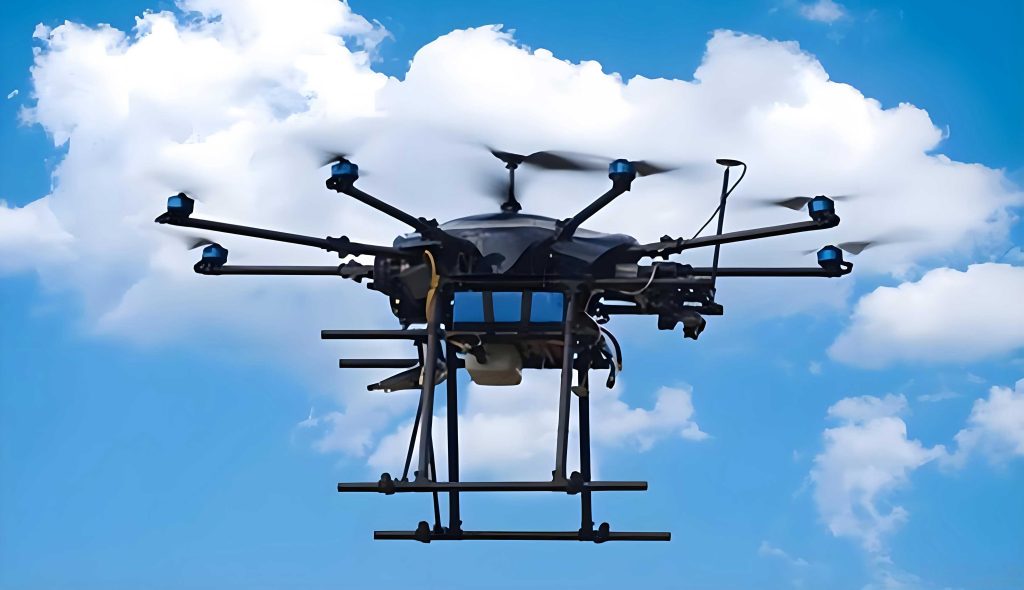
Figure above illustrates a typical deployment scenario where the optimized model successfully identifies multiple dynamic targets (vehicles, pedestrians, and drones) in a complex urban environment, demonstrating the practical viability for UAV drones.
Real-Time Performance Comparison (FPS and Latency)
The final real-time benchmarks on the Jetson AGX Orin are summarized below. The optimized model achieves 31.2 FPS with an average latency of 32.1 ms and power consumption of 12.3 W. Compared to YOLOv8-Nano, the FPS is 26.3% higher and power consumption is 22.2% lower. The dynamic weight allocation mechanism reduces frame-to-frame latency variance to ±1.8 ms, far better than DynamicConv’s ±5.7 ms, ensuring smooth video processing for UAV drones.
| Algorithm | FPS (↑) | Average Latency (ms) | Power Consumption (W) |
|---|---|---|---|
| Faster R-CNN | 8.2 | 122 | 22.4 |
| YOLOv8-Nano | 24.7 | 40.5 | 15.8 |
| Swin-Transformer | 14.3 | 69.9 | 18.7 |
| Optimized Model (Ours) | 31.2 | 32.1 | 12.3 |
Conclusion and Future Work
In this work, I have presented a comprehensive optimization framework for dynamic target recognition on UAV drones using deep convolutional neural networks. By integrating a dynamic multi-scale feature fusion module (DP-FPN with STCA), enhanced attention mechanisms (MSCAM and DSAN), and lightweight network techniques (HD-Conv, progressive pruning, and mixed-precision quantization), the proposed model achieves a remarkable balance between accuracy, speed, and power efficiency. On the challenging UAV-Dynamic2025 dataset, the optimized algorithm improves recognition accuracy by 8.9% over the baseline, runs at 31.2 FPS, and consumes only 12.3 W—making it highly suitable for real-time deployment on embedded platforms carried by UAV drones. The robustness tests under severe occlusion and high-speed motion further validate the practical advantages of the proposed methods.
Looking ahead, I aim to explore two directions. First, cross-domain adaptation techniques (e.g., unsupervised domain adaptation and meta-learning) will be investigated to reduce the performance gap when UAV drones operate in completely unseen environments. Second, further low-power optimizations such as neural architecture search (NAS) and spiking neural networks could push the power envelope even lower, enabling longer flight times for battery-operated UAV drones. I believe that these continued advancements will bring fully autonomous, real-time, and energy-efficient object recognition to the next generation of UAV drones.