
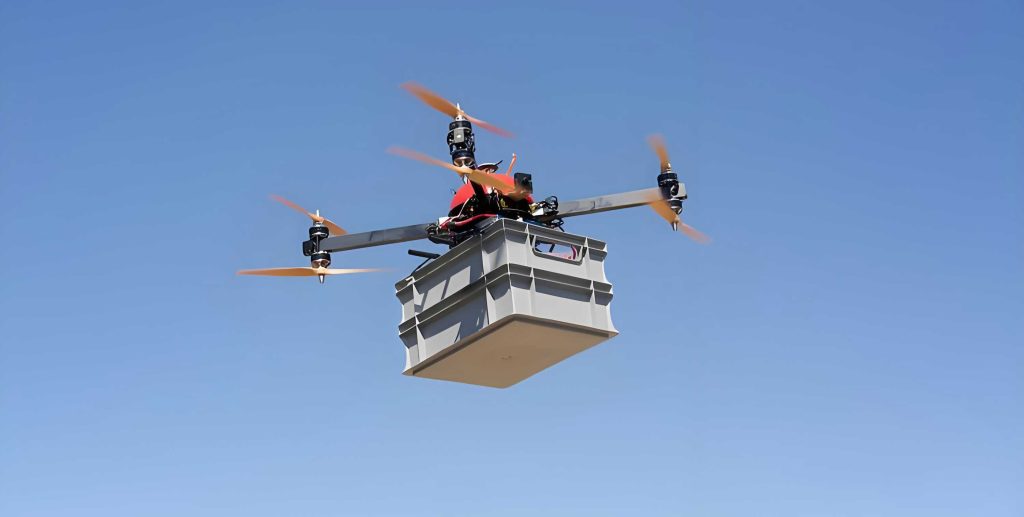
In modern battlefield environments, the complexity of electromagnetic and meteorological conditions poses significant challenges for single-reconnaissance payloads in obtaining comprehensive target information. Unmanned Aerial Vehicle (UAV) drones, with their unique advantages of autonomy, cost-effectiveness, and flexible control, can be integrated with multiple reconnaissance payloads to enhance situational awareness. In this paper, we focus on the collaborative use of electronic signal reconnaissance equipment (ESRE), synthetic aperture radar (SAR), and CCD cameras aboard UAV drones. By designing four coordination schemes and constructing a reconnaissance effectiveness evaluation model, we aim to identify optimal payload deployment strategies under varying operational conditions. Our work provides practical guidance for leveraging UAV drones in multi-payload reconnaissance missions.
Reconnaissance Payload Performance and Operational Analysis
Based on current advanced UAV drones, the primary reconnaissance payloads include ESRE, SAR, and CCD cameras. Each payload exhibits distinct performance characteristics that influence its suitability for different mission phases. ESRE utilizes high-sensitivity detection systems to capture electromagnetic signals over wide areas, providing long-range detection but limited imaging capability. SAR operates in multiple modes—stripmap, spotlight, GMTI, and SAR/GMTI—offering high-resolution imaging and moving target indication. CCD cameras deliver optical images with high resolution but are constrained by shorter ranges and weather dependency. The following tables summarize the key performance metrics.
| Subsystem | Search Zone | Accuracy (deg) | Range (km) |
|---|---|---|---|
| Wide-open guidance | 360° omnidirectional | 15 | 500–700 |
| Guidance direction-finding | 360° omnidirectional + ±45° about fuselage normal | 4 | 200–400 |
| High-gain detection | ±45° about fuselage normal | 0.5 | 0–200 |
| Mode | Range (km) | Resolution (m) | Swath/Beamwidth |
|---|---|---|---|
| Stripmap | 150–200 | 3×3 | 30 km |
| Spotlight | 100–150 | 0.5×0.5, 1×1 | 8–15 km |
| SAR/GMTI | 40–100 | 3×3, 5×5 | 10–20 km |
| GMTI | 30–50, 100–150, 150–200 | — | Azimuth ±60°, Range 50–60 km |
| Depression Angle (°) | Range (km) | Resolution (m) | Swath Width (km) | Swath Length (km) |
|---|---|---|---|---|
| 0–30 | 50–120 | 0.5–1.5 | 10–25 | 25–70 |
| Payload | Reconnaissance Range | Max Search Azimuth | Detection Probability | Simultaneous Track Count | Positioning Accuracy | Resolution |
|---|---|---|---|---|---|---|
| ESRE | Long | Large | High | Many | Low | Low |
| SAR | Medium | Medium | Medium | Medium | High | Medium-High |
| CCD | Short | Small | Low | Few | Medium-High | High |
Furthermore, the flight path selection for UAV drones influences payload performance. Commonly adopted routes include “linear”, “zigzag”, and “figure-8” patterns, each suited to specific payload modes. For instance, the zigzag path facilitates wide-area scanning with ESRE or SAR stripmap mode, while the figure-8 path supports high-resolution spotlight SAR or CCD imaging over a confined region. Payload coordination also demands careful UAV attitude control: ESRE and CCD can operate over 360°, whereas SAR only scans the side-looking direction and cannot simultaneously cover both sides.
Design of Multi-Payload Coordination Schemes
We propose four coordination schemes that leverage the complementary strengths of ESRE, SAR, and CCD cameras aboard UAV drones. Each scheme is designed to maximize detection probability and positioning accuracy under varying mission constraints.
Scheme A: ESRE + SAR Coordination
This scheme uses ESRE for initial long-range detection of electromagnetic emitters, providing coarse bearing and location. The target information is relayed to the UAV control terminal, which replans the flight path. Subsequently, SAR operates in stripmap mode for precise positioning, and finally switches to spotlight mode for high-resolution imaging when within range. This approach reduces search blindness and improves efficiency in complex electromagnetic environments.
Scheme B: ESRE + CCD Coordination
Here, ESRE again provides initial detection over a wide area. Once the target region is identified, the UAV adjusts its route to bring the CCD camera into effective range. The CCD then performs real-time visual reconnaissance or captures high-resolution images. This scheme is particularly useful for immediate target identification and damage assessment, though it suffers from shorter operational range and weather susceptibility.
Scheme C: SAR + CCD Coordination
SAR is employed in GMTI or SAR/GMTI mode to scan large areas and detect moving targets. Given the complexity of SAR image interpretation, the UAV then transitions to CCD mode for direct visual confirmation and tracking. This combination exploits SAR’s wide-area search capability and CCD’s intuitive imaging, making it suitable for dynamic target scenarios.
Scheme D: ESRE + SAR + CCD Coordination
This comprehensive scheme integrates all three payloads. ESRE provides initial long-range detection. For stationary targets, SAR in stripmap or spotlight mode and CCD sequentially perform imaging; for moving targets, GMTI/SAR mode tracks them, followed by CCD visual confirmation. If ESRE fails to detect any emitter, SAR can be used independently to initiate search. This scheme offers the highest flexibility and robustness, though it demands more complex coordination and data fusion.
Effectiveness Evaluation Model for Multi-Payload Coordination
The overall reconnaissance capability of UAV drones depends on navigation ability, payload coordination, and data link transmission. We define the comprehensive capability C as:
$$ C = \varepsilon_1 N + \varepsilon_2 \sum A + \varepsilon_3 T $$
where N is the navigation capability, ∑A is the combined payload coordination capability, and T is the data link transmission capability. The weights ε1, ε2, ε3 are set to 0.15, 0.65, and 0.20 respectively based on prior studies.
When subsequent payloads are activated after initial detection, their detection probability and positioning accuracy are influenced by the earlier payload’s results. The coordination capability ∑A is expressed as:
$$ \sum A = \omega_1 A_1 + \omega_{12} A_{12} + \omega_{13} A_{13} $$
Here, A1 is the capability of the initial payload, and A12, A13 are the capabilities of subsequent payloads, with corresponding weights ω.
The individual reconnaissance capability for each payload is defined by:
SAR:
$$ A_r = \frac{ \xi_r L^2 }{4} \times \frac{\theta}{360^\circ} \times P_r \times K_r \times \frac{ m^{0.05} }{ \Delta_r \rho_r } $$
ESRE:
$$ A_e = \frac{ \xi_e L^2 }{4} \times \frac{\theta}{360^\circ} \times P_e \times K_e \times \frac{ m^{0.05} }{ \Delta_e \rho_e } $$
CCD:
$$ A_c = \frac{ C_0 L^2 }{4} \times \frac{\theta}{360^\circ} \times P_c \times K_c \times \frac{ m^{0.05} }{ \Delta_c \rho_c } $$
In these equations: L is the operational range; θ is the maximum search azimuth; P is the detection probability; K is the system factor; m is the number of simultaneously tracked targets; Δ is the positioning accuracy; ρ is the resolution; ξr, ξe, and C0 represent environmental influence coefficients for SAR, ESRE, and CCD respectively.
For a coordinated payload pair, the updated detection probability P12 and positioning accuracy Δ12 of the later payload are given by:
$$
\begin{pmatrix} P_{12} \\ \Delta_{12} \end{pmatrix}
=
\begin{pmatrix} P_1 \\ \Delta_1 \end{pmatrix}
m_1
\begin{pmatrix} \lambda_{11} & \lambda_{12} \\ \lambda_{21} & \lambda_{22} \\ \lambda_{31} & \lambda_{32} \end{pmatrix}
\begin{pmatrix} P_2 \\ \Delta_2 \end{pmatrix}
$$
where (P1, Δ1) are the initial payload’s parameters, m1 is its simultaneous track count, (P2, Δ2) are the later payload’s nominal parameters, and λ are influence coefficients that capture the synergy between payloads.
Simulation and Analysis
Assuming a pre-planned reconnaissance mission over a target area with a “zigzag” flight path, we evaluate the four coordination schemes (A: ESRE+SAR, B: ESRE+CCD, C: SAR+CCD, D: ESRE+SAR+CCD) using the proposed model. The baseline parameters for navigation and data link are set to N = 0.75 and T = 0.85. The computed coordination capabilities and overall effectiveness are shown in Table 5.
| Scheme | N | ∑A | T | C |
|---|---|---|---|---|
| A | 0.75 | 0.72 | 0.85 | 0.7505 |
| B | 0.75 | 0.56 | 0.85 | 0.6465 |
| C | 0.75 | 0.76 | 0.85 | 0.7765 |
| D | 0.75 | 0.865 | 0.85 | 0.8448 |
Table 5 reveals that Scheme D achieves the highest overall effectiveness (0.8448) under nominal conditions, followed by Scheme C (0.7765) and Scheme A (0.7505). Scheme B yields the lowest effectiveness (0.6465) due to the limited synergy between ESRE’s coarse positioning and CCD’s short-range imaging.
To examine robustness, we consider four operational scenarios with different electromagnetic and weather conditions (Table 6). The coefficients ξr, ξe, and C0 are adjusted accordingly.
| Scenario | Electromagnetic Environment | Weather Condition |
|---|---|---|
| 1 (Baseline) | 0.9 | 0.9 |
| 2 (Degraded EM) | 0.5 | 0.9 |
| 3 (Poor Weather) | 0.9 | 0.5 |
| 4 (Combined Degradation) | 0.5 | 0.5 |
The resulting reconnaissance effectiveness for each scheme under these scenarios is presented in Table 7.
| Scenario | Scheme A | Scheme B | Scheme C | Scheme D |
|---|---|---|---|---|
| 1 | 0.7037 | 0.6101 | 0.7271 | 0.7885 |
| 2 | 0.5165 | 0.5789 | 0.6855 | 0.5805 |
| 3 | 0.7037 | 0.4957 | 0.5711 | 0.7716 |
| 4 | 0.5165 | 0.4645 | 0.5295 | 0.5636 |
The data in Table 7 highlight several important trends. Under benign conditions (Scenario 1), Scheme D remains superior. In Scenario 2 (degraded electromagnetic environment), ESRE and SAR suffer significant performance loss; Scheme C (SAR+CCD) becomes the best choice because it avoids ESRE. In Scenario 3 (poor weather), CCD performance drops drastically, making Scheme D with ESRE and SAR the most resilient. Under combined degradation (Scenario 4), all schemes decline, but Scheme D still marginally outperforms others, demonstrating its robustness.
These results confirm that the effectiveness of a coordination scheme is highly dependent on the prevailing operational environment. Mission planners should select the appropriate payload combination based on real-time electromagnetic and weather conditions. Scheme D offers the greatest versatility, while Scheme C provides a cost-effective option when ESRE is vulnerable.
Conclusion
In this work, we have systematically analyzed the performance of ESRE, SAR, and CCD cameras on UAV drones and designed four multi-payload coordination schemes. By developing a comprehensive effectiveness evaluation model, we quantitatively assessed each scheme under various environmental conditions. Our simulation results indicate that the full integration of all three payloads (Scheme D) yields the highest reconnaissance effectiveness in most scenarios, while SAR+CCD (Scheme C) is preferable under strong electromagnetic interference. The study provides a practical framework for optimizing the collaborative use of reconnaissance payloads on UAV drones, enhancing their adaptability to complex battlefield environments.