
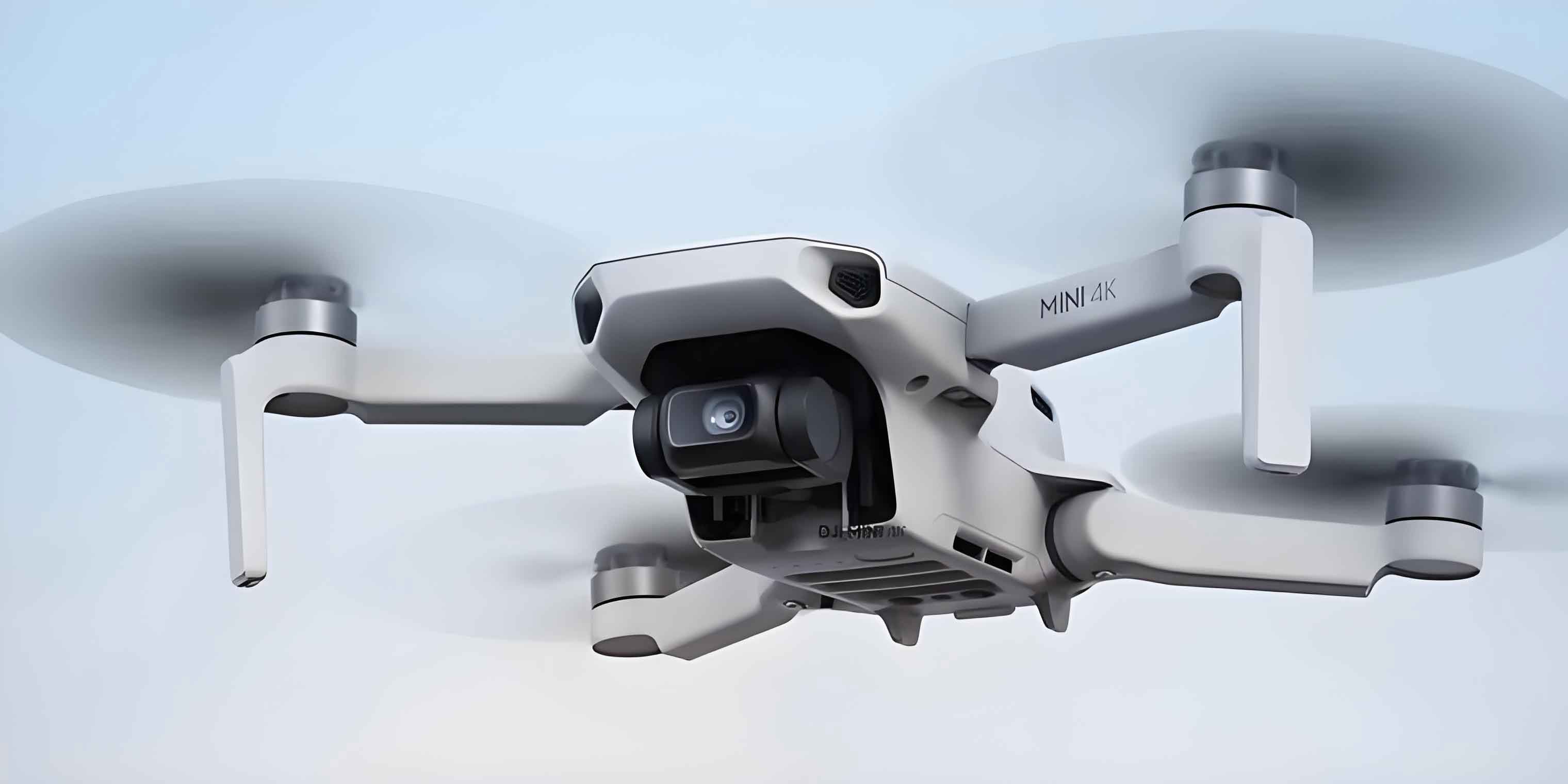
As the technology of unmanned aerial vehicles advances rapidly, the UAV drone has demonstrated significant advantages over manned aircraft in terms of operational cost, endurance, payload capacity, autonomous control, and environmental adaptability. It has increasingly become a critical asset in both military and civil domains. The mission planning system, as the core component during mission execution for a UAV drone, substitutes human operators in managing, controlling, and making decisions under complex flight environments. Based on available literature, the concept of mission planning can be traced back to the 1970s when the U.S. Navy deployed the Tomahawk cruise missile. Subsequently, in the 1980s, the U.S. Air Force began implementing mission planning systems on platforms such as the F-15, F-16, F-111 fighter jets, B-52 bombers, and A-10 attack aircraft. Early systems were relatively simple, primarily focusing on flight path planning. With the enhancement of autonomous capabilities in UAV drones, mission planning systems have evolved toward multi-functionality, intelligence, and predictive capabilities, enabling a UAV drone to more effectively convert complex environmental information into decision-making commands during mission execution.
As various UAV drone models emerge domestically, the functional capabilities of their mission planning systems vary significantly. Standardizing the verification content and methods for UAV drone mission planning systems from a validation perspective is crucial for establishing a standard system and an airworthiness technical framework. By studying relevant international and domestic standards for fixed-wing UAV drone mission planning system verification and combining the characteristics of current domestic systems, I propose a set of general and specific verification requirements. These requirements cover nine aspects: test plan, test environment, test object, test instrumentation and modification, supporting documents, test personnel, data processing, test report, and quality and safety. Furthermore, detailed requirements for ground tests and flight tests—including specific verification items, conditions, methods, and evaluation criteria—are provided. This work aims to support the testing of fixed-wing UAV drone mission planning systems in China and to promote the development of both the flight test standard system and the airworthiness system for such systems.
Necessity of Studying Verification Requirements for UAV Drone Mission Planning Systems
The emergence of unmanned equipment, represented by the UAV drone, has made mission planning a necessary and key step in operational processes. For a specific system, mission planning refers to the operational settings and overall management required to accomplish a given task. For manned aircraft, the planning outputs mainly serve as references for human decision-making. In contrast, for a UAV drone without onboard pilots, the pre-designed flight mission and route are the sole and strict execution basis during operation. Therefore, the outputs of mission planning must satisfy requirements for accuracy, completeness, and consistency. Additionally, due to the complex and changing environments in which a UAV drone operates, rapid re-planning functionality is often needed to ensure flight safety and mission efficiency.
Currently, numerous UAV drone models are emerging in China. From the perspectives of usage and airworthiness certification, establishing a complete testing and verification system for UAV drones is urgent. As a core subsystem, unified verification requirements for mission planning systems are of great importance. From an analysis of existing standards related to UAV drone mission planning system verification, there is currently no dedicated standard for fixed-wing UAV drone systems. Conducting research on verification requirements and systematically identifying verification content, methods, and evaluation criteria can significantly contribute to constructing a comprehensive flight test standard system.
The following table summarizes the necessity of this research:
| Aspect | Current Situation | Gap / Necessity |
|---|---|---|
| Functional diversity | Different UAV drone models have widely varying mission planning capabilities | Need unified verification criteria for consistent evaluation |
| Standard availability | No dedicated standard for fixed-wing UAV drone mission planning systems | Development of a specialized standard is required |
| Safety assurance | Planning errors can lead to flight accidents | Systematic verification ensures accuracy and integrity |
| Airworthiness certification | Absence of clear validation methods for certification | Standardized verification supports airworthiness processes |
| Flight test standard system | Existing standards (e.g., GJB 5433, GJB 5434) are too general | Detailed verification items and methods are needed |
Review and Adaptability Analysis of Domestic and International Standards
Currently, standards related to UAV drone system testing are limited, and content specifically addressing mission planning system verification is even more concise. The main standards I have collected include GJB 5433 “General Requirements for UAV Systems,” GJB 5434 “General Requirements for Flight Test of UAV Systems,” and NATO STANAG 4671 “UAV Systems Airworthiness Requirements (USAR).”
GJB 5433 – General Requirements for UAV Systems
This standard specifies general design and manufacturing requirements for UAV systems. Content relevant to mission planning system verification appears in Chapter 11, “Ground Control Station,” covering “Map and Flight Path Display Equipment” and “Mission Planning Equipment.” For the map display, the standard requires functions such as map display, planned and real-time flight path overlay, navigation control, command input, coordinate conversion, and map database management. For mission planning equipment, it requires capabilities for route generation, digital map display, situational awareness (threat zones, target areas), integrated data management, computation, and mission plan generation/editing/export.
However, this standard only provides basic functional descriptions from the ground control station perspective. It does not cover functions like data generation/loading, briefing generation, data link planning, payload planning, real-time path replanning, or mission rehearsal. Moreover, no test methods or evaluation criteria are provided. Thus, GJB 5433 can only serve as a reference document for mission planning system testing.
GJB 5434 – General Requirements for Flight Test of UAV Systems
This standard specifies general flight test requirements for military fixed-wing UAV systems. Relevant content is in Section 4.8, “Ground Control Station Flight Operation Performance Test,” which includes “Map and Track Display Function Test” and “Track Planning Function Test.” The map display test verifies map selection, processing, UAV position animation, and geographic information display. The track planning test verifies mission setting and planning, online modification and loading, and status reporting.
Similar to GJB 5433, this standard only covers basic map operations and simple planning functions. It does not propose specific verification items, and the verification requirements are merely stated as “shall be conducted according to product design specifications or manufacturing/acceptance specifications.” No detailed test methods or result evaluation criteria are given. Hence, GJB 5434 is also only a reference.
NATO STANAG 4671 – UAV Systems Airworthiness Requirements (USAR)
This standard is one of the most detailed airworthiness documents available for military fixed-wing UAV systems (weight 150–20,000 kg). Requirements for mission planning systems appear in Part 2, “Acceptable Means of Compliance.” It states that automatic mission planning systems must, at all times, perform risk analysis and apply appropriate software design assurance levels to evaluate safety-critical calculation results. Key points include:
- Verification that any mission planning subsystem affecting safe operation (especially those predicting aerodynamic performance, generating UAV drone maneuver commands, or flight profile waypoints) does not exceed UAV drone usage limits or performance capabilities.
- Verification that the system performs range and type checks on crew data inputs against UAV drone limits and performance.
Again, this standard only addresses airworthiness aspects and provides no specific test indicators, methods, or evaluation approaches. It also serves only as a reference for mission planning system verification.
The following table compares the coverage of these three standards:
| Standard | Scope | Mission Planning Coverage | Test Methods Provided | Evaluation Criteria | Reference Value |
|---|---|---|---|---|---|
| GJB 5433 | Design/manufacturing | Basic functions only | No | No | Low |
| GJB 5434 | Flight test | Map & simple planning | Vague | No | Low |
| STANAG 4671 | Airworthiness | Safety constraints | No | No | Medium |
Based on this analysis, I conclude that there is a clear gap in dedicated standards for fixed-wing UAV drone mission planning system verification. Establishing a comprehensive set of verification requirements is essential.
General Verification Requirements for Fixed-Wing UAV Drone Mission Planning Systems
Based on the characteristics of current UAV drone mission planning systems across various models, I propose that the general verification requirements cover the following nine aspects: test plan, test environment, test object, test instrumentation and modification, supporting documents, test personnel, data processing, test report, and quality and safety. Each aspect is described below.
| No. | Aspect | General Requirements |
|---|---|---|
| 1 | Test Plan | Must cover all verification items for the mission planning system; shall be approved according to prescribed procedures. |
| 2 | Test Environment | Specify altitude, ground control station location, test site, and runway conditions. |
| 3 | Test Object | Define the status of the UAV drone and ground control station; specify the software version and basic functions/performance of the mission planning system. |
| 4 | Test Instrumentation & Modification | Require the installation of additional measurement equipment on the test system. |
| 5 | Supporting Documents | All technical documents required before verification must be provided. |
| 6 | Test Personnel | Specify qualifications for command staff, subject matter experts, maintenance personnel, and UAV drone operators. |
| 7 | Data Processing | Describe general requirements for data handling and analysis. |
| 8 | Test Report | Define report formatting requirements and reference documents. |
| 9 | Quality & Safety | Stipulate compliance with UAV drone usage limitations; describe risks and mitigation measures for mission planning tests. |
Detailed Verification Requirements
The detailed verification requirements for fixed-wing UAV drone mission planning systems are divided into ground tests and flight tests. For each verification item, I specify test conditions, measured parameters, verification content and methods, and data processing and result evaluation criteria.
Ground Test Verification Items
The following table lists the ground test verification items for a UAV drone mission planning system, along with corresponding verification content.
| No. | Verification Item | Verification Content |
|---|---|---|
| 1 | Digital Map Operation | Verify flight path overlay on digital map, coordinate conversion, layer display/hide, information input/recording, map panning/zooming, waypoint position/distance/area/elevation queries, and marking of target/no-fly/threat zones. |
| 2 | Maximum Number of Planned Routes | Verify the maximum number of routes that the system can generate. |
| 3 | Maximum Waypoints per Route | Verify the maximum number of waypoints supported per single route. |
| 4 | Route Conflict Check | Verify the system’s ability to perform automatic conflict checks based on predefined constraints. |
| 5 | Mission Data Generation & Loading | Verify capability to generate mission data and load it into relevant UAV drone subsystems via data link or mission loading card. |
| 6 | Mission Data Import/Export | Verify data import/export functionality. |
| 7 | Flight Briefing Generation | Verify automatic generation of flight briefing documents from mission planning content. |
| 8 | Contingency Planning | Verify capability to pre-plan alternative routes for anticipated emergency scenarios. |
For route conflict check, a typical mathematical formulation for checking waypoint altitude constraints can be expressed as:
$$ \text{Conflict detected if } |h_i – h_{i+1}| > \Delta h_{\text{max}} \quad \text{or} \quad d_{i,i+1} < d_{\text{min}} $$
where \(h_i\) is altitude at waypoint \(i\), \(\Delta h_{\text{max}}\) is maximum altitude change allowed, \(d_{i,i+1}\) is distance between consecutive waypoints, and \(d_{\text{min}}\) is minimum separation distance.
Flight Test Verification Items
The flight test verification items for a fixed-wing UAV drone mission planning system are summarized below.
| No. | Verification Item | Verification Content |
|---|---|---|
| 1 | Offline Route Planning | Verify capability to perform offline takeoff/landing and flight route planning using the mission planning system during flight test. |
| 2 | Data Link Planning | Verify the ability to plan data link working status and modes at waypoints. |
| 3 | Navigation Equipment Planning | Verify capability to plan navigation equipment parameters and usage. |
| 4 | Contingency Planning (Flight) | Verify the system’s ability to pre-plan routes for emergency scenarios in actual flight. |
| 5 | Payload Planning | Verify capability to plan payload equipment parameters and usage modes during different mission phases. |
| 6 | Real-Time Route Replanning | Verify the system’s real-time route replanning capability during flight. |
| 7 | Mission Rehearsal Verification | Verify the correctness of mission rehearsal results performed before flight. |
For real-time route replanning, a typical constraint satisfaction condition can be expressed as:
$$ \min_{\mathbf{x}} \sum_{k=1}^{N} \left( \| \mathbf{w}_k – \mathbf{w}_{k}^{\text{target}} \|^2 + \lambda \cdot \text{threat}(\mathbf{w}_k) \right) $$
where \(\mathbf{w}_k\) represents the \(k\)-th waypoint, \(\mathbf{w}_{k}^{\text{target}}\) is the desired position, \(\lambda\) is a weighting factor, and \(\text{threat}(\mathbf{w}_k)\) is a threat level function at that point. The optimization must satisfy constraints such as maximum turn angle, altitude bounds, and no-fly zone avoidance.
Test Conditions, Data Processing, and Evaluation
For each ground and flight test item, the following conditions and methods are recommended:
- Test Conditions: Specify the state of the UAV drone (e.g., power on, data link established, GPS lock), software version of the mission planning system, and environmental conditions (e.g., wind speed, visibility for flight tests).
- Measured Parameters: List key parameters to be recorded, such as waypoint coordinates, altitude, time stamps, data load success/failure flags, and system response times.
- Verification Method: Describe step-by-step procedures. For example, for digital map operation, perform a series of user interactions and check system responses against specifications.
- Data Processing: Use statistical analysis to compare measured values with expected values. For route planning accuracy, compute the deviation between planned and actual flown waypoints:
$$ \text{Deviation} = \frac{1}{N} \sum_{i=1}^{N} \| \mathbf{w}_i^{\text{planned}} – \mathbf{w}_i^{\text{actual}} \| $$ - Result Evaluation: Define pass/fail criteria. For example, route deviation must be less than a specified threshold (e.g., 50 m), conflict detection must be 100% accurate within constraints, and data loading must succeed on the first attempt.
Formula Usage in Verification Criteria
To further standardize the evaluation, I propose the following formulas for quantitative assessment:
Route Coverage Factor:
$$ C = \frac{\text{Actual number of waypoints visited}}{\text{Planned number of waypoints}} \times 100\% $$
Pass criterion: \(C \geq 95\%\) for nominal operation.
Replanning Timeliness:
$$ T_{\text{replan}} \leq T_{\text{max}} $$
where \(T_{\text{replan}}\) is the time taken for the system to generate a new route after a contingency event, and \(T_{\text{max}}\) is the maximum allowable time (e.g., 5 seconds for a typical UAV drone).
Data Link Planning Success Rate:
$$ S = \frac{\text{Number of successful link mode switches}}{\text{Total number of planned switches}} \times 100\% $$
Pass criterion: \(S = 100\%\).
Conclusion
In this study, I have reviewed domestic and international standards related to UAV drone mission planning system verification, including GJB 5433, GJB 5434, and STANAG 4671. The analysis reveals that none of these standards provide comprehensive, detailed verification items, methods, or evaluation criteria specifically for fixed-wing UAV drone mission planning systems. This gap underscores the necessity of developing dedicated verification requirements.
I have proposed a two-tier verification framework: general requirements covering nine aspects (test plan, environment, object, instrumentation, documents, personnel, data processing, report, and quality/safety), and detailed requirements for ground and flight tests. The verification items include digital map operations, route capacity, conflict checks, data loading, briefing generation, and contingency planning for ground tests, as well as offline/real-time route planning, datalink planning, navigation planning, payload planning, and mission rehearsal for flight tests. Each item is associated with specific test conditions, parameters, methods, and evaluation criteria, supported by mathematical formulas where appropriate.
This work provides a solid foundation for establishing a standard for fixed-wing UAV drone mission planning system verification in China. It also supports the development of a flight test standard system and an airworthiness technical system for the UAV drone. Future efforts should focus on validating these requirements through real-world test campaigns and refining the criteria based on operational experience.