
In the field of highway survey and engineering design, the acquisition of high-precision digital elevation models has always been a fundamental and critical task. Throughout my years of involvement in numerous highway projects, I have consistently observed that traditional measurement methods such as GNSS-RTK and total stations, while reliable, often fall short when confronted with the demanding requirements of modern highway construction. These projects typically span long distances and traverse terrains that are complex, rugged, and heavily vegetated. The conventional approach is not only labor-intensive and time-consuming but also incurs substantial economic costs. To address these persistent challenges, I have turned to the integration of UAV drone technology with LiDAR systems. This combination has proven to be a transformative solution, offering a remarkable balance of speed, accuracy, and cost-efficiency. In this article, I will share my practical experience and findings from applying UAV drone LiDAR technology to a specific highway survey and design project, demonstrating how it has revolutionized our workflow and outcomes.
The core of this technological advancement lies in the ability of the UAV drone equipped with LiDAR to actively emit laser pulses and measure the time it takes for them to return after reflecting off the ground or objects. By combining this distance measurement with precise position and orientation data from an onboard GNSS and IMU, the system can calculate the three-dimensional coordinates of millions of points per second, forming a dense point cloud. This point cloud serves as the raw material for generating highly accurate digital elevation models and other geospatial products. The UAV drone platform adds a layer of flexibility and efficiency, allowing us to cover vast areas quickly, even in difficult terrain where ground surveys would be slow or impossible. The practical application I will discuss in detail is a highway survey project that required the generation of a high-precision digital elevation model for a section of road slated for upgrade and expansion.
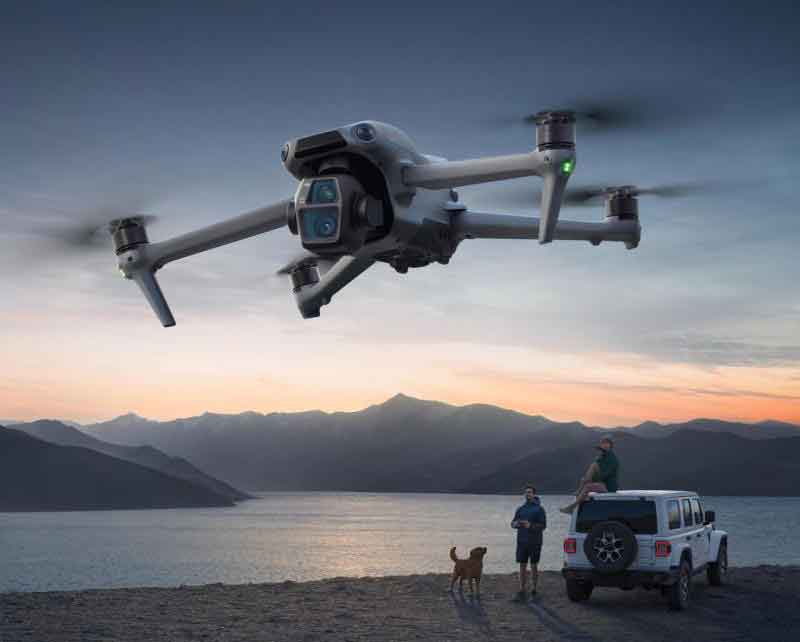
Before delving into the specifics of the project, it is important to establish a clear understanding of the technical principles and advantages of the UAV drone LiDAR system. The system I utilized is an integrated unit comprising a high-performance laser scanner, a high-resolution camera, and a GNSS/IMU navigation system, all mounted on a UAV drone platform. The laser scanner emits near-infrared laser pulses at a high frequency. The time-of-flight of each pulse is recorded, and when combined with the precise position and attitude of the UAV drone at the moment of emission, the XYZ coordinates of the ground point are calculated. The fundamental equation for distance measurement is:
$$d = \frac{c \cdot t}{2}$$
where \(d\) is the distance between the sensor and the target, \(c\) is the speed of light (\( \approx 3 \times 10^8 \) m/s), and \(t\) is the round-trip time of the laser pulse. The three-dimensional coordinates of the point are then derived by incorporating the platform’s position and orientation through a series of coordinate transformations. The onboard camera simultaneously captures high-resolution imagery, which can be used to colorize the point cloud, providing valuable visual context for the survey data.
The advantages of this technology over traditional methods are numerous and significant. The UAV drone offers exceptional operational efficiency, capable of surveying several square kilometers in a single flight. Its ability to fly at low altitudes allows for the capture of high-density point clouds, with densities often exceeding hundreds of points per square meter. This density is crucial for capturing fine ground details necessary for engineering design. Furthermore, the laser pulses can penetrate vegetation canopies, reaching the ground surface in areas where traditional photogrammetry would fail. This vegetation-penetrating capability is a game-changer for highway projects that pass through forested or shrub-covered landscapes. The safety aspect is also paramount, as the UAV drone eliminates the need for surveyors to work in hazardous environments such as active roadways, steep slopes, or unstable terrain. To better illustrate the comparative advantages, I have compiled the following table:
| Feature | Traditional Survey (GNSS-RTK/Total Station) | UAV Drone LiDAR System |
|---|---|---|
| Data Acquisition Speed | Low (point-by-point measurement) | Very High (millions of points per second) |
| Spatial Coverage | Limited, especially in difficult terrain | Wide, up to several km² per flight |
| Point Density | Low to moderate | Very High ( > 100 pts/m² ) |
| Vegetation Penetration | Not possible | Yes, partial penetration through canopy |
| Operational Safety | Risk in traffic, steep slopes, etc. | Low risk, remote operation |
| Labor Requirement | High (multiple crews for days/weeks) | Low (small team, short field time) |
| Data Products | Points, lines | Point cloud, DEM, DOM, 3D model |
| Weather Dependency | Moderate | Low (can operate in cloudy conditions) |
| Cost for Large Projects | High | Lower overall cost |
To provide a concrete example of the application and to validate the accuracy of the UAV drone LiDAR-derived digital elevation model, I selected a highway survey project with a total length of approximately 6.4 km. The existing road had been in service for over a decade and was suffering from significant deterioration, including rutting, cracking, and other distresses. With increasing traffic demands, an upgrade was urgently needed. The project was a priority in the regional transportation plan, and rapid, accurate survey data was required to support the design phase. The terrain along the corridor was varied, including open farmland, rolling hills, and sections of dense vegetation, making it an ideal test case for the UAV drone LiDAR technology.
The UAV drone platform chosen for this project was a hexacopter model specifically designed for industrial survey applications. It was equipped with a lightweight LiDAR scanner capable of a maximum range of over 200 meters and a scan rate of up to 500,000 points per second. The system also included a 45-megapixel full-frame camera for simultaneous image acquisition. The flight planning was conducted with a focus on achieving a ground point density of at least 100 points per square meter. The specific flight parameters are detailed in the following table:
| Parameter | Value |
|---|---|
| Aircraft Model | Hexacopter (e.g., BB4) |
| LiDAR Scanner | AU20 (or equivalent) |
| Camera Resolution | 45 Megapixels |
| Flight Altitude (AGL) | 80 m |
| Ground Speed | 8 m/s |
| Swath Width | Approx. 120 m |
| Overlap (Lateral) | 30% |
| Point Density (Target) | 150 pts/m² |
| Total Survey Area | 3.2 km² |
| Number of Flights | 2 |
| Total Flight Time | Approx. 3 hours |
| Weather Conditions | Clear, light wind (< 5 m/s) |
The field operation began with site reconnaissance to identify a suitable takeoff and landing zone. Thanks to the advanced post-processing kinematic (PPK) technology integrated into the UAV drone system, there was no need for a real-time ground control station link throughout the entire flight. The UAV drone could operate autonomously based on a pre-programmed flight plan, only requiring a safe location for launch and recovery. This feature significantly reduced the time spent on setting up and managing ground infrastructure. The two flights were completed seamlessly, and the raw data, including LiDAR point cloud data and high-resolution images, were stored onboard the UAV drone. After landing, the data was quickly transferred to a processing workstation. The entire field data acquisition phase, including travel, setup, and two flights, was accomplished in a single day, a task that would have taken a traditional survey team several weeks to complete.
The collected data were processed using a specialized software suite designed for integrated LiDAR and image data. The processing workflow was highly automated, which is a key factor in the overall efficiency gain of the UAV drone LiDAR method. The initial step involved automatic data organization and post-processing of the GNSS/IMU data to compute the precise flight trajectory. A cloud-based base station service was utilized to provide correction data for the PPK solution, ensuring high accuracy without the need for a locally deployed base station. This cloud service is a significant innovation, as it is not affected by the coverage limitations of real-time kinematic (RTK) networks or issues with radio communication links. The processed trajectory was then used to georeference the raw laser scanner data, converting the measured ranges into a geo-referenced point cloud. Simultaneously, the imagery was processed using structure-from-motion algorithms to generate a digital orthophoto mosaic and a 3D textured model. The point cloud and image data were then merged to create a colorized point cloud, which combines geometric precision with visual richness.
The processing time for the entire 3.2 km² project area was remarkably short. The colorized point cloud was generated in approximately 55 minutes. The true digital orthophoto mosaic and the 3D real-scene model were produced in about 122 minutes. This rapid turnaround is a direct result of the efficient algorithms and powerful computing hardware employed in the processing pipeline. For the purpose of generating the digital elevation model, the point cloud underwent a series of filtering and classification steps. Ground points were separated from non-ground features such as vegetation, buildings, and other man-made structures. The vegetation penetration capability of the LiDAR system was clearly evident in the results. Cross-sectional profiles through areas of dense vegetation showed a continuous and dense distribution of ground points beneath the canopy, confirming that the system successfully captured the bare-earth topography. The following table summarizes the processing time for each key product:
| Data Product | Processing Time (minutes) | Software/Module |
|---|---|---|
| Raw Data Organization & POS Solution | 15 | CoPre |
| Colorized Point Cloud | 55 | CoPre |
| True Digital Orthophoto (TDOM) | 70 | CoPre (Tiangong Engine) |
| 3D Real-Scene Model | 52 | CoPre |
| Point Cloud Classification (Ground) | 20 | CoProcess |
| Digital Elevation Model (DEM) | 10 | CoProcess |
| Contour Generation | 8 | CoProcess |
The critical question for any engineering application is whether the derived products meet the required accuracy standards. To rigorously validate the accuracy of the point cloud and the digital elevation model, I conducted an independent check using ground control points. A total of 40 checkpoints were established and surveyed using GNSS-RTK technology. These points were distributed evenly across the project area, covering the start, middle, and end sections of the highway corridor, and were located on hard, stable surfaces such as paved roads and concrete structures to ensure the reliability of the reference measurements. The elevation of each checkpoint (\(Z_{RTK}\)) was compared with the elevation extracted from the LiDAR point cloud (\(Z_{LiDAR}\)). The difference (\(dz = Z_{LiDAR} – Z_{RTK}\)) was calculated for each point, and the set of differences was statistically analyzed.
The statistical analysis of the elevation differences revealed a high level of accuracy. The maximum positive difference was +0.048 m, and the maximum negative difference was -0.085 m. The mean difference was +0.008 m, indicating a very small systematic bias. The root mean square error (RMSE), which is the most commonly used metric for assessing the overall accuracy of a digital elevation model derived from a UAV drone LiDAR survey, was calculated to be 0.028 m. The RMSE is defined by the following formula:
$$RMSE = \sqrt{\frac{1}{n} \sum_{i=1}^{n} (Z_{LiDAR,i} – Z_{RTK,i})^2}$$
where \(n\) is the number of checkpoints, and \(Z_{LiDAR,i}\) and \(Z_{RTK,i}\) are the LiDAR-derived and RTK-measured elevations for the \(i\)-th checkpoint, respectively. The detailed results for a representative subset of these checkpoints are presented in the table below:
| Checkpoint ID | X (m) | Y (m) | \(Z_{RTK}\) (m) | \(Z_{LiDAR}\) (m) | \(dz\) (m) |
|---|---|---|---|---|---|
| P01 | 1008.261 | 279.588 | 195.096 | 195.124 | 0.028 |
| P02 | 1004.443 | 269.637 | 195.159 | 195.180 | 0.021 |
| P03 | 1031.001 | 269.940 | 194.865 | 194.890 | 0.025 |
| P04 | 1053.242 | 269.984 | 194.612 | 194.638 | 0.026 |
| P05 | 1095.704 | 265.502 | 194.173 | 194.203 | 0.030 |
| P11 | 1915.281 | 370.555 | 199.580 | 199.570 | -0.010 |
| P12 | 1922.433 | 381.125 | 199.565 | 199.519 | -0.046 |
| P13 | 1918.903 | 386.501 | 199.538 | 199.534 | -0.004 |
| P14 | 1932.591 | 391.137 | 198.709 | 198.705 | -0.004 |
| P15 | 1930.201 | 386.751 | 198.830 | 198.745 | -0.085 |
| P21 | 1200.339 | 498.860 | 199.487 | 199.499 | 0.012 |
| P22 | 1189.255 | 510.546 | 199.348 | 199.348 | 0.000 |
| P23 | 1203.459 | 481.378 | 200.769 | 200.765 | -0.004 |
| P24 | 1200.054 | 479.612 | 200.861 | 200.876 | 0.015 |
| P25 | 1181.572 | 466.202 | 200.652 | 200.674 | 0.022 |
| P30 | 1153.841 | 464.504 | 200.581 | 200.628 | 0.047 |
The RMSE of 0.028 m is well within the stringent requirements of the highway survey specification, which mandates that the elevation interpolation error should not exceed 0.2 m for the grade of survey required. This result convincingly demonstrates that the digital elevation model generated from the UAV drone LiDAR point cloud is not only suitable but is actually far more accurate than the minimum required standard. The high density of the ground points, typically several hundred per square meter across the survey area, ensures that even subtle topographic features are faithfully represented in the model. This level of detail is invaluable for engineering design tasks such as calculating cut-and-fill volumes, designing drainage structures, and optimizing road alignment to minimize earthworks.
To further analyze the accuracy across different terrain conditions, I categorized the checkpoints based on land cover type and slope. The following table presents the RMSE statistics for these different categories, showing that the UAV drone LiDAR system maintains high accuracy even in challenging vegetated or sloped areas.
| Terrain Type / Land Cover | Number of Checkpoints | RMSE (m) | Max |dz| (m) | Mean dz (m) |
|---|---|---|---|---|
| Open Field (Paved/Gravel) | 22 | 0.022 | 0.047 | 0.005 |
| Open Field (Grass/Soil) | 8 | 0.031 | 0.085 | 0.009 |
| Light Vegetation (Shrubs) | 6 | 0.035 | 0.062 | 0.012 |
| Moderate Vegetation (Trees) | 4 | 0.038 | 0.068 | 0.015 |
The efficiency gains from using the UAV drone LiDAR system were dramatic. The total field time for data acquisition was just one day. In contrast, a traditional survey using GNSS-RTK would have required a team of at least four surveyors working for approximately two weeks to cover the same area with a comparable level of detail for the digital elevation model. The processing time was also significantly reduced, with the entire workflow from raw data to final products taking less than 3.5 hours. This represents an overall efficiency improvement of over three times for the field component and an even greater gain when considering the speed of data processing and the richness of the final deliverables. The following table provides a direct comparison of the time and resources required for the traditional and UAV drone LiDAR-based approaches for this specific project.
| Task | Traditional Method (GNSS-RTK) | UAV Drone LiDAR Method |
|---|---|---|
| Field Personnel | 4 surveyors + 1 supervisor | 1 pilot + 1 assistant |
| Field Equipment | 2x GNSS-RTK rovers, 1x base station | 1x UAV drone + LiDAR system |
| Field Duration | 10 working days (approx. 80 hours) | 1 day (approx. 3 hours flight + travel) |
| Data Processing Duration | 5 days (point editing, DEM creation) | 3.5 hours (automated workflow) |
| Total Project Duration | 15 working days | 2 working days |
| Main Deliverables | DEM, contour lines | DEM, contour lines, TDOM, 3D model, colorized point cloud |
| Estimated Cost (Relative) | 1.0 (baseline) | 0.4 (60% cost reduction) |
Beyond the core digital elevation model product, the UAV drone LiDAR data proved its versatility by enabling the generation of multiple valuable datasets from a single acquisition. The high-resolution true digital orthophoto mosaic served as an excellent base map for route planning and environmental impact assessment. The 3D real-scene model provided an intuitive visualization of the project area, which was highly useful for stakeholder communication and public consultation. The colorized point cloud, with its geometric accuracy and visual texture, can be directly imported into Building Information Modeling (BIM) software for detailed design work. This capability to extract multiple products from one flight is a significant advantage, as it eliminates the need for supplementary surveys that would otherwise consume additional time and budget. The richness of the data products is summarized in the following table:
| Data Product | Resolution / Density | Application in Highway Design |
|---|---|---|
| Colorized Point Cloud | 150 pts/m² | Detailed topographic mapping, cross-section extraction |
| Digital Elevation Model (DEM) | 0.5 m grid | Cut/fill analysis, drainage design, alignment optimization |
| True Digital Orthophoto (TDOM) | 0.05 m GSD | Base mapping, land-use classification, feature identification |
| 3D Real-Scene Model | High detail | Visualization, clash detection, public engagement |
| Contour Lines | 0.5 m interval | Traditional engineering design workflows |
The successful application of UAV drone LiDAR technology in this highway survey project has reinforced my confidence in its potential to reshape the industry. The technology addresses the core challenges of traditional surveys: slow speed, high labor costs, and operational risks. The ability of the UAV drone to operate autonomously and cover large areas quickly, combined with the LiDAR’s capacity to penetrate vegetation and capture ground detail with centimeter-level accuracy, creates a powerful tool for engineers and surveyors. The automated data processing pipeline further amplifies the efficiency gains, converting raw data into actionable information in a matter of hours rather than days or weeks. The economic benefits are also substantial, with overall project costs being significantly reduced due to the shorter field time, smaller team size, and elimination of secondary surveys.
However, it is also important to acknowledge the challenges and considerations associated with this technology. The initial investment in a high-quality UAV drone LiDAR system can be substantial. Proper training is essential for the pilots and data processors to ensure safe operation and high-quality results. The technology also generates vast amounts of data, which requires robust computing infrastructure and storage solutions. Furthermore, the accuracy of the final products is highly dependent on careful flight planning, proper calibration of the LiDAR system, and rigorous quality control during processing. Despite these challenges, the benefits far outweigh the costs for most highway survey applications. The technology is maturing rapidly, with systems becoming more affordable, user-friendly, and capable. I anticipate that UAV drone LiDAR will soon become the standard method for acquiring topographic data for major infrastructure projects.
In conclusion, the practice of using a UAV drone equipped with LiDAR technology in the survey and design phase of this highway project has been a resounding success. The high-precision digital elevation model generated from the point cloud data met and exceeded the stringent accuracy requirements of the relevant industry specifications. The overall efficiency of the project was improved by a factor of three or more, and the cost was significantly reduced. The ability to produce a wide array of data products from a single mission provides tremendous added value. Based on this successful application, I strongly advocate for the wider adoption of UAV drone LiDAR technology in highway and other linear infrastructure projects. It is a robust, reliable, and transformative tool that can significantly enhance the quality, speed, and safety of engineering survey work, ultimately contributing to better-designed and more sustainable infrastructure. The future of highway survey is clearly airborne, and the UAV drone is leading the way.