
In the context of economic globalization, drones have become a critical battleground for competition among nations worldwide. General Secretary Xi Jinping has emphasized the need to strengthen aviation emergency response capabilities. In recent years, various departments have intensified research and application of drone technology. In practical work, the role of drones has become increasingly prominent: they can replace traditional inspection methods for automated patrols, promptly identify problems, respond rapidly to emergencies, and assist leadership decision-making. With the advancement of communication network technology, the integration of drones with communication networks will deepen further. Based on the actual requirements of drone emergency communication systems, this paper explores application scenarios of the drone hangar in emergency communications, analyzes key technologies required for its deployment, and aims to contribute to the development of drone hangars.
Research Status
According to the “14th Five-Year Plan for General Aviation Development” and the “Interim Regulations on the Flight Management of Unmanned Aircraft,” the management of drones in China is gradually becoming standardized, institutionalized, and scientific. The “2024–2029 China Drone Industry Investment Planning and Prospect Forecast Report” indicates that by the end of 2022, the scale of China’s drone market was approximately 106.5 billion yuan, with the civilian drone market at about 97.9 billion yuan and the military drone market at about 8.6 billion yuan. In 2022, the number of registered drones in China reached 958,000. By the end of 2022, the entire industry had 700,000 registered drone owners, including 639,000 individual users and 61,000 corporate, institutional, and government users. By the end of 2022, the number of valid pilot licenses for drones was 152,800. In 2022, the total flight hours of drones reached 20.67 million hours, a year-on-year increase of 6.17%. Internationally, competition is fierce, with the United States and Russia strengthening drone research. How to expand and strengthen the drone industry has attracted widespread attention from scholars both domestically and abroad. Drone technology is a new key to smart city development, and more researchers are shifting their focus to drone applications.
| Year | Market Size (Billion CNY) | Registered Drones (Thousand) | Flight Hours (Million) |
|---|---|---|---|
| 2019 | 68.5 | 395 | 12.1 |
| 2020 | 81.2 | 517 | 14.8 |
| 2021 | 92.3 | 740 | 19.5 |
| 2022 | 106.5 | 958 | 20.7 |
Drone Hangar Research
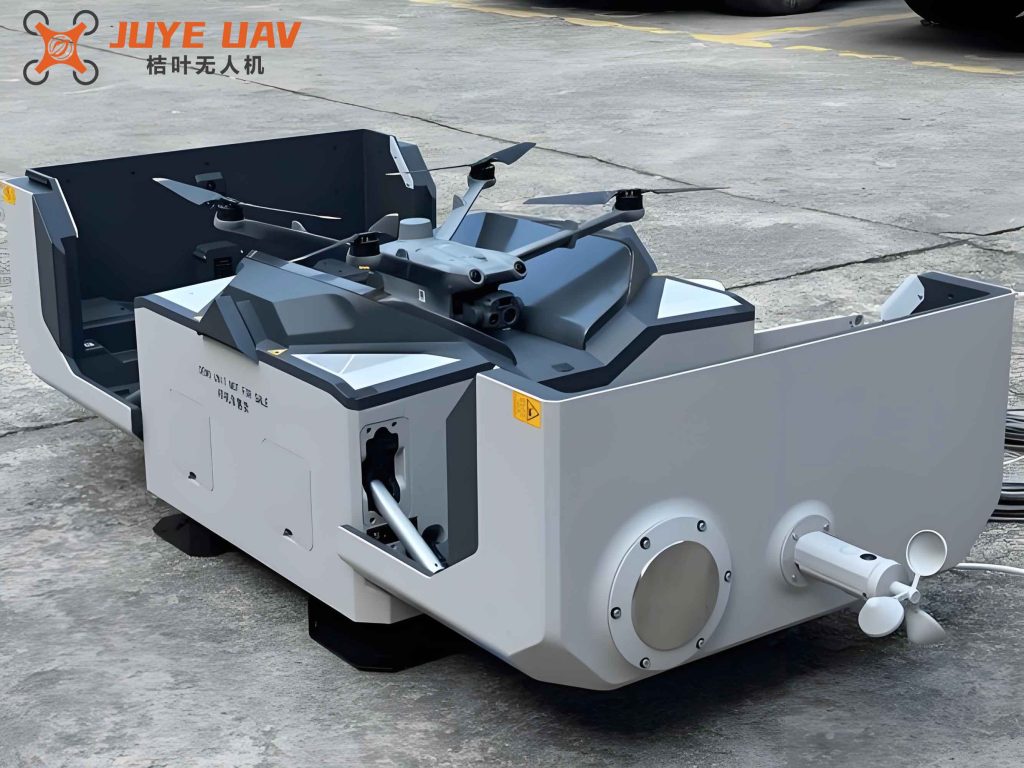
The drone hangar, also known as an automated drone ground infrastructure, is a crucial component for achieving fully autonomous drone operations. It provides functions such as automatic storage, automatic charging/battery swapping, remote communication, data storage, and intelligent analysis. Relying on the full automation of the drone hangar, drones can take off and land autonomously, swap batteries without human intervention, effectively replacing manual on-site drone operations, improving operational efficiency, and completely realizing fully automatic drone missions. Therefore, drone technology has become a research hotspot for enterprises and scholars both domestically and internationally. Research on drones is mainly divided into two aspects: theoretical research and applied research. Theoretically, American Robotics launched the first SCOUTASE drone hangar abroad. In 2020, Japan and South Korea jointly researched the LGUplus drone hangar and automated drone control system. Scholar Fan Bangkui, in his paper “Development and Application of Drones,” proposed that drones act as a “new force” in air transport, a “clever assistant” in agriculture and forestry, and a “good partner” in social services. In “Six Development Directions of Drones,” he envisioned that the essence of development is “a data-driven air mobile intelligent agent in a network environment.” In applied research, DJI launched the “DJI Dock” product; Beijing YunSheng Intelligent Technology Co., Ltd. introduced the “Tiger Cave” fixed/mobile fully automatic drone hangar paired with the “Tiger Whale” industrial drone; and Beehive Aerospace Technology Co., Ltd. produced a series of automatic drone hangars compatible with their multi-rotor and compound-wing drones.
Integration of Drone Hangar with Communication and Other Industries
A search on CNKI using the keywords “drone” and “communication” yielded 384 related papers as of November 2023. Research on drones and communication is concentrated in the communication field. Through literature review, it is found that both drone hangars and communication are hot topics in current research, and the intersection of the two is relatively rich, but micro-level studies are lacking. By modularizing the advantages and features of the drone hangar and establishing connections with new communication development trends, we can map the advantages of the drone hangar to development sectors and propose suggestions to promote high-quality communication development from a micro perspective.
Deployed outdoors near drone operation areas, the drone hangar reduces the need for manual field operations and internally stores professionally adapted drones. When performing flight missions, the drone autonomously takes off from the hangar; upon return, it automatically lands inside the hangar. Operators can remotely monitor and command the process. After completing tasks, the hangar automatically charges or swaps the drone’s battery, preparing it for the next mission.
First, the drone hangar promotes the development of the communication industry, injecting vitality into the communication economy. Second, drone technology brings new development ideas to video conferencing, attracting traditional video conferencing to join the drone development ranks. Finally, drone technology provides technological innovation in related work, improving work efficiency and building an efficient digital economic development environment.
Deep Integration of Drone Hangar with Communication and Other Industries
Facing problems such as poor emergency response capability and low information acquisition and utilization rates, new technological means are needed to rebuild confidence and leverage the advantages of drones to compensate for weaknesses. The drone hangar possesses highly reliable adaptability to complex environments, with capabilities such as high temperature resistance, rain protection, dust resistance, freeze resistance, and anti-theft, meeting the needs of various users in different outdoor settings.
1. Integration of Drone Hangar Technology with the Communication Industry. Taking communication as an example, the traceability feature in drone technology can well standardize communication business processes. When problems arise, specific links can be easily identified and corrected. For instance, in communication base stations, drones can achieve wider-range data transmission and more flexible layout of base stations. Since the deployment of communication base stations requires significant time and resources and must consider various factors such as terrain, population distribution, and surrounding environment, drones can serve as an effective supplementary means. Furthermore, drones can conveniently adjust and configure communication base stations under various climates and terrains, greatly improving communication network coverage and efficiency. Drones can also be equipped with specialized devices to intercept and interfere with communication signals, protecting communication security. In addition, signal interference devices carried by drones can analyze and crack communication signals, providing strong protection for communication security.
2. Integration of Drone Hangar Technology with Emergency Rescue. Taking emergency rescue as an example, with continuous technological innovation, drones play an increasingly important role in rescue missions. In natural disasters, man-made disasters, and other emergency rescue scenarios, drones offer advantages such as rapid response, high efficiency, high precision, and low cost. First, natural disaster rescue is an important application scenario for drones. When earthquakes, landslides, floods, and other natural disasters occur, drones can provide timely aerial monitoring and image transmission, helping rescue personnel quickly understand the situation and guide rescue operations. Second, man-made disaster rescue, such as fires and explosion accidents, is another important scenario. Drones can perform aerial monitoring in dangerous areas to prevent secondary disasters. Moreover, drones equipped with optical and infrared cameras can accurately locate and identify disaster situations from the outside. Finally, other emergency rescue scenarios, such as forest fire control, also benefit from drone capabilities. In summary, the application scenarios of drones in rescue missions are extensive and can meet various emergency rescue needs.
3. Integration of Drone Hangar Technology with Party Office Work. The drone hangar provides a basis for leadership decision-making. Through drone video links, real-time images of emergency rescues, forest fires, natural disasters, and other scenes can be transmitted to leaders, assisting them in making decisions. Drones also provide a source for archival materials. Aerial photography can solve the problem of outdated archival data, as technicians can depart at any time, shoot immediately, and complete the task quickly. Drones inject vitality into the “three offices” of party work: more diverse meeting formats, more flexible working methods, and more standardized document management. Through continuous drone testing and exercises, technology can better serve business needs.
Specific Application Scenarios of Drone Hangar in Periodic Inspections
With the development of modern communication technology, drone technology has been widely applied in communication and other scenarios. As an autonomous flying vehicle, drones can achieve high-altitude reconnaissance, logistics delivery, and provide more advanced data transmission technology for the communication industry. After installation, the drone hangar can adapt to multiple application scenarios and conduct comprehensive periodic inspections.
| Aspect | Traditional Inspection | Drone Hangar Inspection |
|---|---|---|
| Efficiency | Low (manual patrol) | High (automated flight) |
| Safety | Risk of accidents | Reduced human exposure |
| Cost | High labor and equipment | Lower long-term operational cost |
| Data Accuracy | Subjective | High-precision sensors |
| Coverage | Limited by terrain | Wide area, any terrain |
Pipeline Inspection: Traditional pipeline inspection requires substantial manpower and resources, with low efficiency and safety risks. The drone hangar-based intelligent inspection system, by carrying high-definition cameras and radar technology, can accurately detect pipeline damage, leaks, and quickly locate hazards, enabling timely countermeasures, greatly improving pipeline inspection efficiency and safety. Using RTK positioning mode, remote control of the drone hangar for automated inspection flights over power towers, high-voltage transmission lines, and other power facilities for detailed, routine inspections. For example, using a drone hangar with a portable control box to inspect natural gas pipelines and valve wells along mountain roads for gas leaks and security.
Base Station Inspection: Drone line inspections help check the status of communication towers, base stations, antennas, etc., promptly identifying and resolving issues to ensure stable network operation.
Environmental and Water Affairs Inspection: Using drone hangars with automated drone systems to perform remote fully automated inspection flights over drinking water source reservoirs, conducting routine inspections of water quality and security.
River Patrol: Traditional river patrol methods cannot cover vast water areas and are poor at detecting minor hazards. The drone hangar intelligent inspection system can quickly grasp river conditions through high-altitude aerial photography and aquatic biological monitoring, promptly detecting riverbed changes, water pollution, etc., providing comprehensive data support for water management personnel, improving patrol efficiency and comprehensiveness.
Security Patrol: The drone hangar intelligent inspection system provides remote, three-dimensional monitoring services in security patrols. Drones, through high-altitude flight and image recognition technology, can achieve full monitoring of key areas and weak links, promptly detecting anomalies, helping to prevent security risks, and greatly improving the effectiveness of security patrols. For example, routine inspections of streets, communities, roads, rivers, illegal buildings, and unlicensed vending activities.
Traffic Patrol: The drone hangar intelligent inspection system also plays an important role in traffic patrol. Using image recognition technology, drones in high-altitude patrols can accurately identify vehicles and people, monitor road traffic conditions, traffic accidents in real time, issue alerts, and assist traffic police in clearing roads, ensuring road traffic safety and smoothness. Rapid response to police situations, routine inspections of key streets, commercial plazas, municipal institutions, and accident-prone sections.
Environmental Monitoring: The drone hangar intelligent inspection system, equipped with high-definition cameras, high-precision sensors, and gas monitoring devices, achieves remote monitoring, positioning, and environmental data collection. With the support of the system, drones can more accurately and timely monitor and analyze environmental indicators such as air and water quality, assisting government and enterprises in making effective environmental decisions and promoting sustainable ecological development.
Power Inspection: Traditional power inspection is constrained by complex topography and long lines, resulting in low efficiency. The drone hangar intelligent inspection system, through autonomous navigation, high-definition cameras, and infrared thermal imaging, can achieve high-altitude aerial photography, nighttime monitoring, precise positioning, and real-time data transmission, effectively overcoming the limitations of manual power inspection, greatly improving efficiency and accuracy. Using base station positioning mode, automated inspection flights over power towers, high-voltage transmission lines, and secondary distribution lines.
New Energy Photovoltaic Inspection: Using drones equipped with thermal imaging payloads and drone hangars to perform fully automated routine patrols over dense photovoltaic panels on hills and mountaintops, detecting abnormal heat signatures and improving maintenance efficiency for photovoltaic components.
The drone hangar intelligent inspection system has become an important tool for inspection operations across various industries, signifying the advent of an efficient, safe, and smart inspection era. Currently, the system has brought efficient and safe drone inspection solutions to industries such as power, public security, water resources, and maritime. It is believed that in the future, the system will have even broader application scenarios.
Problems and Challenges of Drone Hangar Deployment
Despite the numerous advantages, the drone hangar faces several challenges in practical deployment and operation.
| Problem | Description |
|---|---|
| High Installation and Operation Cost | The installation environment is constrained by flat concrete foundation, power supply, network, surrounding obstacles, and weather. Drones are vulnerable during takeoff and landing due to low rotor speed; rain affects landing and camera lens; fog reduces visibility. Continuous network, electricity, and maintenance costs are substantial. |
| Heavy Maintenance Burden | Mechanical jams in the hangar’s internal mechanisms (e.g., robotic arm, battery insertion) require quick diagnosis of sensor or driver errors. Regular inspections and fine-grained management are essential to avoid latent issues. |
The cost of operation can be modeled as:
$$ C_{total} = C_{installation} + C_{power} + C_{network} + C_{maintenance} + C_{personnel} $$
where each term contributes significantly. For a typical drone hangar, the annual operational cost may exceed 100,000 CNY, making it prohibitive for small-scale users.
Moreover, the failure rate of electromechanical components in harsh outdoor environments can be expressed as:
$$ \lambda(t) = \lambda_0 \cdot e^{\alpha T} \cdot \beta_H $$
with \(\lambda_0\) the base failure rate, \(\alpha\) the temperature coefficient, \(T\) ambient temperature, and \(\beta_H\) humidity factor. This highlights the need for robust design and regular preventive maintenance.
Suggestions for High-Quality Development of Drone Hangar Industry
Based on the analysis, the following suggestions are proposed to ensure the drone hangar technology effectively serves communication and other industries, avoiding “maladaptation.”
| Area | Specific Measures |
|---|---|
| Rational Publicity & Science Education | Conduct targeted training and lectures to improve public understanding of drone hangar technology and prevent image projects. |
| Scenario Matching | Tailor drone hangar applications to specific industry needs through repeated testing and pilot projects, leveraging successful cases as benchmarks. |
| Supporting Hardware & Software | Build a secure, high-speed network infrastructure and balance hardware/software resources to avoid waste. |
| Policy Support & Talent Development | Strengthen legal protection for technological achievements, reward innovators, and establish talent cultivation programs. |
| Industry-Academia Collaboration | Promote university-enterprise cooperation, set up research projects, organize competitions, and facilitate reciprocal learning between students and industry professionals. |
The return on investment (ROI) for a drone hangar deployment can be estimated as:
$$ ROI = \frac{S_{labor} + S_{error\_reduction} + S_{timeliness} – C_{total}}{C_{total}} $$
where \(S_{labor}\) is the saved labor cost, \(S_{error\_reduction}\) is the benefit from reduced inspection errors, and \(S_{timeliness}\) is the value of timely data. For many applications, especially in power and pipeline inspection, ROI can exceed 200% over a three-year period.
Conclusion
This paper has clarified the connections between the drone hangar and communication as well as other industries. Starting from the macroscopic background of drone technology and modularizing the advantages of the drone hangar, we analyzed the intrinsic relationships and identified the problems and considerations during development. On this basis, we summarized and proposed targeted suggestions for promoting high-quality drone hangar development, providing ideas for how the drone hangar can more effectively integrate with business workflows across various sectors. The drone hangar represents a transformative platform that, when properly deployed and maintained, can significantly enhance operational efficiency, safety, and data-driven decision-making in a wide range of industries, from communication and emergency rescue to environmental monitoring and infrastructure inspection. As technology matures and costs decrease, the drone hangar will undoubtedly become an indispensable component of the smart infrastructure of the future.