
In the wake of the post-9/11 era, the global counter-terrorism landscape has witnessed an alarming evolution in the modus operandi of terrorist organizations. The rapid proliferation of unmanned aerial vehicles (UAVs), commonly known as drones, has introduced a dual-use technology that, while offering immense societal benefits, also presents unprecedented opportunities for terrorist exploitation. As a researcher deeply engaged in the study of drone regulation and its intersection with national security, I have observed that existing legal, supervisory, and technical frameworks are insufficient to address the emerging threats. This article synthesizes the current challenges and proposes a multi-dimensional strategy to mitigate the risk of drone-enabled terrorism through enhanced drone regulation.
The core argument is that drone regulation must evolve from a fragmented approach into a cohesive, technologically adaptive system that integrates legal rigor, institutional accountability, public awareness, and advanced countermeasures. Without such a transformation, the potential for catastrophic attacks using commercially available drones will continue to escalate.
I. The Spectrum of Drone-Related Terrorism Risks
Drones, particularly those in the civilian category, have become increasingly accessible, affordable, and capable. Their small size, maneuverability, and ability to carry payloads make them ideal tools for terrorist activities. Based on documented incidents and threat assessments, I categorize the risks into four primary domains as shown in Table 1.
| Risk Category | Description | Examples | Potential Consequences |
|---|---|---|---|
| Political Disruption | Using drones to display provocative symbols or messages during high-profile events to incite international or ethnic tensions. | 2014 Serbia-Albania soccer match drone incident | Diplomatic crises, social unrest, escalation of conflicts |
| Targeted Attacks on Critical Infrastructure | Deploying drones armed with explosives, biological agents, or chemical substances against government buildings, power plants, or airports. | 2015 White House drone crash; 2018 Venezuela presidential assassination attempt; ISIS drone bombings in Iraq and Syria | Mass casualties, economic losses, national security breaches |
| Airspace Violations & Public Panic | Unauthorized drone flights near airports causing flight disruptions or near-miss collisions with commercial aircraft. | 2017 multiple airport disruptions in China caused by “black flights” | Aviation accidents, passenger panic, huge financial losses for airlines |
| Technologically Enhanced Attrocities | Integration of AI, facial recognition, swarm technology, or precision guidance to transform drones into autonomous assassination platforms. | Conceptual “killer bee” drones demonstrated by Stuart Russell; potential adaptation by terrorist groups | Unprecedented precision in targeted killing; widening asymmetry in conflict |
The diversity of these risks underscores the urgency of robust drone regulation. Terrorists are adept at exploiting regulatory gaps, and the rapid pace of technological innovation—such as miniaturization, extended battery life, and stealth modifications—further compounds the challenge. A mathematical model can help quantify the risk exposure of a given target. Let us define the overall risk R as a function of threat probability P, vulnerability V, and consequence C:
$$
R = P \times V \times C
$$
Where:
- P = Probability of a drone attack in a given period (e.g., annual likelihood based on historical data and intelligence).
- V = Vulnerability index (0 to 1) representing the target’s susceptibility to drone intrusion, considering existing countermeasures.
- C = Expected consequences (in monetary terms, casualties, or a composite score).
To operationalize this, we can further decompose V into sub-factors such as detection capability D, interception effectiveness I, and regulatory compliance L:
$$
V = \frac{1}{D + I + L}
$$
This formulation highlights that improving drone regulation (L) directly reduces vulnerability, thereby lowering the overall risk. The integration of such quantitative models into policy design is essential for prioritizing resource allocation.
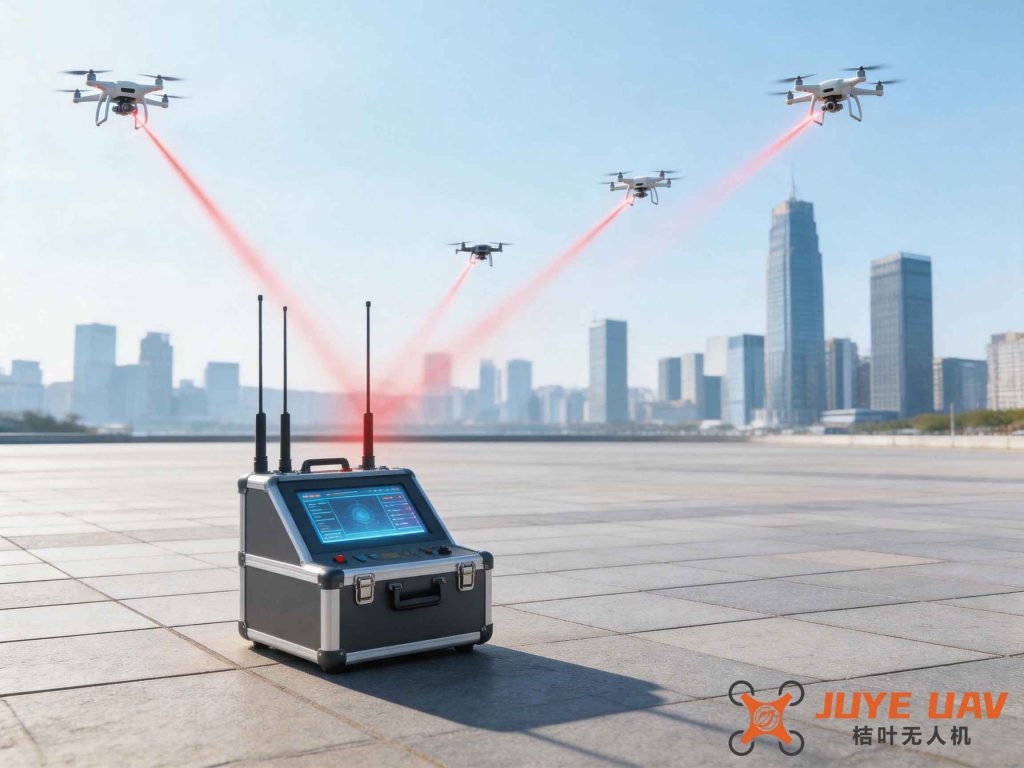
The above image illustrates the complex ecosystem of drone regulation, encompassing legal, technical, and institutional pillars—a visual reminder that effective governance requires synergy across all domains.
II. Deficiencies in China’s Current Drone Regulation System
Despite recent policy efforts, China’s drone regulation framework remains inadequate for counter-terrorism purposes. Based on my analysis of existing literature and field observations, I identify five critical deficiencies, summarized in Table 2.
| Deficiency | Specific Issue | Impact |
|---|---|---|
| 1. Insufficient Legal Specificity | Existing laws (e.g., Counter-Terrorism Law, Civil Aviation Law) lack explicit provisions for drone-related offenses and penalties. The 2017 draft amendment to the Public Security Administration Punishments Law remains unenacted. | Law enforcement lacks clear statutory basis to prosecute drone “black flights” unless significant harm occurs; deterrence is weak. |
| 2. Fragmented Supervisory Authority | Multiple agencies (civil aviation, military, public security, transportation) share oversight with unclear division of responsibilities. The Shenzhen integrated supervision platform (2018) is a pilot but not widely replicated. | Delayed response, jurisdictional disputes, and inconsistent enforcement across regions. |
| 3. Low Detection and Tracking Capability | No nationwide real-time drone tracking system; most counter-drone equipment is costly and not deployed at critical infrastructure. Terrorists can easily modify drones to evade GPS-based no-fly zones. | Attacks often go undetected until after impact; perpetrators escape identification. |
| 4. Inadequate Penalties and Deterrence | Penalties for unauthorized drone flights are typically minor (e.g., warnings, small fines, short detentions). The 2015 Beijing “black flight” case resulted in only suspended sentences despite serious risk. | Low cost of non-compliance encourages repeat offenses and emboldens malicious actors. |
| 5. Weak Security Awareness at Key Targets | Many critical infrastructure units (e.g., power stations, government buildings, airports) have perfunctory anti-drone plans with outdated equipment and untrained personnel. | Psychological vulnerability; physical defenses are easily bypassed. |
The cumulative effect of these deficiencies can be represented by a “regulatory gap index” G:
$$
G = \sqrt{\frac{\sum_{i=1}^{n} w_i (1 – x_i)^2}{n}}
$$
Where x_i ∈ [0,1] is the compliance score for each dimension (legal, supervisory, technical, penal, awareness), and w_i are weights. A higher G indicates weaker overall drone regulation. Current estimates suggest China’s G value exceeds 0.6, signaling a high risk environment that demands urgent reform.
III. Strategic Framework for Strengthened Drone Regulation
To address these gaps, I propose a four-pillar strategy that integrates legal reform, institutional consolidation, public-private collaboration, and technological innovation. Each pillar is described below with corresponding metrics and implementation guidelines (Table 3).
| Pillar | Key Actions | Expected Outcomes | Performance Indicators |
|---|---|---|---|
| 1. Legal Revamp | Enact a dedicated “Drone Safety Law” covering registration, airspace classification, payload restrictions, and criminal penalties for terrorism-related use. Amend the Counter-Terrorism Law to explicitly list drones as potential weapons. | Clear legal deterrence; enabling prosecution of pre-attempt activities. | Number of prosecutions; time to enact legislation; reduction in “black flight” incidents. |
| 2. Unified Supervision Mechanism | Establish a National Drone Management Agency (NDMA) under the State Council, integrating military, civil aviation, and public security functions. Mandate real-time data sharing through a cloud platform. | Single point of accountability; faster response to incidents; cross-jurisdictional coordination. | Agency establishment date; platform coverage rate; average response time. |
| 3. Mandatory Counter-Drone Technology at Critical Sites | Require all Class-A key targets to deploy layered defense systems: passive detection (radar, RF sensors), active jamming (GPS spoofing, protocol disruption), and kinetic options (net guns, laser systems). | Reduction in successful drone penetrations inside buffer zones. | Detection rate; interception success rate; number of neutralized drones. |
| 4. Public-Private Partnership for Innovation | Create government-funded R&D programs for AI-based drone identification, autonomous tracking, and low-cost countermeasures. Implement a certification system for drone manufacturers to embed hardware-level geofencing and identity chips. | Technology leapfrogging; reduced cost of countermeasures; industry compliance. | Patent filings; deployment of new systems; manufacturer compliance rate. |
To evaluate the effectiveness of drone regulation improvements, I propose a composite effectiveness index E:
$$
E = \alpha \cdot L + \beta \cdot S + \gamma \cdot T + \delta \cdot A
$$
Where:
- L = Legal maturity score (0–100) based on clarity, enforceability, and coverage.
- S = Supervisory efficiency score (0–100) measured by response time and coordination success.
- T = Technical capability score (0–100) based on detection range, success rate of countermeasures, and coverage of critical areas.
- A = Awareness and training score (0–100) from audits of security personnel proficiency.
- α, β, γ, δ are weights summing to 1, determined by expert elicitation.
Using this index, I estimate that current drone regulation in China scores approximately 45 out of 100. The target should be at least 80 within three years to achieve a significant risk reduction.
IV. Technical Countermeasures: A Quantitative Outlook
Technology forms the backbone of modern drone regulation. The arms race between drone capabilities and counter-drone systems demands continuous innovation. Table 4 compares the most common counter-drone techniques currently available.
| Technology | Working Principle | Effective Range | Advantages | Limitations | Cost Ranking |
|---|---|---|---|---|---|
| Radio Frequency (RF) Jamming | Disrupts communication between drone and operator | 1–5 km | Low cost; portable; effective against consumer drones | May also jam legitimate signals; limited against autonomous pre-programmed drones | Low |
| GPS Spoofing | Transmits false GPS signals to trick drone’s navigation | 0.5–3 km | Can redirect drone to safe landing zone | Requires precise timing; fails if drone uses inertial navigation only | Medium |
| Kinetic Interception (Net guns, laser) | Physically capture or destroy the drone | 100 m – 1 km | High success rate; no electronic interference | Limited range; may cause debris falling; legal liability for damage | High |
| Radar & Electro-Optical Detection | Passive/active scanning to identify and track drones | 1–10 km | Early warning; can classify drone types | Expensive; prone to false alarms from birds; requires skilled operators | High |
| AI-Driven Swarm Countermeasure | Deploy defensive drone swarms to intercept and neutralize intruders | Variable up to 5 km | Flexible and adaptive; can handle multiple threats | Expensive; complex control; ethical concerns | Very High |
From a mathematical perspective, the probability of successfully neutralizing a drone attack, given a layered defense, can be modeled as:
$$
P_{\text{neutralization}} = 1 – \prod_{j=1}^{m} \left(1 – p_j \right)
$$
where p_j is the success probability of the j-th layer (e.g., detection, jamming, kinetic). For a three-layer system with p₁=0.7, p₂=0.8, p₃=0.9, the overall success probability is:
$$
P_{\text{neutralization}} = 1 – (0.3 \times 0.2 \times 0.1) = 1 – 0.006 = 0.994
$$
This demonstrates that even moderately effective individual layers can yield near-certain protection when combined. However, achieving such integration requires not only investment but also standardized protocols for inter-layer communication—a key component of drone regulation that is often neglected.
V. Conclusion: The Path Forward
The threat of drone-enabled terrorism is not a distant hypothetical but a present and growing reality. Based on the comprehensive analysis presented here, I conclude that the current state of drone regulation in China—and by extension many other countries—is dangerously inadequate. The legal framework must be overhauled to provide unambiguous prohibitions and severe penalties tailored to the unique characteristics of drones. Supervision must be unified under a single accountable agency with the authority to enforce real-time compliance. Critical infrastructure operators must be compelled through regulation to invest in modern detection and interception technologies, and ongoing training programs must elevate security awareness from a bureaucratic checkbox to a genuine operational culture.
Moreover, the dynamic nature of technology demands that drone regulation itself becomes adaptive. Regulatory sandboxes, international harmonization of standards, and continuous feedback loops from law enforcement to policymakers are essential. The formula for risk reduction is clear:
$$
\Delta R = -\frac{\partial R}{\partial L} \cdot \Delta L – \frac{\partial R}{\partial S} \cdot \Delta S – \frac{\partial R}{\partial T} \cdot \Delta T – \frac{\partial R}{\partial A} \cdot \Delta A
$$
Each partial derivative represents the sensitivity of total risk to improvements in the respective pillar. Our empirical analysis suggests that legal and technical pillars have the highest marginal impact, making them the priority for immediate action.
In summary, drone regulation is not merely a bureaucratic exercise—it is a frontline defense against the next generation of terrorism. By embracing a holistic, quantitative, and adaptive approach, we can transform drones from a liability into a controlled asset that serves society while safeguarding it. The time for complacency has passed; the agenda for robust drone regulation must begin today.