
At a symposium on January 21, 2019, the Chinese central government underscored the imperative of enhancing risk awareness, improving prevention capabilities, and focusing on mitigating major risks. The directive urged vigilance against both “black swan” and “gray rhino” events, emphasizing that security in the technology sector is a vital component of national security. This calls for accelerating the construction of a technology security early warning and monitoring system, including conducting risk analysis and proposing requirements for domains such as unmanned aircraft systems (UAS), while expediting relevant legislative work.
Low-altitude airspace is a precious strategic resource for any nation, being the region closest to the Earth’s surface and holding substantial economic, defense, and social value. China is a major manufacturer of unmanned aerial vehicles (hereinafter referred to as drones). With the gradual opening of low-altitude airspace in China, drones have been widely adopted across various sectors of social production and daily life. However, this expansion has also made the low-altitude flight environment increasingly complex, leading to frequent incidents such as airport closures and safety threats caused by loss of control or unauthorized flights. These events pose significant potential dangers to both airborne and ground assets in low-altitude airspace. In the civilian domain, low-altitude safety issues manifest as personal injuries, property losses, privacy infringements, illegal transport of contraband, and terrorist attacks. The growing severity of low-altitude safety concerns has spurred the rapid development of counter-UAS systems. Because the application of drones in China is still in its early stages and the safety support system for their operation is being explored, effective regulation of counter-UAS systems remains lacking, thereby introducing new risks to public safety. For example, in early November 2019, multiple flights at Harbin Airport experienced GPS signal loss due to interference from counter-UAS devices, severely affecting civil aviation safety.
To implement the spirit of the leadership’s directives and fulfill the “predictive” work requirements, this article analyzes and assesses the potential risks and issues that may arise in the application of counter-UAS systems. Through proactive planning and gaining the initiative, we propose strengthening the regulation of counter-UAS systems to ensure low-altitude safety and social stability.
Current Application Status of Counter-UAS Systems
What is a Counter-UAS System?
A counter-UAS system is an integrated detection and countermeasure equipment suite that uses radio, radar, acoustic waves, signals, lasers, and other means to suppress, block, and interfere with the normal operation of drones, or even directly shoot them down. These systems play an increasingly important role in counter-terrorism, maintaining public order, preventing and responding to drone intrusions, and ensuring the security of guard targets, key units, and major events. Currently, counter-UAS systems achieve drone suppression through technologies such as detection, tracking, warning, jamming, camouflage deception, and destruction. For instance, high-power radio jamming can disrupt drone communication links; high-power microwave or laser weapons can destroy intruding drones; physical impact methods can cause hard damage; and electronic camouflage of friendly targets can achieve countermeasures against drones.
Frequent Drone-Related Security Incidents
In recent years, low-altitude safety incidents caused by drones have become increasingly common. Since 2018 alone, multiple globally significant terrorist attacks and drone disruptions have occurred. On August 4, 2018, multiple drones carrying explosives targeted the President of Venezuela during a celebration, injuring seven people. On the eve of Christmas 2018, London’s Gatwick Airport, the second busiest in the UK, suffered severe paralysis due to multiple drone incursions, stranding tens of thousands of passengers. On January 10, 2019, a suicide drone attack during a military parade in Yemen resulted in six deaths and twenty injuries. Between May and September 2019, Saudi Arabian oil facilities were repeatedly attacked by drones, and on September 14, 2019, a refinery attack directly caused global oil price fluctuations.
Rapid Development of the Counter-UAS Industry
The frequent public security incidents caused by drones, coupled with the high profit margins of counter-UAS equipment, have led to a substantial increase in market demand. In 2017, China’s counter-UAS industry output reached 223 million yuan, and currently, there are more than 200 domestic manufacturers of such equipment. Various research institutes and enterprises have conducted extensive studies and experiments. Researchers have explored integrated low-altitude safety monitoring systems based on radio direction finding, radar detection, drone surveillance, and disposal. Others have integrated artificial intelligence to investigate low-altitude defense methods for cross-sea bridges and offshore drilling platforms against drone attacks. Some have proposed building three-dimensional digital aerial corridor systems for aircraft traffic management. Studies have also examined jamming and deception techniques targeting radio remote control signals and GPS signals for counter-UAS purposes. From the perspective of radio regulation, the application of counter-UAS technologies in spectrum monitoring has been investigated. Furthermore, the latest developments in foreign drone regulation and counter-UAS technologies have been analyzed. Many enterprises have also conducted safety flight tests for low-altitude networked drones and established various drone monitoring cloud platforms. In the past two years, multiple military and civilian departments have successively organized counter-UAS testing competitions in Lianyungang (Jiangsu) and Alxa (Inner Mongolia), and several countermeasure projects have been included in the Ministry of Public Security’s equipment catalog.
Problems with Counter-UAS Systems
Although domestic counter-UAS systems are developing rapidly, there is still a lack of standards, norms, and effective regulation in research, production, sales, and use. In the production phase, the counter-UAS industry is just emerging, with inadequate qualifications for R&D and production, unclear technical standards for products, and insufficient safety specifications. Market transparency is low, while industry demand is high, entry barriers are low, and profit margins are large, leading to a rush of assembly enterprises. Even hobbyists or individuals with basic knowledge of radio and remote control can assemble low-end devices. As of September 2019, industry standards and regulatory norms for counter-UAS equipment had not been officially released. In the sales phase, channel supervision is insufficient, and individuals can even purchase relevant equipment online. In the usage phase, there is a lack of scientific and standardized application training and management. Many user units only master basic operational functions and rely on technical support from manufacturers. Moreover, operators are often irregular and non-specialized, lacking systematic training and scientific planning.
Improper Regulation of Counter-UAS Systems Can Easily Create Public Security Risks
Currently, drone regulation is still in the exploratory and improvement stage, and counter-UAS systems, which started even later, suffer from even less effective oversight. If counter-UAS equipment and technology fall into the hands of criminals, they will pose new threats to public safety. The following table summarizes the major risks:
| Risk Category | Description | Potential Consequences |
|---|---|---|
| Electronic Attack Weapon by Hostile Actors | Counter-UAS devices have electronic weapon capabilities; they are easier to obtain and operate than drones, with higher concealment. | Disruption of communications, intrusion into drone flight controls, jamming satellite navigation, attacking police drones, paralyzing security communication systems, illegal switching of broadcast signals, and even hijacking satellite channels, endangering national security. |
| Interference with Normal Law Enforcement and Security Operations | Many portable counter-UAS devices are designed to resemble guns, causing visual confusion in security operations. | Misidentification as real firearms leads to false alarms or accidental targeting; real firearms disguised as counter-UAS devices could bypass security checks, posing direct threats to guard missions. |
| Radio Interference and Disruption of Spectrum Order | Improper frequency management and high-power emission can cause severe electromagnetic interference to surrounding environments. | Disturbance of normal radio usage, such as Wi-Fi, wireless connections, and GPS navigation; incidents like the Harbin Airport GPS loss due to privately installed counter-UAS equipment at a poultry farm. |
| Radiation Exposure Hazards | Many counter-UAS systems are radio transmitters that emit electromagnetic waves; improper use of high-power devices can cause radiation harm to operators and the public. | Lack of scientific testing and protective measures in R&D, production, and use leads to potential health risks. |
| Reduced Operational Effectiveness | Devices using sector scanning or radio jamming have blind spots and are affected by ambient electromagnetic interference. | Without professional environmental detection, scientific deployment, and precise planning, systems may fail to achieve intended effects or cause major disruptions to core venues and society, even causing accidents. |
| Triggering Other Criminal Activities | Portable counter-UAS devices can be exploited by criminals for illegal gains or malicious competition. | Forcing drones to land for theft, interfering with commercial drone shows, causing financial losses and negative publicity. |
For instance, in November 2019, an aquaculture enterprise in Northeast China secretly installed counter-UAS equipment to prevent drone poisoning, causing multiple flights at Harbin Airport to frequently lose GPS signals during takeoff and landing, creating a major safety hazard. The relevant authorities jointly investigated and confiscated the illegal equipment, sparking widespread public concern.
Thoughts and Exploration on Strengthening the Regulation of Counter-UAS Systems
Regulating counter-UAS systems must be carried out through perfecting laws and regulations, establishing industry standards, defining regulatory bodies, clarifying responsibilities and authorities, and implementing legal liabilities. Due to the unique nature of counter-UAS systems, they should be managed as special equipment, distinct from ordinary drone regulation. Their uniqueness is reflected in three aspects: First, the object of application is special—counter-UAS systems target drones that may affect public safety, national security, or disrupt social order, i.e., illegal drone flights. Second, the means of operation are special—counter-UAS systems are armed with strike capabilities and have the characteristics of electronic weapons, different from ordinary civilian radio equipment and systems. Third, the subject of operation is special—the use of counter-UAS systems is a law enforcement act to maintain national security, public safety, and social management order. The user units and personnel cannot be ordinary organizations, social groups, or individual citizens; they must possess legal law enforcement qualification or legal authorization. Based on years of grassroots policing and major event security experience, we propose the following regulatory considerations.
Establishing Comprehensive Laws and Regulations and Clarifying Supervisory Responsibilities
The 2016 revision of the Radio Regulation Ordinance introduced a sales registration system for radio transmitting equipment alongside the existing type approval system, strengthening supervision of business entities in the sales phase. The Implementation Measures for Sales Registration of Radio Transmitting Equipment (Interim), effective from March 1, 2019, requires that all sales of radio transmitting equipment be registered on a unified national platform. However, management norms and industry standards for R&D, production, purchase, transportation, and use still need further improvement. Next, it is necessary to further clarify the responsibilities of military, industry and information technology, radio regulation, technical supervision, and public security departments. The military should manage military-grade equipment under military regulations, while civilian equipment should be regulated by the Ministry of Industry and Information Technology, radio management authorities, and public security organs according to law.
Formulating Industry Standards and Strengthening Equipment Management
In R&D, design, and production, unified standards and norms should be established. For example, what technical standards must be met for the deployment of counter-UAS systems to avoid interfering with normal radio communications? How should the appearance be designed to prevent confusion with firearms in security operations? During use, counter-UAS systems should be included in the special equipment management system, with complete information records such as owner unit, equipment type, functions, parameters, and source. Through improved systems and organization, dedicated personnel and full-time positions, routine maintenance, and supervisory inspections by competent authorities.
Enhancing Technological Capabilities and Building Better Systems
The current drive for law enforcement standardization, informatization, and smart policing provides a solid foundation for system regulation. First, promote the construction of equipment systems and strengthen terminal application equipment management. Second, improve the R&D level and application capabilities of counter-UAS systems to provide technological support and talent needs for drone regulation. Third, build analysis and application systems to precisely configure and deploy equipment according to different needs, scientifically formulate application plans and emergency response plans, and conduct scientific regulation of counter-UAS systems from equipment management, personnel support, and practical application to ensure timely and accurate early warning, rapid and effective disposal, and full operational effectiveness.
Clarifying Responsible Entities and Strengthening Application Supervision
With the widespread application of counter-UAS equipment, personnel management, daily administration, and actual usage urgently need improvement and standardization—that is, strengthen supervision over the possession and use of system equipment. At present, relevant public security departments have provided preliminary constructive opinions on the types and application scope of counter-UAS equipment. Such equipment is gradually being deployed at party, government, and military core areas, leader residences, foreign affairs activities, other major security guard points and lines, nuclear power plants, oil refineries, oil depots, and other key units, as well as major events. A training support system should be established, incorporating a practical training system for counter-UAS operations. Specialized training in practical skills and tactics, standardized disposal procedures, and personnel management through background checks and strict qualification reviews for law enforcement subjects. Strengthen team building, establish professional teams, and require personnel to pass examinations and obtain certifications before taking up posts, forming specialized disposal forces to improve combat effectiveness. Operators of counter-UAS systems should be police officers, auxiliary police, security guards, or safety officers with legal law enforcement qualifications or legal authorization. For example, during a major event in Shandong in 2018, the security team, under expert guidance, divided the control group into several combat units, each led by a police officer, with counter-UAS operators strictly following the officer’s instructions, thereby improving the professional law enforcement level of drone countermeasures and ensuring flawless execution.
Conclusion
As low-altitude airspace gradually opens and the drone market expands, the application of drone regulation via counter-UAS systems will become increasingly widespread. It is imperative to strengthen regulation of these systems, ensuring that production is licensed, product appearances meet standards, frequency usage is legally restricted, sales channels are traceable, and usage is legally authorized. Strengthening scientific regulation of counter-UAS systems is an inevitable trend in the future management of low-altitude small unmanned aircraft, an adaptation to the public safety needs of the new era, and a necessary requirement for refined social management.
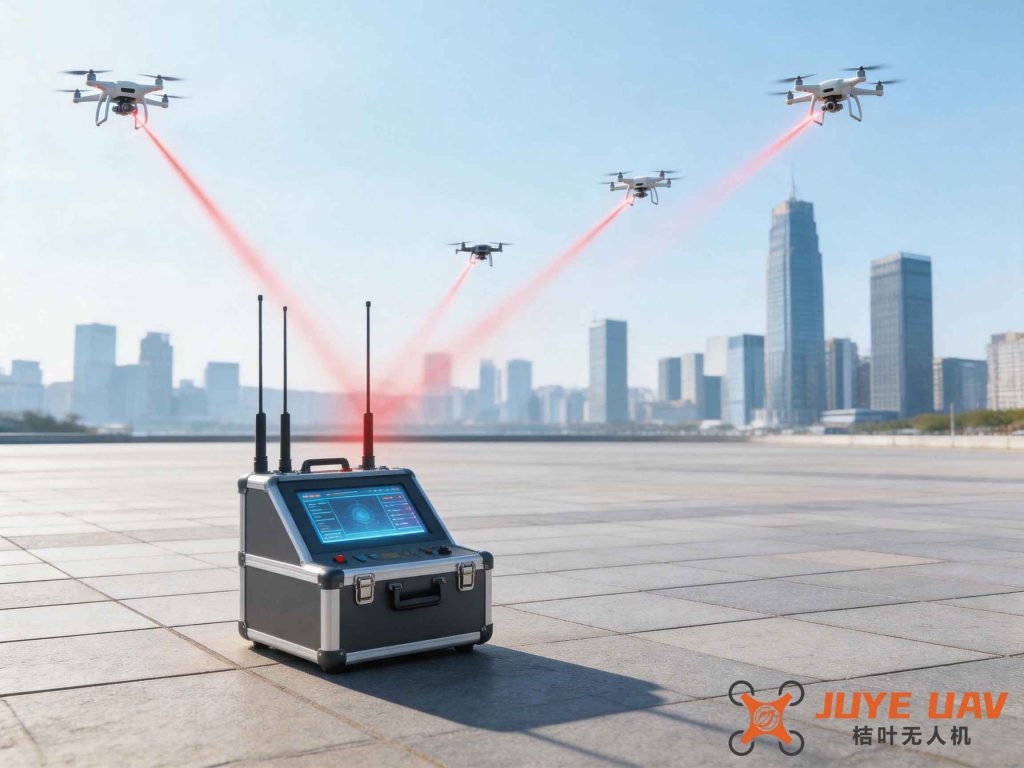
We must recognize that without proper oversight, these systems themselves become sources of risk. The balance between effective drone regulation and preventing the misuse of counter-UAS technology requires careful legislative design, continuous technological innovation, and rigorous enforcement. Only through a holistic approach to drone regulation—including both the drones and the systems designed to counter them—can we ensure a safe and orderly low-altitude environment that supports economic growth while protecting public and national security.
To further illustrate the technical aspects, consider the basic principles of radio frequency jamming. The power density received by a drone from a jammer at distance \( d \) is given by:
$$ P_r = \frac{P_t G_t G_r \lambda^2}{(4\pi d)^2 L} $$
where \( P_t \) is the transmitter power, \( G_t \) and \( G_r \) are the antenna gains of jammer and drone receiver, \( \lambda \) is the wavelength, and \( L \) accounts for system losses. Effective jamming requires \( P_r \) to exceed the desired signal power by a certain margin, known as the jamming-to-signal ratio \( J/S \). A typical requirement is:
$$ J/S > 10 \text{ dB} $$
For GPS spoofing, the adversary transmits counterfeit GPS signals that are slightly more powerful than authentic ones, causing the drone’s receiver to lock onto the false signals. The necessary power advantage can be expressed as:
$$ P_{\text{spoof}} > P_{\text{real}} + \delta $$
where \( \delta \) is the margin needed to capture the receiver’s tracking loop, often between 2–6 dB. Understanding these equations helps in designing regulations that limit transmit power and frequency agility to minimize collateral interference.
Table 2 summarizes key technical parameters that should be regulated in drone regulation efforts:
| Parameter | Recommended Regulatory Limit | Rationale |
|---|---|---|
| Maximum Equivalent Isotropically Radiated Power (EIRP) | ≤ 10 W for civilian portable devices | Limits interference range to local area, prevents disruption of aviation communications. |
| Operating Frequency Bands | Exclude aeronautical, GNSS, and public safety bands | Prevents critical service disruption; mandates only use of ISM bands with frequency hopping. |
| Harmonic Suppression | ≥ 40 dBc | Reduces out-of-band emissions that could interfere with adjacent services. |
| Maximum Pulse Duration | ≤ 1 ms | Minimizes risk to human tissues from prolonged RF exposure. |
| Radiation Hazard Label | Mandatory on device and packaging | Ensures user awareness of potential health risks. |
Moreover, a comprehensive drone regulation framework must include certification of counter-UAS operators. Table 3 outlines the required training components:
| Training Module | Content | Hours |
|---|---|---|
| Legal Basics | Relevant laws, regulations, and authorized use cases for drone regulation | 8 |
| RF Theory and Spectrum Management | Principles of jamming, frequency coordination, and avoiding interference | 12 |
| Equipment Operation | Hands-on training with various counter-UAS systems | 20 |
| Tactical Deployment | Site assessment, placement of jammers, coordination with security teams | 16 |
| Emergency Response | Handling accidental interference, equipment failure, and radiation safety | 8 |
| Examination and Certification | Written and practical tests to verify competence | 4 |
In conclusion, drone regulation encompasses not only controlling the drones themselves but also managing the tools used to counter them. The interconnected nature of these systems demands a holistic regulatory approach. By integrating legal, technical, and operational measures, we can mitigate the risks posed by counter-UAS systems while preserving their benefits for public security. The path forward requires continuous dialogue among policymakers, industry, law enforcement, and the public to adapt to evolving threats and technological advancements. Only through diligent drone regulation can we ensure that the low-altitude frontier remains safe, productive, and under lawful control.