
In the final phase of a fixed-wing UAV flight mission, autonomous and stable landing remains one of the most challenging tasks due to high approach speeds and numerous ground disturbances. Traditional guidance methods such as GPS and INS provide coarse navigation but fail to detect obstacles on or near the runway, increasing the risk of accidents. Vision-based systems, on the other hand, can extract rich spatial information from the runway environment, enabling a fixed-wing UAV to precisely identify the runway boundaries and track its relative position during descent. In this work, I present a comprehensive approach for fixed-wing UAV landing runway identification and tracking using sequence images, covering image preprocessing, edge detection, feature line extraction, runway recognition, and relative position estimation. A real flight experiment with an SZD-45 fixed-wing UAV validates the effectiveness of the proposed algorithms.
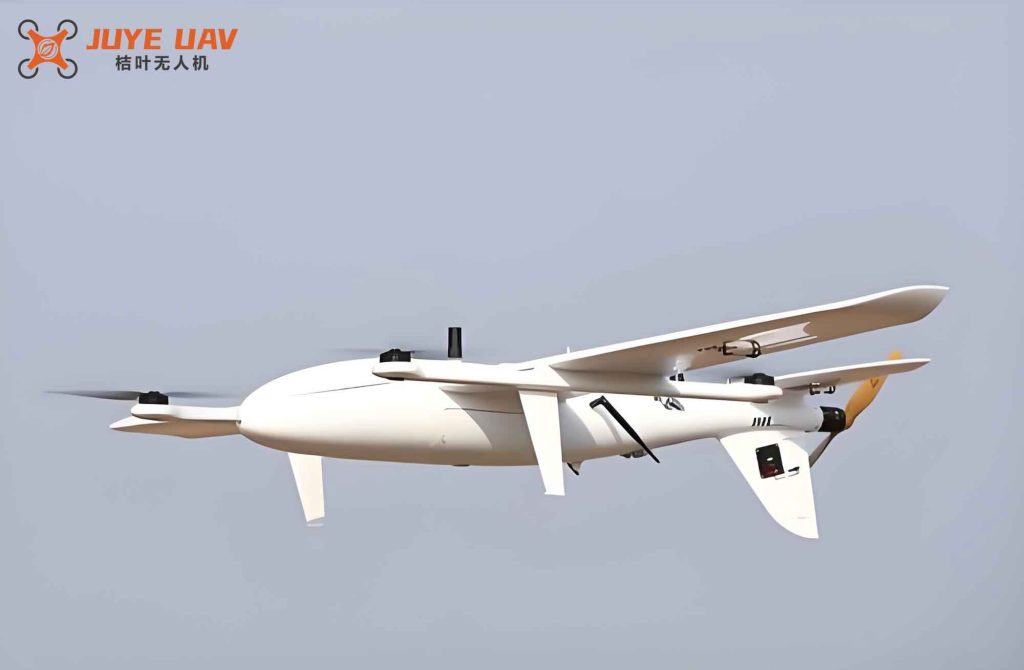
Image Preprocessing and Edge Detection
When a fixed-wing UAV is in motion, the captured runway images are subject to varying lighting conditions, blur, and noise. To reliably extract runway features, I first apply image preprocessing. Among common techniques (multi-resolution, grayscale conversion, edge detection), I adopt edge detection because the runway typically exhibits clear intensity boundaries against surrounding terrain (e.g., green grass). The goal is to obtain sharp linear features representing the runway edges at different flight stages.
For edge detection, I employ the LSD (Line Segment Detector) algorithm. The core idea is to approximate bright‑intensity change regions by their minimum bounding rectangles. Given a set of pixels with significant gradient, we find the smallest rectangle that encloses all these pixels. Let the rectangle have centroid \(O\) with coordinates \((C_x, C_y)\), length \(L\), width \(W\), and inclination angle \(\theta\). If the rectangle contains \(n\) pixels, the set of pixel coordinates is:
\[
P = \{P_i \mid (x_i, y_i), \; i = 1,2,\dots,n\}
\]
The centroid coordinates are:
\[
C_x = \frac{1}{n}\sum_{i=1}^{n} x_i, \qquad
C_y = \frac{1}{n}\sum_{i=1}^{n} y_i
\]
The slope of the rectangle’s length axis (\(K_L\)) and width axis (\(K_W\)) are computed as:
\[
K_L = \frac{\sum_{i=1}^{n} (x_i – C_x)(y_i – C_y)}{\sum_{i=1}^{n} (x_i – C_x)^2}, \qquad
K_W = -\frac{1}{K_L} \quad (\text{if } K_L \neq 0)
\]
The actual length \(L\) and width \(W\) are:
\[
L = \sqrt{\frac{2\left( \sum (x_i – C_x)^2 + \sum (y_i – C_y)^2 + \sqrt{ \left( \sum (x_i – C_x)^2 – \sum (y_i – C_y)^2 \right)^2 + 4\left( \sum (x_i – C_x)(y_i – C_y) \right)^2 } \right)}{n}}
\]
\[
W = \sqrt{\frac{2\left( \sum (x_i – C_x)^2 + \sum (y_i – C_y)^2 – \sqrt{ \left( \sum (x_i – C_x)^2 – \sum (y_i – C_y)^2 \right)^2 + 4\left( \sum (x_i – C_x)(y_i – C_y) \right)^2 } \right)}{n}}
\]
After obtaining the rectangle, I compute the aspect ratio \(L/W\). If this ratio exceeds a predefined threshold \(\lambda\), the rectangle’s major axis is accepted as a candidate feature line; otherwise it is discarded. This process effectively filters out short, non‑linear segments.
Runway Feature Line Extraction
For a fixed-wing UAV approaching a runway, the two parallel edge lines have specific angular distributions. In the image coordinate system, the left edge line typically lies in the angle range \([0^\circ, 90^\circ]\) and the right edge line in \([90^\circ, 180^\circ]\). When multiple lines are detected in the same image, I retain only the two longest lines as the runway boundaries. This heuristic ensures robustness against spurious detections caused by shadows or markings.
Let the left edge line equation be \(v = k_1 u + b_1\) and the right edge line be \(v = k_2 u + b_2\). Their angular bisector corresponds to the runway centerline. The slope of the bisector is derived from the two line slopes, and the relative heading angle \(\psi\) (angle between the bisector and the image vertical axis) can be computed as:
\[
\psi = \arctan\left( \frac{k_{\text{bisector}}}{1} \right) \quad \text{(adjusted for quadrant)}
\]
This heading angle provides crucial feedback for the fixed-wing UAV’s lateral control during landing.
Runway Recognition via Invariant Moments
After extracting candidate runway regions from the preprocessed image, I use invariant moments to match them against a pre‑stored template of the target runway. The Hu moments (seven moment invariants) are computed for each candidate region. If the similarity exceeds 99%, the region is accepted as the true runway; otherwise, the system continues searching and refining. Once recognized, the centroid coordinates of the runway region and the relative heading angle are obtained for subsequent tracking.
Relative Position Estimation
With the runway edges identified, I estimate the relative position of the fixed-wing UAV with respect to the runway centerline. The image coordinates \((x_c, y_c)\) of the runway’s vanishing point or the midpoint of the extracted line segment can be mapped to the lateral offset. Combined with the heading angle, the UAV’s deviation from the ideal approach path is obtained. This information is fed into the flight controller to correct the descent trajectory.
Experimental Setup
I conducted flight tests using an SZD-45 glider as the fixed-wing UAV platform. Its key specifications are listed in the table below:
| Parameter | Value |
|---|---|
| Model | SZD-45 glider |
| Maximum cruise speed | 45 km/h |
| Wingspan | 2.46 m |
| Flight weight | 1.5 kg |
| Wing area | 0.45 m² |
| Overall length | 1.236 m |
The UAV carried a high‑definition camera with built‑in LED illumination, a 180° wide‑angle lens, and a 6‑megapixel CMOS sensor. It supports three recording modes: 1080P 30 FPS, 720P 30/60 FPS, and WVGA 30/60 FPS, with both HDMI and CVBS outputs. The test runway was a 200 m straight asphalt road with uniform background and clear edges, providing a favorable environment for algorithm validation.
Flight Experiment and Results
Selection of Image Resolution
I compared three resolution levels: P (original 1920×1080), P‑1 (480×270), and P‑2 (120×67). Visual inspection of edge detection results showed that P‑2 suffered from significant loss of line sharpness, while P‑1 retained comparable quality to the original but with fewer pixels and lower computational load. Therefore, I selected the P‑1 resolution (480×270) for all subsequent processing.
Tracking Algorithm Performance
I employed a real‑time compressive tracking algorithm to obtain the target’s coordinate information from the image sequence. The relative heading angle was computed using the invariant moments method (the angle between the principal axis of the feature points and the image y‑axis). The following table compares the estimated and measured values for three different frames:
| Frame | Quantity | X coordinate (pixels) | Y coordinate (pixels) | Relative heading angle (°) |
|---|---|---|---|---|
| 10 | Estimated | 312 | 128 | 31.647 |
| Measured | 317 | 128 | 34.116 | |
| Error | 5 | 0 | 2.469 | |
| 30 | Estimated | 399 | 150 | 21.861 |
| Measured | 405 | 150 | 25.747 | |
| Error | 6 | 0 | 3.886 | |
| 60 | Estimated | 303 | 142 | -11.388 |
| Measured | 306 | 138 | -7.285 | |
| Error | 3 | 4 | 4.103 |
The compressive tracking algorithm demonstrated robustness even when the target and background had similar color distributions, yielding small errors in both position and heading angle. This is critical for a fixed-wing UAV that requires precise lateral control during the final approach.
Runway Edge Line Extraction
Four representative frames from the flight sequence were processed to extract the left and right edge lines. The line equations (in image coordinates \(u,v\)) and the computed angular bisector along with the relative heading angle are summarized below:
| Frame | Left edge line | Right edge line | Angular bisector | Relative heading angle (°) |
|---|---|---|---|---|
| 1 | \(v = 1.304u – 214.41\) | \(v = -1.768u + 457.515\) | \(v = 14.741u – 3156.225\) | 3.533 |
| 2 | \(v = -1.000u + 272.00\) | \(v = 2.361u – 464.083\) | \(v = -3.811u + 1028.131\) | -10.385 |
| 3 | \(v = 0.554u – 71.445\) | \(v = -1.717u + 561.217\) | \(v = 4.053u – 983.727\) | 12.388 |
| 4 | \(v = 0.540u – 86.002\) | \(v = -0.354u + 180.413\) | \(v = -13002u + 3486.416\) | -4.050 |
The extracted lines consistently identified the runway boundaries even in the absence of strong shadows or other interfering objects. The angular bisector provided a reliable estimate of the fixed-wing UAV’s relative heading, enabling the flight controller to maintain alignment with the runway centerline. The small variations in heading angle across frames reflect the natural oscillation of the UAV during the approach, but the tracking algorithm successfully kept the runway within the field of view.
Discussion and Conclusion
In this work, I have presented a complete pipeline for fixed-wing UAV landing runway identification and tracking based on sequence images. The LSD‑based edge detection effectively extracts linear features, while the invariant‑moments matching ensures robust recognition. The compressive tracking algorithm delivers accurate coordinate and heading information even under challenging dynamic conditions. The flight experiment with an SZD-45 fixed-wing UAV validated the approach, showing that the extracted runway edges and relative heading angle errors are within acceptable limits for safe autonomous landing. Future work will focus on integrating the vision system with real‑time flight control and testing under adverse weather or low‑contrast runway conditions.