
In the pursuit of enhanced endurance and payload capacity for modern fixed-wing drones, structural lightweight design has become a critical focus. Among various empennage configurations, the V-tail offers superior aerodynamic efficiency and inherent weight advantages compared to conventional T-tails or Y-tails. This paper presents a systematic approach to optimize the V-tail structure for a long-endurance, high-aspect-ratio fixed-wing drone. The optimization leverages response surface methodology (RSM) to minimize structural mass while satisfying strength, stiffness, and dynamic constraints. The design variables include wingspan length, number of ribs, and skin thickness. After optimization, the new V-tail configuration achieves a 22.88% mass reduction. Static and modal finite element analyses confirm that the optimized V-tail meets all safety requirements. Furthermore, external flow field simulations performed on the full fixed-wing drone model indicate that aerodynamic performance remains stable, with a slight drag reduction. Finally, a scaled prototype is fabricated using fused deposition modeling (FDM) additive manufacturing, and the measured weight reduction matches the simulation results, validating the feasibility of the proposed method. The entire study underscores the effectiveness of RSM in the lightweight design of V-tails for fixed-wing drones.
Introduction
Fixed-wing drones are increasingly utilized across military reconnaissance, agricultural monitoring, and infrastructure inspection. For mission profiles requiring long endurance, every kilogram of structural mass reduction translates directly into extended flight time or additional payload capacity. The V-tail configuration is particularly attractive because it combines the functions of both horizontal and vertical stabilizers into two canted surfaces, reducing wetted area and structural weight while maintaining adequate directional and pitch stability. However, designing a lightweight yet robust V-tail for fixed-wing drones is a multi-objective challenge: the structure must withstand aerodynamic loads without excessive deformation, avoid resonance with propeller excitation frequencies, and preserve aerodynamic efficiency.
Previous studies on V-tail optimization have often employed static and modal analysis alone, without considering the coupling between structural modifications and aerodynamic performance. In this work, I adopt a holistic approach that integrates finite element analysis (FEA), RSM, and computational fluid dynamics (CFD). The goal is to produce a V-tail that is not only lighter but also aerodynamically compatible with the fixed-wing drone. The novelty lies in using RSM to efficiently explore the design space defined by three key parameters: wingspan, rib count, and skin thickness. The optimized V-tail is then validated through both structural and aerodynamic simulations, followed by experimental prototyping via FDM.
V-tail Geometry and Material
The baseline V-tail is designed for a medium‑altitude long‑endurance fixed-wing drone. The airfoil selected is NACA 0012, a symmetric section commonly used for empennage applications. The initial dimensions are listed in Table 1.
| Parameter | Value |
|---|---|
| Wingspan (mm) | 2130 |
| Chord length (mm) | 530 |
| Aspect ratio | 4.02 |
| Sweep angle (°) | 4.27 |
| Number of ribs | 22 |
| Skin thickness (mm) | 2.1 |
The material selected is an epoxy‑carbon‑fiber composite, whose mechanical properties are given in Table 2.
| Property | Value |
|---|---|
| Density (kg/mm³) | 1.518×10⁻⁶ |
| Young’s modulus X (MPa) | 1.233×10⁵ |
| Young’s modulus Y (MPa) | 7.78×10³ |
| Young’s modulus Z (MPa) | 7.78×10³ |
| Poisson’s ratio XY | 0.27 |
| Poisson’s ratio YZ | 0.42 |
| Poisson’s ratio XZ | 0.27 |
| Shear modulus XY (MPa) | 5.0×10³ |
| Shear modulus YZ (MPa) | 3.08×10³ |
| Shear modulus XZ (MPa) | 5.0×10³ |
The V-tail adopts a dual‑spar structure with ribs and skin. In the 3D model, the geometric relationship between parameters is linked using parametric equations, which allows us to reduce the number of independent design variables during optimization.
Finite Element Analysis of the Baseline V-tail
To understand the structural response of the initial design, a static FEA was performed under a critical rolling‑out maneuver. The aerodynamic load was simplified as a uniform pressure of 0.003 MPa applied on the stabilizer skin. A fixed constraint was applied at the root where the V-tail connects to the fuselage, simulating a cantilever condition.
The mesh consisted of tetrahedral elements with a global size of 20 mm, resulting in 112 429 nodes and 58 420 elements. The total deformation and von Mises stress are computed. According to the criterion that the tip deflection must not exceed 2.5% of the wingspan, the maximum allowable deflection for the baseline is 53.25 mm. The simulation gave a maximum deflection of 46.284 mm and a maximum stress of 101.85 MPa, both within safe limits.
The maximum deflection δ at the tip of a cantilever beam under uniform pressure can be approximated by:
$$ \delta = \frac{p L^4}{8 E I} $$
where p is the equivalent pressure, L the half‑span, E the effective modulus, and I the second moment of area. This relation provides insight into how changes in span and stiffness affect deflection.
Response Surface Optimization
The objective of the optimization is to minimize the structural mass while maintaining the maximum stress below the material yield stress and the tip deflection below 2.5% of the span. Three design variables were selected:
- Wingspan (L): range 1530–2130 mm, step 100 mm
- Number of ribs (N): range 16–22, step 1
- Skin thickness (t): range 1.5–2.1 mm, continuous
A central composite design (CCD) was employed, generating 7×7×5 = 245 experimental points. Each point was evaluated by coupling SolidWorks for geometry update and ANSYS for FEA. A genetic‑algorithm‑based response surface was then fitted to the mass and stress responses. The mathematical formulation of the optimization problem is:
Minimize mass M = f(L, N, t)
Subject to:
$$ \sigma_{\mathrm{max}} \le \sigma_{\mathrm{allow}} $$
$$ \delta_{\mathrm{max}} \le 0.025 \cdot L $$
where \(\sigma_{\mathrm{allow}} = 350\) MPa (conservative estimate for the composite).
The response surface results are summarized in Table 3, showing three candidate points.
| Parameter | Candidate 1 | Candidate 2 | Candidate 3 |
|---|---|---|---|
| Wingspan L (mm) | 1730 | 1730 | 1730 |
| Number of ribs N | 17 | 18 | 17 |
| Skin thickness t (mm) | 1.523 | 1.529 | 1.540 |
| Max deflection δ_max (mm) | 43.248 | 43.047 | 42.993 |
| Structural mass M (kg) | 24.721 | 24.993 | 24.764 |
| Max stress σ_max (MPa) | 105.81 | 106.09 | 105.36 |
Candidate 1 provides the lowest mass (24.721 kg). After rounding the skin thickness to 1.55 mm for manufacturing convenience, the final optimized V-tail parameters become: L = 1730 mm, N = 17, t = 1.55 mm, yielding a structural mass of 24.784 kg. Compared to the baseline mass of 32.138 kg (computed from baseline geometry), this represents a reduction of 22.88%.
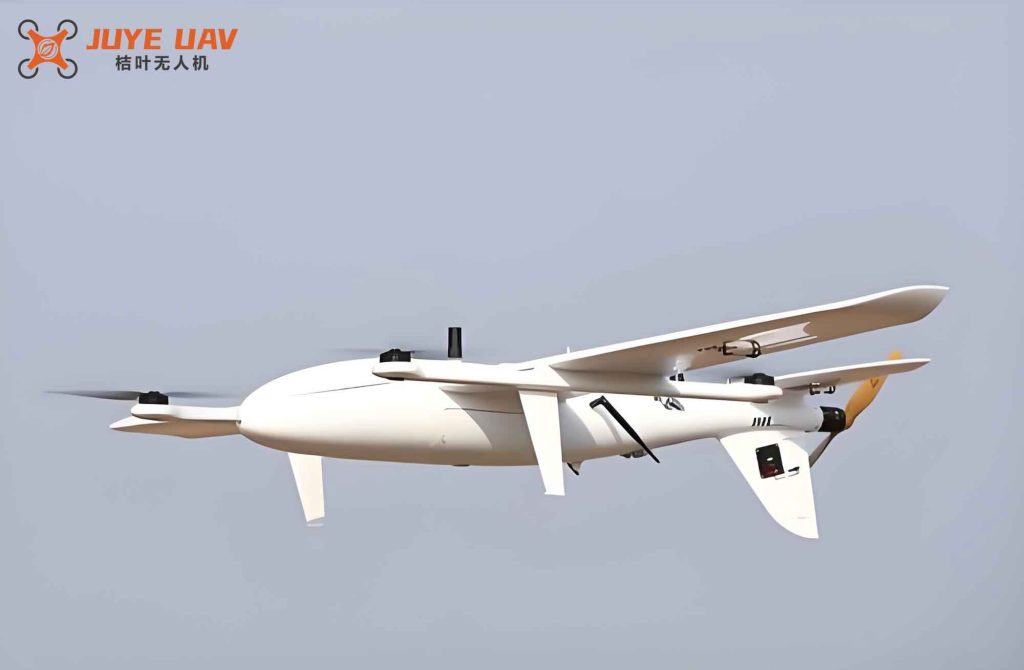
The response surface methodology effectively captured the trade‑off between mass and stiffness. The reduction in span from 2130 mm to 1730 mm is the dominant factor contributing to weight savings, while the skin thickness and rib count adjustments fine‑tune the stress distribution.
Static and Modal Validation of the Optimized V-tail
After updating the 3D model with the optimized parameters, a static FEA under the same loading condition was performed. The maximum deflection was 42.85 mm (within the limit of 43.25 mm), and the maximum stress was 106.93 MPa. Table 4 compares the key structural indicators before and after optimization.
| Indicator | Baseline | Optimized |
|---|---|---|
| Wingspan (mm) | 2130 | 1730 |
| Skin thickness (mm) | 2.1 | 1.55 |
| Number of ribs | 22 | 17 |
| Max deflection (mm) | 46.284 | 42.85 |
| Max stress (MPa) | 101.85 | 106.93 |
| Structural mass (kg) | 32.138 | 24.784 |
| Mass reduction (%) | – | 22.88 |
Modal analysis was conducted to verify that the natural frequencies of the V-tail do not coincide with the excitation frequencies from the propeller. The fixed‑wing drone is assumed to use a five‑blade propeller rotating at 40–50 r/s, giving an excitation frequency range of 200–250 Hz. The first six natural frequencies for both configurations are listed in Table 5.
| Mode | Baseline | Optimized |
|---|---|---|
| 1st | 5.707 | 8.572 |
| 2nd | 29.514 | 43.051 |
| 3rd | 34.326 | 48.566 |
| 4th | 41.936 | 53.601 |
| 5th | 68.405 | 101.510 |
| 6th | 101.270 | 138.650 |
All frequencies are well below 200 Hz, confirming that resonance will not occur. The stiffening effect due to the shorter span is evident: the 1st natural frequency increased by 50%.
External Flow Field Simulations
To ensure that the structural modifications do not degrade the aerodynamic performance of the fixed-wing drone, a full‑aircraft CFD simulation was conducted. The drone model with either the baseline or optimized V-tail was placed in a computational domain of 15 m × 5 m × 3 m. A poly‑hexcore mesh was used, with local refinement near the aircraft surfaces. The solver was set to steady‑state, incompressible, turbulent (k‑ε model), with an inlet velocity corresponding to a typical cruise speed of 50 m/s.
The pressure contours show that the maximum pressure on the drone occurs at the nose and is 2890 Pa for the baseline and 2860 Pa for the optimized V-tail. The velocity vector fields are similar, with a slight reduction in maximum surface velocity from 112 m/s to 110 m/s. The streamline patterns around the V-tail remain virtually unchanged.
Quantitative aerodynamic coefficients were extracted for a range of angles of attack (AoA). Table 6 summarizes the average values over the flight envelope.
| Parameter | Baseline | Optimized | Change |
|---|---|---|---|
| Total drag (N) | 800 | 794 | −0.75% |
| Total lift (kN) | 10.4 | 9.6 | −7.68% |
| Pitching moment (N·m) | 674 | 527 | −21.8% |
| Lift‑to‑drag ratio | 13.0 | 12.1 | −6.9% |
The drag reduction of 0.75% is beneficial, while the lift reduction of 7.68% is a consequence of the smaller tail surface. However, the lift‑to‑drag ratio of 12.1 is still within the typical range (9–14) for such fixed-wing drones. The pitching moment reduction is directly related to the 18.78% reduction in tail arm length. These results indicate that the optimized V-tail preserves acceptable aerodynamic characteristics for the fixed-wing drone, and the slight penalty in lift can be compensated by adjusting the wing incidence or control surfaces.
FDM Prototyping and Experimental Validation
To physically verify the mass reduction, scaled models (10% of the original size) were fabricated using FDM additive manufacturing. The material was UV‑curable resin. Both the baseline and optimized V-tail models were printed with 100% infill and identical settings. After support removal and surface finishing, the masses were measured.
The baseline prototype weighed 43.3 g, while the optimized prototype weighed 33.3 g, a reduction of 10.0 g or 23.09%. This is very close to the simulated mass reduction of 22.88% (the slight difference of 0.21% is attributed to printing tolerances and slight variations in infill density). The experimental result confirms that the RSM‑based lightweight design is practically achievable for fixed-wing drones.
Conclusion
In this work, I have presented a comprehensive lightweight design methodology for the V-tail of a fixed-wing drone using response surface optimization. The main conclusions are:
- The optimized V-tail achieves a 22.88% reduction in structural mass while satisfying strength and deflection constraints under critical load cases.
- Modal analysis confirms that the natural frequencies of the optimized tail avoid the propeller excitation range, ensuring no resonance issues.
- CFD simulations of the complete fixed-wing drone show that aerodynamic performance remains stable: drag decreases by 0.75%, while lift decreases by 7.68%, but the lift‑to‑drag ratio stays within an acceptable range for long‑endurance drones.
- FDM prototyping validates the mass reduction with an error of only 0.21% compared to simulations, proving the practical applicability of the approach.
The response surface methodology proved to be an efficient tool for multi‑parameter optimization of the V-tail structure. The resulting design not only lightens the fixed-wing drone but also maintains its aerodynamic integrity. Future work will focus on aero‑structural coupling to further refine the trade‑off between weight and performance, and on fatigue analysis for extended operational life.