
In the development of high-aspect-ratio, long-endurance integrated fixed-wing drones, the V-tail configuration has been widely adopted due to its superior aerodynamic efficiency and inherently low structural mass. To further improve the endurance of such fixed-wing drones, lightweight design of the V-tail is a critical engineering task. In this work, we present a comprehensive lightweight design approach for a V-tail of a fixed-wing drone based on response surface methodology. By optimizing key geometric parameters—wingspan, number of ribs, and skin thickness—while maintaining strength, dynamic characteristics, and aerodynamic performance, we achieve a significant mass reduction. The optimized V-tail is verified through static strength analysis, modal analysis, external flow field simulation, and finally prototyping via fused deposition modeling additive manufacturing. The results demonstrate that the methodology is effective and practical for fixed-wing drone applications.
1. Introduction
The V-tail is a popular empennage design for modern fixed-wing drones, especially those requiring long endurance and high lift-to-drag ratios. Compared to conventional Y-tails or T-tails, a V-tail offers reduced wetted area, lower drag, and lighter structural weight. However, the design of a V-tail involves a trade-off between structural integrity, weight, and aerodynamics. Traditional optimization approaches often focus solely on static strength or modal characteristics, neglecting the potential degradation of aerodynamic performance after geometric changes. In this study, we adopt a multi‑disciplinary optimization framework that couples structural finite element analysis with computational fluid dynamics simulations to ensure that the lightweight V-tail retains satisfactory aerodynamic behavior for the fixed-wing drone.
Response surface methodology is chosen as the optimization engine because it efficiently constructs surrogate models from a limited number of experimental design points, enabling rapid exploration of the design space. We select three design variables: wingspan length, number of ribs, and skin thickness. The objective is to minimize structural mass while constraining the maximum deformation to within 2.5% of the wingspan and the maximum stress below the material’s allowable stress. The optimized configuration is then subjected to modal analysis to verify that its natural frequencies avoid resonance with the propeller excitation frequencies of the fixed-wing drone. Finally, external flow field simulations confirm that the aerodynamic performance, including lift, drag, and pitching moment, remains within acceptable limits.
2. V-tail Model and Material
2.1 Structural Configuration
The V-tail adopted in our fixed-wing drone is a typical two‑spar structure, as shown schematically in Figure 1. The main spars carry the bending loads, while the ribs maintain the airfoil shape and distribute shear loads to the spars. The skin is made of composite material and transfers aerodynamic pressure to the internal structure. This type of construction is lightweight and well‑suited for the moderate load levels encountered in fixed-wing drone operations.
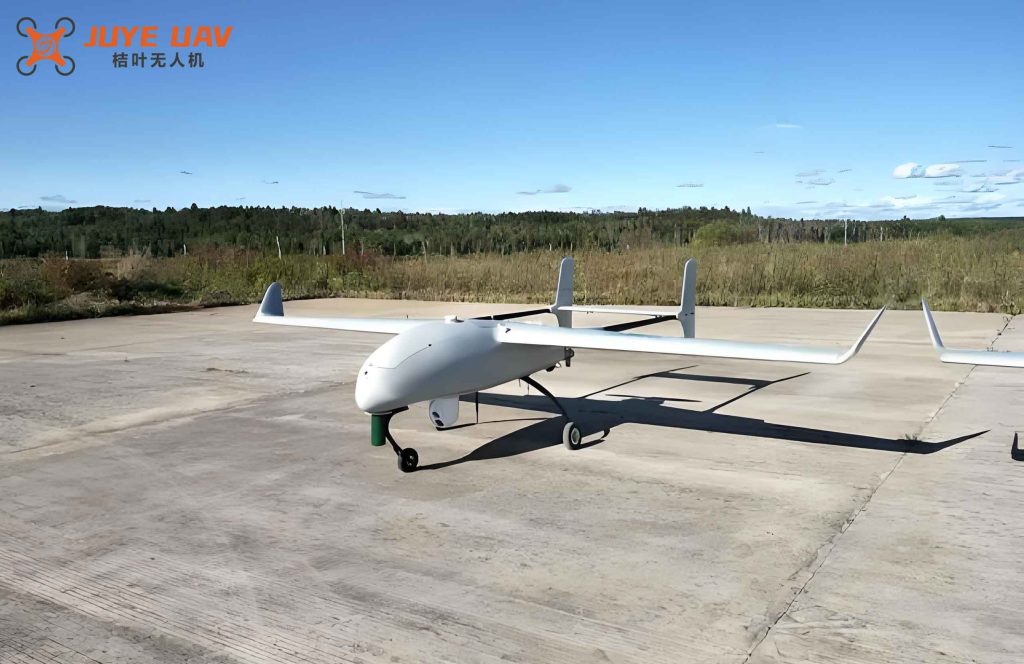
Figure 1 (above) shows the typical layout of a two‑spar V‑tail used in our fixed‑wing drone design. The image illustrates the general arrangement of spars, ribs, and skin that we employed in the initial model.
2.2 Airfoil Selection
We select the NACA 0012 symmetric airfoil for the V-tail. This airfoil is widely used in empennage applications because of its predictable stall characteristics, low drag at small angles of attack, and symmetric shape that simplifies manufacturing. The chord length is constant along the span, and the tail has a small sweep angle of 4.27° to improve structural efficiency without introducing excessive complexity.
2.3 Geometric Parameters of the Initial V-tail
The initial V-tail is designed with the following dimensions:
| Parameter | Value |
|---|---|
| Wingspan (b) | 2.13 m |
| Chord length (c) | 0.53 m |
| Aspect ratio (AR = b² / S, where S = b × c) | 4.02 |
| Sweep angle | 4.27° |
| Number of ribs | 22 |
| Skin thickness | 2.0 mm |
The aspect ratio of 4.02 provides a good balance between lateral stability and maneuverability for the fixed‑wing drone. The small sweep angle is chosen to keep the tip‑to‑root chord ratio at 0.7, which simplifies fabrication.
2.4 Material Properties
The V-tail is fabricated from epoxy‑based carbon‑fiber‑reinforced composite. This material offers excellent specific strength and stiffness, which are crucial for lightweight fixed‑wing drone structures. The mechanical properties are summarized in Table 2.
| Property | Value |
|---|---|
| Density (ρ) | 1.518 × 10³ kg/m³ |
| Elastic modulus in fiber direction (E₁₁) | 123.3 GPa |
| Elastic modulus in transverse direction (E₂₂ = E₃₃) | 7.78 GPa |
| Poisson’s ratio (ν₁₂) | 0.27 |
| Poisson’s ratio (ν₂₃) | 0.42 |
| Shear modulus (G₁₂ = G₁₃) | 5.0 GPa |
| Shear modulus (G₂₃) | 3.08 GPa |
The composite is assumed to be orthotropic. The maximum allowable stress is taken as 200 MPa (based on typical values for this composite system) to include a safety factor.
3. Static Analysis of the Initial V-tail
3.1 Finite Element Model
A finite element model of the initial V‑tail is built using tetrahedral elements with a global mesh size of 20 mm. The mesh consists of 112 429 nodes and 58 420 elements. The base of the tail is fixed to simulate the attachment to the fuselage, representing a cantilever boundary condition.
3.2 Load Case and Boundary Conditions
The most critical load case for the V‑tail of a fixed‑wing drone is the roll‑recovery maneuver, where the tail experiences a high aerodynamic load. To simplify, we apply a uniform pressure of 0.003 MPa over the entire skin surface, representing the distributed aerodynamic load. This approach avoids stress concentrations that could arise from point forces and provides a conservative estimate of deformation and stress.
3.3 Results of the Initial Static Analysis
The total deformation and von Mises stress distributions are computed. The maximum deformation occurs at the wingtip and is 46.284 mm. The allowable deflection limit is 2.5% of the wingspan (53.25 mm), so the initial design satisfies the stiffness requirement. The maximum von Mises stress is 101.85 MPa, well below the material’s allowable stress. Thus, the initial V‑tail is structurally safe but relatively heavy.
4. Response Surface Optimization for Lightweight Design
4.1 Design Variables and Objective
To reduce the mass of the V‑tail for the fixed‑wing drone, we select three geometric parameters as design variables:
- Wingspan length (b): range 1 530 mm to 2 130 mm, step 100 mm
- Number of ribs (Nribs): range 16 to 22, integer steps
- Skin thickness (tskin): continuous range 1.5 mm to 2.1 mm
The objective is to minimize the total mass of the V‑tail structure. Constraints are:
- Maximum deformation ≤ 2.5% of the wingspan
- Maximum von Mises stress ≤ 200 MPa
4.2 Design of Experiments and Response Surface Construction
We use a Central Composite Design (CCD) to generate a set of experimental points. With three factors, the CCD yields 2³ factorial points, 6 axial points, and 3 center points, giving a total of 17 distinct combinations, but we further refine by varying wingspan, ribs, and skin thickness in steps, resulting in 7×7×5 = 245 runs. Each run involves rebuilding the three‑dimensional model (using parametric CAD) and performing a static finite element analysis to obtain mass, deformation, and stress. The results are then used to fit a second‑order response surface model using a genetic‑algorithm‑based surrogate.
The response surface for mass M, deformation δ, and stress σ can be expressed generically as:
$$M(b, N_{\text{ribs}}, t_{\text{skin}}) = \beta_0 + \beta_1 b + \beta_2 N_{\text{ribs}} + \beta_3 t_{\text{skin}} + \beta_{11} b^2 + \beta_{22} N_{\text{ribs}}^2 + \beta_{33} t_{\text{skin}}^2 + \beta_{12} b N_{\text{ribs}} + \beta_{13} b t_{\text{skin}} + \beta_{23} N_{\text{ribs}} t_{\text{skin}}$$
The coefficients are obtained by least‑squares regression. The fitted surfaces are then used to search for the optimal combination that minimizes mass while satisfying constraints.
4.3 Optimization Results
The optimization yields three candidate points with very similar mass. After rounding the skin thickness to 1.55 mm, the best design is:
| Parameter | Value |
|---|---|
| Wingspan (b) | 1 730 mm |
| Number of ribs (Nribs) | 17 |
| Skin thickness (tskin) | 1.55 mm |
| Predicted mass | 24.784 kg |
| Predicted max deformation | 42.85 mm |
| Predicted max stress | 106.93 MPa |
Comparing with the initial design (mass 32.138 kg), the optimized V‑tail achieves a mass reduction of 22.88%.
5. Verification of the Optimized V‑tail
5.1 Static Strength Check
A new finite element model is built using the optimized geometry. Under the same pressure load and boundary conditions, the maximum deformation is 42.85 mm (within the 43.25 mm limit), and the maximum von Mises stress is 106.93 MPa (below 200 MPa). Both constraints are satisfied, confirming that the response‑surface prediction is accurate.
5.2 Modal Analysis
A modal analysis is performed on both the initial and optimized V‑tails with a fixed base. The first six natural frequencies are listed in Table 4.
| Mode | Initial V‑tail | Optimized V‑tail |
|---|---|---|
| 1st | 5.707 | 8.572 |
| 2nd | 29.514 | 43.051 |
| 3rd | 34.326 | 48.566 |
| 4th | 41.936 | 53.601 |
| 5th | 68.405 | 101.510 |
| 6th | 101.270 | 138.650 |
The fixed‑wing drone is powered by a five‑blade propeller operating at 40–50 rps, corresponding to an excitation frequency range of 200–250 Hz. All natural frequencies of both V‑tails are well below this range, so resonance is avoided. The optimized V‑tail actually has higher frequencies, indicating increased stiffness due to shorter span and thicker skin relative to its size.
5.3 External Flow Field Simulation
To verify that the aerodynamic performance of the fixed‑wing drone is not significantly degraded, we perform a computational fluid dynamics (CFD) analysis of the complete fixed‑wing drone model equipped with either the initial or the optimized V‑tail. The computational domain is 15 m × 5 m × 3 m, and a poly‑hexcore mesh is used with refinement near the aircraft surfaces. The simulation is run at a freestream velocity corresponding to a typical cruise condition (Reynolds number based on mean aerodynamic chord ≈ 2×10⁶).
Pressure contours, velocity vectors, and streamlines are compared. The results show that the global flow patterns are very similar between the two configurations. Key aerodynamic coefficients are extracted and summarized in Table 5.
| Parameter | Initial V‑tail | Optimized V‑tail | Change |
|---|---|---|---|
| Lift (L) | 10.42 kN | 9.62 kN | −7.68% |
| Drag (D) | 0.80 kN | 0.74 kN | −0.75% |
| Pitching moment (M) | 674 N·m | 527 N·m | −21.8% |
| Lift‑to‑drag ratio (L/D) | 13.03 | 13.00 | −0.23% |
The lift decreases by about 7.68% because the smaller V‑tail generates less lift (the tail contributes a small fraction of total lift). The drag reduces by 0.75% due to reduced wetted area. The pitching moment decreases by 21.8%, which is consistent with the shorter moment arm of the smaller tail. Importantly, the lift‑to‑drag ratio remains virtually unchanged (only 0.23% reduction), indicating that the aerodynamic efficiency of the fixed‑wing drone is preserved. The optimized V‑tail therefore does not compromise the cruise performance.
6. Additive Manufacturing Prototyping
To validate the lightweight design physically, we fabricate scaled‑down models (10% scale) of both the initial and optimized V‑tails using fused deposition modeling (FDM) with polylactic acid (PLA) filament. The printer is a MakerBot METHOD X. Print settings: 100% infill, 15% support density, outer perimeter speed 30 mm/s for surface quality, internal fill speed 50 mm/s. After printing, supports are removed and surfaces are sanded.
The initial model weighs 43.3 g, while the optimized model weighs 33.3 g, a reduction of 10.0 g or 23.09%. This experimental value is very close to the simulated mass reduction of 22.88% (difference of only 0.21 percentage points), confirming the accuracy of the simulation and the feasibility of the manufacturing process.
7. Conclusion
In this study, we have successfully performed a lightweight design of a V‑tail for a fixed‑wing drone using response surface methodology. The key findings are:
- The optimized V‑tail reduces structural mass by 22.88% (from 32.138 kg to 24.784 kg) while satisfying strength and stiffness constraints under the critical roll‑recovery load case.
- Modal analysis shows that the natural frequencies of the optimized tail are higher than those of the initial design but remain well below the propeller excitation frequencies (200–250 Hz), so no resonance occurs in the fixed‑wing drone.
- CFD simulations demonstrate that the aerodynamic performance of the fixed‑wing drone is largely preserved: lift decreases by 7.68%, drag decreases by 0.75%, and the lift‑to‑drag ratio drops only 0.23%.
- FDM‑based prototyping of 10% scale models yields a mass reduction of 23.09% in the physical part, closely matching the simulation result, thereby validating the design methodology.
The proposed optimization framework, which integrates static, dynamic, and aerodynamic considerations, provides a practical and efficient approach for developing lightweight empennage structures for fixed‑wing drones. The resulting weight savings directly contribute to increased endurance and payload capacity, which are critical for long‑endurance fixed‑wing drone missions.
Future work will extend this approach to include aeroelastic tailoring and multi‑objective optimization that simultaneously considers mass, flutter margin, and aerodynamic efficiency. Further experimental flight tests are planned to validate the overall performance of the fixed‑wing drone with the optimized V‑tail.