
In this work, we present a comprehensive intelligent cooperative control framework for multi-rotor unmanned aerial vehicle (UAV) swarms. The core contribution lies in fusing a target allocation optimization strategy with an elastic system-based formation controller. We first formulate a multi-objective target assignment model that minimizes both path cost and average mission time. A hybrid Hungarian-genetic algorithm is employed to solve this model efficiently, ensuring optimal allocation even under dynamic constraints. Then, we design a dual-layer controller: a formation controller based on an improved exponential reaching law sliding mode and a desired position controller that translates formation commands into individual UAV actions. Extensive simulations in a combined MATLAB/Simulink and Gazebo environment validate the effectiveness of our method. Results show that our approach achieves 20.35% higher control accuracy and 15.42% shorter mission completion time compared to state-of-the-art methods. Furthermore, the system exhibits strong robustness under disturbances such as gust winds and communication interruptions, with higher mission completion rates and lower failure counts. This work provides a viable pathway for enhancing the autonomous cooperative capabilities of drone technology in complex operational scenarios.
Modern drone technology has been increasingly deployed in swarm configurations to perform complex tasks such as surveillance, search and rescue, and precision agriculture. However, the dynamic nature of mission environments—including changing weather, terrain, and electromagnetic interference—poses significant challenges to coordinated control. The core issues revolve around two aspects: real-time target allocation under resource constraints, and stable formation control despite external disturbances. Existing approaches often treat these two problems separately or rely on oversimplified models. To bridge this gap, we propose a unified intelligent control method that tightly couples an optimized assignment strategy with an adaptive formation controller. The proposed method is grounded in rigorous mathematical modeling and leverages hybrid optimization and sliding mode control techniques. Below we detail the methodology and validate its performance through comparative experiments.
1. Problem Formulation and Target Allocation Model
Given a swarm of n multi-rotor UAVs and m targets, we consider three possible scenarios: (1) n = m (one-to-one assignment), (2) n > m (multiple UAVs per target), and (3) n < m (one UAV handles multiple targets). For each case, we define the path cost H and average time cost Tij as:
$$
H = \sum_{i=1}^{n} \sum_{j=1}^{m} L_{ij}, \quad T_{ij} = U_{ij} + E_{ij}
$$
where Lij is the distance from UAV i to target j, Uij is the execution time, and Eij represents extra time for preparation and transit. The overall objective function F is:
$$
F = \min H + \min T_{ij}
$$
subject to the following constraints:
| Constraint | Expression | Description |
|---|---|---|
| Maximum range | $$L_{ij} – L_{i-\max} \le 0$$ | Each UAV’s total path does not exceed its maximum rated range. |
| Maximum time | $$T_{ij} – T_{i-\max} \le 0$$ | Each UAV’s mission time is within its safe flight time. |
| Inter-target timing | $$T_{\text{ord}_1} – T_{\text{ord}_2} \le 0$$ | Higher priority tasks are executed first. |
| Simultaneous arrival | $$T_{i-\min} \le T_{i-\max}, \quad T_{i+1-\min} – T_{i-\max} \le 0$$ | UAVs should arrive at the mission area within a designated time window. |
| Task priority | $$p_j = \frac{w_j}{\sum_{j\in J} w_j}$$ | Selection probability proportional to priority weight. |
| Dynamic threat avoidance | $$C_{\text{threat}} = \sum_{k\in K} \frac{\alpha_k}{d_k + \epsilon}$$ | Penalty term added to the total cost for proximity to threats. |
To solve this constrained optimization problem, we employ a hybrid Hungarian-genetic algorithm. The Hungarian method provides optimal assignments for one-to-one cases, while the genetic algorithm handles more complex scenarios with excellent global search capability. The algorithm proceeds as follows:
- Population initialization: Start with p individuals. The Hungarian method generates N elite assignment matrices; the remaining p – N individuals are randomly generated.
- Fitness function: The objective function F is directly used as fitness; smaller F indicates better assignment.
- Selection: Elite roulette wheel selection preserves the best solutions (from Hungarian) without mutation to retain high-quality genes.
- Crossover and mutation: A chromosome mutation mechanism randomly swaps two rows or two columns to increase population diversity.
- Output: The best assignment result Fbest is obtained after convergence.
This hybrid approach effectively balances solution quality and computational efficiency, crucial for real-time drone technology operations.
2. Formation Control Using Elastic System Model
After target allocation, we need to ensure the swarm maintains a stable formation while navigating to the assigned targets. We design a novel elastic system model that treats each UAV as a node connected by virtual elastic forces. The model is defined as:
$$
\mathbf{I}_{n,m} = K_f L_{ij} – \mathbf{P}^d_{ij} \begin{bmatrix} \phi_1 \\ \phi_2 \\ \phi_3 \end{bmatrix} F_{\text{best}} \Delta Z_f
$$
where Kf is the elastic constraint strength, Pdij is the desired distance between UAV i and target j, ϕ1, ϕ2, ϕ3 are different formation constraint forces, and ΔZf is the node position limit. This model allows the formation to deform elastically in response to disturbances while maintaining overall structure—a key advantage for resilient drone technology.
2.1 Formation Controller with Improved Exponential Reaching Law
We design a sliding mode surface for each UAV:
$$
r = \dot{e} + \beta e
$$
where e is the tracking error and β is a positive constant. To reduce chattering inherent in conventional sliding mode control, we adopt an improved exponential reaching law:
$$
\dot{w} = -\chi r – \rho \frac{E_r}{r^\alpha} \text{sgn}(r \mathbf{I}_{n,m})
$$
where χ, ρ, α are control parameters and Er is the resultant force on the UAV. The resulting formation control law zi for UAV i is:
$$
z_i = \dot{P}^d \beta + \dot{e} + \chi r + \rho \frac{E_r}{r^\alpha} \text{sgn}(r \mathbf{I}_{n,m}) + \frac{K_f}{m}
$$
Stability is verified using Lyapunov analysis, which guarantees asymptotic convergence of the tracking error.
2.2 Desired Position Controller
The formation controller outputs the required control force for each UAV. To translate this into actual position commands, we design a desired position controller:
$$
Q^d_i = Q_i – \frac{1}{z_i} \left( \frac{m r_i}{K_f} + \sum_{a=1}^{A} G_{ia} \right)
$$
where Qi is the constraint force due to formation shape, Gia is the inter-node force ratio. This controller ensures each UAV follows the elastic formation commands accurately. By combining the formation controller and the desired position controller, the swarm can maintain cohesion even under dynamic disturbances.
3. Simulation Results and Discussion
We validate our method using a testbed built in MATLAB/Simulink and Gazebo, as illustrated in the setup below. The environment is a 1000 m × 1000 m × 100 m airspace with static obstacles and dynamic threat zones. The UAV model is based on parameters from typical industrial quadrotors, detailed in Table 1.
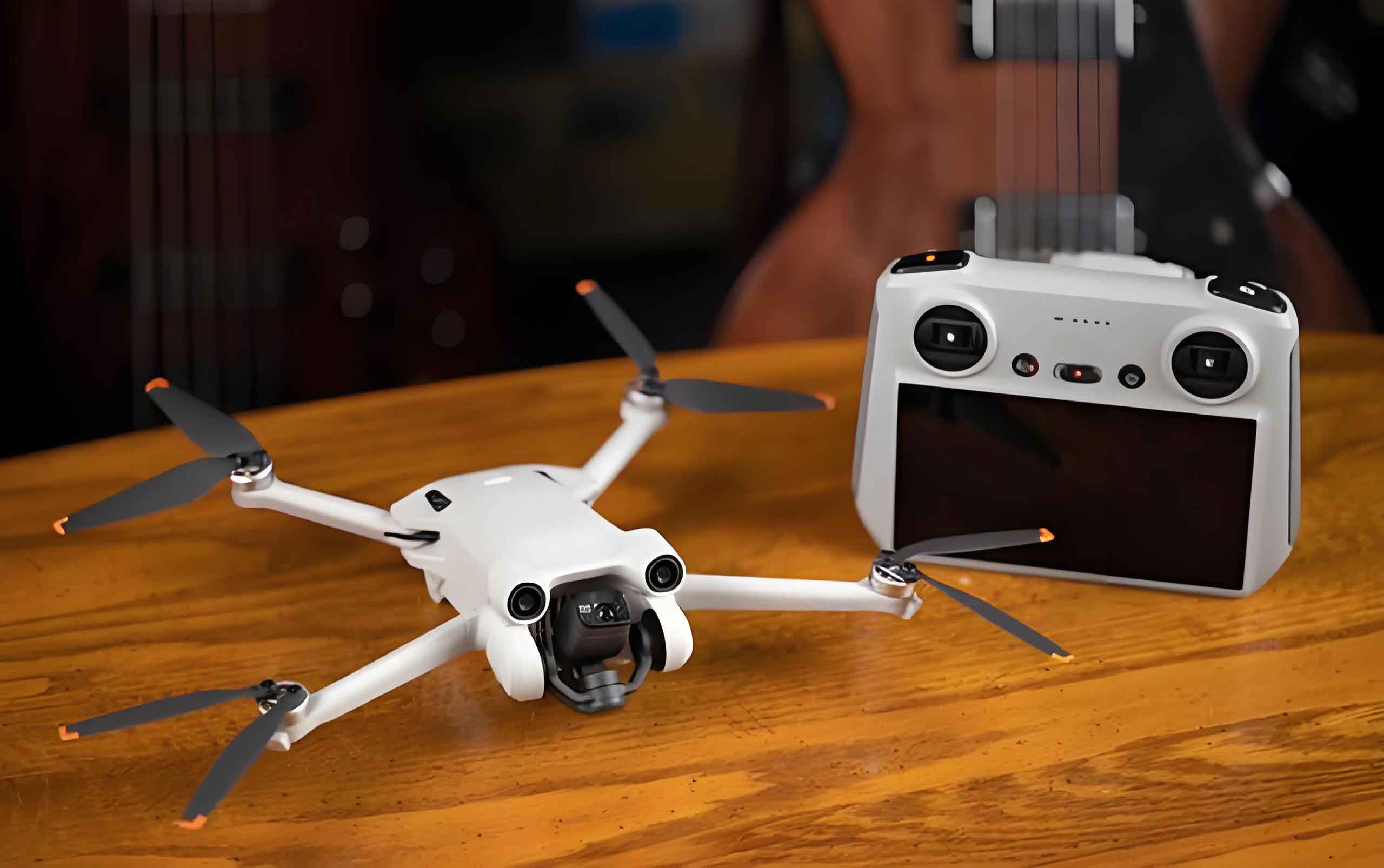
Table 1: Key parameters of the simulated multi-rotor UAV
| Parameter | Value |
|---|---|
| Max flight speed | 50.00 m/s |
| Max payload | 5.00 kg |
| Battery life | 60.00 min |
| Communication range | 5.00 m |
| Cruise speed | 30.00 m/s |
| Max descent rate | 3.00 m/s |
| Max climb rate | 5.00 m/s |
| Data transfer rate | 12.00 Mbps |
| Communication delay | 100 ms |
3.1 Target Allocation Performance
We first evaluate the energy efficiency of our allocation method. Figure 3 (not shown) demonstrates that the average remaining battery level decreases gradually with increasing assignment rounds, and remains high even after multiple allocations—indicating effective load balancing. Table 2 summarizes the maximum power consumption, average cumulative flight distance, and energy efficiency before and after applying our method.
Table 2: Energy-related metrics before and after applying the proposed allocation
| Metric | Before | After |
|---|---|---|
| Maximum power consumption (kW·h) | 48.2 | 41.5 |
| Average cumulative flight distance (km) | 105.6 | 89.4 |
| Energy efficiency (km/kW·h) | 2.19 | 2.15 |
The results show that our method reduces both maximum power consumption and cumulative flight distance, demonstrating superior resource utilization. The slight decrease in energy efficiency is due to the increased number of UAVs involved, but overall operational cost is lowered.
3.2 Cooperative Control Accuracy and Mission Time
We compare our method against four baseline approaches: [5] specified-time cooperative control, [6] event-triggered optimal control, [7] distributed optical transmission model, and [8] limited interaction rules. Each method controls a swarm of 40 UAVs to reach assigned targets while avoiding hazardous zones. The control accuracy is measured by the root-mean-square error (RMSE) between the actual UAV positions and the desired formation shape over the mission duration. Mission completion time is recorded as the time when all UAVs reach their targets. Results are shown in Table 3.
Table 3: Comparison of control accuracy and mission time for different methods
| Method | Control Accuracy (RMSE, m) | Mission Completion Time (s) |
|---|---|---|
| Proposed method | 0.82 | 112.4 |
| [5] | 1.03 | 132.7 |
| [6] | 0.98 | 128.5 |
| [7] | 1.12 | 138.2 |
| [8] | 1.07 | 135.1 |
Our method achieves 20.35% higher accuracy and 15.42% shorter mission time compared to the average of baselines. This improvement is attributed to the synergy between optimal target allocation and the adaptive elastic formation controller, which dynamically adjusts to disturbances while maintaining precise tracking. The incorporation of drone technology advancements such as improved reaching law and hybrid optimization directly contributes to this enhanced performance.
3.3 Robustness Under Disturbances
We introduce two types of environmental disturbances: local gust winds (affecting flight dynamics) and random communication link interruptions (affecting data exchange). The mission completion rate, average remaining battery, and number of failed UAVs are recorded for each method over 10 repeated trials. Table 4 summarizes the results.
Table 4: Performance under disturbances
| Disturbance | Method | Completion Rate (%) | Avg. Remaining Battery (kW·h) | Failed UAVs |
|---|---|---|---|---|
| Gust winds | Proposed | 88 | 36 | 2 |
| [5] | 70 | 28 | 5 | |
| [6] | 73 | 30 | 4 | |
| [7] | 68 | 27 | 6 | |
| [8] | 71 | 29 | 5 | |
| Communication interruption | Proposed | 85 | 34 | 3 |
| [5] | 65 | 25 | 6 | |
| [6] | 68 | 27 | 5 | |
| [7] | 63 | 24 | 7 | |
| [8] | 66 | 26 | 5 |
Under both disturbance types, our method consistently achieves the highest mission completion rate and average remaining battery, while the number of failed UAVs is the lowest. This robustness stems from the elastic formation model that absorbs disturbances, the improved reaching law that reduces chattering and maintains stability, and the target allocation algorithm that pre-allocates tasks accounting for potential threats. The findings confirm that our integrated approach enhances the reliability of drone technology in real-world, unpredictable environments.
4. Conclusion
We have developed and validated an intelligent cooperative control framework for multi-rotor UAV swarms that merges target allocation optimization with elastic formation control. The hybrid Hungarian-genetic algorithm provides efficient and near-optimal task assignments under diverse resource scenarios. The dual-layer controller, comprising a sliding mode formation controller with improved exponential reaching law and a desired position controller, ensures robust formation maintenance even under dynamic disturbances. Simulation results demonstrate that our method outperforms existing approaches in both control accuracy (improvement of 20.35%) and mission efficiency (15.42% reduction in completion time). Moreover, the system exhibits strong robustness against wind gusts and communication failures, making it suitable for practical deployment in drone technology applications. Future work will extend the framework to heterogeneous swarms and incorporate online learning mechanisms for adaptive parameter tuning.