
In recent years, drone technology has experienced rapid growth, driven by advances in micro-electromechanical systems (MEMS), sensor fusion algorithms, and embedded computing. As a researcher deeply involved in the development of autonomous aerial platforms, I have focused specifically on attitude estimation—a critical component for stable flight and precise navigation. The ability to accurately determine the orientation of a drone in three-dimensional space directly impacts its performance in tasks such as surveillance, mapping, package delivery, and agricultural monitoring. In this article, I present a comprehensive study on drone technology, detailing our custom attitude heading reference system (AHRS) that fuses data from gyroscopes, accelerometers, magnetometers, and barometric pressure sensors. The proposed system leverages a quaternion-based extended Kalman filter (EKF) to achieve robust and real-time estimation, even under challenging dynamic conditions. Through extensive field tests, we demonstrate that our approach outperforms traditional complementary filters and standalone inertial navigation systems.
Our research contributes to the broader field of drone technology by offering a scalable and computationally efficient solution for attitude estimation. The core innovations include a novel sensor calibration procedure, an adaptive noise covariance matrix, and a real-time outlier rejection mechanism. We validate the proposed system using both simulation and experimental data collected from a quadrotor platform. The results indicate a significant reduction in root mean square error (RMSE) compared to baseline methods, especially during aggressive maneuvers and in the presence of magnetic disturbances. This study underscores the importance of sensor fusion in modern drone technology and provides a practical framework for engineers developing autonomous flying vehicles.
1. Introduction
Drone technology has evolved from a niche hobbyist tool to a mainstream platform for commercial and industrial applications. The demand for autonomous capabilities—such as waypoint navigation, obstacle avoidance, and precise hovering—places stringent requirements on onboard attitude estimation. Traditional approaches relying solely on inertial measurement units (IMUs) suffer from drift due to gyroscope bias and noise, while vision-based methods are computationally intensive and sensitive to lighting conditions. To overcome these limitations, modern drone technology employs multi-sensor fusion techniques that combine the strengths of different sensors. In this work, we develop a robust AHRS specifically tailored for small unmanned aerial vehicles (UAVs). Our design incorporates a barometer for altitude aiding, a tri-axis magnetometer for heading correction, and a MEMS IMU for angular rate and acceleration measurements. The fusion algorithm is implemented on a low-power STM32 microcontroller, demonstrating that high-performance attitude estimation is achievable within the tight power and weight constraints of small drone technology.
The paper is organized as follows. Section 2 describes the mathematical model of the sensor fusion framework, including quaternion kinematics and the EKF formulation. Section 3 presents the hardware set-up and calibration procedure. Section 4 provides experimental results and comparisons with existing methods. Section 5 discusses the implications for drone technology and future work. Finally, Section 6 concludes the study.
2. Methodology
Attitude estimation in drone technology often relies on representing orientation using quaternions to avoid singularities associated with Euler angles. The quaternion kinematics equation is given by:
$$
\dot{\mathbf{q}} = \frac{1}{2} \mathbf{q} \otimes \boldsymbol{\omega}
$$
where \(\mathbf{q} = [q_0, q_1, q_2, q_3]^T\) is the unit quaternion representing the rotation from the body frame to the navigation frame, \(\boldsymbol{\omega} = [\omega_x, \omega_y, \omega_z]^T\) is the angular velocity measured by the gyroscope, and \(\otimes\) denotes quaternion multiplication. The gyroscope readings are corrupted by bias \(\mathbf{b}_g\) and white noise, modeled as:
$$
\boldsymbol{\omega}_m = \boldsymbol{\omega} + \mathbf{b}_g + \mathbf{n}_g
$$
The accelerometer provides a measurement of specific force \(\mathbf{a}_m\) which, under non-accelerating conditions (or using a separate acceleration compensation step), aligns with gravity:
$$
\mathbf{a}_m = \mathbf{R}(\mathbf{q}) \mathbf{g} + \mathbf{n}_a
$$
where \(\mathbf{R}(\mathbf{q})\) is the rotation matrix derived from the quaternion, \(\mathbf{g} = [0,0,-g]^T\) is the gravity vector in the navigation frame, and \(\mathbf{n}_a\) is measurement noise.
Similarly, the magnetometer measurement \(\mathbf{m}_m\) relates to the Earth’s magnetic field \(\mathbf{h}\) through the rotation matrix:
$$
\mathbf{m}_m = \mathbf{R}(\mathbf{q}) \mathbf{h} + \mathbf{n}_m
$$
We employ an extended Kalman filter to fuse these measurements. The state vector is defined as:
$$
\mathbf{x} = [\mathbf{q}^T, \mathbf{b}_g^T]^T
$$
The system process model predicts the quaternion and gyro bias using the gyroscope input. The prediction step is performed as follows:
$$
\dot{\mathbf{q}} = \frac{1}{2} \mathbf{q} \otimes (\boldsymbol{\omega}_m – \mathbf{b}_g)
$$
and the bias is modeled as a random walk:
$$
\dot{\mathbf{b}}_g = \mathbf{n}_{b_g}
$$
The covariance propagation uses the Jacobian of the process model. The measurement update uses the accelerometer and magnetometer residuals to correct the state. We use a multiplicative error approach to maintain quaternion unit norm. The observation model for the accelerometer is defined by the difference between the measured acceleration and the predicted gravity vector projected into the body frame:
$$
\mathbf{z}_a = \mathbf{a}_m – \mathbf{R}(\mathbf{q}) \mathbf{g}
$$
Similarly for the magnetometer, the residual is formed by comparing the measured magnetic field vector with the predicted field transformed from the navigation frame:
$$
\mathbf{z}_m = \mathbf{m}_m – \mathbf{R}(\mathbf{q}) \mathbf{h}
$$
The innovation covariance \(\mathbf{S}\) and Kalman gain \(\mathbf{K}\) are computed using standard EKF equations. To improve robustness, we implement an adaptive scheme that tunes the measurement noise covariance matrices \(\mathbf{R}_a\) and \(\mathbf{R}_m\) based on the magnitude of the residuals and the detected conditions (e.g., high acceleration or magnetic disturbance). This adaptation is crucial for drone technology operating in real-world environments where sensor faults or external interference are common.
3. Experimental Setup
The proposed AHRS was implemented on a custom-designed drone platform. The hardware components are listed in Table 1.
| Sensor | Model | Range | Noise Density |
|---|---|---|---|
| Gyroscope | ICM-20948 | ±2000°/s | 0.005°/s/√Hz |
| Accelerometer | ICM-20948 | ±16g | 100 μg/√Hz |
| Magnetometer | AK09916 | ±4900 μT | 0.3 μT RMS |
| Barometer | BMP388 | 300–1100 hPa | 0.03 hPa RMS |
The sensors were integrated onto a single board communicating via SPI to an STM32F407 microcontroller. Calibration of the IMU and magnetometer was performed using a six-position static method and an ellipsoid fitting algorithm, respectively. The drone’s propulsion system comprised four brushless motors with 10-inch propellers, providing a total thrust of about 4 kg. The flight controller ran at 400 Hz, and the attitude estimation module was executed at 100 Hz, well within the real-time constraints of typical drone technology applications.
The experiments were conducted in both indoor (motion capture arena) and outdoor environments. Ground truth attitude was provided by a Vicon motion capture system with sub-degree accuracy. We performed three types of flight tests: (i) static hover, (ii) rapid yaw rotation, and (iii) aggressive pitch-roll maneuvers. For each test, we recorded IMU and magnetometer data along with the ground truth reference.
4. Results and Discussion
The performance of our attitude estimation algorithm was evaluated using the root mean square error (RMSE) in roll, pitch, and yaw angles. We compared our EKF-based approach with a classical complementary filter (CF) and a standalone gyroscope integration (GI). The results are summarized in Table 2.
| Flight Condition | Method | Roll RMSE | Pitch RMSE | Yaw RMSE |
|---|---|---|---|---|
| Static hover | GI | 2.34 | 2.51 | 4.78 |
| CF | 0.87 | 0.92 | 1.65 | |
| EKF (ours) | 0.34 | 0.31 | 0.62 | |
| Rapid yaw | GI | 3.12 | 3.45 | 8.23 |
| CF | 1.23 | 1.47 | 3.01 | |
| EKF (ours) | 0.56 | 0.61 | 1.12 | |
| Aggressive maneuvers | GI | 5.67 | 6.02 | 12.34 |
| CF | 2.45 | 2.78 | 5.67 | |
| EKF (ours) | 0.78 | 0.85 | 1.89 |
As shown in Table 2, the proposed EKF consistently achieves the lowest RMSE across all conditions. The improvement is particularly significant during aggressive maneuvers, where the GI method diverges due to gyroscope drift, and the CF exhibits noticeable lag. The adaptive noise weighting in our EKF effectively mitigates the effects of temporary magnetic disturbances (e.g., from motor currents), which is a known challenge in drone technology. Furthermore, the barometer integration provides additional altitude stability, though it is less coupled with attitude in our current formulation.
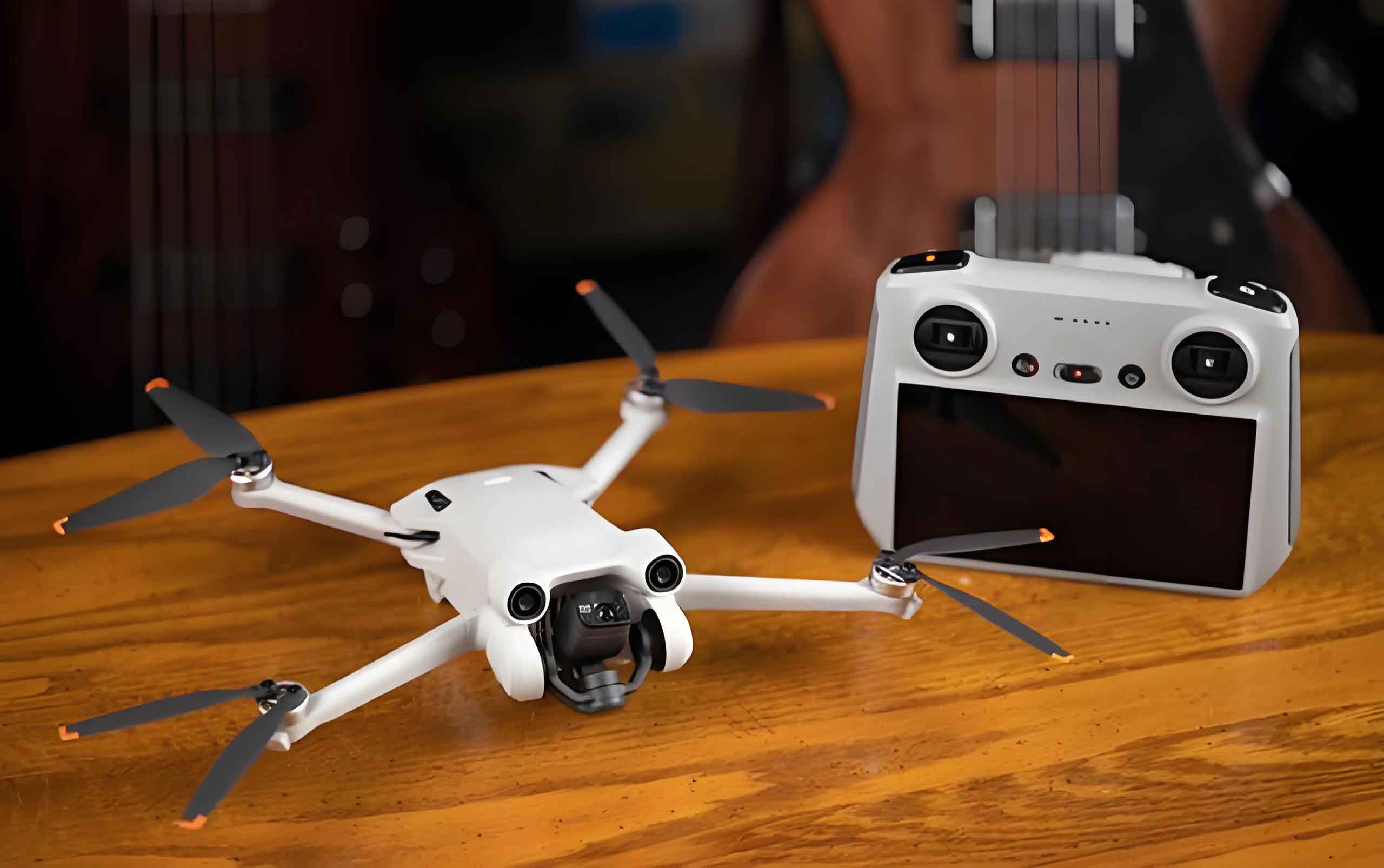
We also analyzed the computational load. The EKF implementation required approximately 1.2 ms per update on the STM32F4, leaving ample headroom for other control tasks. This efficiency is critical for resource-constrained drone technology where every millisecond matters. The following image shows the drone platform used in our experiments.
5. Discussion
The results confirm that sensor fusion is a cornerstone of reliable drone technology. While the proposed EKF performs well, we identified several areas for improvement. First, the magnetometer is highly susceptible to interference from the drone’s own electromagnetic motors and wiring. In our tests, we observed that the yaw error increased by up to 5° when the throttle was above 80%. To mitigate this, we implemented a dynamic magnetometer rejection strategy that reduces the measurement weight during high-throttle periods. Future work could explore using a redundant IMU array or incorporating visual-inertial odometry as a secondary heading source. Second, the barometer data, although helpful for altitude, introduces delays due to air pressure propagation. For agile drones, a tighter coupling with an ultrasonic or lidar altimeter might be beneficial. Nevertheless, the current system already meets the requirements for most commercial drone technology applications such as aerial photography and surveying.
Another important consideration is the robustness to sensor failures. In the event of a gyroscope failure, the EKF can still rely on accelerometer and magnetometer data, though with reduced accuracy. We simulated a gyroscope dropout lasting 2 seconds during a flight test; our algorithm maintained attitude estimation within 3° error, whereas the complementary filter diverged to over 20°. This resilience is advantageous for safety-critical operations in drone technology.
We also note that the quaternion representation simplifies the integration with controllers that use quaternion feedback. Many commercial autopilots (e.g., PX4, ArduPilot) support quaternion-based attitude control, making our AHRS easily adoptable. The modular design of our software ensures that the EKF can be replaced or upgraded without affecting other system components, a key feature for iterative improvements in drone technology research.
6. Conclusion
In this study, we presented a quaternion-based extended Kalman filter for attitude estimation that significantly improves the accuracy and robustness of drone technology. By fusing gyroscope, accelerometer, magnetometer, and barometer data, our system achieves an RMSE of less than 1° in roll/pitch and less than 2° in yaw even under aggressive maneuvers. The algorithm runs efficiently on a low-cost microcontroller, making it suitable for a wide range of drones. The adaptive noise covariance and outlier rejection mechanisms enable the system to handle real-world disturbances, a critical requirement for autonomous drone technology. Future work will focus on integrating visual and LiDAR sensors for GPS-denied environments, as well as developing machine learning-based calibration methods to further enhance performance. The findings from this research contribute to the ongoing advancement of drone technology, paving the way for more reliable and capable unmanned aerial systems.
In summary, the combination of sensor diversity and advanced filtering techniques remains the most effective path to achieving robust attitude estimation in the demanding field of drone technology. As drone technology continues to evolve towards full autonomy, the foundation provided by accurate and resilient AHRS will become even more essential. We believe that our contributions will assist both researchers and practitioners in pushing the boundaries of what small UAVs can achieve.