
Our research addresses the critical challenges in the application of drone technology for urban logistics, specifically within the confined and high-traffic environment of a university campus. While the potential for drone delivery is vast, practical hurdles such as low pick-up efficiency, significant safety risks from rotating propellers, and the lack of a seamless integration between aerial and ground segments have impeded widespread adoption. To solve these problems, we developed a fully automated ground connection system designed to operate in synergy with unmanned aerial vehicles. This system acts as an intelligent intermediary, handling the precise docking, secure storage, and user-friendly retrieval of packages. This paper details our design methodology, system architecture, control strategies, and the experimental validation that proves the system’s robust performance and operational efficiency. The integration of advanced drone technology with specialized ground robotics forms the core of our contribution to the burgeoning low-altitude economy.
1. Overall System Architecture and Design Philosophy
Our design began with a clear definition of the functional requirements for a campus-based drone delivery hub. The core challenge is to create a safe and efficient interface between the dynamic aerial vehicle and the static human user. Our solution is an integrated intelligent cabinet that manages the entire workflow. The system’s architecture is built on a layered ‘Cloud-Edge-Terminal’ framework. The intelligent cabinet acts as the ‘Edge’ computing core, processing commands from the ‘Cloud’ (a remote server for task management and user notification) and issuing precise instructions to the ‘Terminal’ (actuators and sensors).
This architecture resolves the ‘information island’ issue common in fragmented systems. A master-slave control scheme is employed: an Industrial Personal Computer (IPC) serves as the ‘master’ for high-level decision-making, human-machine interface management, and cloud communication, while a dedicated Programmable Logic Controller functions as the ‘slave’ for real-time motion control and sensor data acquisition. This division of labor ensures both computational power for complex tasks and deterministic timing for critical safety operations. The fundamental role of drone technology in this system is to transport the package to the precise location of the ground station, thus completing the first and last miles of the aerial portion of the delivery.
The following table summarizes the key performance indicators (KPIs) that guided our entire design process.
| System Component | Designed Key Performance Indicator (KPI) |
|---|---|
| Airstrip / Landing Pad | Provide a 1.6 m x 1.6 m landing area; structural deformation under UAV and package load < 0.5 mm |
| Bi-Directional Alignment Mechanism | Complete package positioning task; single-axis error < 2 mm |
| Top Protective Cover | No interference with UAV propellers; complete opening/closing within 10 seconds; IP65 waterproof rating. |
| Cabinet Height (to Airstrip) | Airstrip height > 2.2 m to ensure a safe physical separation between the user and the UAV’s operational zone. |
| Storage Bins | Capable of supporting a 30 N load with deformation < 0.75 mm. |
| Three-Axis Stacker Crane | Complete a full storage-retrieval cycle within 120 seconds. |
| Electrical Control Cabinet | Must be safe, reliable, and have adequate heat dissipation for continuous outdoor operation. |
| User Retrieval Port | Must be safe, with an automatic anti-pinch mechanism. |
| Maintenance Access | Provide a maintenance channel width > 1.2 m for service personnel. |
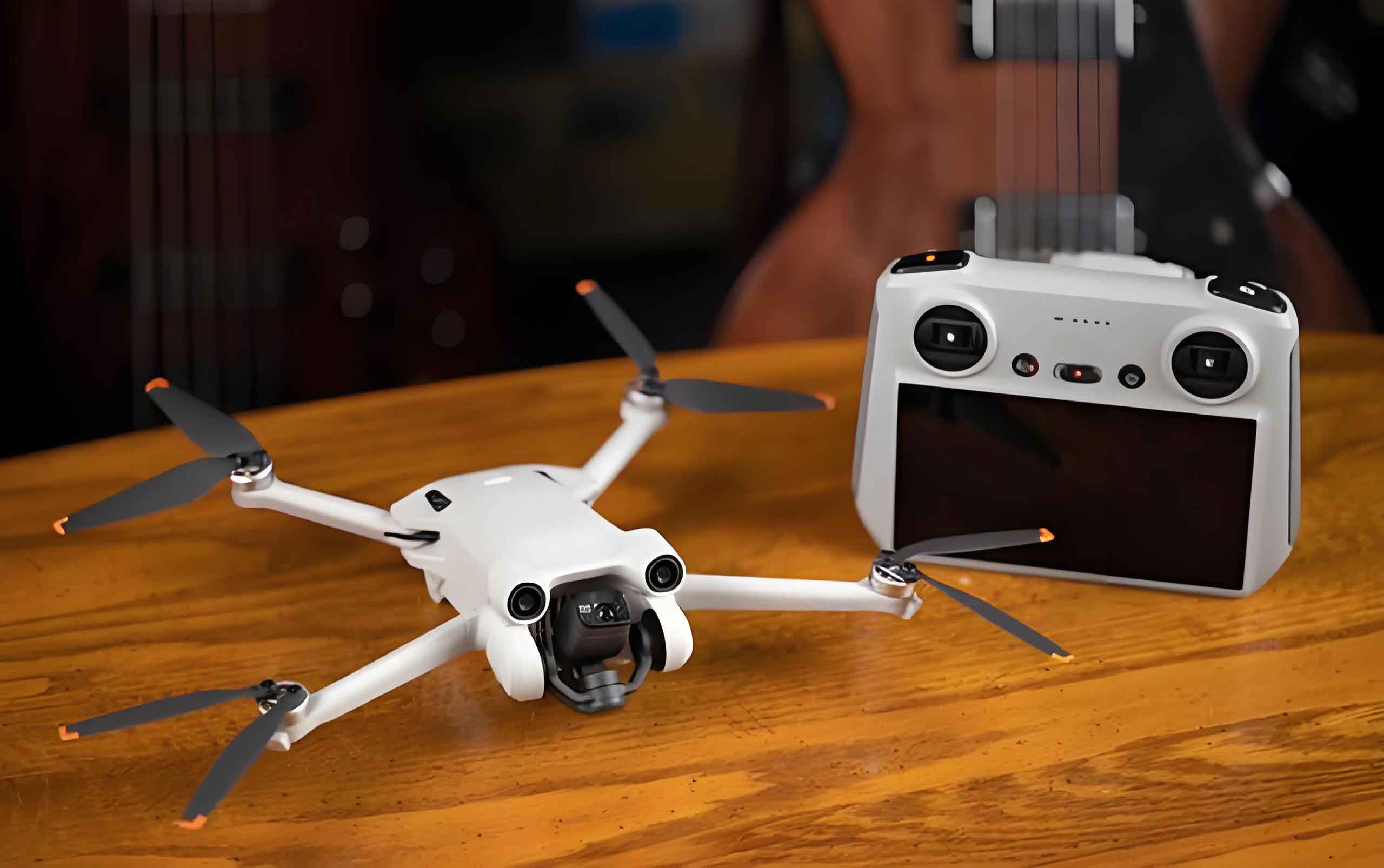
2. Detailed Mechanical Structure Design
Our mechanical design was driven by the need for modularity, reliability, and space efficiency. The cabinet is divided into two primary functional zones: the ‘Airstrip’ on top for UAV operations and the ‘Storage Cabinet’ below for package handling and user interaction.
2.1 The Airstrip Module
The airstrip module is the most critical interface between the airborne drone technology and the ground system. We engineered a cascading top cover and an integrated landing platform. The cascading cover uses a linkage mechanism to fold and retract into a compact space, minimizing the required envelope for its operation. The cover’s joints are designed to meet the IP65 protection standard to withstand rain and dust. Finite element analysis simulations on the aluminum landing platform were performed to ensure it could handle the dynamic load of a landing UAV and the weight of a package without significant deformation, thus ensuring safe and repeatable landings.
A key innovation in this module is the bi-directional positioning bar mechanism. When a UAV releases a package onto the airstrip, its position is inherently random. This would cause problems for the automatic retrieval system. Our solution uses a gear-rack and linear guide-rail system to precisely push the package in the X and Y axes, centralizing it for the stacker crane. This aligns the package’s final position within a tolerance of less than 2 mm per axis, a critical step that ensures the subsequent grip and transfer are error-free.
2.2 The Storage Cabinet and Core Mechanisms
The storage cabinet houses the system’s primary internal actuator: the three-axis stacker crane. This gantry-style robot executes all movements for storing and retrieving packages. To overcome common issues like cumulative error, positioning drift, and operational noise, we carefully designed its drivetrain. The X-axis is driven by a servomotor and a timing belt, with the belt’s tension and the symmetrical layout of the guide rails pre-loaded to minimize angular deviation. The Y and Z axes use a similar servo-timing belt configuration. A triple-redundant safety system uses end-of-travel sensors and hard mechanical stops to prevent overrun events.
The stacker crane’s Z-axis is equipped with a high-resolution barcode scanner. This unit automatically reads the package’s tracking code (using Code 128 format) while the package is being lowered into the storage bin. The scanning information is instantly linked to the bin’s unique identification number and the order data from the cloud, allowing for real-time tracking and eliminating manual data entry. The storage grid itself is designed with robust shelves to handle the specified load limits.
The mechanical design also includes a secure package input door to protect the interior from the elements and a user retrieval port equipped with a safety light curtain to prevent accidental pinching. The entire system is enclosed in a weather-resistant housing.
3. Control System and Workflow Integration
The intelligence of our ground connection system is delivered through a carefully crafted control architecture. The workflow is managed by a finite state machine running on the IPC, ensuring deterministic and safe progression through all steps. The IPC communicates with the motion controller via a fieldbus (XPLC108E-V2 controller with bus-type servo drives), enabling precise multi-axis coordination.
The operational workflow consists of two main processes: Delivery and Pick-up.
3.1 The Automated Delivery Process
This process begins when the UAV, guided by the cloud, arrives above the cabinet. The sequence of events is as follows:
- The UAV sends a landing request to the cloud, which relays it to the IPC.
- The IPC commands the top cover to open and sends a ‘safe to land’ signal back to the cloud/UAV.
- The UAV descends, lands on the airstrip, and releases the package. It then sends a ‘delivery complete’ signal and departs.
- The IPC activates the bi-directional positioning bars to center the package.
- The input door opens, and the three-axis stacker crane grips the package.
- As the crane moves the package down, the barcode scanner identifies the tracking code.
- The crane stows the package in a pre-assigned empty bin. The bin’s ID and the package’s tracking code are linked and stored in the database.
- The IPC updates the cloud, which then sends a pick-up notification (e.g., a one-time code) to the user.
3.2 The User Pick-up Process
This process is designed for speed and ease of use:
- The user approaches the cabinet and interacts with the touch screen.
- The user inputs their pick-up code.
- The IPC queries the database to find the correct bin location for the matching package.
- The IPC commands the three-axis stacker crane to travel to the specified bin, retrieve the package, and move it to the user retrieval port.
- The retrieval port’s door opens.
- The user takes the package. Sensors confirm removal.
- The port door closes, and the system returns to idle.
3.3 The Human-Machine Interface (HMI)
We developed a dual-interface HMI system based on the .NET Framework. The front-end interface, designed with XAML and WPF, provides an intuitive and visually clear experience for the user. It features a large, responsive touch screen with clear prompts and supports both QR code scanning and manual PIN code entry. The back-end interface is a powerful management tool for maintenance personnel. It provides real-time system status, component monitoring, manual override controls for debugging, and access to the order and equipment logs. This dual interface allows for seamless operations, bridging the gap between the end-user and the technical maintainer.
4. Experimental Validation and System Robustness
To validate our design and confirm its operational readiness, we conducted an extensive outdoor field test. The test protocol involved a complete simulation of the full delivery and retrieval cycle for 50 continuous runs. We measured critical performance metrics, including the time for each process step and the final positioning accuracy of the packages.
The results of our KPI validation are presented in the following table:
| Design KPI | Measured Result | Status |
|---|---|---|
| Landing Pad Deformation (under load) | 0.3 mm | Pass (Target: < 0.5 mm) |
| Bi-Directional Alignment Error (X) | 0.7 mm | Pass (Target: < 2 mm) |
| Bi-Directional Alignment Error (Y) | 0.6 mm | Pass (Target: < 2 mm) |
| Cover Opening Time | 6 seconds | Pass (Target: < 10 s) |
| Cover Waterproof Rating | IP65 (Tested via spray test) | Pass |
| User-UAV Physical Separation | 2.26 m height | Pass (Target: > 2.2 m) |
| Storage Bin Load Capacity | 40 N with 0.5 mm deformation | Pass (Target: 30 N load) |
| Total Cycle Time (Store + Retrieve) | 110 seconds (average) | Pass (Target: < 120 s) |
| Electrical Cabinet Stability | 1,440 hours continuous test, no failures | Pass |
The robustness test, analyzing 50 consecutive cycles, yielded the following statistical data for the time taken for the core processes. The average storage time was 80.11 seconds with a standard deviation of only 0.43 seconds. The average user retrieval time was 30.03 seconds with a standard deviation of 0.51 seconds. The low standard deviation and Coefficient of Variation (CV) values, both below 2%, confirm the system’s high repeatability and robustness. All processes completed without any mechanical jams, communication errors, or safety trigger events.
The key performance metrics are mathematically summarized below. The average time ( $\bar{x}$ ), standard deviation ($\sigma$), range ($R$), and coefficient of variation ($CV$) are calculated for the delivery (store) and retrieval processes.
$$ \bar{x} = \frac{1}{n} \sum_{i=1}^{n} x_i $$
$$ \sigma = \sqrt{\frac{1}{n-1} \sum_{i=1}^{n} (x_i – \bar{x})^2} $$
$$ CV = \frac{\sigma}{\bar{x}} \times 100\% $$
These calculations demonstrate that the performance meets the 5-sigma quality standard, indicating exceptional process control. The integration of drone technology with our reliable ground system has proven to be highly effective.
5. Conclusion
In this work, we have presented the successful design, implementation, and validation of a campus-based UAV logistics ground connection system. The system’s innovative mechanical design, including the cascading top cover and the bi-directional positioning mechanism, provides a safe and precise interface for drone operations. The three-axis stacker crane, combined with a robust control architecture, ensures reliable and fast package handling. The cloud-based architecture, coupled with a user-friendly HMI, creates a seamless experience for both operators and end-users. The comprehensive outdoor field testing validated our system against all design KPIs, achieving an average storage time of 80 seconds and a retrieval time of 30 seconds, with a positioning accuracy of less than 1 mm. The low variability in cycle times confirms the system’s robustness and readiness for practical deployment. Our work demonstrates a viable and efficient solution for the critical ‘last meter’ logistics challenge, paving the way for wider commercial adoption of drone technology in various urban environments, from campuses to residential communities and hospital complexes.