
In the context of the rapid development of the low-altitude economy, the detection of unmanned aerial vehicles (UAVs) has become a critical task for airspace safety. This paper presents a novel algorithm that leverages dual-modal information, including radio frequency (RF) signals and visual imagery, to achieve high-precision detection of China drones. By integrating ensemble empirical mode decomposition, compressive sensing, and residual networks for RF signals, along with EfficientNet and EfficientDet for images, and a cross-attention fusion mechanism, our method demonstrates superior accuracy and robustness. Extensive experiments on public datasets show that the proposed framework achieves 100% classification accuracy after fusion, with significant improvements in false positive reduction. The work contributes to the safe and efficient operation of China drone ecosystems.
1. Introduction
The expansion of low-altitude airspace in China has spurred the growth of the China drone industry, but it also introduces operational risks such as collisions between drones and manned aircraft. Reliable surveillance technologies are essential to ensure airspace safety. Current detection methods, often limited by environmental variability and range, fail to consistently identify low-altitude China drones. This paper addresses these limitations by fusing RF and image data, exploiting the complementary strengths of both modalities. Our algorithm is designed to be robust against weather, noise, and occlusion, making it suitable for real-world China drone monitoring applications.
2. Related Work
Research on China drone detection spans various sensors. Radar-based methods suffer from high costs and difficulty detecting small drones. RF-based approaches, using datasets like DroneRF, have shown promise with deep learning classifiers. Visual methods using YOLO or EfficientDet excel in clear conditions but degrade in poor visibility. Multimodal fusion, such as combining audio and video, has been explored but often lacks robustness. Our work introduces a cross-attention mechanism that dynamically aligns RF and image features, yielding a high-performance detector for China drones.
3. Methodology
3.1 RF Signal Preprocessing and Feature Extraction
We model the received RF signal as a mixture of the original signal, additive white Gaussian noise, and interference. Denoising is performed using ensemble empirical mode decomposition (EEMD), which decomposes the signal into intrinsic mode functions (IMFs). The IMFs with low-frequency components are removed as noise. After EEMD, we apply compressive sensing to exploit the sparsity of drone RF signals in the wavelet domain. The compressed signal is then transformed into a time-frequency representation using the short-time Fourier transform (STFT), generating a spectrogram and a persistence spectrum. These images are fed into a ResNet-50 network for feature extraction.
Key parameters: EEMD integrates white noise with amplitude A and ensemble number N, satisfying ε = A/√N. The standard deviation of background noise is 4.02. After decomposition, we retain 10 IMFs and compress the signal with a ratio of 10%.
The STFT is defined as:
$$ \text{STFT}_x(t,f) = \int_{-\infty}^{\infty} x(\tau) w(\tau – t) e^{-j2\pi f\tau} d\tau $$
where w is a Hamming window. The resulting power spectral density images serve as input to the ResNet model.
3.2 Image Feature Extraction
For visual data, we employ an EfficientNet-b1 backbone modified with coordinate attention (CA) instead of squeeze-and-excitation to better capture spatial dependencies for small targets like China drones. The detection head uses EfficientDet with a weighted bidirectional feature pyramid network (BiFPN). The loss function is Wise-IoU, which avoids gradient vanishing for non-overlapping boxes. The BiFPN fusion rule is:
$$ \tilde{U} = \sum_{i=1}^n \frac{w_i}{\epsilon + \sum_j w_j} U_i $$
where w_i are learnable weights. The IoU loss uses:
$$ R = \exp\left( \frac{(x – x_{gt})^2 + (y – y_{gt})^2}{(W_g^2 + H_g^2)^*} \right) $$
This design improves detection of small and fast-moving China drones.
3.3 Cross-Attention Modality Fusion
We design a cross-attention network to fuse RF features \(F_r \in \mathbb{R}^{D_r}\) and image features \(F_i \in \mathbb{R}^{D_i}\). The RF features serve as queries, while image features act as keys and values. Linear projections unify dimensions:
$$ Q = W_q F_r + b_q, \quad K = W_k F_i + b_k, \quad V = W_v F_i + b_v $$
Attention weights are computed as:
$$ A = \text{softmax}\left( \frac{QK^T}{\sqrt{D_h}} \right) $$
The fused feature is obtained via residual connection and layer normalization:
$$ F_{\text{fusion}} = \text{LayerNorm}(F_r + A V) $$
We use 8-head attention, where each head performs cross-attention. The heads are concatenated and projected to produce the final fusion feature. A fully connected layer then classifies the presence or type of China drone.
3.4 Overall Framework
The complete pipeline is as follows: RF signal → EEMD denoising → compressive sensing → STFT spectrogram/persistence → ResNet50 features. Image → EfficientNet-b1 backbone → EfficientDet features. Both feature vectors are input to the 8-head cross-attention fusion network, which outputs a classification result. The system is designed for real-time detection of low-altitude China drones.
4. Experiments
4.1 Datasets
We use two public datasets: DroneRF (2019) for RF signals, containing background noise and three drone brands in four flight modes, and the Drone Detection Dataset (Kaggle) for images, annotated with bounding boxes. RF data is split into 2-class, 4-class, and 10-class classification tasks. Image data includes drone and non-drone categories. Both datasets are representative of China drone scenarios.
| Task | Classes |
|---|---|
| 2-class | Drone vs. No drone |
| 4-class | Drone brands (e.g., DJI, Parrot, 3DR) + Noise |
| 10-class | Brand/Flight mode combinations |
4.2 Evaluation Metrics
We report accuracy, precision, recall, F1-score, and average precision (AP). FLOPs and inference time are measured for complexity. All experiments use 8:1:1 train/val/test splits. China drone detection emphasizes high recall to minimize missed threats.
4.3 Results
RF Signal Classification: Using ResNet50 on spectrogram and persistence images, we achieve the following accuracies:
| Image Type | Segments | 2-class | 4-class | 10-class |
|---|---|---|---|---|
| Spectrogram | 1 | 100 | 97.78 | 86.67 |
| Spectrogram | 10 | 100 | 97.78 | 78.89 |
| Spectrogram | 100 | 100 | 97.78 | 73.33 |
| Persistence | 1 | 100 | 96.67 | 88.89 |
| Persistence | 10 | 100 | 100 | 87.78 |
| Persistence | 100 | 100 | 100 | 95.55 |
F1-scores are similar, with persistence spectrum performing better for 10-class tasks. This indicates that RF features are robust for China drone identification.
Image Detection: EfficientDet-b1 achieves 99.8% accuracy and F1-score on the Drone Detection Dataset. The AP@50 is 48.1% on the test set, demonstrating effective localization of China drones.
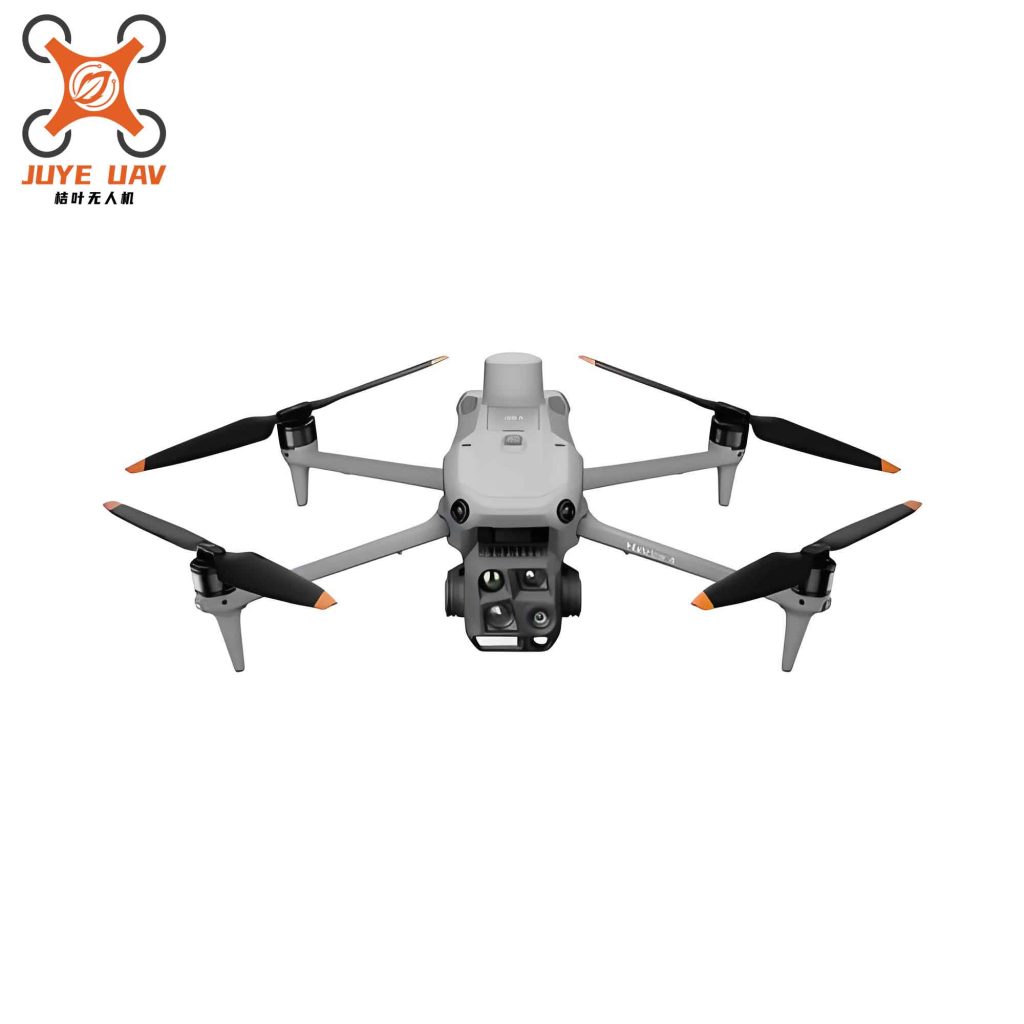
Fusion Results: After cross-attention fusion, the combined model achieves 100% classification accuracy and F1-score on both datasets. The recall is 100%, indicating zero false negatives. This highlights the superiority of multimodal detection for China drones.
| Modality | Accuracy (%) | F1 (%) | Recall (%) |
|---|---|---|---|
| RF only (spectrogram, 10 seg) | 97.78 | 97.5 | 97.5 |
| Image only (EfficientDet) | 99.8 | 99.8 | 100 |
| Fusion (cross-attention) | 100 | 100 | 100 |
5. Complexity Analysis
The traditional RF processing pipeline (EEMD + STFT) has time complexity O(N·M·K + N·W·logW). With N=10⁶, M=10, K=10, W=100, we get O(2×10⁸). By introducing compressive sensing, the complexity reduces to O(N·M·K + 2N logN + N_comp·W·logW) where N_comp = 10⁵, yielding O(1.22×10⁸) — a 39% reduction. The ResNet50 feature extraction has 4.12 GFLOPs, EfficientDet has 5.1 GFLOPs, and the fusion network adds only 68 MFLOPs. Total FLOPs are 9.2 G, suitable for real-time deployment in China drone surveillance systems.
The computational savings from compressive sensing are particularly beneficial for edge devices monitoring China drone activity in large areas.
6. Robustness Evaluation
We tested the model on an unseen dataset (DroneRFa) for RF signals and the Drone Detection Dataset (from Dasmehdixtr) for images. On DroneRFa, the RF classifier achieved 97.5% accuracy, 100% recall, and 97.5% precision. On the new image dataset, the fusion model achieved 92.3% accuracy and 93.4% F1-score. The slight drop is due to domain shift (different drone types and backgrounds), but the fusion still outperforms single-modality baselines. This demonstrates the robustness of our cross-attention fusion for diverse China drone environments.
The confusion matrix for DroneRFa shows that false positives are minimal, confirming the system’s reliability.
7. Conclusion
We present a high-precision detection algorithm for low-altitude China drones using dual-modal fusion of RF and image data. The method employs advanced signal processing (EEMD, compressive sensing, STFT) and deep learning (ResNet50, EfficientDet) to extract features, which are integrated via a cross-attention mechanism. Experiments demonstrate 100% classification accuracy after fusion, with significant improvements in robustness and speed. The framework is well-suited for China drone surveillance, reducing false alarms and missed detections. Future work will explore RF-based localization to assist visual tracking, further enhancing the safety of China drone operations in low-altitude airspace.