
We propose a high-precision detection algorithm for low-altitude Unmanned Aerial Vehicles (UAVs), specifically tailored for China UAV applications, leveraging dual-modal information comprising radio frequency (RF) signals and visual imagery. The framework harnesses a cross-attention mechanism to fuse features from both modalities, significantly enhancing detection accuracy and robustness. This work is motivated by the rapid expansion of the low-altitude economy in China, where reliable surveillance of China UAVs is critical for safe airspace integration. Our algorithm is validated on public datasets, demonstrating superior performance: classification accuracy exceeds 97% for RF signals, surpasses 92% for image data, and achieves a remarkable 100% accuracy with fused multimodal features. Furthermore, we analyze the computational efficiency and robustness of our method, concluding that the multimodal fusion approach effectively mitigates false alarms and missed detections, which are common in single-sensor systems. This provides a solid technical foundation for the secure and efficient operation of the low-altitude economy, particularly in the context of China UAV regulation and monitoring.
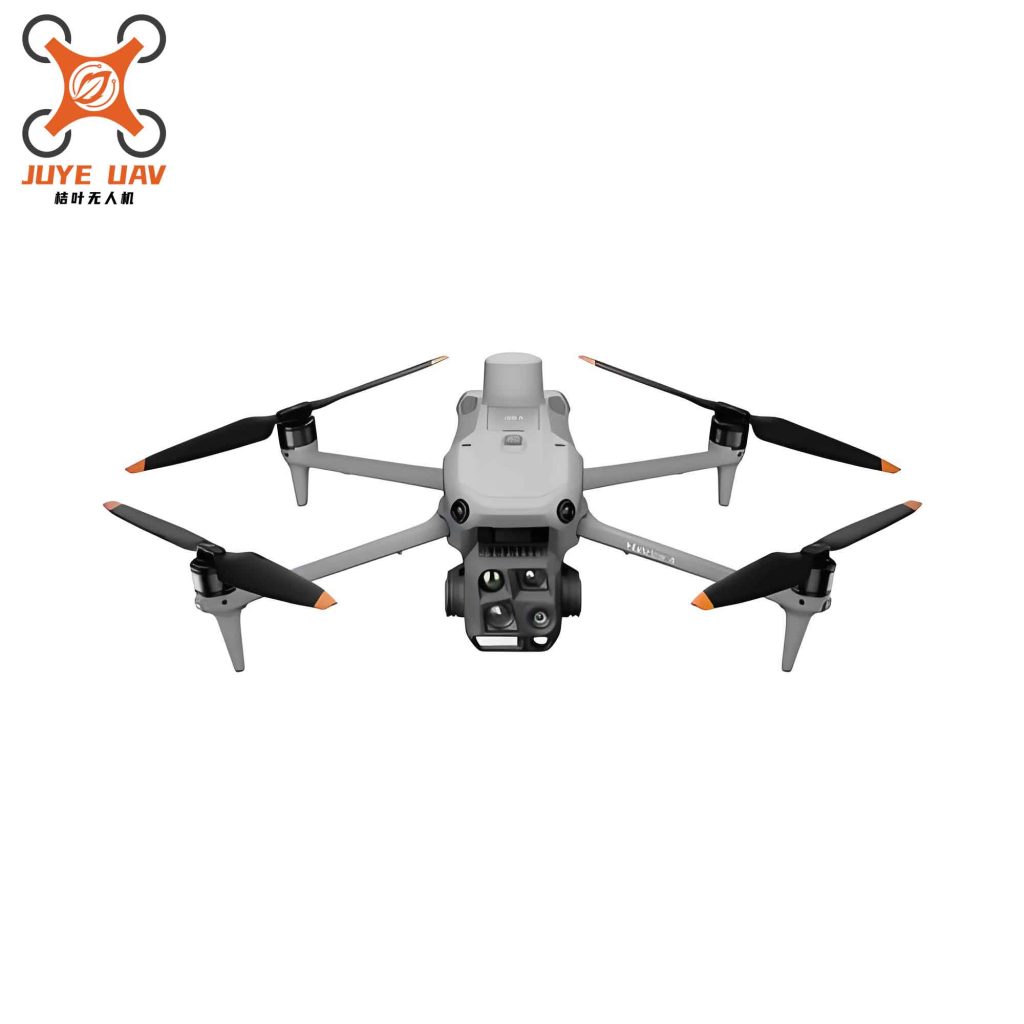
We address the inherent limitations of traditional detection methods, which are often susceptible to environmental variations, limited detection range, and complex backgrounds. By combining the strengths of RF and visual modalities, our algorithm offers a robust solution for detecting diverse types of China UAVs in low-altitude airspace. The integration of a cross-attention mechanism allows for effective feature alignment and fusion, fully leveraging the complementary nature of the two data sources. Our contributions include a novel signal pre-processing pipeline for RF data, an efficient image feature extraction module, and a fusion network that adaptively weights unimodal features to produce a comprehensive representation for classification.
Methodology of the Detection Framework
RF Signal Processing and Feature Extraction
The detection pipeline begins with the acquisition of RF signals emitted by China UAVs. We establish a theoretical model for the received signal, incorporating additive white Gaussian noise and interference components, as shown in the following equation:
$$ r(t) = [s(t)*h(t)] + n_{\text{AWGN}}(t) + n_{\text{inter}}(t) $$
where \(s(t)\) is the transmitted signal, \(h(t)\) is the channel impulse response, \(n_{\text{AWGN}}(t)\) is the noise, and \(n_{\text{inter}}(t)\) represents co-channel interference. To handle the non-linear and non-stationary nature of these signals, we first apply Ensemble Empirical Mode Decomposition (EEMD) for denoising. EEMD decomposes the signal into physically meaningful intrinsic mode functions (IMFs), effectively separating the signal from noise by utilizing white noise-assisted analysis. The parameters for EEMD are defined by a formula relating the noise amplitude \(A\) and the ensemble number \(N\):
$$ \varepsilon = \frac{A}{N} $$
Following denoising, we apply compressive sensing theory to reduce the data dimensionality. We verify the sparsity and low-rank properties of China UAV RF signals in the wavelet domain. The sparsity test, illustrated through the energy concentration of wavelet coefficients, confirms that signal energy is highly concentrated in a small fraction of the coefficients, enabling effective compression. The measurement process is formalized as:
$$ Y = \Phi X $$
where \(X \in \mathbb{R}^N\) is the high-dimensional signal, \(Y \in \mathbb{R}^M\) is the measurement vector with \(M \ll N\), and \(\Phi\) is the measurement matrix. We utilize a partial Fourier measurement matrix, which is incoherent with the wavelet transform matrix, to preserve critical time-frequency features while achieving a compression ratio of approximately 10%. This step significantly reduces the computational burden for subsequent processing stages.
For time-frequency analysis, we employ the Short-Time Fourier Transform (STFT) to generate spectrograms and persistence spectra from the compressed signals. The STFT is defined as:
$$ \text{STFT}_x(t, f) = \int_{-\infty}^{\infty} x(\tau) w(\tau – t) e^{-j2\pi f\tau} d\tau $$
where \(x(\tau)\) is the RF signal and \(w(\tau-t)\) is a window function. These spectral images serve as the input for a deep convolutional neural network. We utilize a Residual Network (ResNet) for feature extraction. The ResNet architecture with its shortcut connections is adept at learning residual mappings, enabling deeper networks without degradation. The specific architecture we employ for the RF modality is ResNet50, the structure of which is detailed in the following table, where each layer is defined by its output size and filter configurations.
| Layer Name | Output Size | 50-Layer Configuration |
|---|---|---|
| conv1 | 112×112 | 7×7, 64, stride 2 |
| conv2_x | 56×56 | 3×3 max pool, stride 2 $$\begin{bmatrix} 1\times1, 64 \\ 3\times3, 64 \\ 1\times1, 256 \end{bmatrix} \times 3$$ |
| conv3_x | 28×28 | $$\begin{bmatrix} 1\times1, 128 \\ 3\times3, 128 \\ 1\times1, 512 \end{bmatrix} \times 4$$ |
| conv4_x | 14×14 | $$\begin{bmatrix} 1\times1, 256 \\ 3\times3, 256 \\ 1\times1, 1024 \end{bmatrix} \times 6$$ |
| conv5_x | 7×7 | $$\begin{bmatrix} 1\times1, 512 \\ 3\times3, 512 \\ 1\times1, 2048 \end{bmatrix} \times 3$$ |
| FLOPs | 3.8×10⁹ | |
The residual learning block, forming the core of ResNet, is shown conceptually as a shortcut connection that bypasses a pair of convolutional layers. This structure allows gradients to flow directly, preventing vanishing gradient issues in deep networks. The extracted features from the RF spectrograms provide a robust representation for distinguishing different types of China UAVs and their operational modes.
Visual Image Feature Extraction
For the visual modality, we process image data captured by cameras. We employ a modified EfficientNet-b1 as the backbone for image feature extraction. EfficientNet uses a compound scaling method that simultaneously scales the network’s depth, width, and input resolution to achieve an optimal balance between performance and computational cost. The scaling law is given by:
$$ \text{depth: } d = \alpha^{\phi}, \quad \text{width: } w = \beta^{\phi}, \quad \text{resolution: } r = \gamma^{\phi} $$
where \(\phi\) is the compound coefficient, and \(\alpha\), \(\beta\), and \(\gamma\) are constants determined by neural architecture search, constrained by \(\alpha \cdot \beta^2 \cdot \gamma^2 \approx 2\). To improve small object detection performance, we replace the Squeeze-and-Excitation (SE) attention mechanism in the MBConv blocks with a Coordinate Attention (CA) mechanism, which captures both spatial location and channel dependencies through decomposed 1D pooling operations.
The extracted features are then processed by an EfficientDet object detection network, which incorporates a Weighted Bi-directional Feature Pyramid Network (Bi-FPN) for multi-scale feature fusion. The Bi-FPN applies a learnable weighting scheme to combine features from different scales, as expressed by:
$$ \tilde{U} = \sum_{i=1}^{n} \frac{w_i}{\epsilon + \sum_{j}^{n} w_j} U_i $$
where \(\tilde{U}\) is the fused feature, \(U_i\) is the i-th input feature, and \(w_i\) are learnable weights. This adaptive fusion enhances the network’s ability to detect China UAVs of varying sizes and under different environmental conditions. For bounding box regression, we employ Wise-IoU, which uses a dynamic focusing mechanism to improve convergence. The Wise-IoU bounding box loss is defined with a focusing coefficient \(R\):
$$ R = \exp\left( \frac{(x – x_{\text{gt}})^2 + (y – y_{\text{gt}})^2}{(W_g^2 + H_g^2)^*} \right) $$
where \((x, y)\) and \((x_{\text{gt}}, y_{\text{gt}})\) are the centers of the predicted and ground truth boxes, and \((W_g, H_g)\) are the dimensions of the enclosing box. The derivative of the loss with respect to the overlap width \(W_i\) is:
$$ \frac{\partial L_{\text{IoU}}}{\partial W_i} = \begin{cases} -\frac{H_i}{\text{IoU} + 1} \cdot \frac{1}{S_u}, & W_i > 0 \\ 0, & W_i = 0 \end{cases} $$
This formulation avoids harmful gradients from the penalty term, ensuring stable training, particularly for small target detection. The overall network structure of EfficientDet integrates the EfficientNet backbone, Bi-FPN, and a class/box prediction head.
Cross-Attention Feature Fusion Network
The core innovation of our work is the cross-attention mechanism for fusing RF features \(F_r \in \mathbb{R}^{D_r}\) and image features \(F_i \in \mathbb{R}^{D_i}\). This mechanism aligns the two modalities by treating the RF feature as the query sequence and the image feature as the key-value sequence. The process begins with linear projections to unify dimensions:
$$
Q = W_q F_r + b_q \\
K = W_k F_i + b_k \\
V = W_v F_i + b_v
$$
where \(W_q \in \mathbb{R}^{D_h \times D_r}\), \(W_k, W_v \in \mathbb{R}^{D_h \times D_i}\) are weight matrices. The attention weights \(A\) are computed as:
$$ A = \text{softmax}\left( \frac{QK^T}{\sqrt{D_h}} \right) $$
The fused feature \(F_{\text{fusion}}\) is then obtained by a residual connection:
$$ F_{\text{fusion}} = \text{LayerNorm}(F_r + AV) $$
To capture complex interactions, we employ an 8-head cross-attention mechanism. Each head performs the above cross-attention operation, and their outputs are concatenated and projected to produce the final fused feature vector. The overall structure can be represented as a neural network where RF and image features are first linearly projected, then processed by eight parallel cross-attention heads, and finally concatenated and linearly projected for classification. This design allows the model to dynamically weigh the importance of each modality, effectively utilizing their complementary information. The classification head, typically a fully connected layer, then outputs the final prediction.
Experimental Results and Analysis
Datasets
We evaluate our algorithm on two primary public datasets. The DroneRF dataset contains RF data for three brands of China UAVs, including background noise and four different flight modes. This dataset enables a multi-class classification task with categories: background (noise), and various specific China UAV models such as Parrot Bebop, Parrot AR, and DJI Phantom 3, among others, encompassing both classification tasks with 2, 4, and 10 classes. The second dataset is a visual detection dataset containing images of China UAVs. Each image is annotated with precise bounding boxes, providing a robust benchmark for object detection and classification tasks. This dataset is used to train and evaluate the image feature extraction model.
RF Signal Feature Extraction Results
The ResNet50 model was trained on spectrogram and persistence spectrum images derived from the DroneRF dataset. The training, validation, and test sets were split in an 8:1:1 ratio across 18 experimental runs. The classification accuracy and F1 scores for different number of signal fragments and class categories are summarized in the tables below.
| Image Type | Classification Task | 1 Fragment Acc (%) | 10 Fragments Acc (%) | 100 Fragments Acc (%) |
|---|---|---|---|---|
| Spectrogram | 2-Class | 100 | 100 | 100 |
| 4-Class | 97.78 | 97.78 | 97.78 | |
| 10-Class | 86.67 | 78.89 | 73.33 | |
| Persistence | 2-Class | 100 | 100 | 100 |
| 4-Class | 96.67 | 100 | 100 | |
| 10-Class | 88.89 | 87.78 | 95.55 |
| Image Type | Classification Task | 1 Fragment F1 (%) | 10 Fragments F1 (%) | 100 Fragments F1 (%) |
|---|---|---|---|---|
| Spectrogram | 2-Class | 93.75 | 100 | 100 |
| 4-Class | 100 | 87.93 | 89.60 | |
| 10-Class | 95.86 | 97.59 | 79.43 | |
| Persistence | 2-Class | 100 | 96.77 | 100 |
| 4-Class | 99.13 | 100 | 100 | |
| 10-Class | 95.95 | 97.59 | 98.18 |
Results indicate that the ResNet50 model excels at extracting features from RF spectral images, achieving near-perfect accuracy for the 2-class and 4-class tasks. The performance demonstrates the model’s strong capability in identifying and classifying diverse China UAVs based on their RF fingerprints.
Visual Image Feature Extraction Results
The EfficientDet-b1 model was pre-trained using EfficientNet on the visual dataset and then fine-tuned for object detection. The training, validation, and test splits were again 8:1:1. The model achieved excellent performance in classifying objects as China UAVs or background. The confusion matrix shows near-perfect classification with no errors on the validation set. The model’s precision is demonstrated by its performance on the Drone Detection Dataset, where it accurately detects and tracks China UAVs in various scenarios. The average precision (AP) metrics for the model are shown below.
| Model | Test Set AP | Test Set AP50 | Validation Set AP |
|---|---|---|---|
| EfficientDet-b1 | 37.4 | 48.1 | 36.9 |
The overall classification accuracy and F1 score for the visual modality were both 99.8%. This demonstrates the effectiveness of the EfficientDet architecture, particularly with the inclusion of the Coordinate Attention mechanism and Wise-IoU loss, in reliably detecting China UAVs from visual data.
Multimodal Fusion Results
The ultimate test of our algorithm is the performance of the cross-attention fusion network. After fusing the features extracted from both the RF and visual modalities, the network was trained to classify the presence of a China UAV. The results are outstanding: the fused model achieves an accuracy of 100%, an F1 score of 100%, and a recall rate of 100%. This perfect score validates the core hypothesis of our research: the complementary nature of RF and visual information, when fused effectively, eliminates the uncertainties associated with each individual modality, leading to flawless detection in the test environment. This result firmly supports the application of multimodal fusion for robust detection of China UAVs in low-altitude airspace.
Complexity and Robustness Analysis
We analyze the computational complexity of our algorithm to confirm its efficiency. The pre-processing steps for RF signals, including EEMD and STFT, have a high computational cost. However, the integration of compressive sensing significantly reduces the overall complexity. The traditional processing complexity is:
$$ O_{\text{traditional}} = 10^6 \times 10 \times 10 + 10^6 \times 100 = 2 \times 10^8 $$
With compressive sensing, the complexity becomes:
$$ O_{\text{proposed}} = 10^6 \times 10 \times 10 + 10^6 \log{10^6} + 10^6 \log{10^6} + 10^5 \times 100 = 1.22 \times 10^8 $$
This represents a 39% reduction in complexity for the signal processing stage alone. The FLOPs for the RF feature extraction network (ResNet50) is 4.12 GFLOPS, and for the image feature network (EfficientDet) is 5.1 GFLOPS. The cross-attention fusion network’s FLOPs is calculated as follows:
$$ O_{FC} = s_{\text{input}} \times s_{\text{output}} $$
$$ O_{Multi} = 6 d_{\text{model}} h d_k $$
$$ O_{Attention} = 4 h d_k l_Q l_K $$
$$ O_{output} = 2 h d_k d_{\text{model}} $$
$$ O_{Total} = O_{FC} + O_{Multi} + O_{Attention} + O_{output} $$
Given our network parameters, the fusion network’s FLOPs is calculated to be \(6.8 \times 10^7\), which is negligible compared to the feature extraction networks. The total network FLOPs is approximately \(9.2 \times 10^9\), demonstrating a good balance between model capacity and computational demand, suitable for real-time or near-real-time applications for China UAV surveillance.
To assess robustness, we tested our framework on the DroneRFa dataset, an independent dataset of RF signals from an expanded set of China UAV models. The RF feature extraction network maintained a high accuracy of 97.5%, with a recall rate of 100%, precision of 97.5%, and an F1 score of 98.7%. The confusion matrix for this test shows very strong performance across different classes. Furthermore, the complete fusion framework was tested on new visual data from the Drone Dataset, where it achieved an accuracy of approximately 92.3% and an F1 score of 93.4%. While the performance is slightly lower than on the training datasets, it still confirms the framework’s strong generalization ability. These results prove the robustness of our algorithm against variations in data, validating its suitability for deployment in real-world low-altitude environments where the flight patterns and electromagnetic characteristics of China UAVs can vary significantly.
Conclusion
We have developed a high-precision detection algorithm for low-altitude China UAVs based on a cross-attention multimodal fusion architecture. By integrating RF signals and visual imagery, our algorithm overcomes the limitations of single-sensor systems, offering superior accuracy and robustness. Extensive experimental validation on public datasets demonstrates that our method achieves perfect classification performance when both modalities are available, and maintains high performance even under challenging conditions. The algorithm also provides a favorable balance between computational complexity and detection speed, making it a practical solution for real-time low-altitude airspace surveillance. This work provides a critical technical foundation for the safe and efficient management of the low-altitude economy in China, supporting the secure integration of China UAVs into the national airspace. Future work will focus on integrating UAV localization capabilities from RF signals to enable precise tracking and enhance overall surveillance capabilities.