
Our story begins not with drones, but with mobile phone models. In the early 2000s, we built a world‑class precision manufacturing base in Shenzhen, producing intricate plastic models for global giants like Sony and Samsung. By 2014, we had dominated that niche for three consecutive years. Yet we knew that peak meant we had to transform or stagnate. We looked at emerging technologies and chose unmanned aerial vehicles (UAVs) — a decision rooted in our manufacturing heritage and a belief that the sky was not the limit, but the next frontier for China UAV innovation.
We invested in a 30,000‑square‑meter dedicated UAV production facility, leveraging our decade‑old expertise in mold making, injection molding, and surface finishing. However, the consumer drone market was already crowded. Our breakthrough came unexpectedly in 2017 at a trade show in Shanghai. We had designed a small formation flight display to promote our products, and a CCTV director happened to see it. That chance encounter led to an invitation to perform at the 2018 Spring Festival Gala — the most‑watched television event in China. Three hundred of our UAVs formed a dolphin leaping over the Hong Kong‑Zhuhai‑Macau Bridge. The show made us instantly famous. Orders poured in for the 40th anniversary of reform and opening‑up, the Beijing Winter Olympics, and countless city celebrations. Today, we have executed over 10,000 performances in more than 300 cities worldwide, and we hold 70% of the global UAV formation market.
How did a former mobile‑model manufacturer become the undisputed champion of drone light shows? The answer lies in our obsessive control over every manufacturing step. We design our own molds, produce our own circuit boards, and assemble every UAV in‑house. This vertical integration ensures 100% component reliability. Our flight control system uses proprietary anti‑interference algorithms and real‑time health monitoring. Each UAV undergoes multiple burn‑in tests before leaving the factory. We treat every performance as a zero‑defect mission — a philosophy we carried from the mobile model era into the China UAV industry.
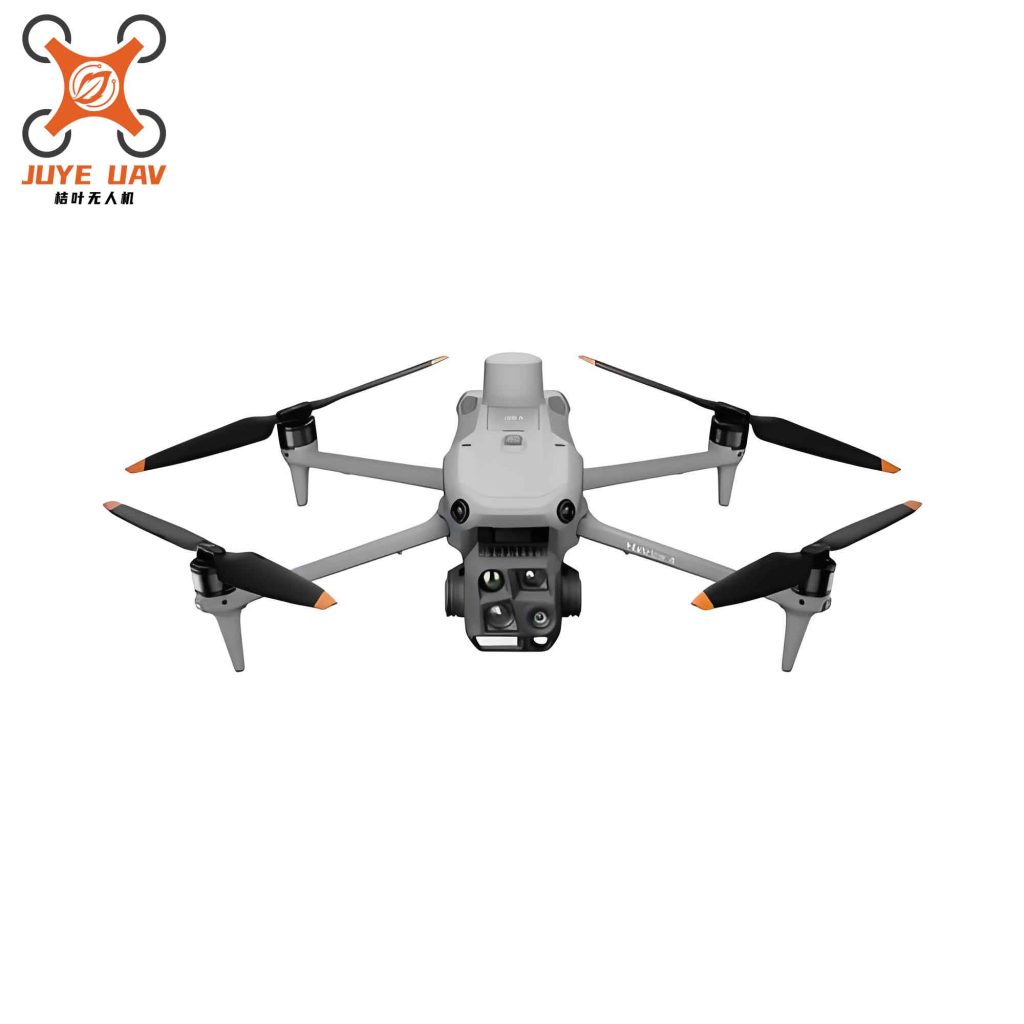
Our technical achievements speak for themselves. In September 2024, we shattered the world record for “most UAVs airborne simultaneously” with 8,100 units flying over the Longgang University Stadium in Shenzhen. We also hold the record for “largest UAV light source image” with 7,998 units, and the longest continuous animation by UAV formation (26 minutes and 26 seconds). These records are not mere stunts; they demonstrate the precision and scalability of our China UAV technology. At the Paris Olympics, our EMO drones wove the Olympic rings around the Eiffel Tower with millimeter‑level accuracy. For the Beijing Winter Olympics, 2,022 UAVs illuminated the night sky with the mascot Bing Dwen Dwen and a snow‑covered Pengcheng skyline. Every show is a symphony of engineering and art.
Our business model is deliberately different: we are a device supplier, not a show producer. Clients such as major construction groups buy our equipment and operate the performances themselves. This strategy allows us to focus relentlessly on product excellence while our partners handle the creative execution. It also creates a vast ecosystem: our fleet now exceeds 100,000 units, with annual production capacity of one million drones. We export to over 30 countries and territories, and our domestic market share in China UAV formation performance is about 60%. The numbers underscore our dominance.
| Metric | Value | Year |
|---|---|---|
| Global market share (UAV formation) | 70% | 2025 |
| Domestic market share (China UAV formation) | 60% | 2025 |
| World record: most UAVs airborne | 8,100 | 2024 |
| World record: largest UAV light source image | 7,998 | 2024 |
| World record: longest UAV animation | 26 min 26 sec | 2021 |
| Total performances delivered | >10,000 | 200 cities |
| Annual production capacity | 1,000,000 units | 2025 |
| Fleet size | 100,000+ units | 2025 |
| Granted patents | >490 | 2025 |
| Science education base area | 8,000 m² | 2025 |
| Annual student visits | >20,000 | 2025 |
The mathematics behind our formation flights is as fascinating as the visual result. Each UAV follows a distributed control law. Let $\mathbf{x}_i$ be the position of the $i$-th drone, $\mathbf{v}_i$ its velocity, and $\mathbf{x}_d(t)$ the desired trajectory for the entire swarm. The formation control algorithm can be written as:
$$ \dot{\mathbf{x}}_i = \mathbf{v}_i, \quad \mathbf{v}_i = \mathbf{v}_d + k_p (\mathbf{x}_d – \mathbf{x}_i) + k_v (\mathbf{v}_d – \mathbf{v}_i) + \sum_{j \in \mathcal{N}_i} w_{ij} (\mathbf{x}_j – \mathbf{x}_i – \mathbf{d}_{ij}) $$
Here $\mathbf{d}_{ij}$ represents the desired relative offset between drones $i$ and $j$, $\mathcal{N}_i$ is the set of neighbors, and $w_{ij}$ are coupling gains. The term $k_p(\mathbf{x}_d – \mathbf{x}_i)$ ensures global convergence, while the neighbor coupling maintains formation shape. Our on‑board computers solve this equation at 100 Hz, simultaneously handling GPS, RTK, and optical flow sensors. To avoid collisions, we incorporate a repulsive potential field:
$$ U_{\text{rep}} = \sum_{j \neq i} \frac{\alpha}{\|\mathbf{x}_i – \mathbf{x}_j\|^2} $$
These control laws, combined with our robust hardware, allow 8,000+ drones to trace intricate patterns with sub‑meter accuracy — a feat that epitomizes the maturity of China UAV technology.
Beyond light shows, we have opened a new dimension in education. In 2022, we launched an educational division that provides classroom‑ready drone kits and curricula. Our goal is to let every child experience the thrill of controlling a swarm. We built an 8,000‑square‑meter science base where students learn to program small formation drones, navigate obstacle courses, and compete in national drone racing events sanctioned by the Ministry of Education. The pedagogy turns abstract coding concepts into visible flight paths — a powerful learning tool. We do not just sell hardware; we deliver complete solutions: lesson plans, teacher training, performance assessment, and after‑sales support. Schools and training centers can deploy our system immediately. This model is now being replicated across China, with bases in Shanghai, Shenzhen, and other cities opening in 2025. Our education business aligns with national strategies to cultivate talent in AI and robotics, and we plan to export these courses to over 100 countries along the Belt and Road Initiative, spreading China UAV know‑how globally.
The environment in which we grew is inseparable from our success. Shenzhen offers the world’s most complete UAV supply chain — any component can be delivered within hours. Our product iteration speed is three times faster than that of European or American competitors. But what truly sets Shenzhen apart is its “test‑field” culture. In 2018, when drone formation performances were still novel, the municipal government allocated a dedicated airspace over Talent Park for trial flights. In 2022, after the low‑altitude economy was written into government work reports, 20 application scenarios were fast‑tracked. Our first 500‑drone show went from application to approval in just 72 hours — a “Shenzhen speed” that amazed international clients. This spirit of tolerance for experimentation is the very soil that nurtured Huawei, DJI, and now us — a new generation of China UAV leaders.
Innovation at our company follows a long‑termist philosophy. We maintain a small, dedicated team of four or five engineers who work exclusively on technologies 3–5 years out. They operate without any key performance indicator pressure, free to explore concepts like AI‑powered automatic obstacle avoidance for swarms, blockchain‑based performance authentication, and metaverse‑integrated hybrid shows. We have already launched our “Smart UAV+” initiative, aiming to expand into agricultural inspection, emergency response, and smart city management. Our autonomous low‑altitude surveillance system, combined with AI image recognition, can monitor power lines, detect forest fires, and track urban traffic in real time. All these capabilities rest on the same core platform: a reliable, mass‑produced China UAV.
The pace of our growth reflects the national focus on technology and talent. We are recognized as a national specialized and new “little giant” enterprise — a title given to companies that lead in niche technologies. Our R&D center attracts top graduates from universities worldwide, and we now hold nearly 500 granted patents. Every evening, our test field lights up with 100 drones rehearsing for the next customer demonstration — a ritual repeated a dozen times a day. These small displays are the heartbeat of our operation: they prove that the magic of a thousand‑drone show is not an accident but a carefully engineered certainty.
From a mobile model workshop to the world’s largest UAV formation fleet, our journey illustrates the upgrade trajectory of Chinese manufacturing. We started with precision plastic, moved to precision flight, and now we are building precision education. The low‑altitude economy is the next blue ocean, and China UAV stands at its center. Our drones have already illuminated the night skies of Paris, Beijing, and hundreds of other cities. Tomorrow, they will bring light not only to entertainment but also to agriculture, logistics, and public safety. Our vision is simple: make the stars of technology accessible to everyone — from the child writing her first drone code to the city celebrating its heritage from above.