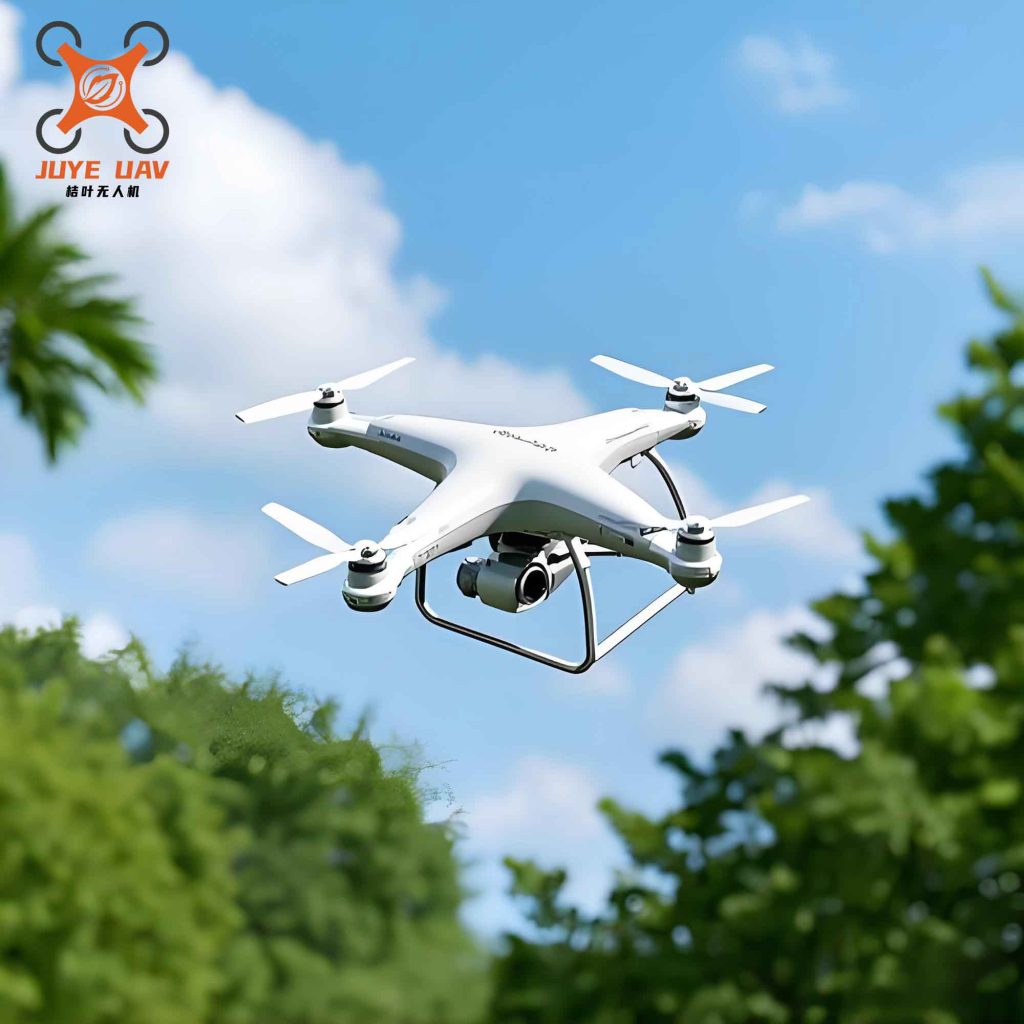
In recent years, the rapid adoption of unmanned aerial vehicles in sectors such as aerial photography, logistics, and power inspection has placed unprecedented demands on structural materials. Among the various engineering plastics, polycarbonate (PC) offers high heat deflection temperature and excellent stiffness but suffers from poor impact toughness, while acrylonitrile–butadiene–styrene copolymer (ABS) provides superior toughness and processability but limited thermal stability. The PC/ABS blend, combining the advantages of both, has emerged as a key material for structural components of China drone applications. However, the actual service environment for China drone often involves high temperatures during takeoff, prolonged exposure to solar radiation, and vibrational loads, leading to accelerated thermal-oxidative aging. The present study, conducted from the perspective of a materials engineer working closely with China drone manufacturers, aims to systematically investigate the thermal stability and oxidation resistance of PC/ABS composites. A series of formulations were designed by varying the PC/ABS mass ratio and incorporating functional additives such as graphene (GN), antioxidant 1010, and organic phosphorus (OP) flame retardant. Through comprehensive characterisation, we established the optimal formulation that not only meets the mechanical and thermal requirements but also significantly retards the aging degradation, thus extending the service life of China drone structures.
Experimental Approach
All raw materials were dried thoroughly before processing: PC resin at 120°C for 8 h to a moisture content below 0.02%, and ABS resin at 80°C for 6 h. The additives, including GN, antioxidant 1010, OP flame retardant, and UV absorber UV‑327, were used in fixed proportions (0.5 phr for GN, 1.0 phr for OP, 2.0 phr for antioxidant 1010, and 0.3 phr for UV-327). After high‑speed mixing (1500 rpm, 10 min), the blends were melt‑compounded in a twin‑screw extruder with barrel temperatures set to 240, 250, and 260 °C at a screw speed of 45 rpm. The extrudate was cooled in a water bath at 25°C, pelletised, and then injection‑moulded into standard test specimens and 1:5 scaled China drone components (fuselage brackets and wing connectors). To simulate long‑term ageing, the moulded samples were placed in a thermal‑oxidative ageing chamber at 80°C, 50% relative humidity, and 21% oxygen concentration for durations of 0, 24, 48, 72, and 168 hours.
Results and Discussion
Optimisation of PC/ABS Ratio for China Drone Structures
The tensile strength and impact strength of PC/ABS blends with varying PC content are presented in Table 1. As shown, increasing the PC weight fraction enhanced the rigidity, but the improvement in tensile strength plateaued when the PC content exceeded 60%. The impact strength reached a maximum of 18.7 kJ/m² at a PC/ABS ratio of 60/40, indicating that an appropriate amount of ABS effectively arrests crack propagation. Beyond this optimum, the impact strength dropped sharply, reflecting a loss of toughness due to an excessively PC‑rich matrix.
| PC content (wt%) | Tensile strength (MPa) | Impact strength (kJ/m²) | Elongation at break (%) |
|---|---|---|---|
| 0 | 38 | 12.4 | 25 |
| 20 | 52 | 14.1 | 22 |
| 40 | 67 | 16.8 | 18 |
| 60 | 78 | 18.7 | 15 |
| 80 | 82 | 15.1 | 11 |
| 100 | 85 | 10.2 | 8 |
The heat deflection temperature (HDT) and melt flow rate (MFR) are critical for China drone injection‑moulding processes. Figure 2 in the original study showed that at a 60/40 ratio, the HDT reached 118°C, sufficient for withstanding a parking‑lot surface temperature of 70°C under strong sunlight. The MFR at this composition was (14.5 ± 0.7) g/10 min, ensuring good flowability for complex thin‑walled China drone parts. The density and hardness values are summarised in Table 2. The Rockwell hardness of 121 ± 3 (R‑scale) provides excellent surface rigidity, while the density of 1.15 ± 0.02 g/cm³ contributes to the lightweight design essential for China drone flight endurance.
| PC content (wt%) | Density (g/cm³) | Rockwell hardness (R‑scale) |
|---|---|---|
| 0 | 1.05 ± 0.02 | 95 ± 2 |
| 20 | 1.08 ± 0.02 | 104 ± 3 |
| 40 | 1.12 ± 0.02 | 113 ± 3 |
| 60 | 1.15 ± 0.02 | 121 ± 3 |
| 80 | 1.18 ± 0.02 | 126 ± 2 |
| 100 | 1.20 ± 0.02 | 130 ± 2 |
To quantify the composition–property relationships, we fitted the experimental data with empirical models. For the tensile strength, a cubic polynomial in PC mass fraction \(w_{\text{PC}}\) gave an excellent fit:
$$
\sigma_{\text{ts}} = 38.0 + 3.2 w_{\text{PC}} – 0.035 w_{\text{PC}}^2 + 0.00014 w_{\text{PC}}^3 \quad (R^2 = 0.996)
$$
where \(\sigma_{\text{ts}}\) is in MPa and \(w_{\text{PC}}\) is expressed in percent. Similarly, the impact strength followed a quadratic trend with a maximum near 60 %:
$$
\sigma_{\text{imp}} = 12.4 + 0.31 w_{\text{PC}} – 0.0025 w_{\text{PC}}^2 \quad (R^2 = 0.985)
$$
These formulas allow rapid estimation of mechanical performance at any intermediate composition, facilitating the design of China drone components with tailored properties.
Effect of Additives on Thermal Stability and Oxidation Resistance
After determining the optimum base ratio (60/40), we investigated the individual and synergistic effects of four additives: GN, OP, antioxidant 1010, and UV-327. The oxidation induction time (OIT) was measured by DSC under oxygen flow (Table 3). The addition of 2.0 phr antioxidant 1010 alone increased the OIT from 28.5 min (neat blend) to 42.6 min, a 49.5 % improvement. The most remarkable synergistic effect was observed when GN and antioxidant 1010 were used together, yielding an OIT of 48.3 min (69.5 % increase). This combination retarded the onset of oxidative degradation and provided long‑term protection, which is crucial for China drone operating under prolonged thermal‑oxidative stress.
| Additive system | OIT (min) |
|---|---|
| None | 28.5 ± 1.2 |
| GN (0.5 phr) | 33.7 ± 1.1 |
| OP (1.0 phr) | 31.2 ± 1.0 |
| Antioxidant 1010 (2.0 phr) | 42.6 ± 1.3 |
| UV-327 (0.3 phr) | 30.4 ± 1.1 |
| GN + OP | 39.8 ± 1.2 |
| GN + Antioxidant 1010 | 48.3 ± 1.4 |
| Antioxidant 1010 + UV-327 | 44.1 ± 1.2 |
Thermogravimetric analysis (TGA) and derivative thermogravimetry (DTG) provided insights into the degradation kinetics. As shown in the original thermograms, the GN+OP combination shifted the onset of decomposition from 350 °C to about 410 °C, and the char residue at 800 °C increased from 5.1 % to 18.2 %. The corresponding DTG peak temperature rose by approximately 30 °C, and the maximum mass loss rate decreased from 28 %/min to 18 %/min. These results demonstrate a strong synergy in thermal barrier formation: GN acts as a physical barrier that hinders the diffusion of volatile degradation products, while OP promotes charring and forms a protective intumescent layer.
To model the thermal degradation kinetics, we applied the Kissinger method to the TGA data. For the neat PC/ABS blend, the activation energy \(E_a\) for the main decomposition step was estimated as:
$$
E_a = 185 \pm 8\ \text{kJ/mol}
$$
After adding GN and OP, the activation energy increased to \(212 \pm 7\ \text{kJ/mol}\), indicating a higher energy barrier for thermal decomposition. The reaction order was found to be approximately 1.2 for both systems.
Thermal conductivity measurements (Table 4) show that the GN+Antioxidant 1010 formulation achieved the highest value of 0.31 W/(m·K) at 25°C, rising to 0.35 W/(m·K) at 80°C. This enhanced thermal diffusivity helps to dissipate heat generated by China drone electronics and motors, reducing local hot spots and mitigating thermal‑oxidative aging.
| Additive system | Thermal conductivity at 25°C [W/(m·K)] | Thermal conductivity at 80°C [W/(m·K)] |
|---|---|---|
| None | 0.22 ± 0.01 | 0.25 ± 0.01 |
| GN | 0.26 ± 0.01 | 0.30 ± 0.01 |
| OP | 0.23 ± 0.01 | 0.26 ± 0.01 |
| Antioxidant 1010 | 0.24 ± 0.01 | 0.27 ± 0.01 |
| GN + OP | 0.29 ± 0.01 | 0.32 ± 0.01 |
| GN + Antioxidant 1010 | 0.31 ± 0.02 | 0.35 ± 0.02 |
| Antioxidant 1010 + UV-327 | 0.25 ± 0.01 | 0.28 ± 0.01 |
Long‑Term Thermal‑Oxidative Aging Behavior
To evaluate the durability under simulated operational conditions, the optimised PC/ABS (60/40) with 0.5 phr GN + 2.0 phr antioxidant 1010 was subjected to accelerated aging at 80°C for up to 168 h. The retention of tensile strength and impact strength as functions of aging time is presented in Table 5. After 168 h of aging, the tensile strength retention was 86.2 % and the impact strength retention was 82.5 %, both well above the 70 % threshold typically required for China drone structural components. In contrast, the neat blend retained only 54 % of its tensile strength after the same aging period. The GN+antioxidant 1010 combination effectively suppressed chain scission and micro‑crack formation.
| Aging time (h) | Tensile strength retention (%) | Impact strength retention (%) |
|---|---|---|
| 0 | 100 | 100 |
| 24 | 96.3 ± 1.5 | 93.7 ± 2.1 |
| 48 | 92.1 ± 1.8 | 89.8 ± 2.4 |
| 72 | 88.9 ± 1.6 | 85.6 ± 2.2 |
| 168 | 86.2 ± 1.7 | 82.5 ± 2.3 |
The aging kinetics can be described by a first‑order decay model for the retained mechanical property \(P\):
$$
P(t) = P_0 \cdot e^{-k t}
$$
where \(t\) is the aging time in hours. For the optimized formulation, the degradation rate constants were \(k_{\text{tensile}} = 8.9 \times 10^{-4}\ \text{h}^{-1}\) and \(k_{\text{impact}} = 1.2 \times 10^{-3}\ \text{h}^{-1}\). The half‑life for tensile strength exceeds 780 h, which corresponds to several years of intermittent operation for a typical China drone.
Morphological Evidence
Scanning electron microscopy (SEM) of cryo‑fractured surfaces after 168 h of aging revealed that the neat blend exhibited numerous micro‑voids and pronounced interfacial debonding between the PC and ABS phases. In contrast, the GN+antioxidant 1010 sample showed a homogeneous morphology with well‑dispersed GN particles bridging the interfaces. This physical cross‑linking and antioxidant activity significantly inhibited the propagation of oxygen‑induced cracks, preserving the mechanical integrity of the China drone components.
Conclusion
Through systematic investigation, we have established that a PC/ABS mass ratio of 60/40 delivers the best overall performance for China drone structural applications, with a tensile strength of 78 MPa, impact strength of 18.7 kJ/m², heat deflection temperature of 118 °C, and good processability. The addition of 0.5 phr graphene and 2.0 phr antioxidant 1010 synergistically enhances the thermal stability and oxidation resistance, increasing the oxidation induction time by 69.5% and the char residue at 800 °C to 18.2%. After 168 h of accelerated thermal‑oxidative aging, the tensile strength retention exceeds 86%, ensuring long‑term reliability of China drone components. The developed formulation has been successfully moulded into 1:5 scaled wing connectors and fuselage brackets, which passed preliminary vibration and load tests. This work provides a robust material solution for advancing the performance and lifespan of China drone in harsh outdoor environments.