
The construction of transmission optical fiber cable networks in the high mountain plateau regions of Western Sichuan presents a formidable engineering challenge. Characterized by highly fragmented topography, deep-cut valleys, dense river networks, and a harsh climate of high altitude, low temperature, strong winds, rain, and snow, traditional construction methods face significant obstacles. Key phases such as route reconnaissance, pilot line deployment across obstacles, and cable pulling and installation are severely impacted by poor accessibility, unpredictable schedules, and heightened safety risks. Manual operations in scenarios involving mountain ridges, river crossings, dense forests, and cliff faces are often inefficient and expose personnel to prolonged periods of high risk. This paper, from a first-person engineering perspective, explores the application of unmanned drone technology to revolutionize these critical construction phases. It details the technical workflows, quality and safety control protocols, and provides a comprehensive evaluation of the resulting improvements in efficiency, schedule reliability, and overall project safety, concluding with pathways for standardized adoption.
1. Environmental Challenges and Limitations of Traditional Construction Methods
1.1. Topographic and Climatic Complexities
The engineering landscape is defined by an extreme environment. The topography features high altitude, dramatic elevation changes, and deep incision, creating a repetitive pattern of ridges and gullies. Cable routes must navigate across these ridges, span wide valleys and rivers, and traverse steep slopes and dense forests, resulting in construction sites that are typically remote, scattered, and extraordinarily difficult to access. The climatic conditions compound these difficulties. High altitude brings low temperature, low oxygen pressure, and unpredictable weather, including frequent strong winds, heavy precipitation (rain and snow), and icing events. These factors not only strain personnel and equipment but also drastically shorten the available weather windows for construction. The combination of terrain and climate creates a project environment where safety, operational agility, and organizational efficiency are paramount, as delays at critical nodes can cascade, amplifying both schedule and risk exposure.
1.2. Organizational Constraints and Traditional Workflow Overview
Organizing construction in this region is a logistical hurdle. Transportation of materials—poles, pulleys, pilot lines, cable reels—relies on temporary access roads, mountain paths, or manual porterage. The mobilization of equipment and personnel to multiple, dispersed work sites is time-consuming, leading to a fragmented, “multi-point, segmented advancement” operational model. The traditional construction methodology follows a sequential process: manual route reconnaissance, ground-based pilot line deployment, upgrade of the pilot line to a stronger pull rope, final cable pulling and installation, followed by fixing, protection, and testing. For obstacle crossings (rivers, gorges), this involves personnel physically traversing or circumventing the obstacle, often using throw lines, to establish the initial pilot line connection. This approach is heavily reliant on manual skill and physical endurance. In complex terrain, it necessitates repeated route-finding attempts, creating efficiency bottlenecks at critical crossings and significantly increasing the proportion of high-risk tasks.
| Construction Phase | Traditional Method (Challenges) | Unmanned Drone-Enabled Method (Solutions) |
|---|---|---|
| Route Reconnaissance | Time-consuming, risky ground surveys; limited perspective; data gaps. | Rapid aerial surveys; comprehensive visual data; precise topographic modeling. |
| Pilot Line Deployment (Crossing) | Manual crossing/绕行; high failure rate; significant personnel risk and time cost. | Aerial “crossing” via drone; direct, precise placement; eliminates ground traversal. |
| Material Logistics | Heavy reliance on ground transport/porterage; slow and costly. | Potential for lightweight tool/line delivery; focuses on enabling critical path activity. |
| Safety Exposure | High: climbing,涉水,临边 work in恶劣 conditions. | Reduced: Minimizes personnel presence in high-risk zones during initial crossing. |
1.3. Analysis of Core Difficulties and the Demand for Unmanned Drone Technology
The difficulties can be categorized into three primary areas. First, the crossing challenge across ridges, rivers, and deep gorges: manual deployment of pilot lines is unreliable due to long绕行 distances, uncontrollable landing points, and susceptibility to terrain and wind effects. Second, the accessibility challenge in dense forests, steep slopes, and cliff edges: the difficulty and cost of simply reaching the work site often outweighs the task itself. Third, the safety-schedule contradiction: the pressure to meet deadlines under harsh conditions can lead to compromised safety during high-risk climbing, wading, and临边 operations. The demand for unmanned drone technology stems directly from these矛盾. Its core value proposition is to substitute aerial flight for human traversal in hazardous crossings, thereby enabling rapid pilot line deployment. Furthermore, it enhances reconnaissance efficiency and accuracy through aerial photography and path verification. Ultimately, it reduces personnel exposure time in dangerous areas, improving both efficiency and safety while maintaining quality standards.
2. Unmanned Drone Technical Solution and Key Process Flows
2.1. Technical Principle and Overall System Design
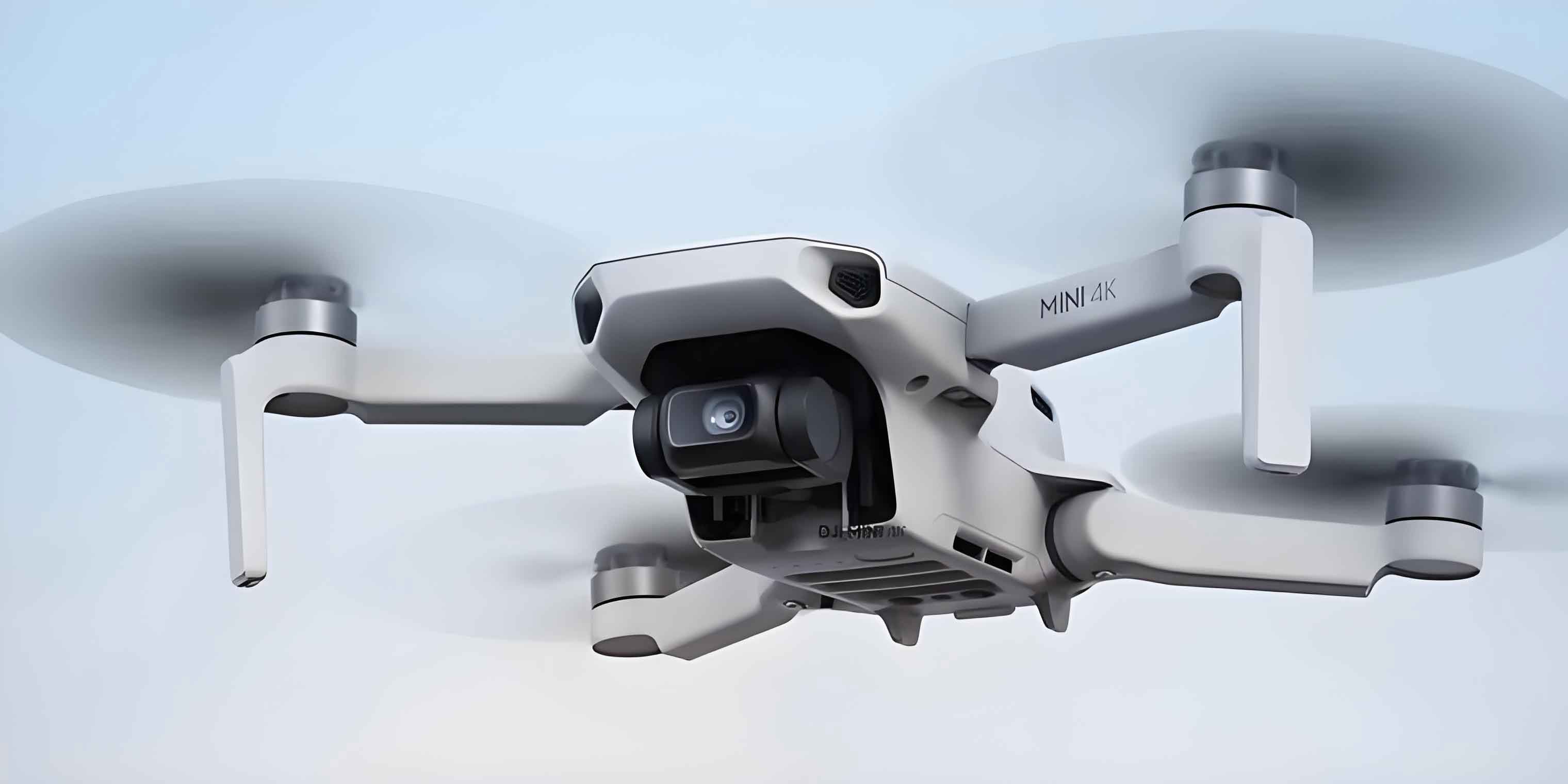
The fundamental principle of unmanned drone application in cable construction is the substitution of “aerial crossing” for “ground traversal.” This transforms the time-consuming and risky task of pilot line deployment in complex terrain from a ground-based operation to an aerial one, creating a replicable model for obstacle crossing. The overarching technical workflow is: Drone Reconnaissance & Path Confirmation → Aerial Pilot Line Deployment & Precise Placement → Line Upgrade to Pull Rope → Controlled Cable Pulling via Ground System → Fixing, Protection & Testing. The unmanned drone ensures the one-time, accurate placement of the pilot line across the obstacle. The controllability of tension and bend radius during the subsequent cable pulling is managed by the ground-based tensioning system. The overall system design focuses on three aspects: 1) Scenario Classification, prioritizing river/gully crossings, ridge crossings, and inaccessible forested sections; 2) Operational Coordination, integrating drone pilots, ground receivers, pulling crews, and quality/safety personnel into a unified team; 3) Quality-Safety Closure, embedding control points into every phase from recon to验收. This “point breakthrough, segment推进” approach significantly enhances the controllability and success rate of the critical path in high-altitude cable projects.
2.2. Surveying, Mapping, and Flight Path Planning
The critical prerequisites for successful unmanned drone operation are “precise reconnaissance” and “reliable flight path planning.” The surveying phase must focus on acquiring specific data for the crossing segment: anchor point coordinates at both ends, crossing distance and elevation difference, distribution of ground obstacles (e.g., trees, rocks), wind-sensitive zones, logistics staging areas, and safe personnel站位 locations. This data forms the basis for construction briefings. For key crossings, flight path planning operates on a reverse-engineering logic from the intended “landing point.” It is crucial to define safe buffer zones for line retrieval, clear recovery paths, and备用 landing points to avoid scenarios where the pilot line becomes entangled in tree canopies, water bodies, or rock crevices.
Flight path planning must incorporate the unique meteorological characteristics of high-altitude plateaus. This involves defining permissible operational time windows, establishing clear abort criteria (e.g., wind speed $v_{max}$, visibility $d_{vis}$, precipitation, temperature $T_{min}$ thresholds), and setting reasonable contingency landing points. The “obstacle avoidance first” principle is paramount; paths should be planned to avoid power lines, communication towers, dense forest canopies, and narrow峡谷 prone to strong turbulence. For long or complex crossings, segmented flight paths or relay drop points may be necessary to mitigate risk. The formalization of reconnaissance data into structured formats (checklists, drawings) reduces the need for on-the-spot decision-making, laying the foundation for a first-attempt successful pilot line deployment. A simplified model for assessing flight stability in wind can be considered:
$$ \text{Drone Stability Margin} \propto \frac{\text{Thrust }(T)}{\text{Wind Drag Force }(F_d) + \text{Payload Weight }(W_p)} $$
Where drag force $F_d$ is a function of wind velocity $v_w$, air density $\rho$, and the drone’s frontal area $A$: $F_d = \frac{1}{2} C_d \rho A v_w^2$. Planning ensures operations stay within stable margins.
2.3. Pilot Line Deployment and Cable Pulling Installation Process
In this challenging environment, the efficacy of the unmanned drone methodology lies not merely in its ability to fly, but in its integration into a standardized, executable, inspectable, and verifiable process for line deployment and cable installation. To ensure first-time success and avoid rework at crossing segments, control must focus on “controllable landing point, continuous path, stable tension, and adequate abrasion protection.” The operation is best decomposed into quantifiable process stages with clear control points, facilitating on-site briefing, process documentation, and quality traceability.
| Process Stage | Primary Tasks | Key Inputs / Equipment | Critical Control Points (Quality/Safety) | Process Output |
|---|---|---|---|---|
| 1) Job Preparation | Briefing, positioning, comms setup, risk zone隔离. | Radio, barrier tape, briefing sheet, weather report. | Establish abort thresholds &撤离 commands. Define no-entry zones for pull lines. Confirm all ground crews ready. | Job readiness confirmation record, site positioning diagram. |
| 2) Drone Payload & Take-off | Attach pilot line, prevent tangling, pre-flight check. | Unmanned drone, lightweight pilot line, quick-release mechanism, spare电池. | Pilot line spooled for tangle-free deployment. Quick-release mechanism functional. Hover test to check line swing & drone stability. | Pre-flight checklist, pilot line status confirmation. |
| 3) Crossing Flight & Line Deployment | Fly planned route, deploy line at target. | Flight path map, landing point markers, contingency points. | Maintain safe altitude & compensate for crosswind. Avoid strong turbulence zones. Ensure landing point is clear of canopy/water/crevices. | Pilot line deployed across obstacle,末端 secured at landing point. |
| 4) Line Retrieval & Initial Fixing | Ground crew retrieves and temporarily secures line. | Gloves, securing rope, temporary anchor. | Do not stand in line-of-tension during retrieval. Anchor point must be robust to prevent line snap-back or slippage. | Continuous pilot line通道 established. |
| 5) Line Upgrade to Pull Rope | Use pilot line to pull intermediate/heavy-duty pull rope. | Intermediate rope, main pull rope, pulleys/guiding sleeves. | Upgrade in stages to avoid sudden high load. Install pulleys/sleeves at all critical abrasion points. Prevent jamming at corners. | Main pull rope通道 ready. |
| 6) Cable Pulling & Installation | Coordinated pull from牵引端, controlled pay-out from放线端. | Pulling winch, cable reel jack, tension monitor (optional). | Unified command protocol. Control pulling speed $v_p$ and tension $F_t$.严禁 forceful pulling if jam occurs. Maintain minimum bend radius $R_{min}$ and abrasion protection. | Optical fiber cable installed across span. |
| 7) Fixing, Protection & Handover | Final securement, slack management, marking, visual inspection. | Cable clamps, markers, protective sleeves. | Verify ground clearance/sag. Inspect cable sheath for damage. Reinforce corners/abrasion points. Prepare for OTDR testing. | Installation complete, handover documentation. |
The table above transforms “experience-based construction” into a “process-controlled standard operation.” In practice, this should be supported by linked checklists and record forms (e.g., for pre-flight, landing confirmation, upgrade steps, pulling parameters, clearance verification). Embedding key control points as mandatory checks at each stage reduces the probability of rework and enhances quality traceability. Simultaneously, enforcing no-entry zones in tension areas and adhering to strict weather abort standards maintains safety margins while improving efficiency.
The tension during controlled pulling is critical and should be monitored. A simplified force balance for the cable during a simple span pull, ignoring complex friction models initially, can be represented as:
$$ F_t \approx F_{drag} + F_{friction} + F_{gravity\_component} $$
$$ F_{gravity\_component} = w \cdot L \cdot \sin(\theta) $$
Where $F_t$ is the pulling tension, $F_{drag}$ is aerodynamic drag, $F_{friction}$ is the cumulative friction in guiding equipment, $w$ is the cable weight per unit length, $L$ is the length being pulled, and $\theta$ is the incline angle. The unmanned drone phase eliminates the initial high-friction $F_{friction}$ component associated with manually dragging a line through underbrush or over rough terrain.
2.4. Quality & Safety Control and Emergency Response Mechanism
Unmanned drone operations necessitate a triple-control system encompassing Flight Safety — Ground Pulling Safety — Installed Cable Quality. For quality, control points must be front-loaded into key工序 nodes: path and landing point control during reconnaissance; line continuity and retrievability control during aerial deployment; tension, speed, bend radius, and abrasion protection control during pulling; and clearance, clamping, marking, and test指标 control during handover. Using standardized checklists for these “must-verify” items reduces variability inherent in经验-based judgment.
For safety, a list-based identification of primary risks is essential: e.g.,飞行失联, loss of control due to sudden wind shear, payload (line) detachment, crash injury; risks during pulling like rope snap-back, pulley failure, personnel entering the tension zone; and general site risks like falls, hypothermia during临边临水 work. The Emergency Response Mechanism must cover: abort and evacuation standards, procedures for lost-link return/home or controlled crash, on-site management of payload entanglement or drone crash, response to rope breakage, first-aid and evacuation预案 for personnel injury. These protocols require pre-job briefings or drills. Through “clear role responsibility + reliable communication + thorough risk isolation,” the incremental risks introduced by the unmanned drone can be managed within acceptable limits, while fully realizing the safety benefits of substituting high-risk human tasks.
| Risk Category | Specific Hazards | Preventive Mitigation | Corrective/ Emergency Action |
|---|---|---|---|
| Flight Operations | Mid-air collision, signal loss, motor/power failure, sudden weather恶化. | Pre-flight path planning避障, maintain VLOS, battery management, strict weather limits ($v_w < v_{max}$, etc.). | Execute auto-RTH, initiate controlled landing in预选 zone, announce emergency to all ground crews. |
| Payload & Line Deployment | Line entanglement on drone, inaccurate drop, line snag on obstacle. | Secure, tangle-free spooling; pre-drop hover verification; select clear landing zones. | Fly to safe altitude to disentangle; execute contingency drop at备用 point; deploy ground crew for manual retrieval if safe. |
| Ground Pulling Operations | Rope/cable snap-back, equipment failure, personnel in line-of-fire. | Use rated equipment; staged line升级; physical barriers隔离 tension zone; tension monitoring. | Immediate halt on “STOP” command; secure broken ends; inspect and clear area before resuming. |
| Environmental & Personnel | Falls, falling objects, hypothermia, altitude sickness. | Use of PPE, safe站位 locations, weather-appropriate gear, acclimatization protocols. | Activate site-specific medical/救援预案; first aid; emergency evacuation. |
3. Evaluation of Engineering Application Effectiveness and Recommendations for Promotion
3.1. Assessment of Construction Efficiency and Schedule Impact
The application of unmanned drone technology yields marked improvements in efficiency at critical crossing segments within Western Sichuan’s transmission projects. Traditional methods often involve lengthy绕行, arduous climbing, and反复 trial-and-error for pilot line placement, leading to uncertainty, waiting periods, and rework that slow overall progress. By enabling direct aerial delivery of the pilot line to the target point, the unmanned drone drastically reduces ground traversal time and the number of attempts required. This transforms a crossing segment from a potential schedule “blocker” into a predictable, plannable工序. Additionally, the reconnaissance capability of the unmanned drone provides superior data for decision-making, reducing route selection errors and subsequent adjustments. Overall, unmanned drone deployment compresses the duration of critical path activities, increases productive work output, and enhances schedule predictability within the constraints of limited favorable weather windows.
The efficiency gain $\Delta E$ for a crossing task can be conceptually modeled as the reduction in time versus the traditional method, accounting for setup time for the drone system $t_{setup}^{drone}$:
$$ \Delta E_{crossing} = t_{traditional} – (t_{setup}^{drone} + t_{flight}^{drone} + t_{ground}^{post-drone}) $$
Where $t_{traditional}$ includes manual approach, traversal, and deployment attempts, often a large variable. $t_{flight}^{drone}$ is typically short and predictable for distances under 1-2 km.
3.2. Safety Risk Control and Economic Feasibility Analysis
From a safety perspective, the unmanned drone directly reduces personnel exposure time in the most hazardous environments—cliff edges, deep gorges, and water-crossing points—thereby lowering the probability of falls, slips, immersion hypothermia, and other related incidents. As the number of high-risk manual tasks decreases, it becomes more feasible to implement and enforce strict “isolation-supervision-command”闭环 protocols on-site. While the unmanned drone introduces new risks (e.g., crash, lost link), these are largely controllable through operational windows, exclusion zones, checklists, and rehearsed emergency procedures. This leads to an optimized overall risk profile for the project.
Economic feasibility must be evaluated from a total-cost perspective. The costs include unmanned drone procurement/rental, specialized personnel training, insurance, and operational overhead. The benefits encompass reductions in labor工日, decreased management costs due to shorter project duration, and the significant mitigation of potential accident-related costs. In high mountain plateau projects, traditional “mobilization costs” and隐性的 risk costs are exceptionally high. The unmanned drone reduces无效 traversal and rework, often resulting in a favorable overall cost-benefit outcome. A two-tier evaluation is recommended: assessing the unit cost per critical crossing segment and the comprehensive cost for the entire route.
| Evaluation Metric | Traditional Method (Typical Profile) | Unmanned Drone-Assisted Method (Typical Profile) |
|---|---|---|
| Time per Major Crossing | High variance, 1-3 days (weather/terrain dependent). | Predictable, often < 1 day (weather window permitting). |
| Personnel Exposure (High-Risk Tasks) | High. Multiple personnel involved in direct hazardous terrain traversal. | Low. Minimized to brief periods for line retrieval and setup outside hazard zone. |
| Risk of Weather-Induced Rework | High. Ground efforts are susceptible to sudden changes. | Reduced. Aerial operation is quick; primary risk is delay, not physical rework of placed line. |
| Direct Labor Cost (Crossing Segment) | Higher due to more personnel and longer duration. | Lower due to reduced crew size on the critical path and shorter duration. |
| Equipment & Technology Cost | Lower (standard tools). | Higher (drone, training,维护). |
| Total Project Risk Cost (Potential) | Higher due to greater probability of safety incidents. | Lower due to reduced high-risk exposure. |
3.3. Standardized Promotion Path and Management Safeguards
For scalable promotion, the application must evolve from an experiential technique to a systematized construction methodology. This requires: 1) Developing Standardized Documentation: creating Standard Operating Procedures (SOPs) for reconnaissance/path planning, pre-flight checks, aerial line deployment work cards, pulling parameter records, handover checkpoints, and risk registers. 2) Building Personnel Competency Systems: implementing joint training and simulation for drone pilots, pulling directors, and quality/safety officers, establishing clear communication protocols and abort criteria. 3) Establishing Equipment Guidelines: defining unmanned drone selection criteria (payload, wind resistance, range) and ensuring adequate spare parts and support gear. 4) Integrating into Project Management Systems: formally incorporating unmanned drone工序 into construction organization plans and监理验收 frameworks, defining documentation requirements and quality acceptance criteria to form a consistent owner-supervisor-contractor management闭环. Through the combined measures of “standard documents + training/simulation + equipment support + process验收,” the unmanned drone can transition to a常态化 tool in the construction of optical fiber networks in high mountain plateau regions.
4. Conclusion
The construction of transmission optical fiber cable infrastructure in the high mountain plateau regions of Western Sichuan is fundamentally constrained by complex topography and a severe high-altitude, cold climate. Traditional construction methods suffer from low efficiency, high risk, and schedule instability, particularly at critical obstacle-crossing nodes. This study has detailed the technical原理, process flows, and critical control points of unmanned drone construction technology. It demonstrates that through the synergistic combination of aerial pilot line deployment and controlled ground-based cable pulling, unmanned drone applications can significantly enhance the controllability of crossing segment construction, drastically reduce personnel exposure to high-risk tasks, and present a favorable overall cost-benefit profile from a total project cost perspective. The path forward involves advancing the standardization of operational SOPs, parametric quality control measures, risk registers, and emergency mechanisms. Concurrently,完善 personnel training and equipment support systems is essential to promote the large-scale, standardized, and safe adoption of unmanned drone technology in transmission cable engineering across challenging high mountain plateau terrains.