
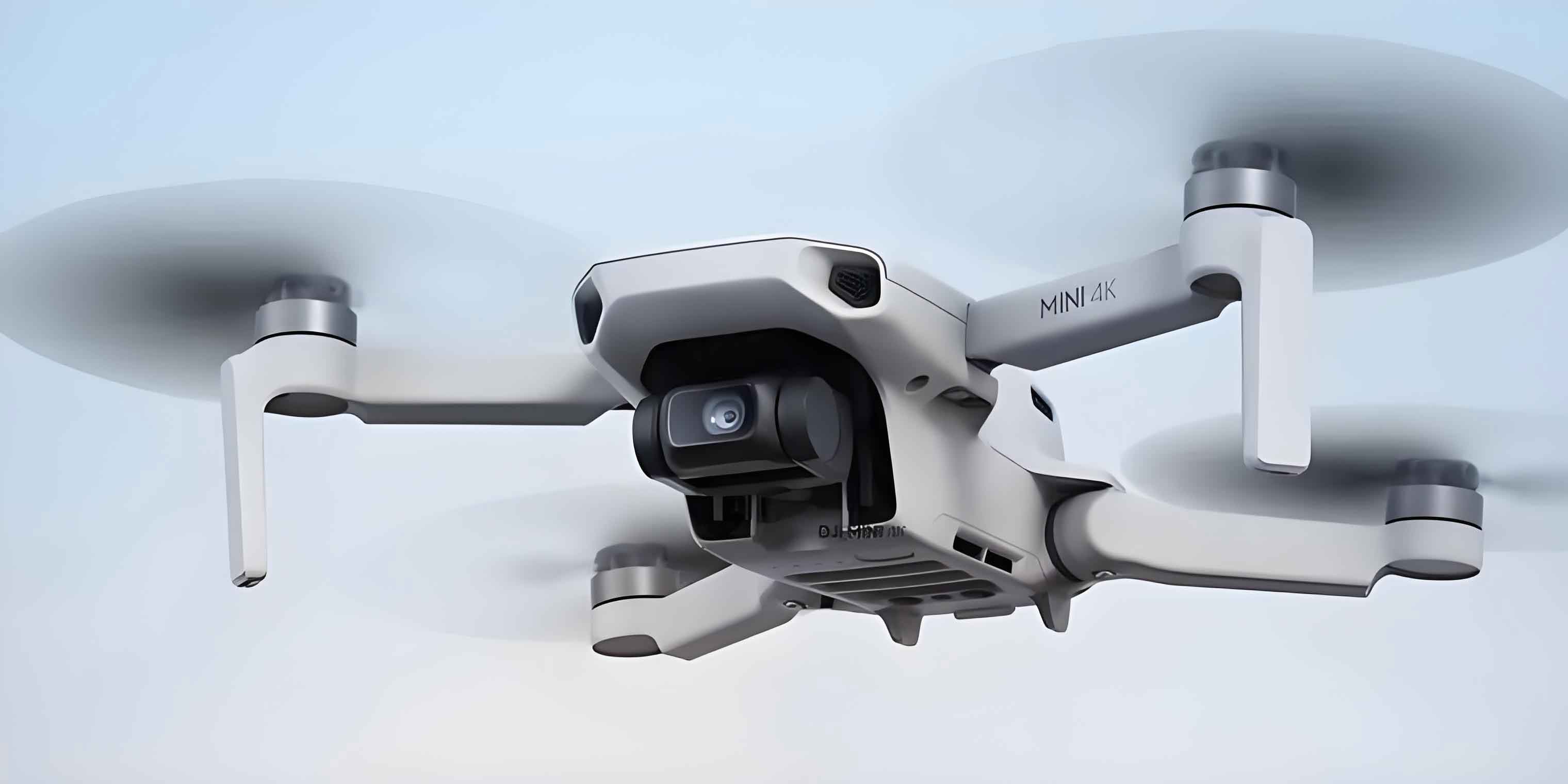
The rapid development of the low-altitude economy, characterized by various low-altitude flight activities involving both manned and unmanned aerial vehicles, is driving the integrated growth of related sectors. As a quintessential representative of new quality productive forces, this sector merges technologies from informatics, digitalization, aeronautics, and unmanned drone systems. Within this ecosystem, low-altitude logistics, a critical component, has emerged as a powerful engine for economic growth. The gradual opening of low-altitude airspace and the establishment of industry standards are accelerating the practical application of unmanned drone delivery models. These unmanned drones demonstrate unique advantages for aerial transport, particularly in deliveries to remote areas, urban instant delivery, emergency supply transportation, and logistics operations in special environments. As the scale of unmanned drone applications expands, the challenge of efficiently coordinating multiple unmanned drones through effective task planning has become a pivotal technical problem for the logistics industry.
This article delves into the latest research, key technologies, and existing challenges in multi-unmanned drone task planning for logistics. The core of efficient collaborative operations lies in task planning technology, which encompasses two critical, interdependent sub-problems: task allocation and trajectory planning. The goal is to optimize resource allocation and enhance the overall efficiency of mission execution.
1. The Unmanned Drone Task Planning Problem
Task planning serves as the top-level design for the collaborative operation of multiple unmanned drones. It involves devising optimal delivery tasks and flight paths based on mission objectives, along with constraints related to the unmanned drone swarm, the tasks themselves, and the operational environment. Both task allocation and trajectory planning are NP-hard problems at the heart of this process. Task allocation for logistics unmanned drones involves a central dispatch or the swarm itself assigning a fleet of unmanned drones to service delivery demands, allocating an ordered set of tasks to each unmanned drone. The objective is to fulfill all customer demands while optimizing the system’s resource configuration and execution efficiency. Trajectory planning for an unmanned drone is essentially a multi-constrained, multi-objective combinatorial optimization problem. It must account for regulatory limits, terrain obstacles, air traffic control, and other constraints to plan an economical, efficient, and safe flight path. These two sub-problems are strongly coupled: allocation decisions should ideally be based on accurate trajectory cost information, while trajectory generation depends on the assigned task sequence. Ignoring this coupling prevents finding an optimal solution for the overall task planning problem. The complexity of the planning problem is further exacerbated by numerous interacting elements and the strong nonlinearity and discontinuity of objectives and constraints.
1.1 Constraint Sets
Effective planning for multiple unmanned drones must rigorously account for a comprehensive set of constraints, which can be categorized as follows:
| Constraint Category | Specific Constraints | Description |
|---|---|---|
| Unmanned Drone Constraints | Quantity, Endurance/Range, Payload Capacity, Dynamic Performance (speed, climb/descent angle, turn rate) | Limitations inherent to the physical and operational capabilities of each unmanned drone in the fleet. |
| Task Constraints | Delivery Task (all tasks served, no duplication), Time Windows (hard/soft), Task Priority | Requirements and conditions specific to the logistics delivery missions. |
| Environmental Constraints | Weather Conditions (wind, precipitation), Obstacle Avoidance (buildings, terrain) | External factors in the operational airspace that affect flight safety and feasibility. |
| Swarm/Safety Constraints | Spatial Coordination (safe separation distance, formation keeping), Temporal Coordination (simultaneous/sequential arrival), Task Dependency | Rules governing the safe and synchronized interaction among multiple unmanned drones. |
1.2 Evaluation Metrics
The performance of a task plan is evaluated against one or multiple objectives. Common optimization metrics for logistics unmanned drone operations include:
- Minimizing total flight distance or energy consumption.
- Minimizing total mission completion time (makespan).
- Minimizing total operational cost (including delay penalties for missing time windows).
- Minimizing cumulative risk or threat exposure along flight paths.
- Maximizing the overall value or priority of completed tasks.
Since these objectives often conflict (e.g., shorter paths may be riskier), multi-objective optimization techniques are essential. Common approaches include:
- Weighted Sum: Aggregating objectives into a single function: $$ F_{total} = \sum_{i=1}^{k} w_i \cdot f_i $$ where $w_i$ is the weight for objective $f_i$.
- Hierarchical Optimization: Solving objectives in order of priority.
- Pareto Optimization: Finding a set of non-dominated solutions.
- Constraint Transformation: Treating secondary objectives as constraints for a primary objective.
1.3 System Control Architecture
The control architecture defines how decision-making is distributed among the unmanned drones and central units, fundamentally impacting the planning approach.
| Architecture | Description | Advantages | Disadvantages |
|---|---|---|---|
| Centralized | A single central node has global information and computes plans for all unmanned drones. | Global optimality; strong coupling between allocation and path planning is manageable. | Single point of failure; high computational/communication burden; poor scalability. |
| Distributed | Each unmanned drone acts as an autonomous agent, negotiating and planning locally. | High robustness and scalability; fast response to local changes. | Difficulty in achieving global optimum; requires extensive communication for coordination. |
| Hybrid | Combines centralized high-level planning with distributed low-level execution and adjustment. | Balances global optimization with local reactivity and robustness. | Increased design complexity for coordination between levels. |
2. Unmanned Drone Task Allocation
The task allocation problem seeks the optimal discrete mapping between a set of $N_t$ tasks and a fleet of $N_u$ unmanned drones under operational constraints.
2.1 Mathematical Model
A general formulation involves defining decision variables, an objective function, and constraints. Let $x_{ij} \in \{0,1\}$ be a binary variable indicating whether task $j$ is assigned to unmanned drone $i$. A common objective is to minimize total cost, which may include travel distance, time, or penalty costs. The allocation result is a set of ordered task sequences for each unmanned drone: $AT = [seq_1, seq_2, …, seq_{N_u}]$, where $seq_i = [M^i_1, M^i_2, …, M^i_{m_i}]$ and $m_i$ is the number of tasks assigned to unmanned drone $U_i$. The core problem can be defined as:
$$
\begin{aligned}
& \min_{x} f(x) \\
& \text{s.t. } x \in \Omega
\end{aligned}
$$
Where $\Omega$ represents the feasible region defined by all relevant constraints (e.g., each task assigned once, unmanned drone capacity not exceeded).
2.2 Task Allocation Algorithms
Algorithms can be classified based on the underlying control architecture.
| Algorithm Type | Representative Methods | Key Characteristics & Improvements for Unmanned Drones |
|---|---|---|
| Centralized (Heuristic/Metaheuristic) | Genetic Algorithm (GA), Particle Swarm Optimization (PSO), Simulated Annealing (SA) | Employ problem-specific encoding (e.g., chromosome representing task sequences). Use strategies like dual-chromosome GA, multi-objective PSO with constraint handling, or hybrid mechanisms to avoid premature convergence and improve solution quality for large-scale unmanned drone problems. |
| Distributed | Auctions (e.g., Consensus-Based Bundle Algorithm – CBBA), Market-Based, Bio-inspired (ACO, Wolf Pack) | Enable scalable, real-time allocation. “Two-stage” hybrid auctions combine initial bidding with consensus phases. Improved Ant Colony Optimization (ACO) uses adaptive pheromone updates for dynamic target coverage by multiple unmanned drones. |
| Hybrid | Combinations (e.g., Quantum GA for initial plan + Contract Net for dynamic re-allocation) | Leverage global optimization of centralized methods for initial planning and the agility of distributed methods for real-time adjustments, enhancing overall unmanned drone swarm performance. |
3. Unmanned Drone Trajectory/Path Planning
Trajectory planning generates a safe and feasible geometric path (and optionally a velocity profile) for an unmanned drone to execute its assigned task sequence. It is the lower-level realization of the task plan.
3.1 Mathematical Model
The problem is typically defined in continuous 2D or 3D space. Given an initial position $P_0$, a sequence of target task locations $[P_1, P_2, …, P_k]$, and a set of constraints $C$, find a path $\Gamma$ that minimizes an objective $g(\Gamma)$. The path for an unmanned drone $U_i$ is a series of waypoints: $[(x_0,y_0,z_0), (x_1,y_1,z_1), …, (x_{M_k}, y_{M_k}, z_{M_k})]$. The formal problem is:
$$
\begin{aligned}
& \min_{\Gamma} g(\Gamma) \\
& \text{s.t. } \Gamma \text{ is feasible under } C
\end{aligned}
$$
Objectives $g(\Gamma)$ often include path length, flight time, threat exposure, or energy consumption.
3.2 Environmental Modeling
Before planning, the operational environment must be represented computationally.
| Modeling Method | Description | Suitability for Unmanned Drone Logistics |
|---|---|---|
| Grid-Based | Space is discretized into cells (2D/3D voxels), each with a cost (e.g., risk, traversability). | Widely used for urban airspace; intuitive for risk mapping; simple for search algorithms but suffers from “grid effect” and dimensionality explosion in 3D. |
| Graph-Based | Represents the environment as a network of nodes and edges (e.g., Visibility Graph, Voronoi Diagram, Probabilistic Roadmap – PRM, Rapidly-exploring Random Tree – RRT). | Visibility graphs yield shortest but obstacle-proximal paths. Voronoi diagrams maximize clearance but lengthen paths. RRT is efficient for high-dimensional spaces and dynamic planning for a single unmanned drone or swarm. |
| Artificial Potential Field (APF) | Defines attractive forces toward goals and repulsive forces from obstacles. | Computationally light, generates smooth paths in real-time, making it suitable for online unmanned drone obstacle avoidance. Prone to local minima and oscillations. |
3.3 Trajectory Planning Algorithms
Numerous algorithms have been adapted and improved for unmanned drone path planning.
| Algorithm Category | Key Algorithms & Recent Improvements |
|---|---|
| Heuristic Search | A* Algorithm: Enhanced with dynamic weighting, bidirectional search, and safety buffers for risk-aware urban unmanned drone navigation. Often combined with post-smoothing techniques. |
| Metaheuristic Optimization |
Particle Swarm Optimization (PSO): Improved with adaptive inertia weights, chaotic initialization, and hybridization with local search for 3D unmanned drone path planning. Genetic Algorithm (GA): Enhanced using specialized crossover/mutation operators for path chromosomes, chaos theory for population diversity, and dynamic fitness updates. Ant Colony Optimization (ACO): Modified with better heuristic information design, time-varying pheromone updates, and clustering mechanisms to generate multiple low-risk paths for an unmanned drone. |
| Other Bio-inspired Algorithms | Grey Wolf Optimizer (GWO), Crow Search Algorithm (CSA), and Honey Badger Algorithm have been modified with improved population initialization and local search strategies for unmanned drone path planning. |
| Algorithm Fusion | Common trend: Hybridizing algorithms to overcome individual weaknesses (e.g., A*-Dynamic Window Approach for global planning with local reactive avoidance; PSO-GWO fusion; ACO-RRT combinations). |
| 4D Trajectory Planning | An emerging critical area for multi-unmanned drone logistics. Involves planning in 3D space plus time to ensure temporal coordination (e.g., simultaneous delivery) and resolve spatio-temporal conflicts among unmanned drone swarms using time-slot allocation, speed adjustment, or spatial deconfliction layers. |
4. Integrated Task Planning Solution Strategies
The coupling between task allocation and trajectory planning necessitates integrated solution strategies, broadly classified as follows:
4.1 Centralized (Coupled) Strategy
This strategy solves the combined problem in a monolithic framework. A single optimization model and algorithm (e.g., a specially designed GA with a compound chromosome encoding both assignment and path variables) search the joint solution space. While potentially offering global optimality, the computational complexity is extremely high, limiting its application to small-scale unmanned drone fleets or offline planning.
4.2 Hierarchical Decoupled Strategy
This more pragmatic and common approach decomposes the problem into two tiers: an upper tier for task allocation and a lower tier for trajectory planning. The key lies in how information flows between these tiers.
| Coupling Method | Process Flow | Characteristics |
|---|---|---|
| Loose Coupling | 1. Predict inter-task distances (e.g., using Euclidean or simple cost models). 2. Solve Task Allocation using predicted costs. 3. Solve Trajectory Planning based on the fixed allocation. |
Simple, fast. Sub-optimal because actual trajectory costs may differ significantly from predictions, especially in complex urban environments for an unmanned drone. |
| Iterative/Tight Coupling | 1. Initial Allocation (using predicted costs). 2. Detailed Trajectory Planning for the allocation. 3. Feedback actual trajectory costs (time, risk, energy) to the allocation module. 4. Re-optimize Allocation if needed. Iterate until convergence or satisfaction. |
More accurate and higher-quality solutions for unmanned drone swarms. Balances planning quality and computational cost. Implemented via bi-level optimization frameworks, auction algorithms with path-aware bidding, or iterative refinement loops. |
The iterative, hierarchical strategy is often preferred for real-world multi-unmanned drone logistics planning, as it offers a reasonable trade-off between solution quality and computational feasibility.
5. Future Outlook and Research Directions
The future of task planning for logistics unmanned drones lies in enhanced intelligence, autonomy, and robust large-scale coordination. Several promising research directions are emerging:
1. Complex and Dynamic Logistics Scenarios: Current research often assumes homogeneous cargo and static, known tasks. Future models must handle heterogeneous goods with different compatibility constraints (e.g., food vs. electronics). Furthermore, integrating real-time, dynamic order requests into the planning loop for on-demand urban logistics presents a significant challenge, requiring highly adaptive and fast-replanning capabilities for the unmanned drone fleet.
2. Advanced 4D Spatio-Temporal Planning: Moving beyond 3D path planning to full 4D trajectory planning (3D + precise timing) is crucial for dense, coordinated unmanned drone operations. This enables precise time-slot management for deliveries, efficient traffic flow in urban air corridors, and sophisticated conflict detection and resolution among hundreds of unmanned drones.
3. Hybrid and Adaptive Control Architectures: Leveraging hybrid control architectures that dynamically switch between centralized and distributed paradigms based on network conditions, task criticality, and swarm size will enhance both robustness and efficiency. This requires developing intelligent meta-coordination protocols for the unmanned drone swarm.
4. AI and Machine Learning Integration: Reinforcement Learning (RL), particularly Multi-Agent RL (MARL), holds great promise for learning complex coordination policies directly from interaction with the environment. Deep learning can be used for fast, learned cost prediction to inform allocation or for direct end-to-end planning. The goal is to develop systems where unmanned drones can autonomously learn to cooperate and replan in real-time under uncertainty.
5. Robustness and Resilience: Planning algorithms must account for increased uncertainty—in weather, unmanned drone performance degradation, communication dropouts, and pop-up no-fly zones. Research into resilient planning that includes contingency branches, graceful degradation of service, and robust multi-unmanned drone re-routing is essential for safe and reliable commercial operations.
In conclusion, task planning for multi-unmanned drone systems in logistics is a vibrant and critical field of study. By advancing integrated solution strategies, leveraging new algorithmic paradigms, and directly addressing the complexities of real-world urban and rural delivery, the full potential of unmanned drone swarms to revolutionize the logistics industry can be unlocked.