
The emergence and proliferation of unmanned drone technology have fundamentally altered the landscape of modern conflict and security operations. As a researcher deeply embedded in the study of asymmetric warfare and technological countermeasures, I have observed a paradigm shift where the unmanned drone has evolved from a niche surveillance tool to a central pillar in national and international counter-terrorism strategy. Their ability to project power, gather intelligence, and conduct precision engagements with minimal risk to personnel has made them indispensable. This article will explore, from a first-person analytical perspective, the multifaceted role of unmanned aerial systems in countering terrorism. It will establish a theoretical framework for understanding their impact, delve into the technological architectures that enable their use, examine operational applications through empirical and modeled lenses, and confront the significant ethical and strategic challenges that accompany their deployment. The core of this analysis posits that the effectiveness of an unmanned drone in counter-terrorism is not merely a function of its hardware, but a complex product of its integration into a broader system of intelligence, decision-making, and legal oversight.
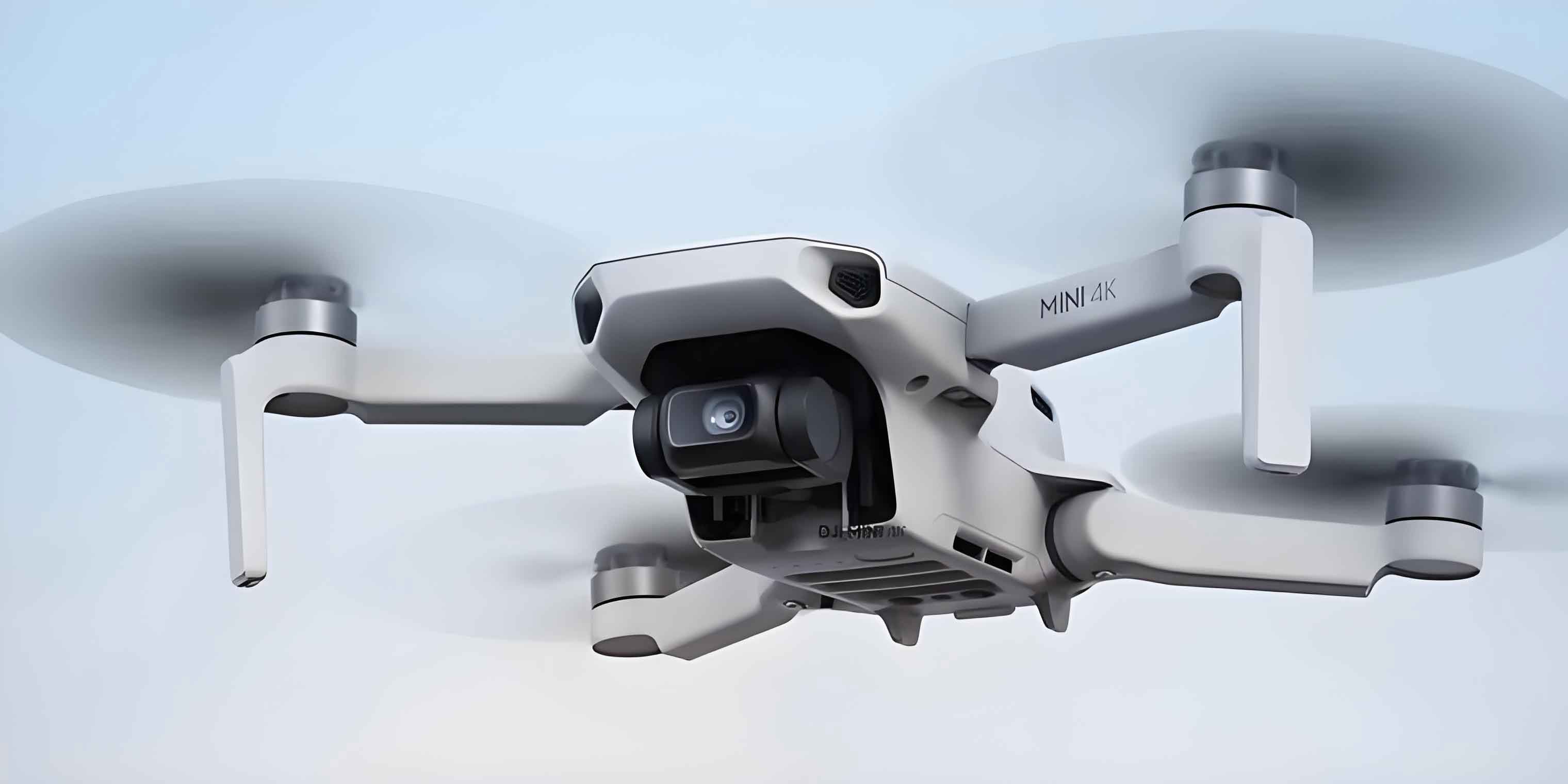
The theoretical foundation for employing an unmanned drone in counter-terrorism can be modeled through a lens of signal intelligence, spatial dominance, and decision-chain compression. We begin by considering the terrorist operative as an agent operating within an environment where they must manage their detectability, or “signal.” The primary function of an ISR (Intelligence, Surveillance, and Reconnaissance) unarmed drone is to alter the parameters of this environment, increasing the probability of detection and identification.
Let us define \(S(C, D)\) as the composite signal of a terrorist cell, where \(C\) represents its covert operational activities and \(D\) represents its detectability footprint. The natural state of the cell aims to minimize \(D\). The introduction of persistent aerial surveillance via an unmanned drone imposes a new variable, the surveillance coverage intensity \(I\). The effective detectability \(D_{eff}\) under surveillance becomes a function of the original footprint and the surveillance intensity, often non-linear:
$$ D_{eff}(D, I) = D \cdot (1 + \alpha I^{\beta}) $$
where \(\alpha\) is a terrain and technology-dependent coefficient, and \(\beta > 1\) suggests increasing returns to scale in surveillance intensity—a key argument for persistent loitering capabilities of advanced unmanned drone platforms.
The goal of counter-terrorism is to drive the total signal \(S(C, D_{eff})\) above a actionable threshold \(\tau\). This creates a decision loop model. The unmanned drone system, by providing real-time or near-real-time data \( \mathbf{Data} \), compresses the traditional “observe, orient, decide, act” (OODA) loop. If \(T_{human}\) is the time for a human-in-the-loop decision cycle based on traditional intelligence, and \(T_{drone}\) is the cycle time with integrated drone data and accelerated processing, the operational advantage \(\Delta T\) is:
$$ \Delta T = T_{human} – T_{drone} = k \cdot \log\left(\frac{V(\mathbf{Data}_{human})}{V(\mathbf{Data}_{drone})}\right) $$
where \(V(\cdot)\) represents the volume and velocity of intelligence data, and \(k\) is a platform and C2 (Command and Control) efficiency constant. This compressed cycle time is critical for engaging time-sensitive targets, a hallmark of counter-terrorism operations.
| Theoretical Component | Key Variable | Role of Unmanned Drone | Operational Impact |
|---|---|---|---|
| Signal Detection | \(D_{eff}\), \(\tau\) | Increases \(D_{eff}\) via \(I\) (persistent surveillance) | Raises probability of target acquisition and identification. |
| Spatial Control | Area Denial Coefficient | Establishes a “no-go” zone for adversary movement. | Disrupts logistics, training, and safe haven establishment. |
| Decision Cycle | \(\Delta T\) | Reduces \(T_{drone}\) by providing high-velocity data \(\mathbf{Data}_{drone}\). | Enables engagement of fleeting targets; increases adversary planning uncertainty. |
| Risk Calculus | Operator Risk \(R_{op}\) | Minimizes \(R_{op}\) to near-zero for the aerial platform operator. | Politically and militarily enables operations in denied areas with lower threshold for action. |
The technological architecture of a counter-terrorism unmanned drone system is a layered stack. It moves far beyond the airframe itself. We can model the system efficacy \(E_{sys}\) as a product of interdependent layers:
$$ E_{sys} = \prod_{i=1}^{n} L_i^{w_i} \quad \text{where} \quad \sum w_i = 1 $$
Here, \(L_i\) represents the performance level of the \(i\)-th layer (normalized between 0 and 1), and \(w_i\) its relative weight. A failure in any critical layer (\(L_i \rightarrow 0\)) can collapse the entire system’s effectiveness.
| System Layer (L_i) | Key Technologies | Function in Counter-Terrorism | Weight (w_i) Estimate |
|---|---|---|---|
| 1. Platform & Propulsion | MALE/HALE UAVs, VTOL UAS, stealth coatings, hybrid/electric propulsion. | Provides endurance, range, payload capacity, and survivability. A HALE unmanned drone offers days of coverage. | 0.15 |
| 2. Sensor Suite | EO/IR gimbals, SIGINT pods, SAR/GMTI radar, hyperspectral imagers. | Generates the primary data \(\mathbf{Data}\). SAR allows seeing through clouds; SIGINT intercepts communications. | 0.25 |
| 3. Data Processing & AI | Onboard edge computing, ML algorithms for pattern-of-life analysis, automatic target recognition (ATR). | Filters terabyte data streams into actionable intelligence. Reduces \(T_{drone}\) by automating detection and tracking. | 0.20 |
| 4. Communication & C2 | Satellite links (SATCOM), secure datalinks, resilient mesh networks. | Ensures reliable transmission of \(\mathbf{Data}\) and commands. A lost link can render a unmanned drone useless or vulnerable. | 0.20 |
| 5. Payload (Kinetic/Non-Kinetic) | Precision-guided munitions (PGMs), directed energy weapons, non-lethal payloads (speakers, jammers). | Enables the “act” phase of the OODA loop. PGMs allow for low collateral damage strikes from a loitering unmanned drone. | 0.15 |
| 6. Ground Control & Analysis | Multi-domain C2 centers, data fusion systems, analyst workstations. | Where the human decision-making integrates with machine speed. The point where \(\mathbf{Data}\) becomes a “decision-quality” target package. | 0.05 |
The integration of Artificial Intelligence and Machine Learning in layers 2 and 3 represents a quantum leap. An AI-enabled unmanned drone system can be tasked not just to “watch a location,” but to “identify anomalous vehicle movement consistent with IED emplacement patterns between 0200 and 0500 local time.” This shifts the role of human analysts from searching data to validating machine-generated hypotheses, dramatically scaling surveillance capabilities. The mathematical expression for coverage efficiency with AI (\(CE_{AI}\)) versus without (\(CE_0\)) over an area \(A\) with \(n\) objects of interest is instructive:
$$ CE_0 \propto \frac{n_{analysts} \cdot v_{scan}}{A} $$
$$ CE_{AI} \propto \frac{f_{GPU} \cdot \epsilon_{ML} \cdot \eta_{sensor}}{A} $$
where \(v_{scan}\) is the human visual scan rate, \(f_{GPU}\) is processing power, \(\epsilon_{ML}\) is algorithm efficiency, and \(\eta_{sensor}\) is sensor sampling rate. For large \(A\) and complex patterns, \(CE_{AI} \gg CE_0\), making wide-area persistent counter-terrorism search feasible.
The operational applications of the unmanned drone in counter-terrorism are diverse and have evolved through distinct phases.
1. Intelligence, Surveillance, and Reconnaissance (ISR): This remains the foundational use. The unmanned drone provides “unblinking eye” coverage over suspect areas, building patterns of life (PoL). PoL analysis involves tracking movements, social interactions, and daily routines to establish a baseline and then flag anomalies. This directly feeds the signal detection model \(S(C, D_{eff})\). Modern wide-area motion imagery (WAMI) sensors on a single unmanned drone can track every vehicle and person in a small city simultaneously, creating a searchable temporal database of movement.
2. Targeted Strikes: The most controversial application. Here, an armed unmanned drone (often a MQ-9 Reaper or similar) loiters in a “stack” until a high-value target (HVT) is positively identified and authorized for engagement. The kill chain involves: detection by other assets (e.g., SIGINT), tasking of the unmanned drone for confirmation, PID (Positive Identification) via its EO/IR sensors, legal review, command authorization, and weapon release. The probability of a successful strike \(P_{success}\) can be modeled as a chain of conditional probabilities:
$$ P_{success} = P_{detect} \cdot P_{task} \cdot P_{PID} \cdot P_{legal} \cdot P_{weapon} $$
Each \(P\) is less than 1, and the overall probability diminishes rapidly. The unmanned drone‘s key contribution is maximizing \(P_{PID}\) through persistent, stable sensor observation and potentially raising \(P_{weapon}\) through precision guidance.
3. Force Protection & Base Security: Smaller tactical unmanned drones (e.g., RQ-11 Raven, instant eye) are used by patrols and bases for local area reconnaissance, overwatch, and IED detection. They act as a force multiplier, extending the sensory reach of a small unit. The effective security perimeter \(R_{eff}\) of a base with a small unmanned drone patrol is greater than without:
$$ R_{eff} = R_{static} + v_{drone} \cdot t_{loiter} \cdot \gamma $$
where \(R_{static}\) is the physical perimeter, \(v_{drone}\) is drone patrol speed, \(t_{loiter}\) is mission duration, and \(\gamma\) is a coverage efficiency factor.
4. Communications Relay & Electronic Warfare: A unmanned drone can act as an airborne cell tower or radio relay, restoring communications for ground forces in rugged terrain. Conversely, it can be a jamming platform, disrupting terrorist command and control (C2) and remote IED triggering signals (e.g., cell phone signals). The jamming effectiveness \(J\) at a ground point relative to a jammer on an unmanned drone follows an adapted link budget equation:
$$ J = P_{tx}^{drone} + G_{tx}^{drone} – PL(d) + G_{rx}^{target} – P_{rx,min}^{target} $$
where \(P_{tx}\) is transmit power, \(G\) are antenna gains, \(PL(d)\) is path loss over distance \(d\), and \(P_{rx,min}\) is the minimum receive power needed by the target device. The unmanned drone‘s altitude gives it a significant advantage in line-of-sight and coverage area over ground-based jammers.
| Operation Type | Primary Drone Type | Key Performance Metric | Mathematical/System Focus | Risk Transfer |
|---|---|---|---|---|
| Strategic ISR/PoL | HALE (Global Hawk) | Endurance (Hours), Sensor Resolution, Area Coverage Rate (\(km^2/hr\)) | Maximizing \(D_{eff}\) over large \(A\); data fusion for \(S(C,D)\). | Very High (No aircrew risk) |
| Theater ISR/Strike | MALE (Reaper, Predator) | Loiter Time on Station, Weapon Payload, Sensor Persistence | Optimizing the \(P_{success}\) chain; minimizing \(\Delta T\). | High |
| Tactical Recon/Force Prot. | Small/Tactical UAS (ScanEagle, Raven) | Deployment Time, Ease of Use, Datalink Robustness | Extending \(R_{eff}\); providing real-time SA (Situational Awareness). | Moderate (Reduces ground patrol risk) |
| EW/Communications | Modified MALE or Specialized Platform | Effective Radiated Power (ERP), Frequency Agility, On-Station Time | Maximizing \(J\) over target area; maintaining comms relay link budget. | High |
To move from theory to practice, it is essential to examine case studies. The use of unmanned drone campaigns in various theaters provides empirical data on their strengths and limitations.
Case A: FATA Region, Pakistan (2004-2018): This was the archetypal “drone war.” The U.S. employed MALE unmanned drones for surveillance and targeted strikes against Al-Qaeda and Taliban leadership in a region largely inaccessible to ground forces. The strategic effect was significant degradation of senior leadership (high \(P_{success}\) for HVTs). However, the campaign highlighted critical issues: controversial legal bases, high civilian casualty claims (raising questions about \(P_{PID}\) accuracy), and significant political blowback that may have fueled local recruitment. The metrics were clear on decapitation but fuzzy on overall network resilience.
Case B: Counter-ISIS Operations, Iraq & Syria (2014-2019): This represented a more integrated and diverse use of unmanned drone technology. Missions ranged from persistent WAMI coverage over cities like Mosul for battle damage assessment (BDA) and civilian movement tracking, to tactical support for Iraqi forces, to strikes against moving vehicle-borne IEDs (VBIEDs). The integration of drone-derived data with ground unit tactics was more seamless. The unmanned drone here was part of a combined arms team, not a standalone strike platform. Effectiveness was high in supporting conventional military defeat of ISIS territorial holdings.
Case C: Domestic Counter-Terrorism & Border Security: Nations employ unmanned drones for border surveillance, monitoring critical infrastructure, and large-event security. Here, the focus is almost exclusively on ISR and tracking, with kinetic action typically left to ground intervention teams. The key performance metric is deterrence through perceived omnipresent surveillance—raising the perceived \(D_{eff}\) for any would-be operative. The ethical concerns shift from lethal strikes to issues of mass surveillance and privacy.
| Case Study | Primary Drone Mission | Observed Strengths | Observed Challenges/Limitations | Key Lesson for Model |
|---|---|---|---|---|
| FATA, Pakistan | Leadership Decapitation (Strike) | Ability to reach into denied areas; high precision for fixed targets; zero U.S. aircrew loss. | Legal legitimacy contested; civilian casualties; strategic political costs; network adaptation. | High \(P_{success}\) for HVTs does not equal strategic victory. The “blowback” variable must be added to the efficacy equation \(E_{sys}\). |
| vs. ISIS, Iraq/Syria | Integrated ISR & Strike in Combined Arms | Excellent for BDA, counter-mobility (striking convoys), protecting allies; flexible role-switching. | Vulnerable to advanced air defenses (e.g., in later stages); required dense support infrastructure. | The unmanned drone is most effective when its data \(\mathbf{Data}_{drone}\) is fused with other intelligence and operational domains (ground, space, cyber). |
| Border Security & Domestic CT | Persistent Wide-Area Surveillance | Force multiplier for limited personnel; creates a persistent record; deters illicit crossing/activity. | Privacy concerns; high operational costs for 24/7 coverage; limited in adverse weather. | The psychological impact (deterrence) is a real output. The model must account for prevention, not just response. |
Any comprehensive analysis must confront the profound ethical, legal, and strategic challenges posed by counter-terrorism unmanned drone operations.
1. The Ethics of Remote Killing: The physical and psychological distance between the operator and the target—the “3,000-mile screwdriver”—raises concerns about dehumanization and the lowering of the threshold for using lethal force. When a pilot in Nevada engages a target in Yemen, the risk calculus \(R_{op}\) is near zero. This can lead to a “push-button war” mentality and potentially less rigorous adherence to principles of distinction and proportionality in the heat of a compressed OODA loop (\(\Delta T\)).
2. Legal Frameworks and Sovereignty: International law is strained by cross-border unmanned drone strikes. Is a strike in a non-belligerent country an act of war? The U.S. has often relied on the Authorization for Use of Military Force (AUMF) and self-defense arguments. Other nations view such strikes as violations of sovereignty. The lack of a universally accepted legal framework creates instability and accusations of hypocrisy.
3. Civilian Casualties and Accountability: Despite advanced sensors, misidentification happens. The fog of war is not eliminated by a camera feed; it is merely viewed from a different vantage point. The problem of “signature strikes”—targeting based on behavioral patterns rather than positive identity—exemplifies this. The formula for a strike decision must include not just \(P_{PID}\), but an estimate of expected collateral damage \(E[CD]\). A responsible policy requires: \(P_{PID} > \theta_{high}\) AND \(E[CD] < \theta_{low}\), where \(\theta\) are strict policy thresholds.
4. Proliferation and the Democratization of Air Power: The technology is proliferating. Non-state actors and adversarial states now deploy commercially available or indigenously built unmanned drones for terrorism (e.g., ISIS drone-dropped grenades, Houthi drone attacks on Saudi oil facilities). The same tool used for counter-terrorism becomes a terrorist weapon. This creates a defensive challenge: Counter-Unmanned Aerial Systems (C-UAS) technology must now be integrated into the security architecture.
5. Strategic Blowback and Radicalization: As seen in Case A, perceptions of illegitimate strikes causing civilian deaths can be a powerful recruitment tool for terrorist organizations. The tactical gain of eliminating one HVT may be offset by the strategic loss of radicalizing dozens more. A full strategic assessment must model this trade-off:
$$ Net Strategic Gain = (Value_{HVT} – Cost_{Strike}) – \kappa \cdot (Casualties_{civ} \cdot Radicalization_{Multiplier}) $$
where \(\kappa\) is a conflict-specific constant. Often, \(\kappa\) is underestimated.
Looking ahead, the future of unmanned drone technology in counter-terrorism points toward greater autonomy, swarming, and multi-domain integration.
1. Increased Autonomy and AI: Current systems are “human-in-the-loop” or “human-on-the-loop.” Future systems may see “human-in-command” with delegated authority for certain functions, like target selection from a pre-approved list or reactive flight maneuvers. This raises the stakes for ethical and legal frameworks exponentially. The decision to engage could move from \(P_{legal}\) (human review) to an algorithmic certainty score.
2. Drone Swarms: The coordinated operation of dozens or hundreds of small, inexpensive unmanned drones presents a paradigm shift. Swarms could saturate an area for search, perform distributed electronic warfare, or overwhelm defenses. The effectiveness of a swarm \(E_{swarm}\) for area search can be modeled differently than a single platform:
$$ E_{swarm} \propto N \cdot \sqrt{A_{sensor}} \cdot \Phi(connectivity) $$
where \(N\) is the number of drones, and \(\Phi\) is a function of swarm communication and coordination algorithms. This offers resilience and scalability but introduces immense C2 complexity.
3. Counter-Drone Technologies (C-UAS): The defense against terrorist drones will become as important as the offensive use. This includes kinetic (nets, lasers, missiles) and non-kinetic (jamming, spoofing, cyber-takeover) systems. The battle may evolve into an electronic and cyber contest between the C2 link of the terrorist unmanned drone and the defensive system.
4. Integration with Other Domains: The unmanned drone will not operate alone. Data from space-based sensors, cyber intelligence, and human sources will be fused in real-time. A drone’s flight path may be directed by a SIGINT intercept; its sensor feed may be used to guide a cyber-attack on an enemy communications node. The unmanned drone becomes a node in a “kill web” rather than a single-string “kill chain.”
| Future Trend | Technological Driver | Potential Counter-Terrorism Impact | Associated Risk | Mitigation Requirement |
|---|---|---|---|---|
| Advanced Autonomy | Machine Learning, Edge Computing | Faster \(\Delta T\), ability to handle data volumes beyond human capacity, persistent tracking in cluttered environments. | Loss of meaningful human control; algorithmic bias leading to wrongful engagement; escalatory speed. | Legally-binding “meaningful human control” standards; rigorous testing and validation of AI models; explainable AI (XAI). |
| Cooperative Swarms | Mesh Networking, Miniaturization | Resilient, wide-area search and tracking; saturation attacks on terrorist positions; distributed EW. | Difficulty in discrimination in swarmed strikes; potential for loss of control leading to chaotic “rogue swarm” scenarios. | Advanced IFF (Identification Friend or Foe) for micro-platforms; secure and robust swarm C2 protocols; international norms on swarm use. |
| AI-Powered Analytics | Big Data Analytics, Predictive Algorithms | Proactive threat prediction (“predictive policing” at strategic level); automated pattern recognition for IED networks; deepfake detection in terrorist propaganda. | Mass surveillance overreach; false predictions leading to wrongful detention or strikes; erosion of privacy. | Strong legal frameworks for data use; transparency in predictive criteria; independent oversight boards. |
| Adversarial Drone Use (Terrorist Drones) | Commercial Drone Proliferation, DIY Modification | Terrorist attacks using drones for IED delivery, assassination, or mass surveillance of targets. | Asymmetric threat to civilians, critical infrastructure, and public events; challenges for traditional air defense. | Investment in layered C-UAS; regulation of commercial drone tech; public awareness and response protocols. |
In conclusion, the unmanned drone is a transformative technology in counter-terrorism, but it is not a panacea. Its efficacy, modeled through frameworks of signal detection, spatial control, and compressed decision cycles, is contingent upon its integration into a sophisticated system of technology, intelligence, law, and ethics. The operational benefits—persistent intelligence, precision strike capability, and force protection—are substantial and have been demonstrated in multiple theaters. However, these benefits are counterbalanced by significant strategic risks: legal ambiguities, potential for civilian harm, political blowback, and the proliferation of the technology to adversaries. The future points toward even more capable, autonomous, and networked systems. Therefore, the most critical task for policymakers, military strategists, and ethicists is not to build a better unmanned drone in isolation, but to construct the robust legal, ethical, and strategic frameworks that must govern its use. The ultimate measure of success for a counter-terrorism unmanned drone program is not the number of HVTs eliminated, but whether its application makes a nation and its allies more secure in a sustainable and legitimate manner, without eroding the very principles it seeks to defend. The equation for responsible use must forever include variables for law, ethics, and long-term strategic consequence alongside those for sensor resolution and probability of kill.