
As a researcher focused on modern surveying technologies, I have witnessed firsthand the transformative potential of unmanned drone aerial surveys. These systems offer unparalleled efficiency and flexibility in data acquisition. However, their application in complex environments, such as mining areas with dramatic elevation changes, steep slopes, and rugged terrain, has been historically constrained by a fundamental requirement: ground control points (GCPs). The traditional workflow’s heavy reliance on numerous, precisely surveyed GCPs presents significant operational hurdles—increased labor intensity, prolonged survey cycles, substantial costs, and considerable safety risks for personnel navigating hazardous slopes and unstable ground.
The objective of our research was to systematically evaluate and demonstrate the viability of an image-free unmanned drone aerial survey methodology. This approach aims to eliminate the dependency on physical GCPs by leveraging high-precision direct georeferencing. We integrated Post-Processed Kinematic (PPK) and Real-Time Kinematic (RTK) Global Navigation Satellite System (GNSS) technology onboard the drone, coupled with a ground-based reference station. This configuration allows for the direct acquisition of precise Position and Orientation System (POS) data—coordinates and attitude—for each captured image at the moment of exposure. The core hypothesis was that this high-accuracy POS data could serve as a robust constraint in the aerial triangulation process, enabling the generation of high-fidelity 3D models and digital products without any GCPs, even in topographically challenging mining landscapes.
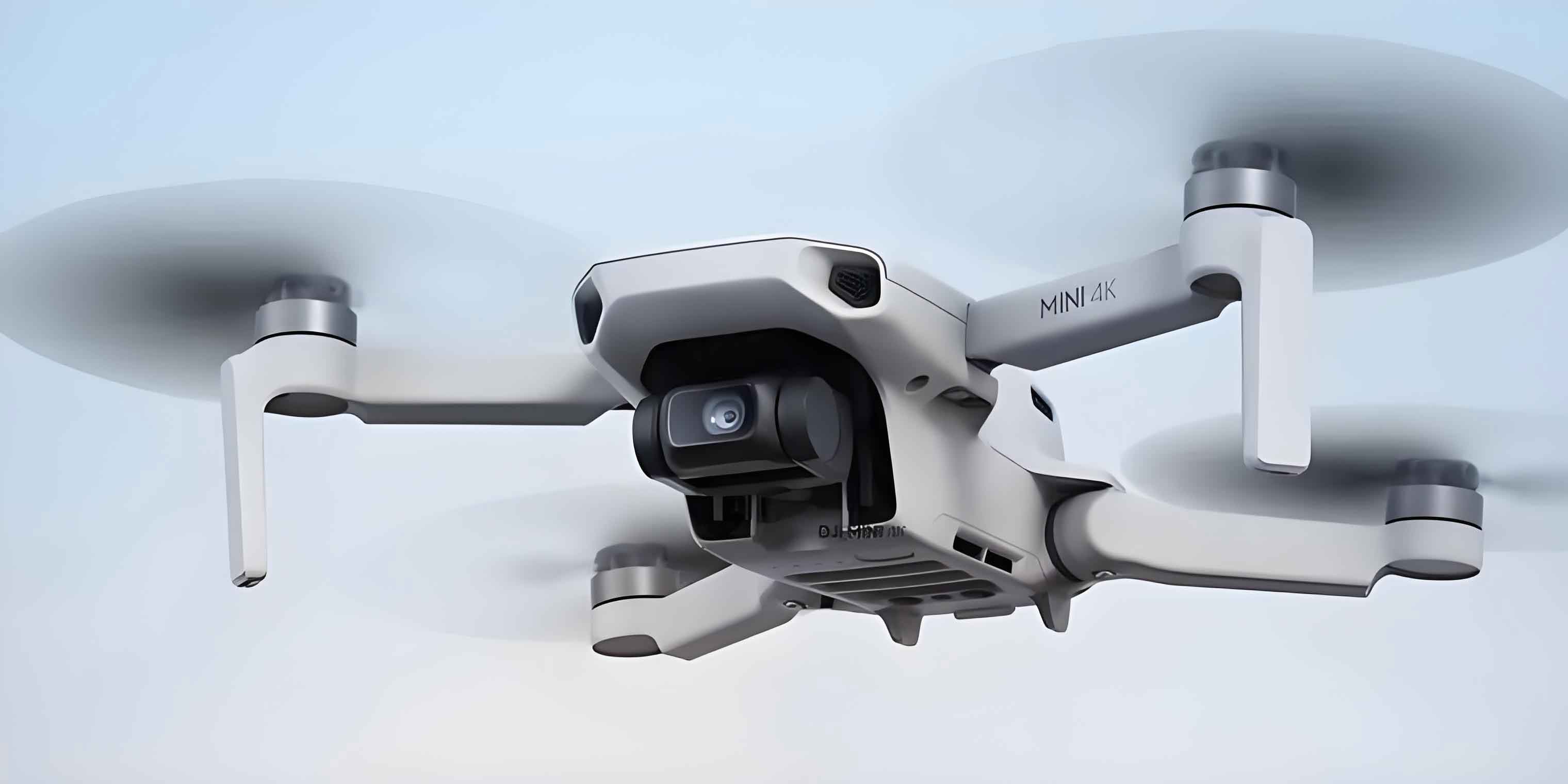
Fundamental Principles of Image-Free Unmanned Drone Surveying
The principle of photogrammetry hinges on solving for the spatial relationship between overlapping 2D images to reconstruct 3D geometry. Traditional methods rely on GCPs—known ground coordinates—to “tie down” or scale and orient the entire block of images through a process called bundle block adjustment. The core mathematical model is the collinearity condition, which states that a point on the ground (A), the perspective center of the camera (S), and its corresponding image point (a) all lie on a straight line.
The collinearity equations for a single image are expressed as follows:
$$
\begin{cases}
x – x_0 = -f \frac{a_1(X_A – X_S) + b_1(Y_A – Y_S) + c_1(Z_A – Z_S)}{a_3(X_A – X_S) + b_3(Y_A – Y_S) + c_3(Z_A – Z_S)} \\
y – y_0 = -f \frac{a_2(X_A – X_S) + b_2(Y_A – Y_S) + c_2(Z_A – Z_S)}{a_3(X_A – X_S) + b_3(Y_A – Y_S) + c_3(Z_A – Z_S)}
\end{cases}
$$
Where $(x, y)$ are the image coordinates of point a; $(x_0, y_0)$ are the coordinates of the principal point; $f$ is the focal length; $(X_A, Y_A, Z_A)$ are the object space coordinates of ground point A; $(X_S, Y_S, Z_S)$ are the object space coordinates of the exposure station S; and $a_i, b_i, c_i$ (for $i=1,2,3$) are the elements of the rotation matrix derived from the three exterior orientation angles (omega, phi, kappa) of the image.
In a conventional aerial triangulation involving hundreds of images, the parameters $(X_S, Y_S, Z_S)$ and the rotation matrix for each image are initially unknown or imprecise. GCPs provide the necessary absolute control to solve for these parameters accurately during the bundle adjustment, minimizing error propagation. The image-free unmanned drone methodology fundamentally changes this. By equipping the drone with a high-grade GNSS receiver (e.g., RTK/PPK-capable) and an Inertial Measurement Unit (IMU), we can directly measure the exterior orientation parameters $(X_S, Y_S, Z_S, \omega, \phi, \kappa)$ for every image with centimeter-level positional accuracy and sub-degree angular accuracy. These measured values are introduced into the bundle adjustment as highly weighted, fixed, or tightly constrained observations. This strong a priori information effectively replaces the need for GCPs to control the model’s absolute position, scale, and orientation. The adjustment then primarily solves for the refined camera calibration parameters and the 3D coordinates of all tie points, resulting in a correctly georeferenced dense point cloud, digital surface model (DSM), and orthomosaic. This paradigm shift moves the complexity from labor-intensive field work (“people running”) to sophisticated data processing (“data running”).
Technical Methodology and Field Implementation
Our implementation of the image-free unmanned drone survey followed a structured workflow encompassing platform selection, mission planning, field execution, and data processing, tailored for a complex mining environment.
Platform and Sensor Configuration
We selected the DJI Matrice 300 RTK as our primary unmanned drone platform. Its key features include robust flight performance, dual GNSS receivers for redundancy, and seamless integration with high-precision payloads. The critical component for image-free operation is its integrated D-RTK 2 GNSS mobile station/onboard receiver system, which supports real-time centimeter-level positioning. The imaging payload was a D2-PSDK five-lens oblique camera system. This sensor captures one nadir (vertical) and four oblique images simultaneously, ensuring comprehensive coverage of vertical faces (e.g., pit walls, steep slopes) that are often missed by traditional nadir-only surveys.
Pre-Flight Planning and Field Operations
The survey area was a typical mining district characterized by open pits, waste dumps, and rugged topography. To ensure data quality:
- Ground Reference Station: A permanent GNSS base station or a precisely located temporary base station with known coordinates was established within 10-15 km of the survey area. This station logged raw GNSS observation data throughout the flight for PPK post-processing, providing a backup to the real-time RTK link.
- Mission Planning: Flight parameters were designed for high overlap and optimal resolution. Using DJI Pilot 2 software, we set a flight altitude of 450 m above the takeoff point, yielding a ground sampling distance (GSD) of approximately 7.7 cm. The forward and side overlap were set to 80% and 70%, respectively, to ensure robust stereo matching in areas with complex texture and relief. The flight plan included a perimeter buffer around the area of interest.
- Flight Execution: Before takeoff, the unmanned drone’s RTK system established a fixed integer solution by connecting to the ground base station via a network or radio link. During the autonomous flight, the POS data (latitude, longitude, altitude, roll, pitch, yaw) for each image exposure event was recorded directly into the image’s metadata (e.g., in the EXIF).
- Checkpoint Survey: To independently validate the accuracy of the final models, a network of 18 checkpoints was established across the site using traditional RTK surveying. These points were located on stable ground at distinct topographic features and were not used in the processing; they served solely for accuracy assessment.
Data Processing Workflow
The image-free data processing pipeline was streamlined:
- Data Ingestion: All aerial images and their associated POS metadata were imported into specialized photogrammetric software (e.g., DJI Terra, Agisoft Metashape, or Pix4Dmapper).
- PPK Enhancement (Optional but Recommended): The timestamped GNSS data from the unmanned drone was post-processed against the data from the ground base station using dedicated PPK software. This step typically yields more robust and accurate coordinates than RTK alone, especially in areas with potential RTK signal interruptions.
- Image-Free Aerial Triangulation: In the software settings, the “georeferencing” mode was set to use the “camera positions” (from the POS data). The accuracy values for the provided XYZ coordinates (e.g., 0.02 m horizontal, 0.03 m vertical) and orientation angles were input to weight these observations appropriately in the bundle adjustment. The software then performed feature matching, tie point extraction, and the bundle adjustment, using the high-precision POS as the primary control constraint.
- Model Generation: Following the successful alignment, high-density 3D point clouds, textured mesh models, DSMs, and Digital Orthophoto Maps (DOMs) were generated automatically. The volume of spoil piles and excavation pits was calculated directly from the DSM.
Results: Accuracy Assessment and Geomorphic Analysis
Precision Validation
The most critical test of the image-free unmanned drone methodology is its absolute accuracy. After processing, the 3D coordinates of the 18 independent checkpoints were extracted from the generated DSM/DOM and compared against their RTK-surveyed values. The statistical results are summarized below:
| Accuracy Component | Mean Error (m) | Root Mean Square Error (RMSE) (m) | Standard Deviation (m) |
|---|---|---|---|
| Planimetric (X, Y) | 0.03 | 0.065 | 0.058 |
| Vertical (Z) | 0.08 | 0.165 | 0.144 |
The aerial triangulation quality report from the software also indicated excellent internal consistency, with a mean re-projection error of 0.054 pixels. These results demonstrate that the image-free model achieved a planimetric RMSE of ±6.5 cm and a vertical RMSE of ±16.5 cm. According to standards such as the ASPRS Positional Accuracy Standards for Digital Geospatial Data, this level of accuracy is fully compliant with the requirements for 1:1000-scale topographic mapping, validating the core premise of our research.
Mine Landform Characterization and Hazard Identification
Beyond geometric accuracy, the high-resolution 3D products enabled detailed geomorphic analysis of the mining landscape. The primary landform units—slopes, spoil piles, and excavation pits—were systematically identified and quantified.
1. Slope Analysis
Thirteen major slopes were delineated. Key geometric parameters were extracted directly from the 3D model, as shown in the following table for a subset of critical slopes:
| Slope ID | Toe Elevation (m) | Crest Elevation (m) | Height (m) | Slope Length (m) | Average Inclination (°) | Aspect |
|---|---|---|---|---|---|---|
| #1 | 764.12 | 878.58 | 114.46 | 643.74 | 19 | Southeast |
| #7 | 760.63 | 870.70 | 110.07 | 294.82 | 26 | North |
| #10 | 709.98 | 881.24 | 171.26 | 410.34 | 31 | East |
| #12 | 749.69 | 874.17 | 124.48 | 284.83 | 31 | East |
Furthermore, immersive inspection of the textured 3D mesh within a viewer allowed for the identification of potential geohazards. On Slope #12, clear signs of instability were detected, including a distinct scar, tension cracks, and a talus cone at the base, indicative of a recent or incipient landslide. The boundary of this unstable mass was digitized directly on the model for monitoring and remediation planning.
2. Spoil Pile Volumetrics
Nine major spoil piles were identified. Using the “volume calculation” tool (comparing the DSM to a defined base plane), their volumes were efficiently computed. This application is crucial for inventory management, planning of material relocation, and stability assessments.
| Pile ID | Base Elevation (m) | Top Elevation (m) | Height (m) | Basal Area (m²) | Calculated Volume (m³) |
|---|---|---|---|---|---|
| #1 | 764.36 | 883.49 | 119.13 | 250,055.6 | 22,440,045.7 |
| #6 | 756.94 | 837.06 | 80.12 | 239,206.4 | 15,887,280.9 |
| #8 | 781.57 | 692.76 | 88.81 | 112,074.9 | 7,639,721.3 |
3. Excavation Pit Analysis
Three main excavation pits were analyzed. Their perimeters and areas were measured from the DOM, and their void volumes (fill volumes) were calculated from the DSM relative to a reconstructed pre-excavation surface or a defined rim contour.
| Pit ID | Perimeter (m) | Surface Area (m²) | Void Volume (m³) | Status |
|---|---|---|---|---|
| I | 2,187.68 | 258,686.5 | 8,549,693.5 | Inactive, partially flooded |
| II | 3,567.76 | 237,186.7 | 1,216,343.5 | Inactive, rehabilitated |
| III | 1,576.05 | 74,276.3 | 440,737.0 | Active |
Discussion
The successful application of the image-free unmanned drone survey in this complex mining area underscores several key advantages and considerations.
Operational Efficiency and Safety: The most significant benefit is the dramatic reduction in field time and labor. Eliminating the need to deploy and survey dozens of GCPs across dangerous terrain shortened the project timeline by an estimated 60-70% for the field component. It also entirely removed personnel from exposure to hazards on highwalls and unstable ground, aligning with the highest safety standards.
Data Consistency and Accuracy: The direct georeferencing method provides a consistent, mathematically rigorous control framework. Unlike GCPs, which can have individual measurement errors or identification mismatches in imagery, the unmanned drone’s POS data offers a continuous stream of high-precision control. The achieved sub-0.2 m vertical accuracy is more than sufficient for engineering-grade terrain modeling, volumetric calculations, and geomorphic change detection in mining contexts.
Comprehensive Data Product: The integration of oblique photography from the five-lens system was instrumental. It ensured that near-vertical surfaces were captured with sufficient detail, which is critical for accurate slope characterization, structural discontinuity mapping, and the identification of localized instability features that would be invisible in nadir-only imagery.
Limitations and Future Work: The accuracy of this method is inherently tied to the performance of the GNSS/IMU system. Signal obstructions in deep pits or near very high walls can potentially degrade RTK fix quality, making PPK processing essential. Future work should focus on integrating this unmanned drone photogrammetric data with other sensing modalities, such as terrestrial or mobile LiDAR, to capture areas with extreme overhangs or persistent GNSS shadows. Furthermore, the application of deep learning algorithms for the automatic segmentation and classification of mine landforms (waste piles, benches, water bodies) from the generated 3D models presents a promising avenue for fully automated mine site monitoring.
Conclusion
This research effectively demonstrates that image-free unmanned drone surveying, powered by high-precision PPK/RTK direct georeferencing and multi-view oblique photography, is not only viable but highly advantageous for three-dimensional reconstruction in complex mining terrains. We have validated that this approach can reliably produce centimeter-level accurate models that meet large-scale mapping standards, all while eliminating the cost, time, and safety burdens associated with traditional ground control. The derived high-resolution 3D models serve as a powerful digital twin of the mine site, enabling precise volumetric analysis, detailed geomorphic characterization, and proactive identification of geohazards like landslides. This methodology represents a paradigm shift towards safer, faster, and more cost-effective data acquisition for resource management, environmental monitoring, and engineering design in the mining sector and other challenging topographic environments. The unmanned drone has proven to be an indispensable tool in this new paradigm of survey-grade, contact-free terrain modeling.