
The rapid advancement of drone technology has revolutionized numerous sectors including surveillance, logistics, and emergency response. However, this proliferation introduces significant security risks from unauthorized or malicious Unmanned Aerial Vehicle operations. Traditional detection methods relying on single modalities (visual, audio, radar, or RF signals) face limitations in complex environments. This review examines how multi-modal fusion overcomes these constraints by integrating complementary data sources, significantly enhancing detection accuracy and robustness for Unmanned Aerial Vehicle systems.
Single-Modal Unmanned Aerial Vehicle Detection
Traditional Approaches
Early detection systems followed a three-stage pipeline: region proposal, feature extraction, and classification/regression. Common techniques included:
$$ \text{HOG} = \sum\nolimits_{pixels} \nabla_x I(x,y)^2 + \nabla_y I(x,y)^2 $$
Audio detection leveraged acoustic fingerprints like Mel-Frequency Cepstral Coefficients (MFCC), while radar systems utilized Radar Cross Section (RCS) and Doppler features. RF detection analyzed spectral signatures but remained vulnerable to electromagnetic interference.
| Method | Strengths | Limitations |
|---|---|---|
| Visual (HOG) | Rich spatial information | Fails in low-light |
| Audio | Low-cost deployment | Noise-sensitive |
| Radar | Weather-resistant | Low resolution |
| RF | Long-range capability | Spectrum congestion |
Deep Learning Advancements
Vision-Based Detection
Two-stage detectors (e.g., Faster R-CNN) generate region proposals before classification, while single-stage detectors (e.g., YOLO series) perform simultaneous localization and classification:
$$ \text{YOLO Loss} = \lambda_{\text{coord}} \sum \text{MSE}(b,\hat{b}) + \lambda_{\text{obj}} \text{BCE}(C,\hat{C}) $$
Comparative performance on DUT Anti-UAV dataset:
| Model | Backbone | AP@0.5 |
|---|---|---|
| Faster R-CNN | ResNet50 | 0.653 |
| Cascade R-CNN | ResNet50 | 0.683 |
| YOLOX | VGG16 | 0.551 |
Audio and Radar Detection
Audio methods employ spectral analysis and CNNs for drone acoustic signatures. Radar approaches convert signals to spectrograms for CNN classification, achieving >98% accuracy in controlled environments.
Multi-Modal Fusion Strategies
RGBT Fusion
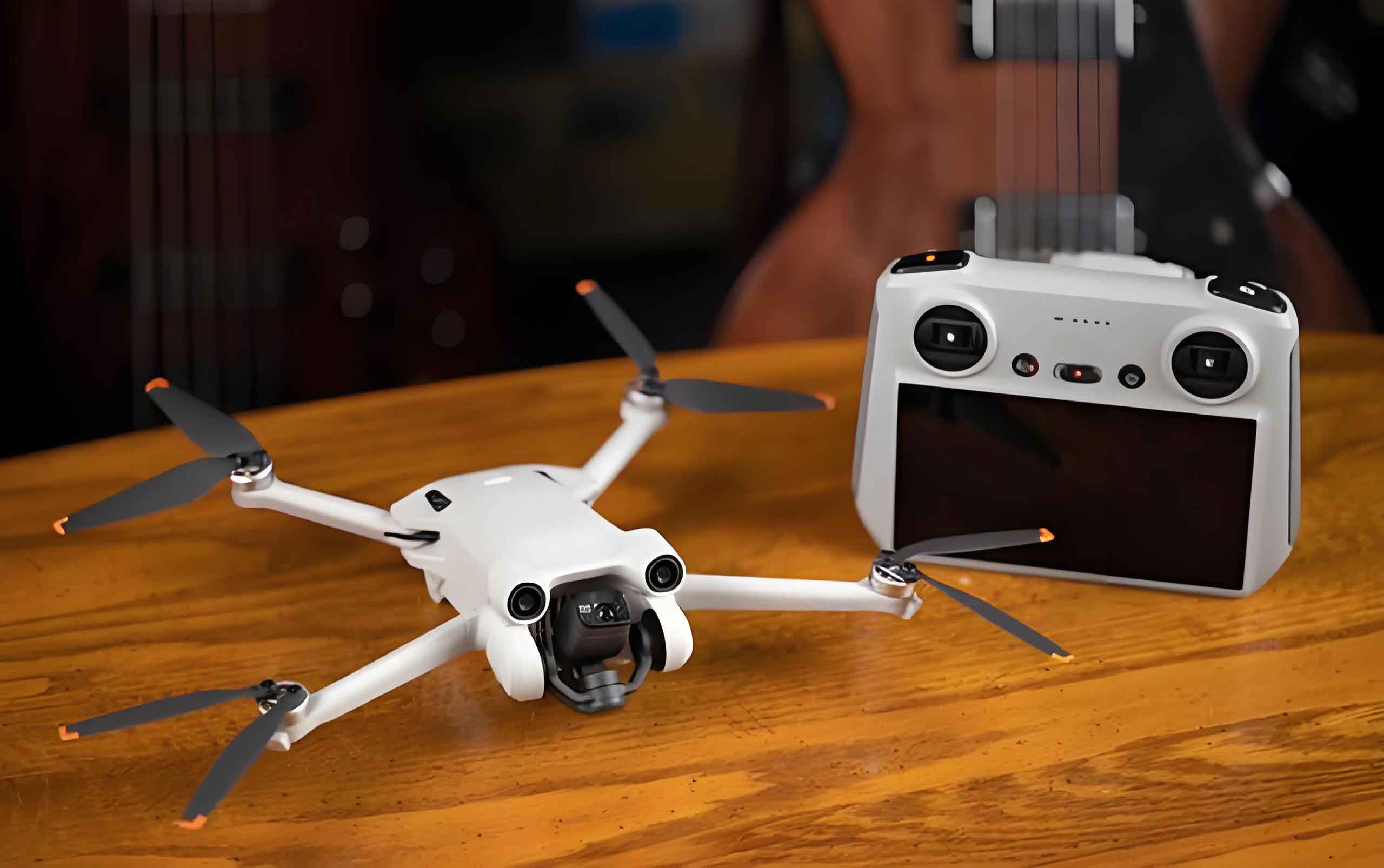
Combining visible (RGB) and thermal infrared (TIR) imagery addresses lighting limitations. Fusion architectures include:
$$ \text{Fusion}_{\text{feature}} = \text{Attention}(F_{\text{RGB}}) \oplus \text{Attention}(F_{\text{TIR}}) $$
Enhanced YOLO variants with attention mechanisms achieve up to 97.9% mAP@0.5 on drone datasets.
Vision-Audio Fusion
Audio provides omnidirectional awareness complementary to visual focus. CRNNs process temporal audio features while CNNs extract spatial visual features:
$$ \text{Score}_{\text{fusion}} = \alpha \cdot \text{Softmax}(V) + \beta \cdot \text{LSTM}(A) $$
Integrated systems demonstrate 99.6% accuracy under ideal conditions and maintain >90% performance in real-world deployments.
Vision-Radar Fusion
Radar provides precise ranging and velocity data to augment visual detection. Fusion techniques include:
$$ P_{\text{fused}} = \text{KalmanFilter}(P_{\text{radar}}, P_{\text{visual}}) $$
Millimeter-wave radar with lightweight CNNs achieves 94.8% mAP@0.5 while reducing inference latency by 44.43% compared to pure vision systems.
Other Fusion Approaches
Advanced systems integrate 3+ modalities:
| Modalities | Key Innovation | Performance |
|---|---|---|
| RF+Visual+Audio | Deep ensemble learning | 95% detection range: 300m |
| LiDAR+Radar+Visual | Point-cloud fusion | 0.9998 classification accuracy |
| 3D+Thermal | Spatial coordinate mapping | <2.5% localization error |
Evaluation Framework
Metrics
Critical performance measures:
$$ \text{Precision} = \frac{\text{TP}}{\text{TP} + \text{FP}} $$
$$ \text{Recall} = \frac{\text{TP}}{\text{TP} + \text{FN}} $$
$$ F_1 = 2 \times \frac{\text{Precision} \times \text{Recall}}{\text{Precision} + \text{Recall}} $$
Datasets
Key multi-modal drone datasets:
| Dataset | Modalities | Size | Key Features |
|---|---|---|---|
| Anti-UAV | RGB+TIR | 186K images | 6 drone models, day/night |
| MMAUD | Visual+LiDAR+Audio+Radar | 1,700+ seconds | 5 drone types, environmental noise |
| UAV Audio | Acoustic | 5,215 seconds | 10 drone categories |
| Drone-vs-Bird | RGB | 104K images | Cluttered aerial targets |
Challenges and Future Directions
Key limitations in current drone technology detection:
- Scale variance: Rapid target size changes during approach/departure
- Modality alignment: Temporal-spatial synchronization of heterogeneous sensors
- Edge deployment: Computational constraints for real-time processing
- Adversarial attacks: Evasion techniques against multi-modal systems
Emerging research focuses on neuromorphic processing for sensor fusion, self-supervised adaptation to new environments, and quantum-optimized neural networks for resource-constrained platforms.
Conclusion
Multi-modal fusion represents the frontier in robust Unmanned Aerial Vehicle detection, overcoming fundamental limitations of single-sensor systems. The integration of visual, thermal, acoustic, and RF modalities enables reliable operation across diverse environmental conditions. Future advancements will depend on lightweight architectures, dynamic sensor weighting, and adversarial-resistant fusion strategies to address evolving drone technology threats. Continuous dataset expansion and standardized evaluation protocols remain crucial for benchmarking progress in this critical security domain.