
In recent years, the advent of unmanned aerial vehicles (UAVs) has revolutionized various fields, from entertainment to military applications. Among these, the formation drone light show has emerged as a captivating display of coordinated drone swarms, where multiple drones operate in synchrony to create intricate patterns and performances. This technology, however, extends beyond mere spectacle; it embodies principles of coordination, real-time decision-making, and dynamic adaptation that are crucial in more critical scenarios, such as maritime combat operations. In this article, I explore how models derived from formation drone light show systems can be adapted for target selection in coordinated naval assaults using carrier-based UAV formations. By leveraging discrete Dynamic Bayesian Networks (DBNs), I propose a robust framework for prioritizing and selecting targets during sea-based attacks, emphasizing the integration of real-time data and predictive analytics. The focus is on enhancing the efficiency and effectiveness of UAV fleets, drawing parallels to the precision and harmony seen in a formation drone light show.
The concept of a formation drone light show involves a fleet of drones operating as a unified system, where each drone’s position and movement are meticulously planned to achieve a collective goal. This mirrors the challenges in military UAV operations, where carrier-based drones must collaborate to strike maritime targets under constraints like limited numbers and high-threat environments. In such contexts, target selection becomes a pivotal task, requiring the identification of key points within an enemy’s target system to maximize impact. Just as a formation drone light show relies on real-time adjustments to maintain formation integrity, UAVs in combat must dynamically assess and prioritize targets based on evolving battlefield conditions. This article delves into a three-tier functional model for target selection, inspired by the hierarchical coordination in formation drone light show performances, and implements a discrete DBN approach to model uncertainty and temporal dependencies.
To begin, let’s define the target system in maritime operations. A target system comprises individual elements—such as ships or submarines—that interact to form a cohesive whole, similar to how drones in a formation drone light show combine to create visual effects. In military terms, this is extended to a target hierarchy, where systems are nested within larger systems, creating a multi-layered structure. For instance, an enemy fleet might include subsystems like destroyers, frigates, and supply vessels, each contributing to overall operational capability. Target selection, therefore, involves identifying and ranking these elements based on their value, threat, and feasibility of attack. This process is akin to choreographing a formation drone light show, where certain drones are highlighted or positioned to achieve desired effects. The key characteristics of carrier-based UAV target selection include a wide range of options, high planning requirements, predictive capabilities, and a focus on critical points, all of which resonate with the dynamics of a formation drone light show.
I propose a three-tier functional model for UAV target selection, adapted from communication jamming models but refined for maritime contexts. This model consists of: (1) Maritime Battlefield Situation Information Extraction, (2) Target Selection Pre-processing, and (3) Target Selection Fine-processing. In the first tier, situational awareness is gathered from reconnaissance assets, analogous to the sensor data used in a formation drone light show to track drone positions. The second tier involves qualitative analysis and rough target listing, leveraging expert knowledge and historical cases—much like pre-programming sequences in a formation drone light show. The third tier employs precise, real-time assessment using discrete DBNs to evaluate target priority, reflecting the adaptive control in a live formation drone light show performance. This hierarchical approach ensures systematic decision-making, reducing the cognitive load on UAV operators and enhancing operational success.
Discrete Dynamic Bayesian Networks (DBNs) are particularly suited for this task due to their ability to model temporal processes and handle uncertainty. A DBN extends static Bayesian networks over time, allowing for reasoning across multiple time slices. In mathematical terms, a DBN is defined by a prior network \(B_1\) and a transition network \(B_{\rightarrow}\), representing the state evolution of variables. For a set of variables \(X[1], X[2], \ldots, X[T]\) over time \(T\), the joint probability distribution can be expressed as:
$$P(X[1], X[2], \ldots, X[T]) = P(X[1]) \prod_{t=2}^{T} P(X[t] | X[t-1])$$
where \(P(X[t] | X[t-1])\) is the transition probability. In the context of target selection, variables might include target value, threat level, and attack feasibility, each with discrete states such as High (H), Medium (M), and Low (L). This mirrors the state management in a formation drone light show, where drone states (e.g., position, velocity) evolve over time to maintain formation. The DBN inference formula, based on Bayes’ theorem, enables updating beliefs as new observations arrive, ensuring robust decision-making under dynamic conditions.
To model target selection, I construct a DBN with three sub-models: Target Value Analysis, Target Threat Analysis, and Target Attack Feasibility Analysis. Each sub-model captures specific factors influencing priority. For Target Value Analysis, nodes include Intrinsic Value (with sub-nodes Economic, Political, and Psychological Value) and Systemic Value (with sub-nodes Key, Important, and General Nodes). The probability distributions are defined conditionally, e.g., \(P(\text{Val} | \text{Eco}, \text{Pol}, \text{Psy}, \text{Sys})\). Similarly, Target Threat Analysis considers factors like speed, course, and distance, with conditional probabilities such as \(P(\text{Thr} | \text{Rate}, \text{Cou}, \text{Dis})\). Target Attack Feasibility assesses vulnerability, maneuverability, and counter-capability, represented as \(P(\text{Fea} | \text{Vul}, \text{Man}, \text{Con})\). Finally, the root node, Target Selection Priority (Pri), integrates these sub-models: \(P(\text{Pri} | \text{Val}, \text{Thr}, \text{Fea})\). This networked structure emulates the coordination in a formation drone light show, where multiple inputs (e.g., drone sensors) are fused to guide collective actions.
The conditional probability tables (CPTs) for this DBN are derived from expert knowledge, historical data, and simulation results. For example, the CPT for Target Selection Priority given Target Value and Threat might be as shown in Table 1. These probabilities encode domain-specific insights, similar to how a formation drone light show algorithm encodes choreography rules. The state transition probabilities, such as those for priority over time, are listed in Table 2, capturing how target rankings evolve with battlefield dynamics. This temporal aspect is crucial, as it allows the model to predict future states, akin to forecasting drone movements in a formation drone light show to preempt collisions or misalignments.
| Target Value (Val) | Target Threat (Thr) | P(Pri = H | Val, Thr) | P(Pri = M | Val, Thr) | P(Pri = L | Val, Thr) |
|---|---|---|---|---|
| High | High | 0.85 | 0.10 | 0.05 |
| High | Medium | 0.70 | 0.20 | 0.10 |
| High | Low | 0.50 | 0.30 | 0.20 |
| Medium | High | 0.60 | 0.25 | 0.15 |
| Medium | Medium | 0.40 | 0.40 | 0.20 |
| Medium | Low | 0.20 | 0.50 | 0.30 |
| Low | High | 0.30 | 0.40 | 0.30 |
| Low | Medium | 0.15 | 0.45 | 0.40 |
| Low | Low | 0.05 | 0.25 | 0.70 |
Table 2: State Transition Probabilities for Target Priority Over Time
| Pri(t) | P(Pri(t+1) = H | Pri(t)) | P(Pri(t+1) = M | Pri(t)) | P(Pri(t+1) = L | Pri(t)) |
|---|---|---|---|
| High (H) | 0.75 | 0.20 | 0.05 |
| Medium (M) | 0.30 | 0.50 | 0.20 |
| Low (L) | 0.06 | 0.14 | 0.80 |
To validate this model, I conduct a simulation scenario involving a carrier-based UAV formation tasked with striking maritime targets. Suppose eight enemy vessels are detected: one destroyer, two frigates, one amphibious landing ship, two missile boats, and two supply ships. This scenario mirrors the complexity of orchestrating a formation drone light show with multiple drones, where each vessel represents a target requiring assessment. Using the DBN model, I input real-time data over three time slices, similar to how a formation drone light show system processes continuous sensor feeds. The inference is performed using Netica, a Bayesian network tool, to compute priority probabilities. For instance, for Target 1 (the destroyer), the probability of high priority evolves over time, as shown in Table 3. This dynamic updating reflects the adaptive nature of a formation drone light show, where drone positions are adjusted based on real-time feedback.
| Time Slice | P(Pri = H) | P(Pri = M) | P(Pri = L) |
|---|---|---|---|
| t=1 | 0.333 | 0.400 | 0.267 |
| t=2 | 0.498 | 0.350 | 0.152 |
| t=3 | 0.649 | 0.250 | 0.101 |
The simulation results for all targets are summarized in Table 4, providing a prioritized list for attack. This ranking aids decision-makers in allocating UAV resources effectively, much like how a formation drone light show director assigns roles to drones based on their capabilities and positions. The DBN approach offers advantages over traditional methods like expert scoring or fuzzy evaluation by incorporating temporal reasoning and handling data uncertainties, which are common in dynamic environments such as a formation drone light show or maritime combat.
| Target ID | Target Type | P(Pri = H) at t=3 | Priority Rank |
|---|---|---|---|
| 1 | Destroyer | 0.838 | 2 |
| 2 | Frigate 1 | 0.815 | 4 |
| 3 | Frigate 2 | 0.824 | 3 |
| 4 | Landing Ship | 0.658 | 8 |
| 5 | Missile Boat 1 | 0.857 | 1 |
| 6 | Missile Boat 2 | 0.733 | 7 |
| 7 | Supply Ship 1 | 0.804 | 5 |
| 8 | Supply Ship 2 | 0.787 | 6 |
The integration of formation drone light show principles into this model highlights the synergy between entertainment technology and military applications. In a formation drone light show, drones must avoid collisions, maintain formation, and respond to environmental changes—all requiring robust decision-making algorithms. Similarly, in target selection, UAVs must assess risks, coordinate strikes, and adapt to enemy movements. The DBN model facilitates this by providing a probabilistic framework that updates beliefs with new evidence, ensuring that priorities reflect the latest battlefield conditions. This is analogous to how a formation drone light show system dynamically adjusts drone paths based on real-time GPS and sensor data to create seamless performances.
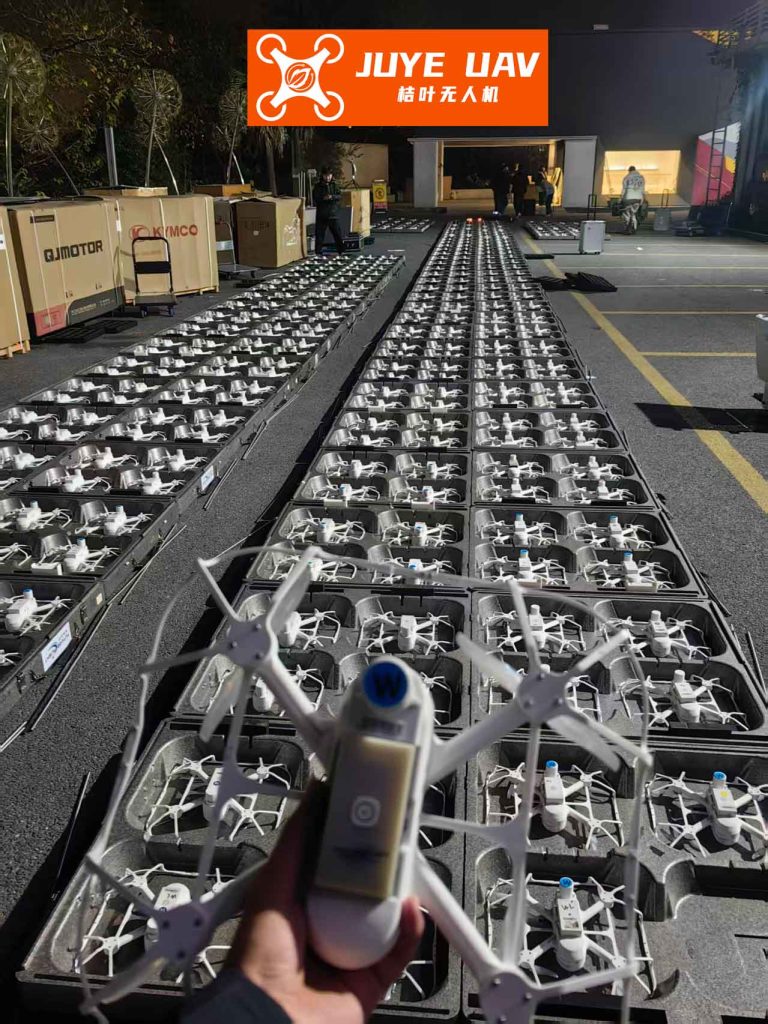
The visual representation of a formation drone light show, as seen in the image above, exemplifies the coordination and precision achievable with UAV swarms. In military contexts, such coordination is critical for maximizing the impact of limited resources, such as carrier-based UAVs. By modeling target selection as a dynamic Bayesian process, we can enhance the autonomy and effectiveness of UAV formations, reducing reliance on human intervention and enabling faster responses. This approach also aligns with trends in autonomous systems, where formation drone light show technologies are being adapted for search-and-rescue, surveillance, and now, combat operations.
To further elaborate on the mathematical underpinnings, let’s consider the DBN inference in detail. For a node \(X_i^t\) at time \(t\), with parents \(Pa(X_i^t)\), the conditional probability is given by:
$$P(X_i^t | Pa(X_i^t))$$
and the joint distribution over all nodes in a time slice is:
$$P(X^t | X^{t-1}) = \prod_{i=1}^{N} P(X_i^t | Pa(X_i^t))$$
where \(N\) is the number of variables. In our target selection model, this allows us to compute the likelihood of high priority for a target based on observed factors. For example, if we observe high economic value and low threat, the probability of high priority can be derived using the CPTs. This computation is similar to predicting the next move in a formation drone light show based on current drone positions and intended patterns.
Moreover, the model incorporates predictive capabilities by using transition probabilities. For instance, the probability that a target’s priority remains high over time is modeled as \(P(\text{Pri}(t+1) = H | \text{Pri}(t) = H) = 0.75\), as per Table 2. This enables anticipatory decision-making, crucial in fast-paced environments like a formation drone light show or maritime combat. By forecasting target dynamics, UAVs can pre-position or allocate resources more efficiently, much like how a formation drone light show plans sequences ahead of time to ensure smooth transitions.
In terms of implementation, the DBN model can be extended with additional nodes to capture more nuanced factors, such as weather conditions or enemy electronic warfare capabilities. This flexibility mirrors the scalability of formation drone light show systems, which can incorporate hundreds of drones without compromising performance. The use of discrete states simplifies computation while maintaining accuracy, making it suitable for real-time applications. For example, we can define a composite metric for target attractiveness \(A_t\) at time \(t\) as a function of value, threat, and feasibility:
$$A_t = \alpha \cdot V_t + \beta \cdot T_t + \gamma \cdot F_t$$
where \(V_t\), \(T_t\), and \(F_t\) are normalized scores for value, threat, and feasibility, and \(\alpha, \beta, \gamma\) are weighting coefficients summing to 1. This linear combination can be integrated into the DBN as an observed variable, enhancing interpretability. Such formulations are common in formation drone light show algorithms for balancing multiple objectives, like energy efficiency and visual appeal.
The simulation results demonstrate the model’s effectiveness, with priority probabilities converging to realistic rankings over time. For Target 5 (Missile Boat 1), the high probability of 0.857 aligns with its high threat and value, making it a top priority. This outcome is consistent with military doctrine, where fast-attack craft are often prioritized due to their offensive capabilities. The model’s ability to refine rankings with new data—similar to how a formation drone light show adjusts to wind gusts or signal interference—ensures robustness in uncertain environments. Additionally, the use of Netica for simulation provides a practical tool for training and operational planning, allowing commanders to test scenarios and optimize strategies.
Looking ahead, the fusion of formation drone light show technologies with military UAV operations holds promise for advanced autonomous swarms. Future research could explore continuous DBNs for handling continuous variables like exact distances or speeds, or integrate machine learning for adaptive CPT estimation. This would further enhance the model’s predictive power, akin to how AI-driven formation drone light show systems learn from past performances to improve coordination. Moreover, the principles discussed here can be applied to other domains, such as disaster response or traffic management, where coordinated decision-making is essential.
In conclusion, the discrete DBN-based target selection model offers a powerful framework for carrier-based UAV formations engaged in maritime assaults. By drawing inspiration from formation drone light show coordination, it addresses the challenges of dynamic prioritization under uncertainty. The three-tier functional model, combined with probabilistic reasoning, enables efficient resource allocation and adaptive decision-making. As UAV technologies evolve, the synergy between entertainment innovations like formation drone light show and critical applications will continue to drive advancements in autonomous systems. This article underscores the importance of cross-disciplinary approaches in solving complex operational problems, paving the way for smarter, more responsive UAV fleets in both civilian and military contexts.