
As drone technology advances and costs decrease, Unmanned Aerial Vehicle applications continue to expand across diverse fields. Charging compartments enable extended mission durations but face critical thermal challenges with lithium-ion batteries. Optimal charging occurs within 20–45°C, while post-flight temperatures often exceed 60°C, causing prolonged cooling delays, safety hazards, and accelerated lifespan degradation. We address this by integrating Flat Plate Micro Heat Pipe Arrays (MHPA) with refrigerant direct cooling—a novel solution leveraging MHPA’s lightweight design and superior thermal conductivity to rapidly dissipate heat during intermediate charging cycles.
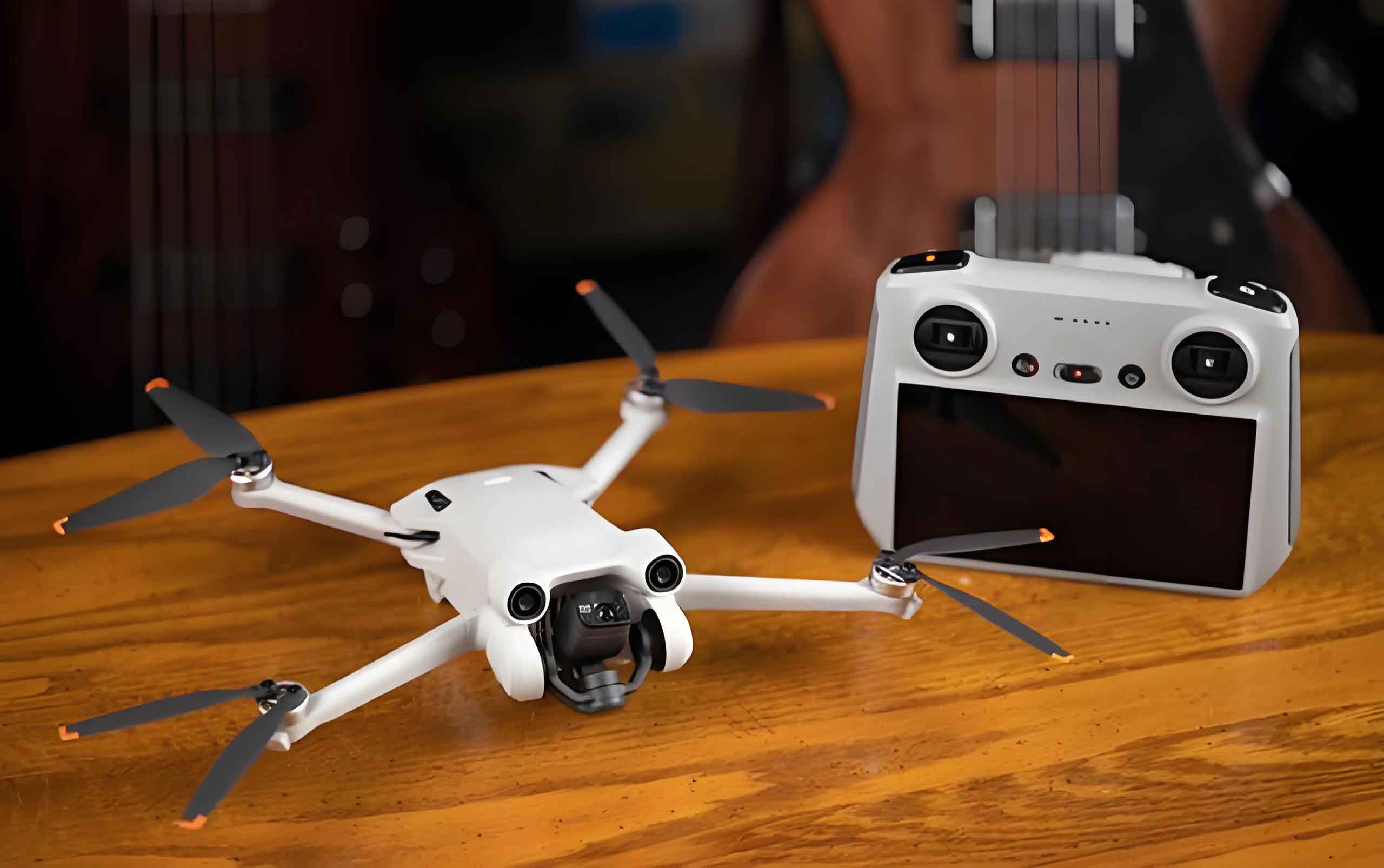
Physical Model and Setup
The thermal management system integrates MHPA directly into the drone structure. Heat absorption ends contact battery surfaces, while condensation ends protrude from the battery compartment, attaching to the fuselage underside. During charging, these ends interface with evaporators in the charging station, transferring heat via refrigerant cycles. Key components include:
| Component | Parameters | Value |
|---|---|---|
| Battery | Dimensions | 127mm × 48mm × 8mm |
| Capacity | 5.2Ah | |
| Specific Heat | 1100 J/(kg·K) | |
| Thermal Conductivity (xy/z) | 35 / 0.48 W/(m·K) | |
| Max Charging Rate | 3C | |
| MHPA | Working Fluid | Acetone (50% fill ratio) |
| Thermal Conductivity | 14,000 W/(m·K) | |
| Thickness | 3mm | |
| Air Domain | Thermal Conductivity | 0.0242 W/(m·K) |
| Specific Heat | 1006.43 J/(kg·K) | |
| Density | 1.225 kg/m³ |
Governing equations for heat transfer and fluid dynamics:
Energy Conservation:
$$ \frac{\partial (\rho c_p T)}{\partial t} + \nabla \cdot (\rho c_p \mathbf{u} T) = \nabla \cdot (k \nabla T) + S_h $$
Battery Heat Generation (Bernardi Model):
$$ q = \frac{1}{V_b} \left( I^2 R_b + I T \frac{\partial U_0}{\partial T} \right) $$
Internal Resistance Model (Temperature/SOC-dependent):
$$ R = 2.904 – 5.424SOC – 1.006SOC^2 – 34.446SOC^3 – 75.76SOC^4 + 39.81T – 3.478T^2 + 0.198T^3 – 0.0054T^4 + 6.978 \times 10^{-5}T^5 + 3.488 \times 10^{-7}T^6 $$
Experiments and Model Validation
We validated our model against experimental data from a 25°C environment using 1C–3C charging rates. Temperature sensors monitored surface dynamics, with results showing strong alignment:
| Charging Rate | Max Temp (Exp) | Max Temp (Sim) | Error |
|---|---|---|---|
| 1C | 42.1°C | 41.3°C | 1.9% |
| 2C | 47.8°C | 46.5°C | 2.7% |
| 3C | 53.6°C | 51.9°C | 3.2% |
Mesh independence was confirmed at 487,858 elements (5 boundary layers), yielding <0.1°C temperature deviation and <0.1μm condensate thickness error. Time steps of 1s balanced accuracy and computational efficiency.
Numerical Simulation Results and Analysis
Condensation Temperature Impact
Lower condensation temperatures accelerate cooling but increase thermal gradients. At 8°C, batteries cooled from 60°C to 33°C in 1,200s. Temperature distribution asymmetry intensified below 8°C due to vapor-liquid phase change limitations:
$$ \Delta T_{\text{surface}} = 8.7^\circ \text{C} \quad (\text{at } T_{\text{cond}}=6^\circ \text{C}) \quad \text{vs} \quad \Delta T_{\text{surface}} = 4.2^\circ \text{C} \quad (\text{at } T_{\text{cond}}=16^\circ \text{C}) $$
Environmental Factors
Ambient humidity (20–100% RH) had negligible effect (±0.3°C), while temperature variations (8–46°C) altered steady-state temperatures by <1.5°C. Heat transfer is dominated by conduction through MHPA rather than convection.
Air Gap Thickness Optimization
Reducing the air gap between batteries and MHPA significantly enhanced cooling. A 0.2mm gap achieved 50°C temperature drop in 1,200s—61.3% faster than 1mm gaps. Time to reach 25°C:
$$ t_{0.2\text{mm}} = 391 \text{s} \quad \text{vs} \quad t_{1\text{mm}} = 1807 \text{s} \quad (78.4\% \text{ faster}) $$
Charging Phase Thermal Control
The system maintained safe temperatures across all charging rates. At 3C, peak temperature reached 36.98°C—well below the 45°C threshold. Temperature differentials stabilized within operational limits:
| Charging Rate | Peak Temp (°C) | Max ΔT (°C) | Time to Safe Temp |
|---|---|---|---|
| 1C | 29.4 | 4.58 | Immediate |
| 2C | 33.7 | 9.77 | <300s |
| 3C | 36.98 | 13.25 | <120s |
Conclusion
Our MHPA-refrigerant hybrid system enables rapid battery cooldowns and safe high-rate charging for Unmanned Aerial Vehicles. Critical design guidelines include:
- Optimal air gap thickness: 0.2mm (78.4% faster cooldown than 1mm)
- Condensation temperature: 12–16°C (balances efficiency and temperature uniformity)
- 3C charging support: Peak temperatures maintained at 36.98°C (ΔT<13.25°C)
This approach eliminates liquid cooling complexity while outperforming air-based systems, crucial for expanding drone technology in long-endurance applications. Future work will optimize MHPA geometry for multi-battery configurations and transient flight heat loads.