
Long-distance oil and gas pipelines traverse complex geological environments where natural disasters pose significant threats to infrastructure integrity. Unmanned Aerial Vehicle (UAV) technology has emerged as a critical solution for pipeline monitoring due to its rapid deployment capabilities and high-resolution imaging. However, traditional computer vision approaches struggle with environmental complexities like vegetation cover and lighting variations. This research presents an integrated framework combining multimodal foundation models with specialized deep learning architectures to overcome these limitations.
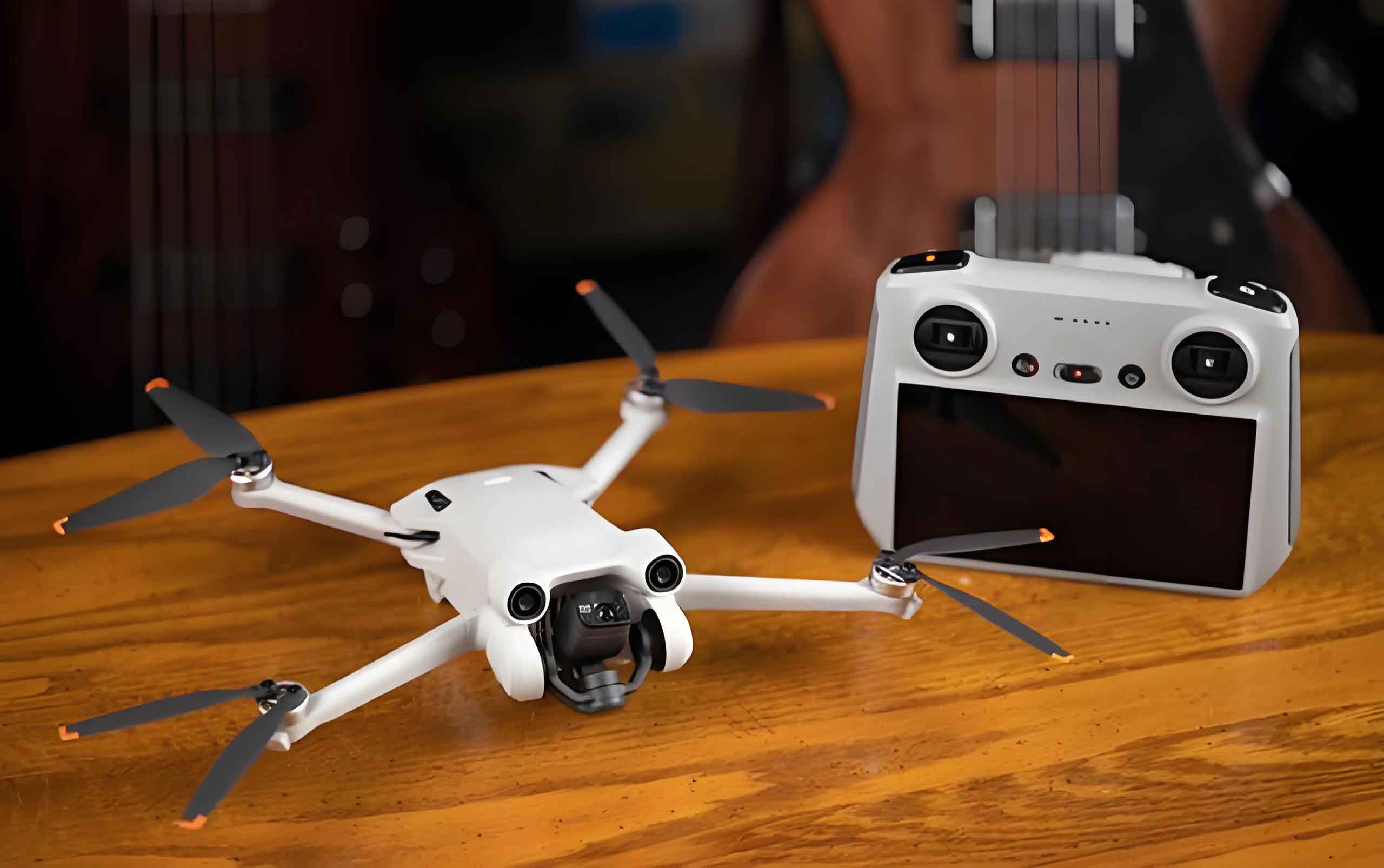
Our methodology processes temporally separated drone-captured images through four stages: geometric alignment, feature extraction, change detection, and hazard classification. The technical workflow integrates:
| Component | Function | Technical Innovation |
|---|---|---|
| Keypoint Alignment | Geometric correction | ORB + Brute-Force matching |
| Feature Extraction | Semantic understanding | CLIP Vision Transformer |
| Change Detection | Pixel-level anomaly localization | BIT Network with tokenization |
| Hazard Classification | Disaster type identification | EfficientNet-B7 architecture |
The geometric alignment module addresses UAV positioning variances using the ORB algorithm, which combines FAST feature detection with BRIEF descriptors. FAST identifies candidate pixels \( p \) by comparing intensity values \( I_p \) against a circular neighborhood of 16 pixels \( \{p_i\}_{i=1}^{16} \). A pixel qualifies as corner if contiguous pixels satisfy:
$$ \exists n \geq 12 : \begin{cases}
I_{p_i} > I_p + t & \text{(brighter)} \\
\text{or} \\
I_{p_i} < I_p – t & \text{(darker)}
\end{cases} $$
where threshold \( t = 40 \). Feature matching employs Brute-Force search with Hamming distance minimization:
$$ d_H(D_1, D_2) = \sum_{k=1}^{n} XOR(D_1^k, D_2^k) $$
where \( D_1 \) and \( D_2 \) are binary descriptors from different timestamps.
The core innovation resides in our feature extraction backbone using CLIP’s ViT-L/14@336px architecture pretrained on 400 million image-text pairs. This foundation model provides unparalleled generalization capabilities for diverse terrains captured by drone technology. Feature maps \( F_t \in \mathbb{R}^{H \times W \times C} \) from temporal pairs \( \{t_1, t_2\} \) undergo tokenization in the BIT network:
| BIT Module | Function | Mathematical Formulation |
|---|---|---|
| Transfer Fusion | Multiscale feature integration | \( \hat{F} = \text{LN}( \oplus_{s} \text{Upsample}( \text{WindowAttn}(F_s) ) ) \) |
| Semantic Tokenizer | Contextual representation | \( \mathbf{T} = \text{SpatialAttn}(\text{PatchEmbed}( \hat{F} )) \) |
| Transformer Encoder | Global context modeling | \( \mathbf{T}’ = \text{MultiHeadAttn}(\mathbf{T}) \) |
| Transformer Decoder | Change feature decoding | \( \Delta F = \text{Conv}(| \text{Decode}( \mathbf{T}’_{t1} ) – \text{Decode}( \mathbf{T}’_{t2} ) |) \) |
For hazard classification, EfficientNet-B7 processes change regions identified by BIT. The compound scaling approach optimizes model efficiency:
$$ \text{depth}: d = \alpha^\phi $$
$$ \text{width}: w = \beta^\phi $$
$$ \text{resolution}: r = \gamma^\phi $$
$$ \text{s.t. } \alpha \cdot \beta^2 \cdot \gamma^2 \approx 2.07 $$
We curated specialized datasets for evaluation:
| Dataset | Image Pairs | Resolution | Application |
|---|---|---|---|
| LEVIR-CD | 637 | 0.5m | Change detection |
| S2Looking | 5,000 | 0.5-0.8m | Structural changes |
| Proprietary UAV | 2,100 | 0.1-0.3m | Hazard classification |
| Augmented Disasters | 209,154 | Variable | Landslide/flood recognition |
Quantitative evaluation against state-of-the-art methods demonstrates significant improvements:
| Model | IoU (%) | F1-Score | Inference Time (ms) |
|---|---|---|---|
| FC-EF | 45.0 | 0.62 | 120 |
| STANet | 62.0 | 0.71 | 95 |
| ChangeFormer | 66.0 | 0.80 | 85 |
| TinyCD | 70.0 | 0.83 | 45 |
| Proposed (CLIP+BIT) | 75.0 | 0.86 | 200 |
Hazard classification performance for critical disaster types:
$$ \text{Accuracy} = 86\% \quad \text{Precision} = 83\% \quad \text{Recall} = 79\% \quad F_1 = 79\% $$
The confusion matrix reveals exceptional performance for oil spills (87.32% accuracy) and landslides (86.17% accuracy), crucial for pipeline integrity monitoring. This Unmanned Aerial Vehicle-based system achieves practical deployment capability with 0.2s per image processing speed.
Drone technology enables continuous pipeline surveillance through automated change detection and hazard classification. Our framework demonstrates that foundation models significantly enhance traditional computer vision approaches when processing UAV imagery under challenging environmental conditions. Future work will integrate real-time telemetry from drone fleets for predictive hazard analytics.