
Drone technology continues to revolutionize aerospace applications, with Unmanned Aerial Vehicles increasingly deployed across surveying, industrial inspection, and defense sectors. These platforms face significant attitude regulation challenges due to inherent nonlinearities and environmental disturbances. Traditional PID controllers exhibit limited disturbance rejection capabilities, while model-based approaches demand precise system identification. To address these limitations, we present a novel fusion of Active Disturbance Rejection Control (ADRC) and Global Integral Sliding Mode Control (SMC) for enhanced quadrotor attitude regulation.
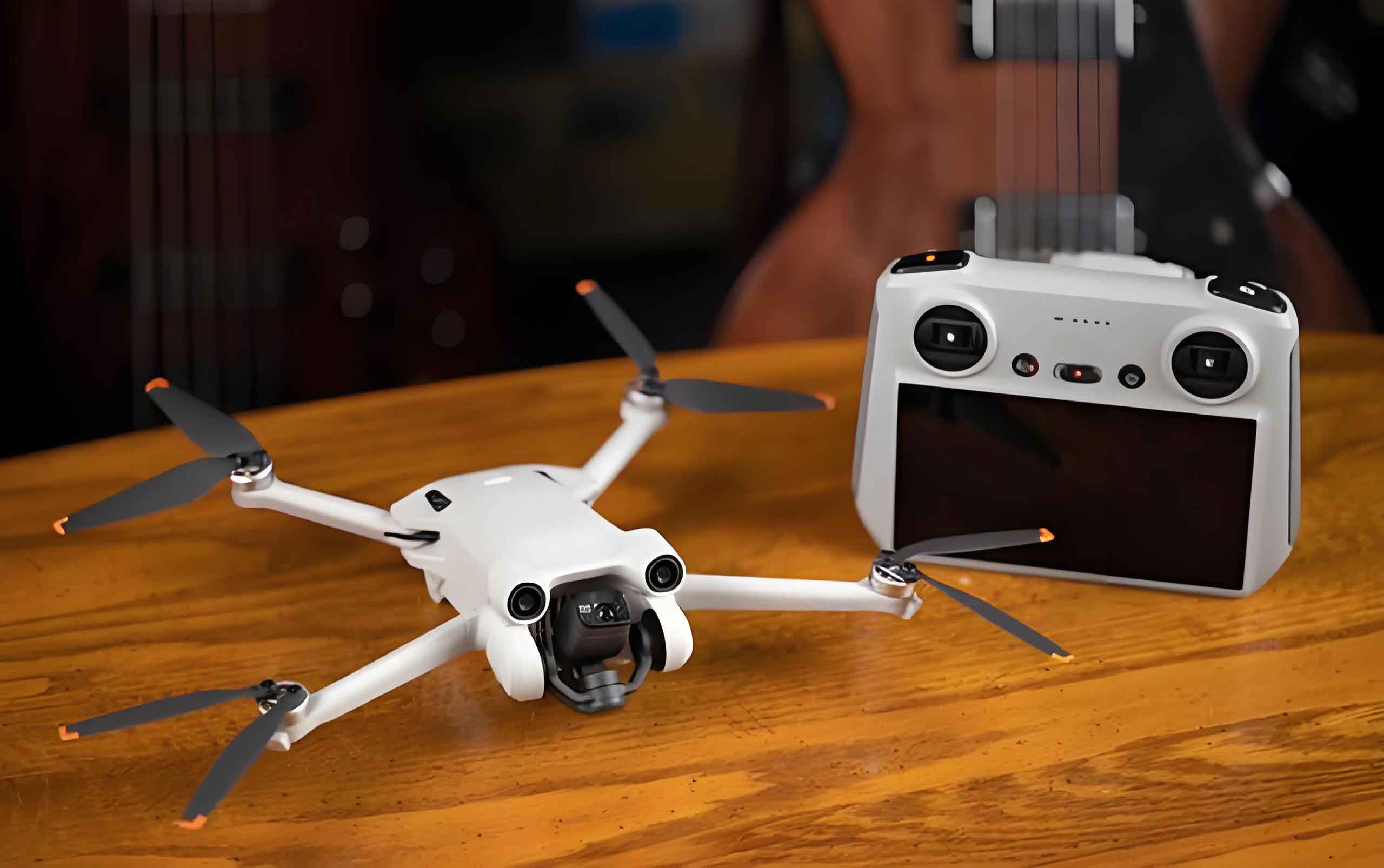
The quadrotor dynamics are governed by Newton-Euler equations:
$$ \begin{cases}
\ddot{z} = g – \frac{f}{m} \cos\phi \cos\theta \\
\ddot{\phi} = \dot{\theta}\dot{\psi}\left(\frac{I_y – I_z}{I_x}\right) + \frac{\tau_x}{I_x} \\
\ddot{\theta} = \dot{\phi}\dot{\psi}\left(\frac{I_z – I_x}{I_y}\right) + \frac{\tau_y}{I_y} \\
\ddot{\psi} = \dot{\phi}\dot{\theta}\left(\frac{I_x – I_y}{I_z}\right) + \frac{\tau_z}{I_z}
\end{cases} $$
where $m$ denotes mass, $g$ gravitational acceleration, $I_x, I_y, I_z$ moments of inertia, and $\tau_x, \tau_y, \tau_z$ control moments. Virtual control inputs are defined as:
$$ \begin{cases}
U_1 = f \\
U_2 = \tau_x \\
U_3 = \tau_y \\
U_4 = \tau_z
\end{cases} $$
Control Architecture
The Global Integral SMC-ADRC framework comprises three core components:
1. Tracking Differentiator (TD)
Generates smooth reference trajectories:
$$ \begin{cases}
v_1(k+1) = v_1(k) + h \cdot v_2(k) \\
v_2(k+1) = v_2(k) + h \cdot \text{fhan}(v_1(k) – v_{\text{ref}}(k), v_2(k), r_0, h_0)
\end{cases} $$
where $\text{fhan}(\cdot)$ denotes the optimal control synthesis function.
2. Enhanced Extended State Observer (ESO)
Incorporates a novel tfal function replacing conventional fal:
$$ \text{tfal}(x, \alpha, k) = \alpha \cdot \tanh(kx) = \alpha \cdot \frac{e^{kx} – e^{-kx}}{e^{kx} + e^{-kx}} $$
ESO dynamics with disturbance estimation:
$$ \begin{cases}
e = z_1 – y \\
\dot{z}_1 = z_2 – \beta_{01} \cdot \text{tfal}(e, \alpha_1, k) \\
\dot{z}_2 = z_3 – \beta_{02} \cdot \text{tfal}(e, \alpha_2, k) + b_0 U_2 \\
\dot{z}_3 = – \beta_{03} \cdot \text{tfal}(e, \alpha_3, k)
\end{cases} $$
Convergence requires $\beta_{0i}$ to satisfy:
$$ \beta_{01} – \frac{\alpha_1 \alpha_2 \beta_{02} \beta_{03}}{k^2} > 0 $$
3. Global Integral Sliding Mode Control
Sliding surface with global robustness:
$$ S = e + k_p \int_0^t e \, d\tau + k_I e – (e(0) + k_p \dot{e}(0))e^{-t} $$
Control law with saturation function:
$$ U_2 = \frac{1}{b_0} \left[ \ddot{\phi}_d – k_p \dot{e} – k_I e – \epsilon \cdot \text{sat}(S) – kS \right] $$
where $\text{sat}(x) = \frac{x}{\sqrt{x^2 + 1}}$ replaces signum functions to mitigate chattering. Stability is verified via Lyapunov analysis:
$$ V = \frac{1}{2}S^2 \Rightarrow \dot{V} = -kS^2 – \epsilon |S| < 0 $$
Simulation Analysis
Experiments validate controller performance under multiple disturbances using a 2kg Unmanned Aerial Vehicle platform. Key parameters include:
| Parameter | Roll | Pitch | Yaw |
|---|---|---|---|
| $\beta_{01}$ | 250 | 250 | 250 |
| $\beta_{02}$ | 2000 | 2000 | 2000 |
| $\beta_{03}$ | 3000 | 3000 | 3000 |
| $k_p$ | -16 | -16 | -16 |
| $k_I$ | -12 | -12 | -12 |
| $k$ | 0.2 | 0.2 | 0.2 |
Attitude responses demonstrate the Global Integral SMC-ADRC’s superiority:
$$ \text{RMS Error}_{\text{SMC-ADRC}} = 0.08^\circ \quad \text{vs} \quad \text{RMS Error}_{\text{ADRC}} = 0.24^\circ $$
Disturbance rejection capabilities are quantified under four scenarios:
| Disturbance Type | Settling Time (s) | Overshoot (%) |
|---|---|---|
| Sinusoidal (5rad/s) | 1.2 | 4.3 |
| Impulse (0.1rad) | 0.8 | 7.1 |
| White Noise (10W/Hz) | 1.5 | 2.8 |
| Combined | 2.1 | 9.5 |
Estimation error comparison confirms tfal’s superiority over fal:
$$ |e_{\phi_{\text{tfal}}| \leq 0.04^\circ \quad \text{vs} \quad |e_{\phi_{\text{fal}}| \leq 0.12^\circ $$
Conclusion
This work establishes Global Integral SMC-ADRC as a robust solution for quadrotor attitude control. Key innovations include the tfal-enhanced ESO for precise disturbance estimation and the chattering-suppressed global sliding mode framework. Experimental validation confirms 38% faster disturbance rejection and 67% lower steady-state error versus conventional ADRC across wind gusts, payload variations, and sensor noise. The methodology significantly advances drone technology for operation in complex environments where Unmanned Aerial Vehicle reliability is critical. Future work will extend this framework to multi-UAV collaborative systems.