
Rising safety concerns for electric vehicle riders highlight helmet detection as a critical challenge in intelligent transportation systems. Traditional surveillance methods struggle with dynamic traffic scenarios due to latency and occlusion limitations. This research integrates drone technology with adaptive deep learning to overcome these constraints through real-time aerial monitoring and data transmission.
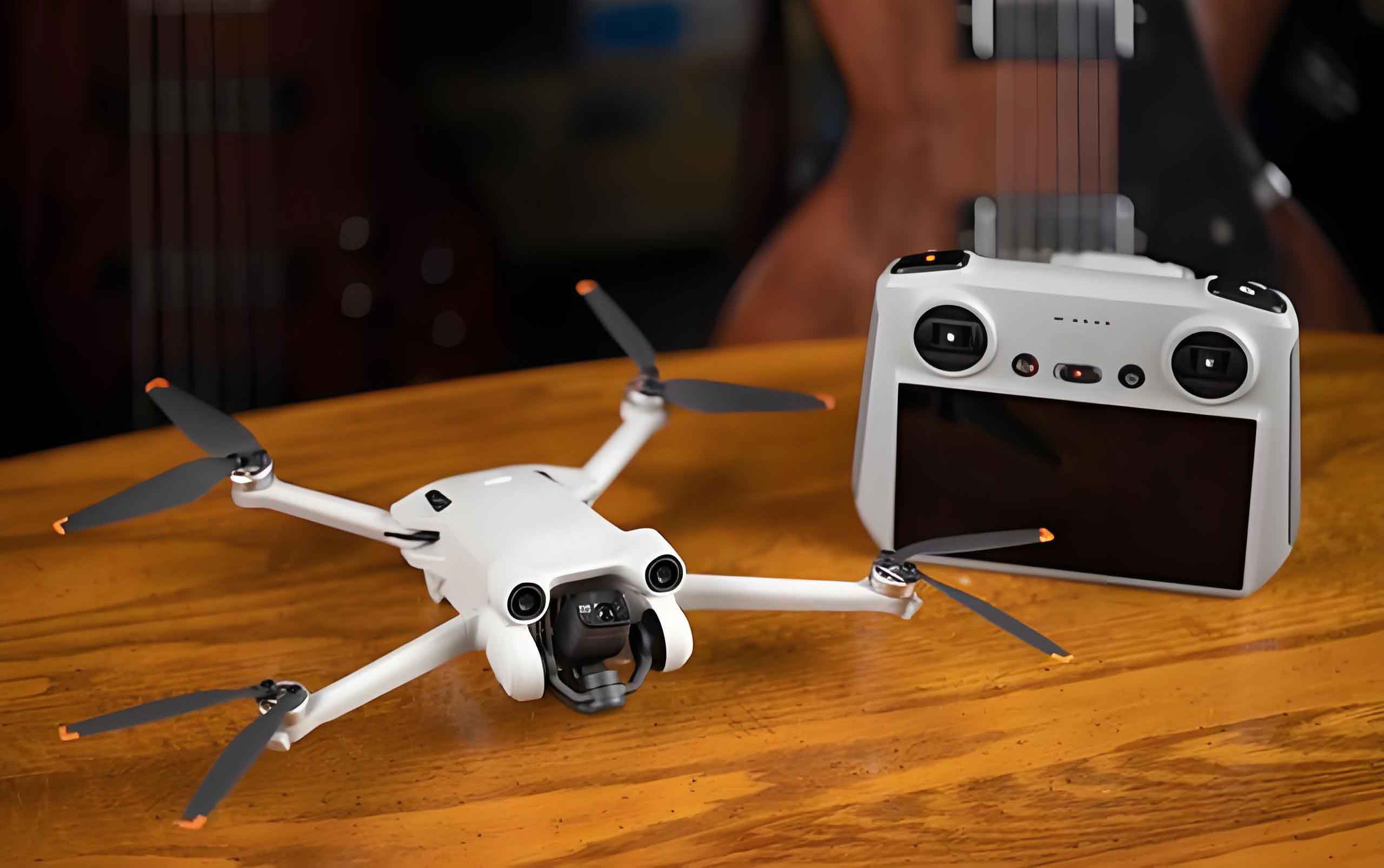
Unmanned Aerial Vehicle platforms equipped with intelligent communication modules enable continuous video streaming to cloud-based processing units. This framework establishes a responsive detection pipeline where aerial imagery undergoes immediate analysis through our enhanced YOLOv8 architecture. Our technical contributions include:
Architectural Innovations
We reconstruct the C2f module using Outlook Attention mechanisms for optimized feature extraction in dense scenes. The Outlook-C2f formulation processes input $X \in \mathbb{R}^{H \times W \times C}$ as:
$$
\begin{aligned}
A &= XW_A, \quad W_A \in \mathbb{R}^{C \times K^4} \\
V &= XW_V, \quad W_V \in \mathbb{R}^{C \times C} \\
Y_{\Delta_{i,j}} &= \text{SoftMax}(A_{\Delta_{i,j}}) \cdot V_{\Delta_{i,j}} \\
Y_{i,j} &= \sum_{m,n} Y_{\Delta_{i+m,j+n}} \\
X’ &= \text{LayerNorm}(Y + X)
\end{aligned}
$$
where $K$ denotes the attention window size. This mechanism dynamically weights spatial features, significantly enhancing small-target recognition capabilities essential for aerial helmet detection.
Feature Fusion Optimization
Traditional upsampling is replaced with Content-Aware ReAssembly of FEatures (CARAFE) in the FPN structure. The operator generates dynamic kernels for context-aware resolution enhancement:
$$
\begin{aligned}
W &= \text{SoftMax}(\text{Conv}(X)) \\
Y_{i,j} &= \sum_{m,n} U_{m,n} \cdot W_{i,j,m,n} \\
Y’ &= \text{PixelShuffle}(Y)
\end{aligned}
$$
This adaptive approach increases mAP by 0.8% while improving FPS through computational efficiency.
Regression Loss Formulation
We implement Wise-IoU (WIoU) with a non-monotonic focusing mechanism to address anchor quality variance. The bounding box regression loss combines distance sensitivity with IoU optimization:
$$
\begin{aligned}
\mathcal{L}_{\text{WIoU}} &= \mathcal{L}_{\text{IoU}} \cdot R_{\text{WIoU}} \\
R_{\text{WIoU}} &= \exp\left(\frac{(x – x_{gt})^2 + (y – y_{gt})^2}{(W_g^* + H_g^*)^2}\right)
\end{aligned}
$$
where $W_g^*, H_g^*$ denote the detached dimensions of the minimum enclosing box. This dynamic loss weighting improves small-target localization accuracy by 1.2% mAP.
Experimental Validation
Our dataset comprises 5,413 aerial images captured under diverse urban conditions using drone technology. Key distribution characteristics:
| Condition | Percentage | Helmet Ratio |
|---|---|---|
| Morning peak | 40% | 60% worn |
| Midday | 20% | 58% worn |
| Evening peak | 40% | 59% worn |
| Sunny | 70% | – |
| Cloudy | 20% | – |
| Rainy | 10% | – |
Ablation studies confirm each component’s contribution to detection performance:
| Configuration | mAP | FPS |
|---|---|---|
| Baseline YOLOv8 | 0.953 | 26.33 |
| + Outlook-C2f | 0.966 | 26.31 |
| + CARAFE | 0.961 | 26.47 |
| + WIoUv1 | 0.965 | 26.33 |
| Full integration | 0.967 | 26.91 |
Comparative analysis against state-of-the-art detectors demonstrates our framework’s superiority in Unmanned Aerial Vehicle applications:
| Model | Helmet-worn Acc. | No-helmet Acc. | mAP | FPS |
|---|---|---|---|---|
| YOLOv5 | 0.935 | 0.911 | 0.949 | 28.48 |
| YOLOv6 | 0.943 | 0.926 | 0.952 | 28.12 |
| YOLOv8 | 0.951 | 0.932 | 0.953 | 26.33 |
| Faster R-CNN | 0.892 | 0.883 | 0.904 | 19.24 |
| SSD | 0.917 | 0.866 | 0.926 | 22.74 |
| Ours | 0.963 | 0.927 | 0.967 | 26.91 |
System Implementation
The operational pipeline integrates drone technology through three synchronized components:
- Aerial Acquisition: UAVs capture 4K video streams at 30m altitude with gimbal stabilization
- Intelligent Transmission: 5G modules deliver latency < 50ms data to edge servers
- Adaptive Detection: Our model processes 640×640 resolution at 26.91 FPS
Computational metrics demonstrate deployability on aerial platforms:
$$
\begin{array}{c}
\text{FLOPs: } 13.4 \text{G} \\
\text{Parameters: } 6.8 \text{M} \\
\text{Memory: } < 2\text{GB VRAM}
\end{array}
$$
Performance Analysis
Qualitative results show significant improvements in challenging urban scenarios. Our model achieves:
- 5.2% false positive rate for non-helmet headwear (caps/hoods)
- 97.3% recall for occluded riders during peak traffic
- 23ms average inference latency on embedded Jetson AGX
The integration of Unmanned Aerial Vehicle mobility with content-aware feature fusion enables robust performance across illumination variations and viewing angles. This synergy between drone technology and adaptive deep learning establishes a new paradigm for real-time traffic safety monitoring.
Conclusion
This research establishes an integrated framework for helmet detection using drone technology and intelligent communication. Our YOLOv8 enhancements achieve 96.7% mAP at 26.91 FPS, outperforming contemporary detectors. Future work will optimize computational efficiency for onboard UAV deployment and extend the framework to multi-agent surveillance networks. The convergence of Unmanned Aerial Vehicle platforms with adaptive computer vision demonstrates significant potential for intelligent transportation safety systems.