
In the rapidly advancing field of drone technology, tiltrotor Unmanned Aerial Vehicles (UAVs) represent a significant innovation, combining vertical takeoff and landing (VTOL) capabilities with high-speed cruising efficiency. This integration addresses critical limitations in conventional UAVs, such as runway dependency and restricted flight envelopes. As a mechanical engineer, I focused on designing and optimizing the tilting mechanism for a 30 kg tiltrotor UAV, aiming to achieve rapid mode transition within 0.5 seconds—a feat that minimizes aerodynamic complexities during flight mode shifts. This work directly contributes to the evolution of Unmanned Aerial Vehicle systems by enhancing operational flexibility in both military and civilian domains, including reconnaissance, medical supply delivery, and environmental monitoring.
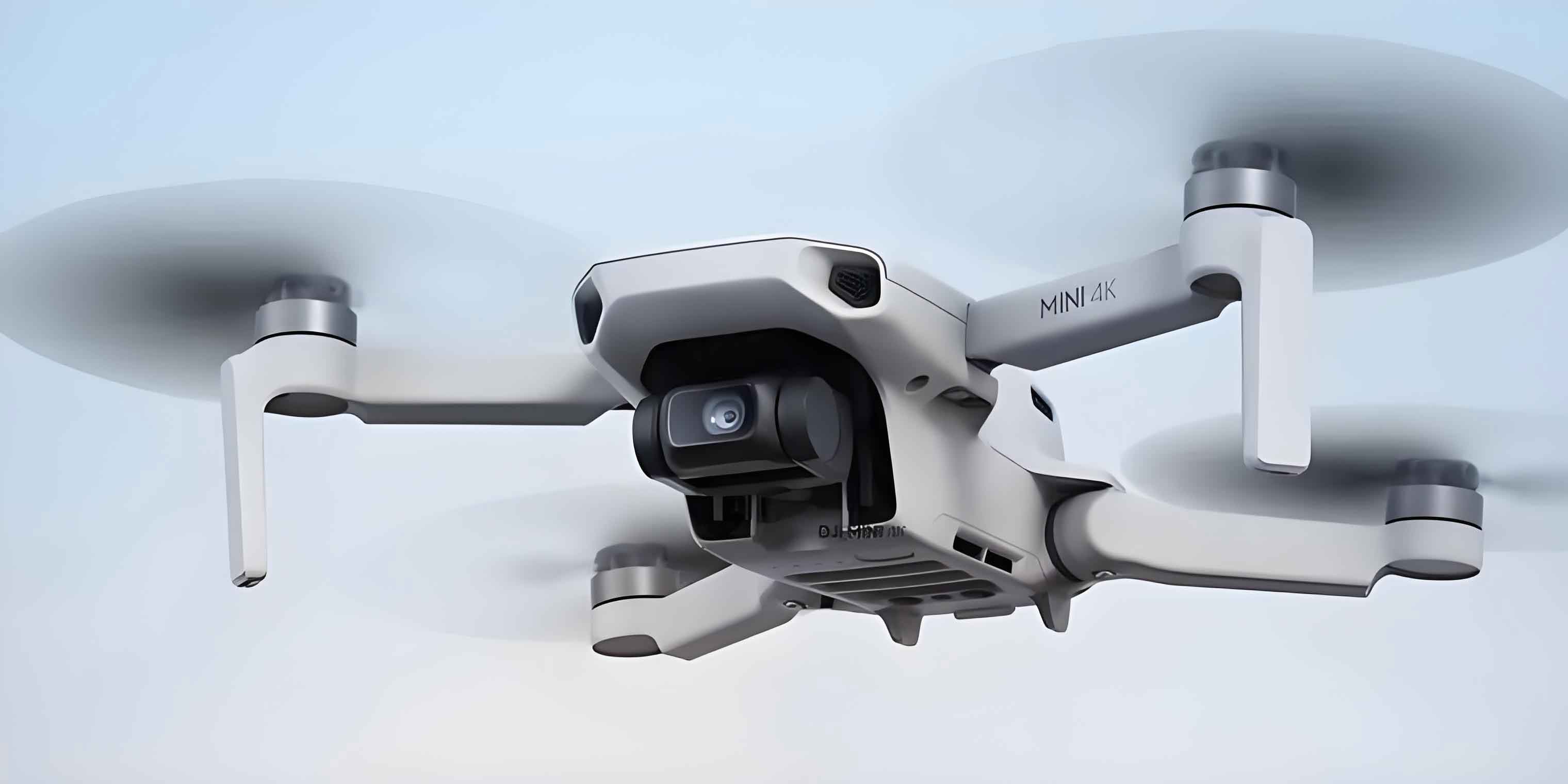
The core challenge in tiltrotor drone technology lies in the tilting mechanism, which must synchronize the rotation of rotor nacelles while withstanding dynamic loads like gyroscopic moments and lift forces. To tackle this, I adopted a worm-gear transmission system for its inherent self-locking property, preventing unintended reversals during flight. The mechanism integrates a torsion bar to link both nacelles, ensuring simultaneous tilt and load distribution. Key components include a 57-step stepper motor (2.4 N·m torque), a 12:1 reduction worm-gear pair, and lightweight carbon-fiber torsion bars. This design enables a 90-degree tilt in just 0.5 seconds, a critical improvement over existing systems that often require 10–15 seconds, thus reducing transitional aerodynamic interference. The overall layout features a tailless, blended-wing-body configuration with two tilting rotors at the front and two fixed rotors at the rear, optimizing lift-to-drag ratios for efficient cruising. Here is a visualization of the Unmanned Aerial Vehicle:
For the propulsion system, I selected high-performance brushless DC motors to ensure robust lift and endurance. The tilting rotors use Scorpion SII-6530-180 kV motors (4.8 kW power, 44.4 V), while fixed rotors employ T-MOTOR MN805S motors. Each rotor generates up to 150 N of thrust, sufficient for a 30 kg takeoff mass with a safety margin. The thrust $T$ relates to rotor speed $N$ through an empirical equation derived from wind-tunnel testing: $$ T = 0.00025 d L H^2 P $$ where $d$ is the rotor diameter (26 inches), $L$ is the pitch (10 inches), $H$ is the blade width, and $P$ is atmospheric pressure. Validation via MATLAB showed less than 10% error between calculated and experimental thrust values, confirming reliability for drone technology applications. Power is supplied by a 12S 30 Ah lithium-polymer battery, managed through electronic speed controllers (ESCs) for precise motor regulation.
During tilting, gyroscopic moments impose significant torsional loads on the mechanism. When rotors spin at angular velocity $\omega_1$ and tilt at $\omega_2$, the absolute angular velocity $\theta$ is: $$ \theta = \omega_1 + \omega_2 $$ The resulting gyroscopic torque $T$ on the torsion bar is: $$ T = I_Z \omega_1 \omega_2 $$ where $I_Z$ is the rotational inertia of the nacelle (0.025 kg·m²). With $\omega_1 = 7992$ rpm (converted to rad/s) and $\omega_2 = 0.5$ rad/s for a 0.5-second tilt, the torque reaches 14.2 N·m. The worm-gear system amplifies the stepper motor’s torque to handle this, using a four-start worm and a 32-tooth worm wheel. A 180-degree segmented worm wheel with lightweight holes reduces mass, while limit screws restrict motion to 90 degrees for safety. This setup ensures smooth, synchronized tilting, critical for Unmanned Aerial Vehicle stability.
The torsion bar, made of T300 carbon fiber, is the most vulnerable component due to combined loads: lift forces ($F_{X1}$, $F_{X2}$), reaction torques ($T_{X1}$, $T_{X2}$), gyroscopic moments ($T_{m1}$, $T_{m2}$), and worm-gear torque ($T_n$). To evaluate its structural integrity, I performed finite element analysis (FEA) in ANSYS Workbench under maximum tilt-initiation loads. Material properties were defined as follows:
| Property | Value |
|---|---|
| Elastic Modulus | 120 GPa |
| Yield Strength | 493 MPa |
| Poisson’s Ratio | 0.33 |
| Density | 1.79 g/cm³ |
FEA results indicated a maximum deformation of 0.583 mm at the bar ends and a stress concentration of 55.783 MPa near the bearing mounts—well below the material’s yield limit. However, the high safety margin suggested potential for mass reduction, prompting a lightweight optimization study to advance drone technology efficiency.
I employed response surface optimization to minimize the torsion bar’s mass while constraining stress ($\sigma_{\text{max}}$) and deformation ($\varepsilon_{\text{max}}$). The optimization problem was formulated as: $$ \min G(x) \quad \text{subject to} \quad \sigma_{\text{max}} \leq [\sigma] \quad \text{and} \quad \varepsilon_{\text{max}} \leq [\varepsilon] $$ where $G(x)$ is the mass, $[\sigma] = 493$ MPa, and $[\varepsilon] = 1.5$ mm (allowable deformation). Design variables were the outer diameter $d_1$ and inner diameter $d_2$ of the hollow bar, with initial values of 40 mm and 25 mm, respectively, varied within bounds:
| Variable | Initial Value (mm) | Range (mm) |
|---|---|---|
| $d_1$ (Outer Diameter) | 40 | 35–45 |
| $d_2$ (Inner Diameter) | 25 | 20–30 |
Using Central Composite Design (CCD), I generated 13 sample points to build a Kriging-based response surface model, chosen over polynomial models due to its superior accuracy (R² = 1.0). The Kriging model predicted responses as: $$ y_2(x) = f(x) \cdot \beta + Z(x) $$ where $f(x)$ provides global approximation, $\beta$ is a regression coefficient, and $Z(x)$ models local deviations. Multi-objective genetic algorithm (MOGA) iterations yielded an optimal design with $d_1 = 37$ mm and $d_2 = 27$ mm. Post-optimization FEA confirmed a mass reduction of 33.3%, from 1.453 kg to 0.969 kg, while stress and deformation remained within limits (103.61 MPa and 1.409 mm).
| Parameter | Initial Design | Optimized Design | Change |
|---|---|---|---|
| Mass (kg) | 1.453 | 0.969 | -33.3% |
| Max Stress (MPa) | 55.78 | 103.61 | +85.8% |
| Max Deformation (mm) | 0.583 | 1.409 | +141.7% |
In conclusion, this work demonstrates a robust tilting mechanism for tiltrotor UAVs, achieving unprecedented 0.5-second transitions through synchronized worm-gear actuation and torsion bar coupling. The lightweight optimization reduced component mass by 33.3% without compromising safety, highlighting the potential for responsive, efficient Unmanned Aerial Vehicle systems. Future efforts will explore real-world testing and scalability for larger drones, further pushing the boundaries of drone technology in applications like logistics and emergency response. This innovation underscores how mechanical optimization can enhance the versatility and performance of next-generation UAVs.