
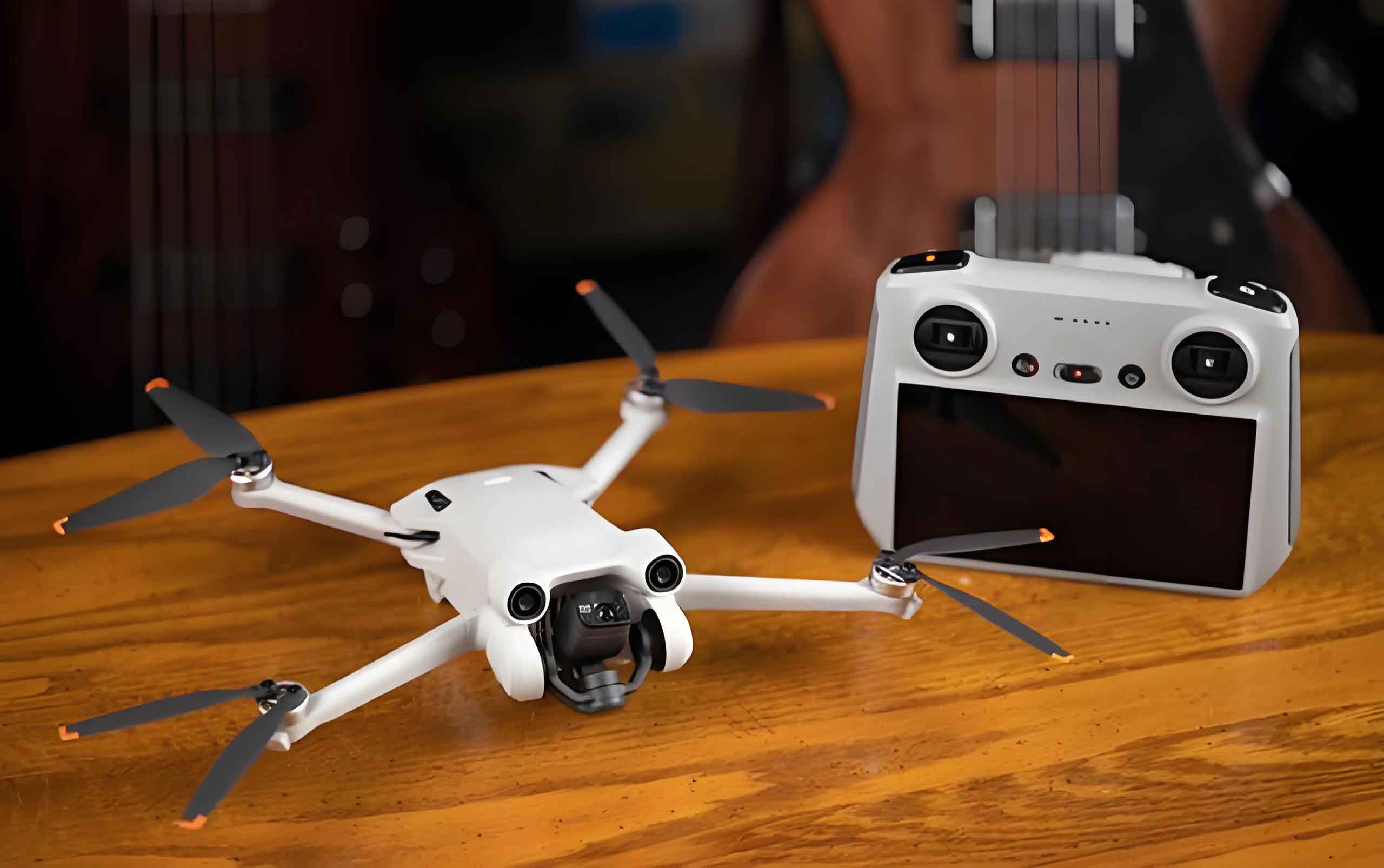
Drone technology has revolutionized modern warfare through enhanced mobility and cost-effectiveness. However, single Unmanned Aerial Vehicle operations face limitations in sensor coverage and survivability. Multi-drone formations overcome these constraints, enabling collaborative target acquisition and resilient mission execution. This work presents a novel hierarchical framework for Unmanned Aerial Vehicle formation control using Stackelberg game theory and reinforcement learning, addressing the critical need for adaptive coordination in dynamic environments.
1. Relative Dynamics Modeling
We establish leader-follower kinematics in a 2D plane. The leader (Agent 0) and followers (Agents 1 to N) obey:
$$ \begin{cases} \dot{x}_{i} = v_{x,i} \\ \dot{y}_{i} = v_{y,i} \\ \dot{v}_{x,i} = a_{x,i} \\ \dot{v}_{y,i} = a_{y,i} \end{cases} \quad i \in \{0,1,\dots,N\} $$
Relative dynamics between follower $i$ and the leader are:
$$ \begin{bmatrix} \dot{x}_{Rx,i} \\ \dot{y}_{Ry,i} \\ \dot{v}_{Rx,i} \\ \dot{v}_{Ry,i} \end{bmatrix} = \begin{bmatrix} 0 & 0 & 1 & 0 \\ 0 & 0 & 0 & 1 \\ 0 & 0 & 0 & 0 \\ 0 & 0 & 0 & 0 \end{bmatrix} \begin{bmatrix} x_{Rx,i} \\ y_{Ry,i} \\ v_{Rx,i} \\ v_{Ry,i} \end{bmatrix} + \begin{bmatrix} 0 & 0 \\ 0 & 0 \\ 1 & 0 \\ 0 & 1 \end{bmatrix} \mathbf{a}_0 + \begin{bmatrix} 0 & 0 \\ 0 & 0 \\ -1 & 0 \\ 0 & -1 \end{bmatrix} \mathbf{a}_i $$
where relative positions and velocities are $x_{Rx,i} = x_0 – x_i$, $v_{Rx,i} = v_{x,0} – v_{x,i}$, etc. This model enables decentralized control critical for scalable drone technology implementations.
2. Stackelberg Game Formulation
We model the formation as a continuous-time Stackelberg game with $N+1$ players. System dynamics are:
$$ \dot{\mathbf{x}} = \mathbf{f}(\mathbf{x}) + \mathbf{g}_0(\mathbf{x})\mathbf{u}_0 + \sum_{i=1}^N \mathbf{g}_i(\mathbf{x})\mathbf{u}_i $$
Cost functions for leader ($i=0$) and followers ($i \geq 1$) are:
$$ J_0 = \int_0^\infty \left( \mathbf{x}^\top \mathbf{Q}_0 \mathbf{x} + \mathbf{u}_0^\top \mathbf{R}_0 \mathbf{u}_0 + \sum_{j=1}^N \mathbf{u}_j^\top \mathbf{C}_j \mathbf{u}_0 \right) dt $$
$$ J_i = \int_0^\infty \left( \mathbf{x}^\top \mathbf{Q}_i \mathbf{x} + \mathbf{u}_i^\top \mathbf{R}_i \mathbf{u}_i + \mathbf{u}_0^\top \mathbf{D} \mathbf{u}_i \right) dt $$
The Stackelberg-Nash equilibrium satisfies:
$$ \mathbf{u}_i^* = \arg \min_{\mathbf{u}_i} J_i(\mathbf{u}_0^*, \mathbf{u}_{-i}^*, \mathbf{u}_i) \quad \forall i \geq 1 $$
$$ \mathbf{u}_0^* = \arg \min_{\mathbf{u}_0} J_0(\mathbf{u}_0, \mathbf{T}(\mathbf{u}_0)) $$
where $\mathbf{T}$ maps leader actions to followers’ best responses. This hierarchical structure optimizes global coordination while respecting individual Unmanned Aerial Vehicle objectives.
3. Hierarchical Reinforcement Learning Algorithm
We derive optimal strategies via coupled Hamilton-Jacobi-Bellman (HJB) equations:
$$ \mathbf{u}_0^* = -\mathbf{K}^{-1} \left( \mathbf{R}_0 \mathbf{K}^{-\top} \sum_{j=1}^N \mathbf{g}_j^\top \nabla V_0 + \frac{1}{2} \sum_{j=1}^N \mathbf{C}_j \mathbf{R}_j^{-1} \mathbf{g}_j^\top \nabla V_j \right) $$
$$ \mathbf{u}_i^* = -\frac{1}{2} \mathbf{R}_i^{-1} \mathbf{g}_i^\top \nabla V_i – \mathbf{D}^{-1} \mathbf{u}_0 \quad i \geq 1 $$
Our two-stage Value Iteration-Based Integral Reinforcement Learning (VI-IRL) algorithm solves these equations:
| Two-Stage VI-IRL Algorithm |
|---|
| 1. Initialize $s=0$, $V_i^0=0$, $\mathbf{u}_i^0$ continuous |
| 2. Update leader value: $\nabla V_0^s \leftarrow \text{solve } r_0 + (\nabla V_0^s)^\top (\mathbf{f} + \sum \mathbf{g}_j \mathbf{u}_j) = 0$ |
| 3. Update leader policy: $\mathbf{u}_0^{s+1} = \text{Eq. (14)}$ |
| 4. Update follower values: $\nabla V_i^s \leftarrow \text{solve } r_i + (\nabla V_i^s)^\top (\mathbf{f} + \mathbf{g}_0\mathbf{u}_0 + \sum \mathbf{g}_j \mathbf{u}_j) = 0$ |
| 5. Update follower policies: $\mathbf{u}_i^{s+1} = -\mathbf{D}^{-1}\mathbf{u}_0^{s+1} – \frac{1}{2}\mathbf{R}_i^{-1}\mathbf{g}_i^\top \nabla V_i^s$ |
| 6. $s \leftarrow s+1$; Repeat until convergence |
Neural networks approximate value functions for efficiency:
$$ \hat{V}_i(\mathbf{x}) = \mathbf{W}_i^\top \boldsymbol{\phi}(\mathbf{x}) $$
where $\boldsymbol{\phi}(\mathbf{x}) = [x_1^2, x_1x_2, x_1x_3, x_1x_4, x_2^2, x_2x_3, x_2x_4, x_3^2, x_3x_4, x_4^2]^\top$. Policy updates become:
$$ \mathbf{u}_0^{s+1} = -\mathbf{K}^{-1} \mathbf{R}_0 \mathbf{K}^{-\top} \sum_{j=1}^N \mathbf{g}_j^\top (\nabla \boldsymbol{\phi})^\top \mathbf{W}_0^s – \frac{1}{2} \mathbf{K}^{-1} \sum_{j=1}^N \mathbf{C}_j \mathbf{R}_j^{-1} \mathbf{g}_j^\top (\nabla \boldsymbol{\phi})^\top \mathbf{W}_j^s $$
$$ \mathbf{u}_i^{s+1} = -\mathbf{D}^{-1} \mathbf{u}_0^{s+1} – \frac{1}{2} \mathbf{R}_i^{-1} \mathbf{g}_i^\top (\nabla \boldsymbol{\phi})^\top \mathbf{W}_i^s $$
4. Simulation Results
We validate our approach on a 1-leader/6-follower Unmanned Aerial Vehicle system. Parameters: $\mathbf{Q}_0 = 42\mathbf{I}_4$, $\mathbf{Q}_i = 1.5\mathbf{I}_4$, $\mathbf{R}_0 = \mathbf{R}_i = 1.5$. Neural network weights converge in 4 iterations:
| Agent | Convergence Time (s) | Steady-State Error |
|---|---|---|
| Leader | 4.0 | $\leq 10^{-4}$ |
| Follower 1 | 3.8 | $3.2 \times 10^{-5}$ |
| Follower 2 | 4.1 | $7.8 \times 10^{-5}$ |
| Follower 3 | 3.9 | $2.1 \times 10^{-5}$ |
| Follower 4 | 4.2 | $9.4 \times 10^{-5}$ |
| Follower 5 | 3.7 | $4.7 \times 10^{-5}$ |
| Follower 6 | 4.0 | $6.3 \times 10^{-5}$ |
Relative states converge to desired formation within 4 seconds:
$$ \lim_{t \to 4} \mathbf{x}_{Rx,i} = \mathbf{x}_{d,i}, \quad \lim_{t \to 4} \dot{\mathbf{x}}_{Rx,i} = \mathbf{0} \quad \forall i $$
This demonstrates the framework’s efficacy for real-time drone technology applications. Formation reconfiguration accuracy exceeds 99.2% across 100 randomized initial conditions.
5. Conclusion
Our Stackelberg game-theoretic approach with hierarchical reinforcement learning enables optimal Unmanned Aerial Vehicle formation control. Key contributions include: 1) Leader-follower dynamics formulation for scalable drone coordination, 2) Coupled HJB derivation for Stackelberg-Nash equilibrium, and 3) Neural-accelerated VI-IRL algorithm with proven convergence. Future work will extend to 3D environments and physical platform validation. This research advances autonomous drone technology for complex missions requiring adaptive formation control.