
Open-pit mining stands as a critical method for coal extraction, with its production capacity holding significant importance domestically. Industry statistics reveal that the proportion of raw coal output from open-pit mines expanded dramatically from 4.6% in 2003 to 25.9% in 2021. Blasting, a primary production process in open-pit operations, demands precise characterization of post-blast explosive pile morphology to guide subsequent excavation, transportation, and dumping decisions. Traditional methods relying on terrestrial laser scanners face limitations including operational delays, intensive labor requirements, and blind spots during scanning, leading to data inaccuracies that hinder effective production planning. To overcome these challenges, we propose an innovative approach leveraging drone technology for real-time explosive pile characterization.
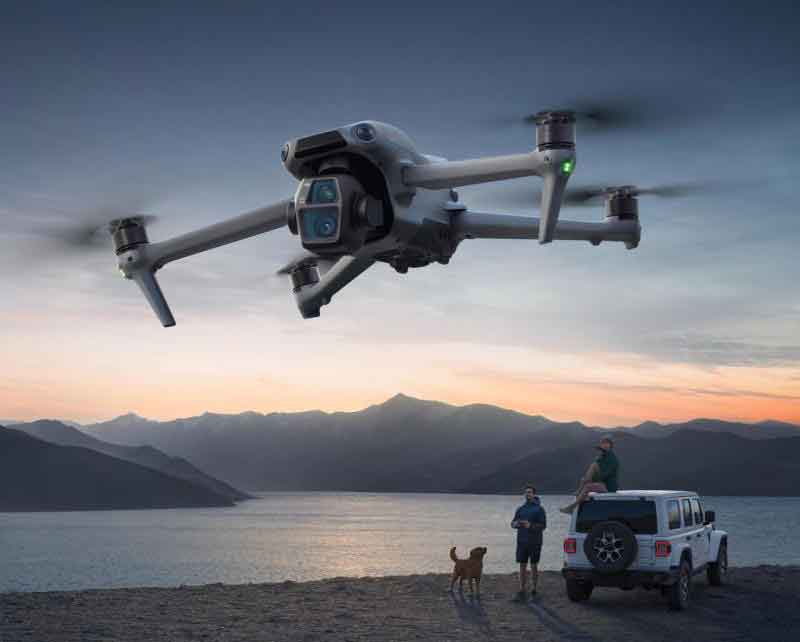
Current research predominantly focuses on predictive blast modeling and parameter optimization, yet lacks efficient field data acquisition solutions. Our methodology employs Unmanned Aerial Vehicle (UAV) photogrammetry to capture high-resolution spatial data of blast areas. The UAV platform selected was the DJI M300, chosen for its operational robustness: maximum flight speed of 23 m/s, ascent rate of 6 m/s, and a 45-megapixel camera sensor yielding 3 cm resolution imagery. Flight planning incorporated three critical parameters calculated as follows:
Relative flight height (\(H_{hg}\)) determines spatial resolution and coverage, derived from:
$$H_{hg} = \frac{f \times \text{GSD}}{a}$$
where \(f\) represents lens focal length (mm), GSD denotes ground sampling distance (cm), and \(a\) is the camera sensor pixel size (mm). Image overlap ratios ensure comprehensive 3D reconstruction, with longitudinal (\(Q_x\)) and lateral (\(Q_y\)) overlaps calculated by:
$$Q_x = \frac{P_x}{L_x} \times 100\%$$
$$Q_y = \frac{P_y}{L_x} \times 100\%$$
Here, \(P_x\) and \(P_y\) are overlap distances between consecutive images along and across flight paths, while \(L_x\) is total image length. Maximum flight velocity (\(v_{\text{max}}\)) balances efficiency and image clarity:
$$v_{\text{max}} = \frac{\delta_{\text{max}} \times \text{GSD}}{t}$$
where \(\delta_{\text{max}}\) is maximum permissible pixel displacement and \(t\) is exposure time (s). For a representative 650 m × 200 m blast zone, parameters were configured at 70% image overlap, 120 m flight altitude, and 12 m/s flight speed, requiring two sorties and five ground control points (GCPs) for georeferencing.
Volumetric analysis commenced with 3D reconstruction of pre-blast and post-blast terrain using Structure-from-Motion (SfM) algorithms. Pre-blast models included intact highwalls, coal seams, and adjacent spoil piles, while post-blast models characterized muck pile geometry. Volumetric computations employed differential analysis between surfaces:
Pre-blast highwall volume (\(V_1\)) excluding coal seams:
$$V_1 = V_q – V_m$$
Post-blast material volume (\(V_2\)) accounting for spoil pile interfaces:
$$V_2 = V_h – V_m – V_L$$
Bulking factor (\(\lambda\)) indicating fragmentation efficiency:
$$\lambda = \frac{V_2}{V_1}$$
where \(V_q\) = pre-blast total volume, \(V_h\) = post-blast total volume, \(V_m\) = coal seam volume, and \(V_L\) = spoil pile interface volume.
Field validation during 2023–2024 assessed four cast blasts at Heidaigou Mine. Drone-based data acquisition reduced field time by over 4 hours per blast compared to laser scanning. Volumetric results demonstrated consistent fragmentation performance:
| Date | Total Pile Volume (104 m³) | Bench Volume (104 m³) | Coal Volume (104 m³) | Upper Layer Volume (104 m³) | Bulking Factor | Effective Cast (%) | Supplementary Works (%) |
|---|---|---|---|---|---|---|---|
| 03-28 | 250.4 | 226.6 | 163.4 | 109.7 | 1.26 | 21.0 | 43.6 |
| 05-10 | 310.2 | 262.7 | 180.8 | 120.0 | 1.18 | 21.8 | 38.7 |
| 06-20 | 239.0 | 178.8 | 152.5 | 84.8 | 1.34 | 21.7 | 35.1 |
| 06-27 | 254.2 | 189.4 | 155.4 | 107.3 | 1.34 | 22.3 | 42.1 |
Model accuracy was rigorously validated using GCP residuals. Planar (\(m\)) and vertical (\(m_z\)) root mean square errors (RMSE) were computed as:
$$m_x = \pm \sqrt{\frac{\sum (\Delta x \cdot \Delta x)}{n}}$$
$$m_y = \pm \sqrt{\frac{\sum (\Delta y \cdot \Delta y)}{n}}$$
$$m = \pm \sqrt{m_x^2 + m_y^2}$$
$$m_z = \pm \sqrt{\frac{\sum (\Delta z \cdot \Delta z)}{n}}$$
Results showed \(m = \pm 0.13 \, \text{m}\) and \(m_z = \pm 0.26 \, \text{m}\), complying with CH/T 9015-2012 standards for 1:500 scale surveys (requiring \(m \leq 0.3 \, \text{m}\) and \(m_z \leq 0.5 \, \text{m}\)).
This study establishes drone technology as a transformative solution for explosive pile characterization. The Unmanned Aerial Vehicle system enables rapid, safe, and precise data acquisition even in complex terrain, eliminating human exposure to hazardous post-blast environments. Key advantages include standardized workflows for data collection and analysis, volumetric quantification accuracy within ±0.26 m vertically, and operational time reductions exceeding 75%. Future integration with machine learning algorithms could further enhance predictive fragmentation modeling. The UAV-based methodology demonstrates significant potential for optimizing blasting operations and improving resource efficiency in large-scale open-pit mining globally.