
In recent years, unmanned aerial vehicle (UAV) technology has advanced rapidly, with global drone numbers growing exponentially and application fields expanding continuously. As China’s low-altitude airspace management reforms progress, the domestic UAV industry has flourished, showing significant increases in general aviation enterprises and registered drones. Companies including Xunyu and Meituan have established urban ultra-low-altitude logistics delivery pilots, broadening application scenarios for low altitude UAV operations. However, the diversification of low-altitude aircraft types and rapid growth in air traffic pose severe challenges to airspace safety and operational efficiency. Effective surveillance and management of low altitude drones in complex environments has become a critical challenge.
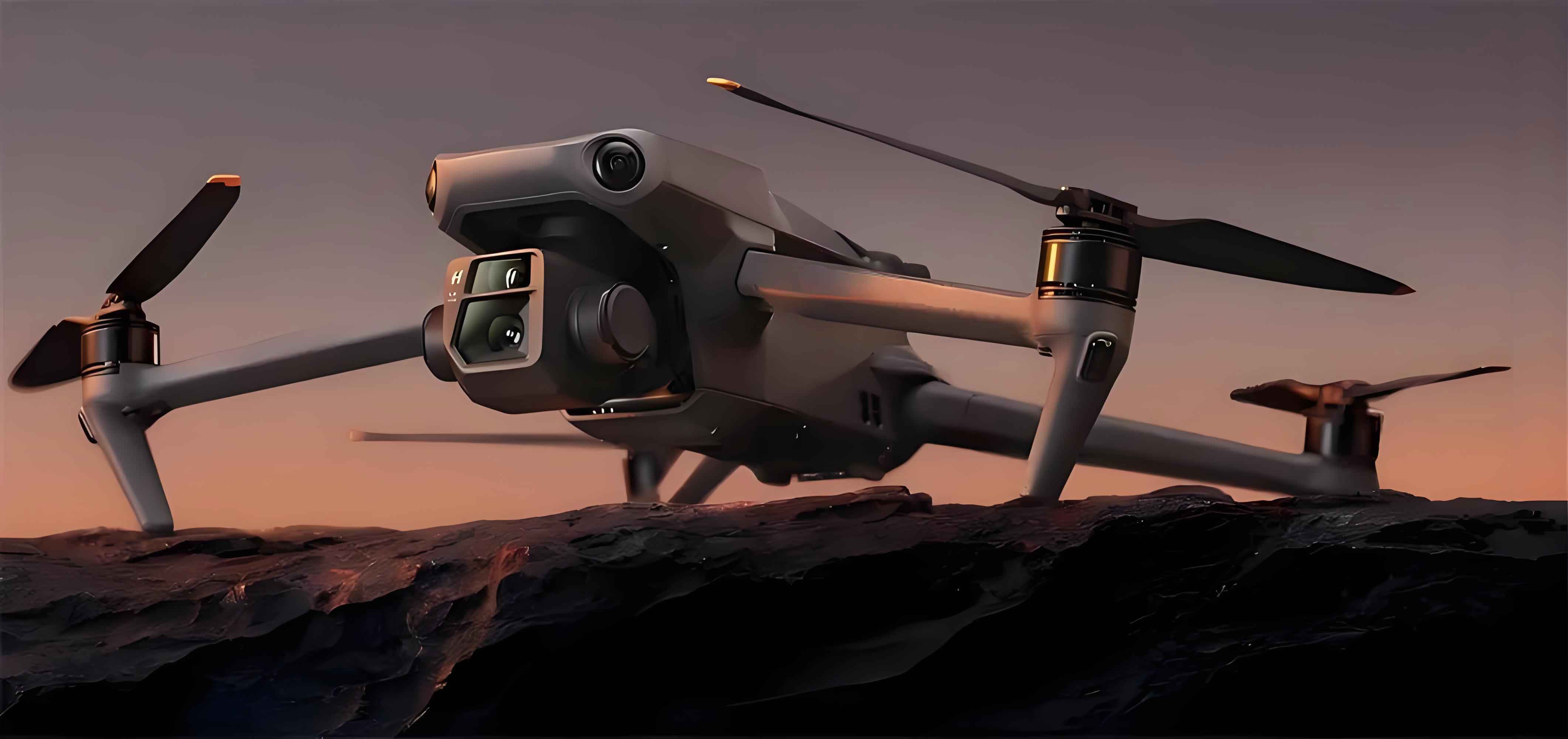
Traditional surveillance methods like radar and electro-optical monitoring can no longer meet the requirements for dynamic monitoring of low altitude UAVs in terms of detection range, accuracy, and anti-interference capabilities. Currently, China lacks a unified low-altitude airspace coordination management system. Therefore, developing efficient and reliable surveillance systems for low altitude drones is crucial for safe operations and sustainable industry development.
Existing Surveillance Data Link Solutions
Most current UAV surveillance systems rely on single data link technologies like BeiDou, 4G/5G mobile networks, or ADS-B. However, research increasingly focuses on combining multiple technologies for enhanced surveillance effectiveness. Key limitations of single-link approaches include:
| Technology | Coverage Limitations | Latency | Bandwidth |
|---|---|---|---|
| ADS-B | Line-of-sight required | Low (~1s) | Low |
| 4G/5G | Urban areas only | Medium (~4s) | High |
| BeiDou SMS | Global | High (~60s) | Very Low |
The signal propagation characteristics for low altitude drone communication can be modeled as:
$$P_r = P_t – 20\log_{10}(d) – 20\log_{10}(f) – 32.44 + G_t + G_r – L_{\text{obstruction}}$$
Where \(P_r\) = received power (dBm), \(P_t\) = transmitted power (dBm), \(d\) = distance (km), \(f\) = frequency (MHz), \(G_t/G_r\) = antenna gains (dBi), \(L_{\text{obstruction}}\) = obstacle attenuation.
Multi-Link Dynamic Hybrid Surveillance Architecture
The proposed system integrates three complementary data links for comprehensive low altitude UAV monitoring:
| System Component | Function | Technical Specifications |
|---|---|---|
| Airborne System | Data acquisition & transmission | STM32F4 processor, triple-antenna design |
| Ground System | Data processing & visualization | Multi-threaded server architecture |
| Hybrid Links | Redundant communication | ADS-B/5G/BeiDou parallel pathways |
The dynamic link selection algorithm optimizes transmission based on real-time conditions:
$$\text{Link}_{\text{selected}} = \begin{cases}
\text{5G} & \text{if } \text{SINR}_{\text{5G}} > 15\text{dB} \\
\text{ADS-B} & \text{if } h > 500\text{m} \\
\text{BeiDou} & \text{otherwise}
\end{cases}$$
Where SINR = Signal-to-Interference-plus-Noise Ratio, h = altitude.
System Implementation
Airborne Module Design
The airborne system employs an STM32F4 microprocessor with six communication interfaces managing three parallel transmission channels for low altitude drone tracking. The real-time scheduling algorithm ensures optimal resource allocation:
$$T_{\text{cycle}} = \sum_{i=1}^{n} (t_{\text{ADS-B}_i} + t_{\text{5G}_i} + t_{\text{BeiDou}_i}) \leq 100\text{ms}$$
Data transmission intervals are strategically configured:
| Data Link | Transmission Interval | Payload Size |
|---|---|---|
| ADS-B | 1 position/sec + 1 ID/5s | 112 bytes |
| 4G/5G | 1 update/4s | 256 bytes |
| BeiDou SMS | 1 message/60s | 78 bytes |
Ground System Architecture
The ground system implements a multi-threaded architecture with dedicated processing pipelines for each low altitude UAV data stream. The data fusion process combines inputs from all links:
$$\hat{\mathbf{x}}_k = \mathbf{K}_k \mathbf{z}_k + (1 – \mathbf{K}_k) \hat{\mathbf{x}}_{k-1}$$
Where \(\hat{\mathbf{x}}_k\) = fused state estimate, \(\mathbf{K}_k\) = Kalman gain, \(\mathbf{z}_k\) = measurement vector from active links.
Experimental Validation
Field tests covered urban, suburban, and mountainous terrain (500m ASL) with specialized equipment deployment:
| Terrain Type | ADS-B Availability | 5G Availability | BeiDou Availability |
|---|---|---|---|
| Urban canyons | 38% | 92% | 100% |
| Suburban | 74% | 85% | 100% |
| Mountainous (>500m) | 98% | 23% | 100% |
The hybrid approach demonstrated significant reliability improvements for low altitude UAV operations:
$$R_{\text{hybrid}} = 1 – \prod_{i=1}^{3} (1 – R_i) = 1 – (0.02 \times 0.15 \times 0.00) = 99.97\%$$
Where \(R_i\) = individual link reliability.
Performance Analysis
The temporal-spatial coverage characteristics reveal complementary performance across environments for low altitude drones:
$$\text{Coverage}_{\text{effective}} = \frac{1}{T} \int_0^T \max \left[ C_{\text{ADS-B}}(t), C_{\text{5G}}(t), C_{\text{BeiDou}}(t) \right] dt \approx 99.2\%$$
Message frequency analysis demonstrates how the hybrid system overcomes limitations of individual technologies in different low altitude UAV operating environments:
| Altitude Band | Dominant Link | Avg. Message Rate | Latency (s) |
|---|---|---|---|
| 0-100m urban | 5G | 0.25 Hz | 3.8 ± 0.7 |
| 100-500m mixed | Hybrid | 0.32 Hz | 2.1 ± 1.2 |
| >500m rural | ADS-B | 1.8 Hz | 0.7 ± 0.2 |
Conclusion
The multi-link approach effectively overcomes coverage limitations of individual technologies for low altitude UAV operations. 4G/5G links provide stable transmission below 500m in urban environments, ADS-B delivers reliable service in unobstructed airspace above 500m, while BeiDou SMS offers universal backup coverage. The hybrid system achieves 99.2% effective coverage through intelligent link selection, significantly outperforming any single-technology solution (maximum 78% coverage). This architecture provides a robust foundation for future low altitude drone traffic management systems, particularly in complex terrain where no single link can guarantee uninterrupted service. Future work will explore integrating AI-based predictive handover algorithms to further optimize transmission efficiency for dense low altitude UAV operations.