
Low altitude drones represent the core carrier and primary driving force in the emerging low-altitude economy. This strategic industry synergizes new productive forces with industrial innovation, demonstrating transformative potential across global markets. The vertical scope of low-altitude operations, typically below 1,000 meters but increasingly extending to 3,000 meters, creates unique technical challenges that must be addressed for widespread commercialization.
The global evolution of low altitude UAV technology has progressed through four distinct phases: Initial military applications (1990s-2000s), consumer drone proliferation (2010-2015), industrial-grade expansion (2016-2020), and the current integration into urban air mobility ecosystems (2021-present). Market projections indicate exponential growth, with China’s low-altitude economy reaching ¥505.95 billion in 2023 at a 33.8% growth rate. Current industrial distribution includes:
| Sector | Enterprises | Registered UAVs | Annual Revenue |
|---|---|---|---|
| Civil Consumer | 1,500+ | 1.26 million+ | $17.8 billion |
| Industrial Applications | 300+ | 85,000+ | $9.2 billion |
| Logistics Specialized | 120+ | 42,000+ | $6.5 billion |
Power Propulsion Systems
Energy solutions constitute the fundamental limitation for low altitude UAV operational capabilities. Current power systems must overcome the critical challenge of power-to-weight ratios, where low altitude drones require 30-40 times more average power than equivalently weighted electric vehicles. The energy density equation highlights this challenge:
$$ \text{Energy Density (Wh/kg)} = \frac{\text{Usable Energy (Wh)}}{\text{Battery Mass (kg)}} $$
Contemporary solutions include:
| Technology | Energy Density | Endurance | Commercial Stage |
|---|---|---|---|
| Lithium-ion (NMC/Si-C) | 400-512 Wh/kg | 45-120 min | Widely deployed |
| Hydrogen Fuel Cell | 1,200 Wh/kg (system) | 3-8 hours | Early commercial |
| Hybrid Electric | 750-950 Wh/kg | 2-5 hours | Demonstration |
| Solar-Electric | Continuous (day) | Theoretical indefinite | Experimental |
Hydrogen storage systems present particular promise for extended operations, with composite cryogenic tanks achieving gravimetric efficiency through:
$$ \text{Storage Efficiency} = \frac{m_{H_2}}{m_{\text{tank}}} \times 100\% $$
where advanced Type IV composites reach 5.8% mass fraction at 70 MPa storage pressure. This enables hydrogen-powered low altitude drones to achieve ranges exceeding 1,000 km, making them ideal for logistics and surveillance applications.
Communication and Data Processing
Reliable connectivity forms the nervous system of low altitude UAV operations. The heterogeneous network architecture integrates terrestrial 5G with satellite communications, creating a resilient communication fabric. Signal propagation in complex urban environments follows stochastic models:
$$ P_r = P_t + G_t + G_r – PL(d) – \chi_\sigma $$
where $P_r$ is received power, $P_t$ transmitted power, $G_t/G_r$ antenna gains, $PL(d)$ distance-dependent path loss, and $\chi_\sigma$ shadowing effects. Advanced systems utilize 3D geometric-based stochastic models (GBSM) to simulate non-stationary channels in urban canyons.
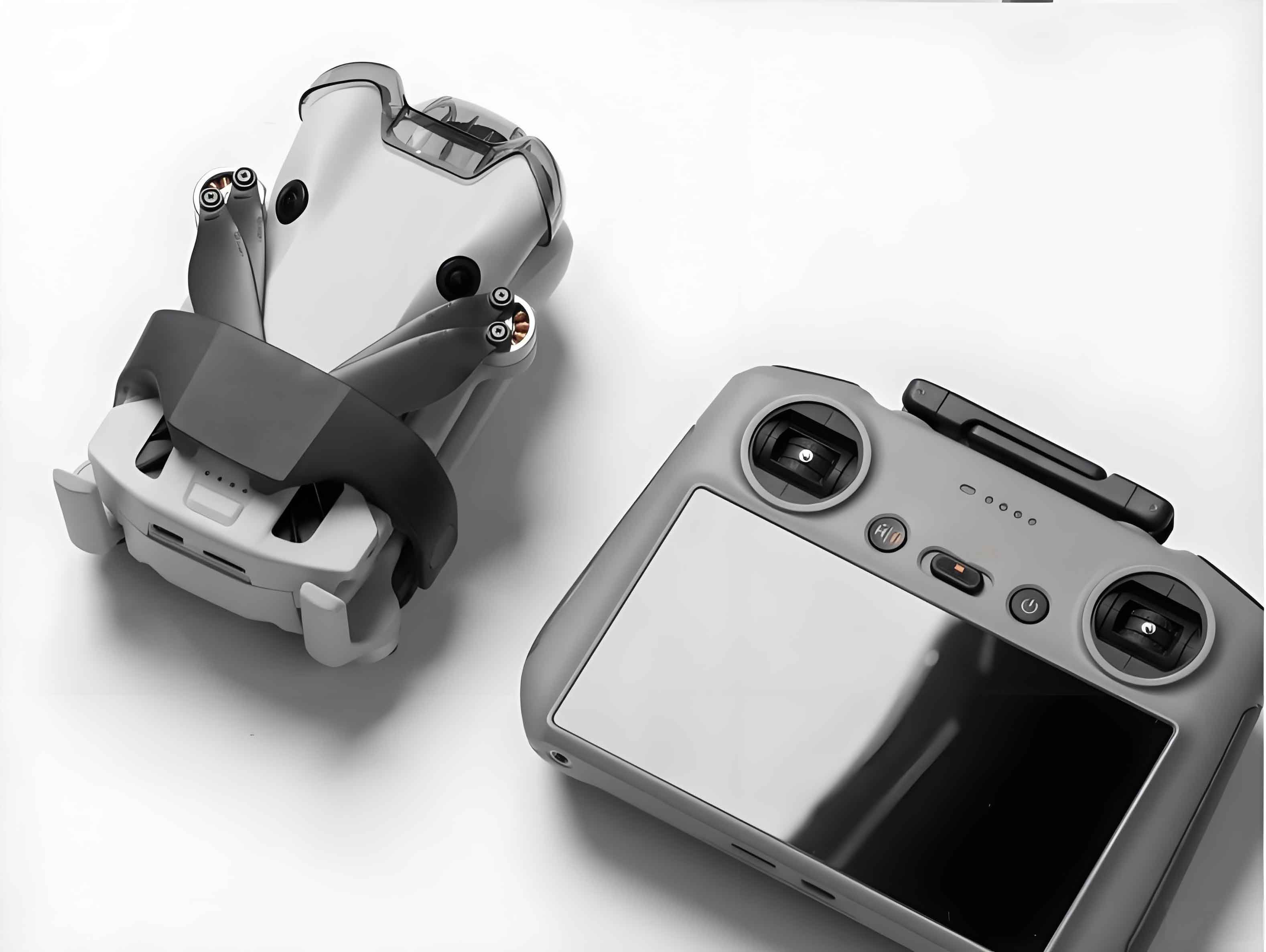
Key performance benchmarks for low altitude UAV communications include:
| Parameter | 5G Networks | LEO Satellite | Hybrid Systems |
|---|---|---|---|
| Latency | 5-20 ms | 25-50 ms | 15-30 ms |
| Bandwidth | 100+ Mbps | 10-50 Mbps | 50-100 Mbps |
| Coverage | Urban/Suburban | Global | Seamless |
| Reliability | 99.9% | 99.5% | 99.99% |
Federated learning frameworks enhance spectrum utilization in congested environments through distributed decision-making:
$$ \min_{\omega} \sum_{k=1}^K \frac{n_k}{n} F_k(\omega) \quad \text{where} \quad F_k(\omega) = \frac{1}{n_k} \sum_{i=1}^{n_k} f_i(\omega) $$
This approach enables collaborative spectrum sensing while preserving data privacy across low altitude drone fleets. Recent implementations demonstrate 40% improvement in spectral efficiency during peak operations.
Airspace Management and Safety
Safe integration of low altitude UAV systems requires sophisticated traffic management architectures. Modern UTM (Unmanned Traffic Management) systems employ multi-layered airspace segmentation:
$$ \mathcal{A} = \bigcup_{i=1}^{n} \left( \mathcal{Z}_i \times [h_{min}^{(i)}, h_{max}^{(i)}] \times [t_{start}^{(i)}, t_{end}^{(i)}] \right) $$
where airspace $\mathcal{A}$ comprises volumetric zones $\mathcal{Z}_i$ with defined altitude and temporal constraints. Dynamic density management algorithms prevent congestion through predictive analytics:
$$ \rho_{\text{critical}} = \frac{1}{\pi \cdot R^2_{\text{sep}} \cdot v_{\text{avg}} \cdot t_{\text{response}} $$
with $R_{\text{sep}}$ being minimum separation distance, $v_{\text{avg}}$ average velocity, and $t_{\text{response}}$ system reaction time. Implementation data shows 68% improvement in airspace utilization efficiency compared to static sectorization.
Safety systems employ multi-sensor fusion for real-time anomaly detection:
$$ \text{Risk Index} = \sum_{i=1}^{n} w_i \cdot \sigma_i \left( \frac{\partial \mathbf{x}}{\partial t} – f(\mathbf{x}) \right) $$
where sensor readings $\mathbf{x}$ are compared against predicted states $f(\mathbf{x})$ with weighted deviations $\sigma_i$. This approach enables 95% accurate failure prediction 8-12 seconds before critical events in low altitude drone operations.
Strategic Applications
The technological convergence enables transformative applications across sectors. Urban air mobility demonstrates particular promise with operational cost models:
$$ C_{\text{mile}} = \frac{C_{\text{vehicle}} + C_{\text{energy}} + C_{\text{infra}}}{R_{\text{annual}} \cdot U_{\text{load}}} $$
Current projections indicate $2.50-3.75 per passenger-mile for eVTOL services at scale. Agricultural applications show 92% reduction in chemical usage through precision spraying algorithms:
$$ Q_{\text{spray}} = k \cdot \int_{A} \phi(x,y) \cdot \nabla C_{\text{crop}} dA $$
where application rate $Q$ adapts to vegetation density $\phi$ and health gradient $\nabla C$. Logistics networks achieve 40% cost reduction in last-mile delivery through optimized routing:
$$ \min \sum_{i=0}^{n} \sum_{j=0}^{n} c_{ij} x_{ij} \quad \text{s.t.} \quad \sum_{i=0}^{n} x_{ij} = 1, \sum_{j=0}^{n} x_{ij} = 1 $$
Conclusion
The maturation of low altitude UAV technologies converges around three critical domains: advanced power systems overcoming energy density limitations, resilient communications enabling secure operations, and intelligent airspace management ensuring scalable integration. These developments collectively unlock the $1.5 trillion global potential of the low-altitude economy by 2035. Continued innovation in solid-state batteries, quantum-secure communications, and AI-driven traffic optimization will further accelerate adoption. The strategic importance of low altitude drone systems extends beyond economic metrics, representing fundamental infrastructure for future sustainable transportation networks. As regulatory frameworks evolve alongside technological capabilities, we anticipate exponential growth in commercial applications that leverage the unique capabilities of low altitude UAV platforms across urban, agricultural, and logistical domains.