
The rapid development of low altitude economies has positioned low altitude UAV logistics as a transformative force in supply chain management. Enabled by progressive airspace deregulation and technological advancements, these systems overcome terrestrial constraints through three-dimensional mobility while reducing operational costs by 15-30% compared to traditional methods. This paradigm shift addresses critical “last-mile” delivery challenges in both urban and rural environments, where low altitude drones demonstrate particular efficacy in congested metropolitan areas and geographically isolated regions.
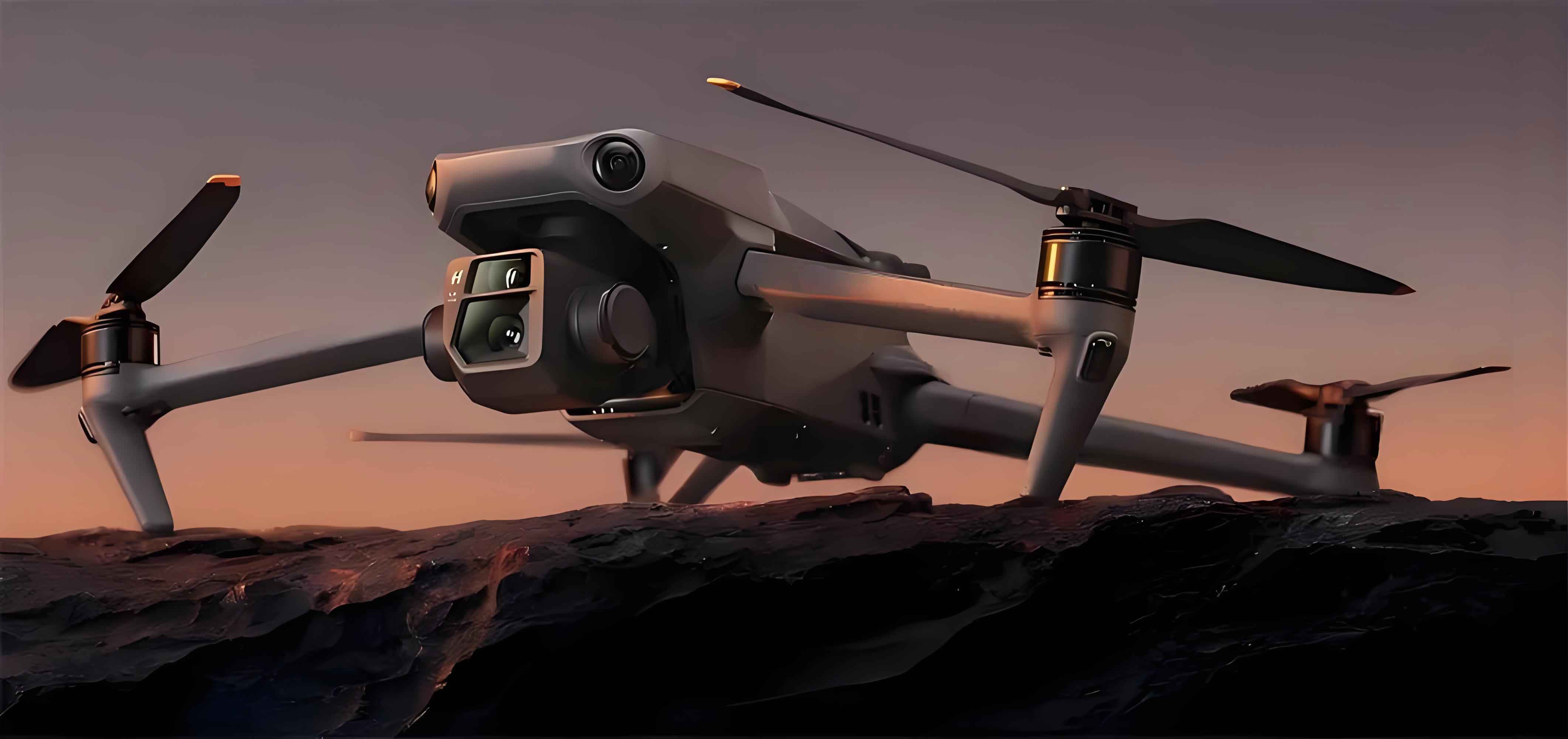
System Architecture and Core Technologies
Low altitude UAV logistics systems integrate six critical subsystems:
1. Propulsion System: Manages energy distribution with lithium polymer batteries providing power densities of 200-300 Wh/kg
$$P_{req} = \frac{1}{2} \rho v^3 A C_D + mgv \sin\theta + mgv \frac{C_{rr}}{\cos\theta}$$
where $\rho$ = air density, $v$ = velocity, $A$ = frontal area
2. Flight Control: Stabilizes aerial platforms during payload operations
3. Sensory Perception: Integrates LiDAR, IMU, and vision systems for environmental awareness
4. Avionics: Ensures navigation precision through GNSS-RTK positioning with <3 cm error
5. Dispatch Management: Optimizes resource allocation through intelligent scheduling algorithms
6. Safety Assurance: Implements multi-layer encryption and collision avoidance protocols
Motion Control Methodologies
Precise attitude regulation remains fundamental for low altitude drone operations. Control strategies bifurcate into linear and nonlinear approaches:
| Control Method | Implementation | Robustness | Application Context |
|---|---|---|---|
| PID Control | Proportional-integral-derivative gains adjustment | Low | Stable flight regimes |
| LQR | State-space optimization | Moderate | Precision trajectory tracking |
| Model Predictive | Future state prediction | High | Dynamic obstacle avoidance |
| Sliding Mode | Predefined sliding surface convergence | High | Adverse weather operations |
| Adaptive Control | Real-time parameter adjustment | High | Payload variation compensation |
The nonlinear controller for a quadrotor low altitude UAV follows:
$$\begin{aligned}
\dot{x} &= v \\
m\dot{v} &= mg\mathbf{e}_3 – fR\mathbf{e}_3 \\
\dot{R} &= R\hat{\omega} \\
J\dot{\omega} &= \tau – \omega \times J\omega
\end{aligned}$$
where $R$ = rotation matrix, $\omega$ = angular velocity, $J$ = inertia tensor.
Route Optimization Frameworks
Low altitude drone path planning constitutes a multi-objective optimization challenge balancing:
$$\min \left( \alpha D + \beta T + \gamma E \right)$$
$$subject\ to: \begin{cases}
v_{min} \leq v \leq v_{max} \\
h_{min} \leq h \leq h_{max} \\
\omega \leq \omega_{max} \\
SOC \geq SOC_{critical}
\end{cases}$$
| Optimization Approach | Problem Type | Constraints Handled | Computational Efficiency |
|---|---|---|---|
| Pareto Optimization | Multi-objective surveillance | Velocity, altitude | Moderate |
| Hybrid CAOSA | 3D path planning | Obstacle avoidance, energy | High |
| Multi-objective GA | Urban delivery | Time windows, noise | Moderate |
| Robust MILP | Demand uncertainty | Weather, dynamic obstacles | Low |
Vehicle-Drone Collaborative Systems
Synchronized truck-low altitude UAV operations enhance delivery efficiency through complementary capabilities:
$$\min \sum_{i=0}^{n} \sum_{j=0}^{n} c_{ij}x_{ij} + \sum_{k=1}^{m} f_k y_k$$
$$subject\ to: \sum_{i \in S} \sum_{j \in S} x_{ij} \leq |S| – 1 \quad \forall S \subseteq V$$
| Collaboration Mode | Operational Paradigm | Key Innovations | Efficiency Gain |
|---|---|---|---|
| Truck-launched | Mothership deployment | Dynamic parking optimization | 25-40% |
| Parallel delivery | Independent operation zones | Spatial partitioning algorithms | 15-30% |
| Synchronized | Concurrent launch/recovery | Time-window coordination | 35-50% |
| Electric hybrid | Shared energy management | Wireless charging integration | 20-35% |
Security and Privacy Protocols
Low altitude UAV logistics face multidimensional security challenges:
1. Sensor Integrity: Cross-validation through physical invariants:
$$s(t) = \begin{bmatrix} a_x \\ a_y \\ a_z \end{bmatrix} \times \begin{bmatrix} \alpha \\ \beta \\ \gamma \end{bmatrix} \equiv \mathbf{C}$$
2. Communication Protection: Elliptic curve cryptography for command channels:
$$E: y^2 = x^3 + ax + b \mod p$$
3. Anti-collision: Stochastic conflict prediction models:
$$P_{coll} = 1 – e^{-\lambda \Delta t} \quad \lambda = \rho \sigma \bar{v}_r$$
Future Research Trajectories
Critical advancement areas for low altitude drone logistics include:
1. Swarm Intelligence: Distributed decision-making for heterogeneous low altitude UAV fleets
2. Energy Resilience: Hybrid fuel cell-battery systems extending range to 150+ km
3. Regulatory Frameworks: Dynamic airspace allocation algorithms balancing density and safety
4. Equity Considerations: Cost-sharing models for rural service provision:
$$U_i = \frac{\phi_i(S)}{\sum_{j \in N} \phi_j(S)} \cdot v(S) \quad \phi_i(S) = v(S) – v(S \setminus {i})$$
5. Cyber-Physical Security: Quantum-resistant encryption for navigation systems
The evolution of low altitude UAV logistics represents a convergence of aerospace engineering, operations research, and urban planning. As these systems mature, they will fundamentally restructure logistics networks through vertical dimension utilization, with projected market expansion to $150 billion by 2035. Successful implementation requires coordinated advances in vehicle autonomy, air traffic management, and public policy frameworks.