
Dam monitoring and vulnerability assessment are critical for disaster prevention and human safety. Due to their large dimensions and inaccessible terrain, low-altitude drones provide unique opportunities for efficient surveillance. UAV systems excel in visual inspections of massive structures like dams and retaining walls, offering rapid, cost-effective access to challenging locations. Previous research demonstrates that UAV technology effectively replaces traditional photogrammetry for infrastructure projects. This study investigates the impact of Ground Control Point (GCP) configurations on the accuracy of 3D point clouds generated from low-altitude UAV surveys of concrete gravity dams.
A concrete gravity dam in Yunnan Province, China, was selected for this investigation. The structure stands 87m tall with a 225.5m crest length and 12m crest width, comprising ten monoliths including a 24m spillway section. The reservoir capacity is 364 million m³, serving irrigation, water supply, and flood control purposes. The upstream dam face exhibits complex features like spillway gates and railings, creating texture discontinuities.
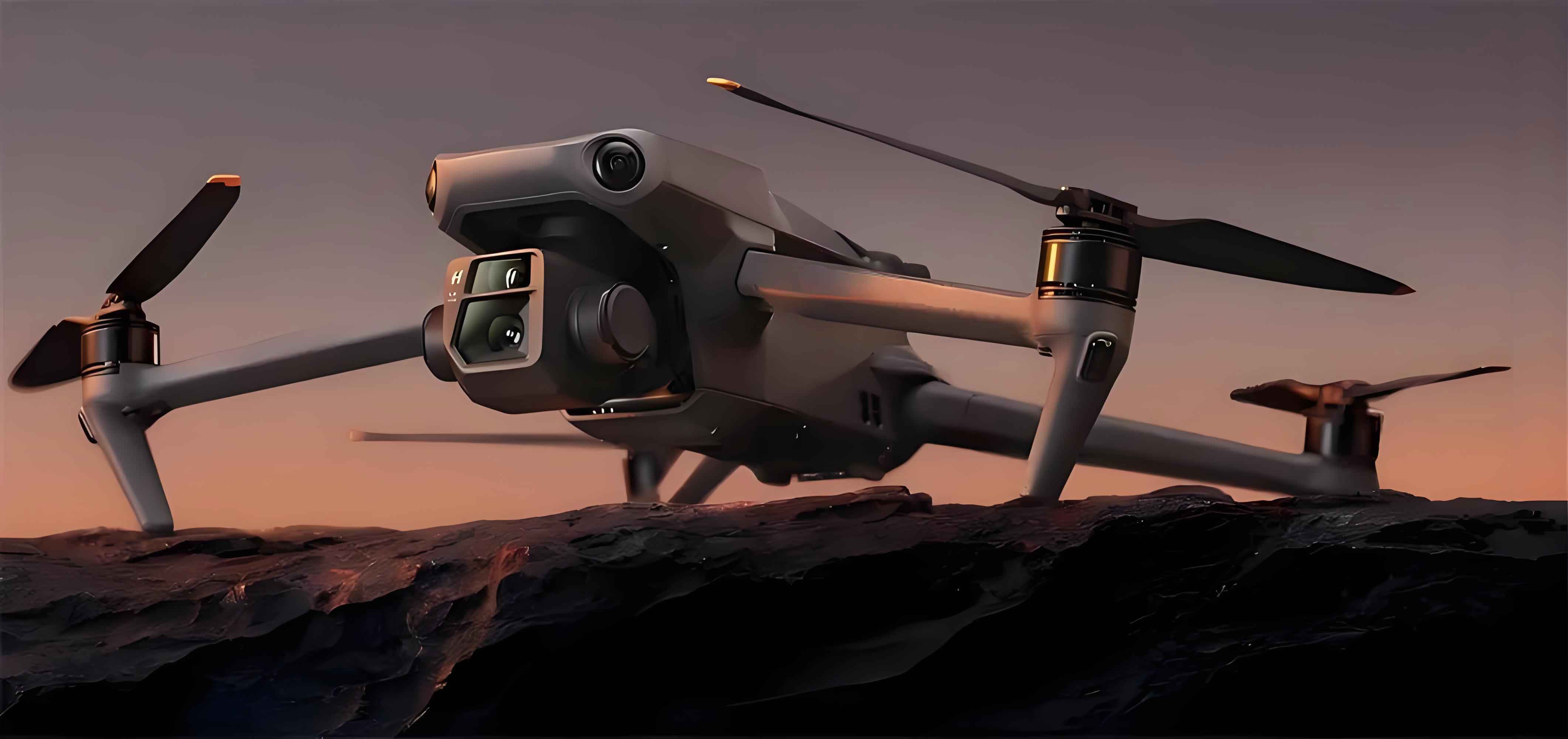
Survey operations employed a HighOne 4HSE Pro quadcopter equipped with a 36.4-megapixel full-frame Sony Alpha 7R camera. Key specifications include:
- Maximum speed: 72 km/h
- Endurance: 20-30 minutes
- Positioning accuracy: <0.1 m
- Image dimensions: 5472 × 3684 pixels
Pre-marked targets served as GCPs distributed across the dam face. Flight paths ensured 80% lateral and 75% forward overlap. Image processing used Structure-from-Motion (SfM) algorithms in Agisoft Photoscan® (v1.2.4) with the following workflow:
- Feature detection and matching
- Incremental image addition and triangulation
- Bundle adjustment optimization
- Dense point cloud generation
The Brown distortion model corrected radial and tangential lens distortions:
$$ \Delta r = k_1 r^3 + k_2 r^5 + k_3 r^7 $$
$$ \Delta t = p_1(r^2 + 2x^2) + 2p_2xy $$
where \( \Delta r \) and \( \Delta t \) represent radial and tangential distortion components, \( r \) is the radial distance from the image center, and \( k_n \), \( p_n \) are distortion coefficients. Camera calibration parameters derived from the imagery are presented in Table 1.
| Parameter | Value (pixels) |
|---|---|
| Focal length x | 7424.32 |
| Focal length y | 7428.37 |
| Principal point offset x | 3654.48 |
| Principal point offset y | 2434.65 |
| Skew coefficient | -5.89 |
| Radial distortion k₁ | 0.05 |
| Radial distortion k₂ | -0.25 |
| Radial distortion k₃ | 0.04 |
| Tangential distortion p₁ | 0 |
| Tangential distortion p₂ | 0 |
Processing parameters for dense cloud reconstruction are detailed in Table 2. Control point accuracy was set to 1 pixel during georeferencing, with tie point precision at 0.1 pixels. The average root mean square error (RMSE) for control points was 0.798 pixels, with a mean projection error of 1.216 pixels.
| Processing Step | Parameters |
|---|---|
| Align Photos | Accuracy: Medium, Key point limit: 40,000 |
| Build Mesh | Surface type: Arbitrary, Interpolation: Enabled |
| GCP Import | Marker accuracy: 0.005m, Tie point accuracy: 1px |
| Build Dense Cloud | Quality: Medium, Depth filtering: Aggressive |
Error analysis quantified the relationship between GCP configuration and point cloud accuracy using mean absolute error (MAE):
$$ MAE = \frac{1}{n}\sum_{i=1}^{n}|x_{i, measured} – x_{i, extracted}| $$
Twenty-six distinct GCP layouts (labeled a-z) were evaluated with quantities ranging from 7 to 51 points. Results in Table 3 demonstrate that increased GCP density reduces MAE across all directions, with elevation (z-axis) showing the most significant sensitivity:
| Layout | GCP Count | MAEx (m) | MAEy (m) | MAExy (m) | MAEz (m) |
|---|---|---|---|---|---|
| a | 7 | 0.058 | 0.032 | 0.070 | 0.121 |
| b | 7 | 0.059 | 0.032 | 0.073 | 0.074 |
| c | 9 | 0.053 | 0.033 | 0.067 | 0.087 |
| d | 11 | 0.054 | 0.031 | 0.066 | 0.135 |
| e | 9 | 0.052 | 0.031 | 0.064 | 0.087 |
| f | 14 | 0.061 | 0.030 | 0.072 | 0.065 |
| g | 11 | 0.056 | 0.032 | 0.069 | 0.074 |
| h | 20 | 0.053 | 0.030 | 0.065 | 0.077 |
| i | 22 | 0.053 | 0.029 | 0.063 | 0.062 |
| j | 21 | 0.054 | 0.029 | 0.066 | 0.066 |
| l | 21 | 0.053 | 0.037 | 0.068 | 0.155 |
| m | 20 | 0.055 | 0.032 | 0.069 | 0.083 |
| n | 20 | 0.056 | 0.030 | 0.069 | 0.065 |
| o | 15 | 0.051 | 0.029 | 0.062 | 0.076 |
| p | 18 | 0.052 | 0.033 | 0.065 | 0.105 |
| q | 31 | 0.049 | 0.027 | 0.059 | 0.073 |
| r | 21 | 0.056 | 0.030 | 0.067 | 0.170 |
| s | 31 | 0.054 | 0.031 | 0.066 | 0.075 |
| t | 31 | 0.049 | 0.027 | 0.059 | 0.073 |
| u | 29 | 0.055 | 0.030 | 0.068 | 0.076 |
| v | 33 | 0.053 | 0.031 | 0.066 | 0.062 |
| w | 40 | 0.048 | 0.029 | 0.059 | 0.102 |
| x | 27 | 0.054 | 0.029 | 0.065 | 0.086 |
| y | 42 | 0.055 | 0.027 | 0.065 | 0.021 |
| z | 51 | 0.050 | 0.023 | 0.057 | 0.015 |
Key findings from low altitude drone surveys reveal:
- Elevation error (MAEz) dominates total error, averaging 68% higher than planar errors due to the dam’s vertical geometry
- Optimal layouts require GCP distribution across multiple elevations, with layout z (51 GCPs) achieving minimal MAEz = 0.015m
- Structural discontinuities like spillway gates increase local errors by 22-37% without adjacent GCPs
- Low-altitude UAV surveys achieve relative height accuracy of 0.067% (MAEz/dam height), meeting engineering requirements
The relationship between GCP quantity and accuracy follows a negative exponential trend (Figure 1):
$$ MAE_z = 0.118e^{-0.028N} + 0.012 $$
where \( N \) represents the number of GCPs. This model explains 84% of variance (\( R^2 = 0.84 \)). Boxplot analysis confirms elevation errors exhibit greater variance than planar errors, with outliers concentrated near water surfaces and texture-poor regions.
Low altitude UAV surveys demonstrate significant advantages for hydraulic infrastructure monitoring. Optimal accuracy requires:
- Minimum 30 GCPs for structures exceeding 50m height
- Vertical distribution of targets across elevation zones
- Increased density near discontinuities (spillways, joints)
- Strategic placement to avoid water-reflection interference
These protocols enable sub-centimeter accuracy suitable for deformation monitoring and as-built verification. The flexibility of low-altitude drone systems provides unparalleled access for comprehensive dam surveillance, establishing a new standard for hydraulic infrastructure surveying.