
In karst mountainous regions, dangerous rock masses on high and steep slopes pose severe threats due to their sudden instability, short failure duration, and extensive hazard potential. Traditional ground-based surveys face significant challenges in accessing these remote and rugged terrains. To address this, we integrated multiple low altitude drone remote sensing technologies—airborne LiDAR, oblique photogrammetry, and close-range photogrammetry—for refined identification. This study focuses on a typical karst area, leveraging the high penetration capability of LiDAR to “see through” vegetation and the high-resolution imaging of photogrammetry for detailed structural analysis. By combining these approaches, we achieved comprehensive hazard mapping without direct human intervention, demonstrating the efficacy of low altitude UAV systems in enhancing geological risk assessment.
The study area exhibits peak-forest valley topography with steep slopes and dense vegetation, where pure carbonate rocks are intersected by fault networks. These conditions foster rockfalls and collapses, necessitating advanced remote sensing for safe investigation. We deployed low altitude UAV platforms to capture multi-source data, ensuring high precision in hazardous zones. The workflow involved data acquisition, processing, and interpretation, with a focus on extracting critical parameters like cracks, discontinuities, and rock mass geometries. Our approach enabled efficient identification of unstable rock bodies, providing a template for similar environments.
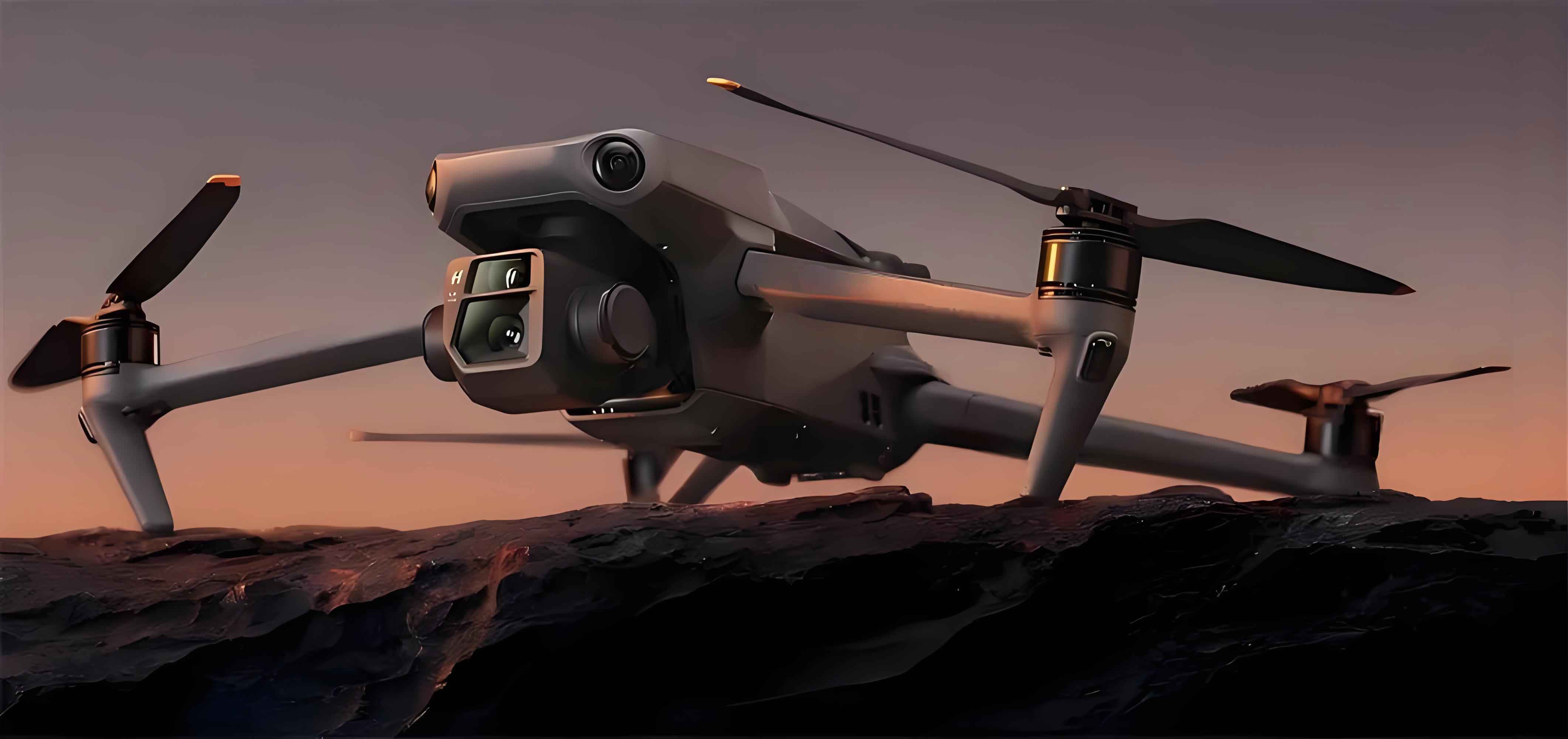
For data acquisition, we utilized specific low altitude drone configurations to optimize coverage and resolution. Airborne LiDAR employed a multi-rotor UAV with a 200 KHz laser sensor, flying at 200 m altitude to generate dense point clouds. Oblique photogrammetry used a fixed-wing UAV with a five-lens camera for 3D reconstruction, while close-range photogrammetry targeted critical slopes at 30 m height for millimeter-scale detail. Key parameters are summarized in Table 1, highlighting the role of low altitude UAV in achieving high overlap and resolution.
| Technology | Equipment | Key Parameters | Output |
|---|---|---|---|
| Airborne LiDAR | Multi-rotor UAV + LiDAR sensor | Point density: 60 pt/m²; Flight height: 200 m; Overlap: 75% | DEM, DSM |
| Oblique Photogrammetry | Fixed-wing UAV + Oblique camera | Resolution: 5 cm; Flight height: 319 m; Overlap: 80% (along-track), 75% (cross-track) | 3D model, DOM |
| Close-range Photogrammetry | Multi-rotor low altitude UAV | Resolution: 5 mm; Flight height: 30 m; Overlap: 80% | High-resolution 3D model |
Point cloud processing began with filtering using a Triangulated Irregular Network (TIN) densification algorithm to remove vegetation and extract ground features. The algorithm starts with seed points at minimum elevations in grid cells, iteratively adding points based on distance and angular thresholds. For a point \( P \) relative to a triangle formed by vertices \( V_1, V_2, V_3 \), the iterative distance \( d \) (perpendicular from \( P \) to the plane) and iterative angles \( \angle a, \angle b, \angle c \) (angles between \( PV_i \) and the plane) are calculated. Points are classified as ground if \( d \) and angles fall below thresholds (e.g., angles between 2° and 10°). The process is defined by:
$$ d = | \overrightarrow{PO} | $$
$$ \angle a = \arccos\left( \frac{ \overrightarrow{PV_1} \cdot \mathbf{n} }{ | \overrightarrow{PV_1} | \cdot | \mathbf{n} | } \right) $$
where \( \mathbf{n} \) is the normal vector of the plane. This method, executed via low altitude UAV data, enabled detection of sub-vegetation features like boulders (≥1 m diameter) and cracks (width ≥0.2 m).
Structural plane orientation was derived from 3D models using a three-point fitting method. For points \( (X_1, Y_1, Z_1) \), \( (X_2, Y_2, Z_2) \), and \( (X_3, Y_3, Z_3) \) on a discontinuity, the plane equation \( Z = AX + BY + C \) is solved via least squares:
$$ \begin{bmatrix} A \\ B \\ C \end{bmatrix} = \begin{bmatrix} X_1 & Y_1 & 1 \\ X_2 & Y_2 & 1 \\ X_3 & Y_3 & 1 \end{bmatrix}^{-1} \begin{bmatrix} Z_1 \\ Z_2 \\ Z_3 \end{bmatrix} $$
Dip angle \( \alpha \) and dip direction \( \beta \) are then computed as:
$$ \alpha = \left| \arctan \left( \sqrt{A^2 + B^2} \right) \right| $$
$$ \beta_0 = \arctan \left( \frac{B}{A} \right) $$
with conditions:
$$ \text{If } A < 0: \begin{cases} B \leq 0, & \beta = \beta_0 \\ B > 0, & \beta = \beta_0 + \pi \end{cases} $$
$$ \text{If } A > 0: \beta = \beta_0 + \pi $$
This approach, facilitated by low altitude UAV photogrammetry, achieved sub-degree accuracy in orientation measurements.
Additional structural parameters were extracted to assess rock mass stability. Spacing \( \bar{x} \) for discontinuities was calculated along scanlines:
$$ \bar{x} = \frac{ \sum_{i=1}^{n} x_i }{ n } $$
where \( x_i \) is the spacing between adjacent discontinuities in a set, and \( n \) is the number of measurements. Trace length and aperture were directly measured on 3D models, with aperture derived as the mean distance between fracture edges. Pole plots grouped discontinuities into sets based on density distributions, critical for identifying dominant failure planes. Table 2 summarizes key parameters extracted from low altitude UAV data, emphasizing the integration for comprehensive hazard analysis.
| Parameter | Extraction Method | Typical Values | Significance |
|---|---|---|---|
| Spacing (\( \bar{x} \)) | Scanline measurement on DEM/3D model | 0.5–2.0 m | Indicates rock mass fracturing; smaller values imply higher instability |
| Trace Length | Direct line measurement on 3D surface | 1–10 m | Longer traces increase failure risk |
| Aperture | Perpendicular distance across cracks | 0.1–0.15 m | Wider apertures facilitate water infiltration and root wedging |
| Number of Sets | Pole density plots from orientation data | 2–3 sets per slope | More sets correlate with higher disintegration |
In total, 34 dangerous rock masses were identified, categorized as isolated rocks, rock groups, boulders, or boulder clusters. Isolated rocks and groups predominantly occupied upper and mid-slopes with steep gradients (>70°), often near cliff edges. Close-range low altitude UAV models revealed tension cracks and fresh scars, indicating recent activity. For instance, a typical rock group showed multiple control joints (e.g., J1: 32°∠78°, J2: 157°∠27°) with spacings of 0.5 m and apertures of 0.1–0.15 m, exacerbated by vegetation root penetration. Conversely, boulders and clusters, detected under forest cover using LiDAR-derived DEMs, exhibited clear protrusions and rough textures, with some showing evidence of prior collapses. The low altitude drone data allowed “cross-shaped” flight paths over steep faces to eliminate “shadow effects” in conventional surveys, enhancing feature recognition.
| Category | Number Identified | Typical Location | Key Features from Low Altitude UAV |
|---|---|---|---|
| Isolated Rocks | 6 | Upper slopes, cliff bases | High-relief textures, visible detachment scars, no vegetation on cracks |
| Rock Groups | 21 | Mid-slopes, steep transitions | Multiple blocks, joint-controlled, apertures 0.1–0.15 m, root wedging |
| Boulders | 4 | Slope toes, colluvial deposits | Sub-vegetation protrusions, DEM-highlighted boundaries, coarse surfaces |
| Boulder Clusters | 3 | Depositional zones | Accumulated debris, LiDAR-visible under canopy, indicative of past failures |
Discussion highlights the superiority of fused low altitude UAV technologies. Airborne LiDAR excelled in vegetated areas, with DEMs revealing hidden boulders, while photogrammetry provided mm-scale crack details. The three-point fitting method showed high reliability for planar discontinuities but required careful point selection for curved traces. Challenges included data alignment in complex topography, mitigated by SFM algorithms in software like ContextCapture. Comparatively, low altitude drone approaches reduced survey time by 70% versus terrestrial methods, proving vital for inaccessible karst terrains. Future work could integrate InSAR for displacement monitoring, enhancing predictive capabilities.
In conclusion, low altitude UAV remote sensing enables refined identification of dangerous rock masses in karst mountains. By combining LiDAR, oblique, and close-range photogrammetry, we extracted critical structural parameters and identified 34 hazardous features with high accuracy. The methodologies—from TIN-based filtering to orientation calculation—offer a replicable framework for similar regions. This study underscores the transformative role of low altitude drone systems in geological hazard assessment, promoting safer and more efficient surveys.