
As an observer and analyst of technological advancements, I have witnessed the rapid evolution of the China drone industry over the years. From its humble beginnings to becoming a global powerhouse, China drone development has reshaped numerous sectors, integrating cutting-edge technologies like communication systems, intelligent control, and aerospace propulsion. In this article, I will delve into the definition, history, applications, and future trends of China drone technology, emphasizing its transformative role in agriculture, social activities, security, and beyond. My analysis is based on extensive research and firsthand insights into how China drone innovations are driving practical solutions and unlocking immense potential worldwide.
The term “drone” refers to an unmanned aerial vehicle (UAV), which is an aircraft operated without a human pilot onboard. These devices rely on remote control or autonomous programming through onboard computers. In my view, China drone systems epitomize the convergence of sensor technology, communication networks, information processing, smart control, and aerospace engineering, making them high-tech products of the information age. A typical China drone comprises several key components: the airframe, flight control system, data link system, launch and recovery system, and power supply system. The flight control system acts as the “heart” of the drone, determining stability, data reliability, accuracy, and real-time performance. The data link ensures precise transmission of commands and feedback, while the launch/recovery systems facilitate safe takeoff and landing. Power systems, often battery-based, provide the necessary energy for operation.
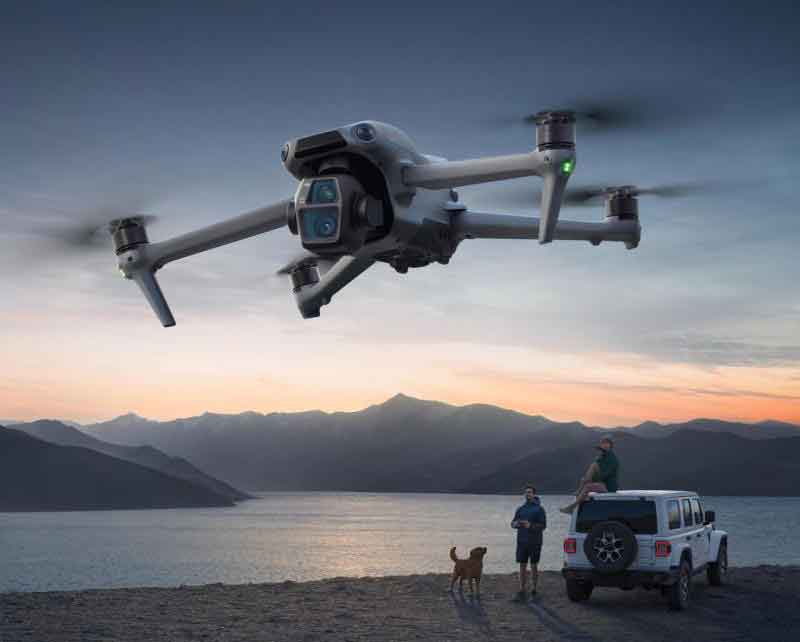
To better understand China drone varieties, I have categorized them based on technical features and application domains. Technically, drones can be classified into fixed-wing, helicopter, multi-rotor, and others like airships or biomimetic drones. Each type has distinct advantages and limitations, which I summarize in the table below.
| Category | Description | Advantages | Disadvantages | Primary Applications |
|---|---|---|---|---|
| Fixed-wing China Drone | UAVs with rigid wings that generate lift via forward motion. | High payload, long endurance, fast speed, high altitude, cost-effective. | Requires runway for takeoff/landing, cannot hover, complex control needs. | Military, professional-grade uses (e.g., surveying). |
| Helicopter China Drone | UAVs with rotary wings for vertical takeoff and landing. | Vertical flight, hover capability, moderate payload and endurance. | Complex mechanics, high maintenance, expensive. | Military, specialized civilian tasks. |
| Multi-rotor China Drone | UAVs with multiple rotors (e.g., quadcopters). | Vertical takeoff/landing, hovering, simple structure, affordable, flexible. | Limited payload, short endurance, slower speed, demanding flight control. | Consumer-grade, professional applications (e.g., photography). |
| Other China Drones | Including airships, parafoils, and biomimetic models. | Specialized functions like long-duration flight or stealth. | Niche use, often experimental. | Research, unique commercial projects. |
In terms of applications, China drone platforms are divided into military and civilian domains. Military drones include reconnaissance and target drones, while civilian drones split into consumer-grade (for personal use) and professional-grade (for industrial sectors). This classification highlights how China drone technology adapts to diverse needs, from hobbyist photography to critical infrastructure inspection.
Reflecting on the history of China drone development, I trace its origins to global innovations. Early experiments date back to 1910 with concepts like Charles Kettering’s “aerial torpedo,” but significant progress emerged in the 1930s with radio-controlled target drones in Britain. The United States advanced this field post-1939, producing series like “Firebee.” China drone endeavors began in the mid-20th century, with milestones such as the successful first flight of the “Chang Kong-1” target drone in 1966. Since then, China drone research has accelerated, leveraging international expertise while fostering domestic innovation. By the 21st century, breakthroughs in lightweight materials, satellite positioning, and electronic controls propelled China drone industry into a rapid growth phase, especially with the advent of multi-rotor designs that democratized access.
The applications of China drone technology are vast and transformative. In my analysis, I have seen China drone systems excel in tasks deemed too dull, dirty, or dangerous for humans. For civilian use, professional-grade China drones serve sectors like agriculture, where they enable precision spraying and crop monitoring, boosting efficiency. In public safety, China drone units assist in firefighting, search-and-rescue, and traffic monitoring. Consumer-grade China drones dominate aerial photography, recreation, and even delivery services. To illustrate, I present a table summarizing key application areas and their impact.
| Application Area | Specific Uses | Benefits of China Drone | Example Metrics |
|---|---|---|---|
| Agriculture | Crop spraying, soil analysis, irrigation management. | Reduces labor costs, increases yield, minimizes chemical use. | Coverage: up to 100 acres per day with a single China drone. |
| Infrastructure Inspection | Power line checks, bridge monitoring, pipeline surveys. | Enhances safety, cuts downtime, provides high-resolution data. | Inspection time reduced by 70% compared to manual methods. |
| Disaster Response | Emergency mapping, supply delivery, victim location. | Rapid deployment, access to hazardous zones, real-time feedback. | Response time improved by 50% in earthquake scenarios. |
| Media and Entertainment | Film shooting, sports broadcasting, event coverage. | Creative angles, cost savings, dynamic footage. | Used in over 80% of modern action movie productions. |
| Environmental Monitoring | Wildlife tracking, pollution detection, forest conservation. | Non-invasive, large-scale data collection, continuous oversight. | Monitors 500+ square kilometers daily for anti-poaching. |
Beyond these, China drone solutions are expanding into logistics, healthcare (e.g., vaccine transport), and smart city management. The versatility of China drone platforms stems from their modular design, allowing customization with sensors like LiDAR or thermal cameras. In my experience, the adoption curve for China drone technology follows an exponential trend, driven by falling costs and rising capabilities.
Looking ahead, the future of China drone industry promises even greater advancements. I anticipate that innovation will focus on several core areas: market expansion, technological breakthroughs, and产业链 optimization. The market size for China drone products, especially civilian ones, is soaring. Based on current trends, I project the civilian China drone market to grow robustly, with agricultural drones leading the charge. We can model this growth using a compound annual growth rate (CAGR) formula:
$$ MarketSize(t) = P_0 \times (1 + r)^t $$
Where \( P_0 \) is the initial market size, \( r \) is the annual growth rate, and \( t \) is time in years. For instance, if the China drone market starts at $10 billion in 2020 with a 25% CAGR, by 2025, it would reach approximately $30.5 billion. More granularly, I estimate sub-sector contributions, as shown in the table below.
| Sub-sector | Projected Market Size by 2025 (in billion USD) | Growth Drivers |
|---|---|---|
| Agricultural China Drones | 200 | Precision farming, government subsidies, labor shortages. |
| Security and Surveillance China Drones | 150 | Urbanization, safety regulations, AI integration. |
| Power Inspection China Drones | 50 | Grid modernization, cost efficiency, automation. |
| Consumer China Drones | 100 | Tech affordability, social media trends, hobbyist demand. |
| Other Professional China Drones | 346.2 | Emerging applications in logistics, healthcare, etc. |
Technologically, I foresee China drone systems evolving toward miniaturization, intelligence, and network integration. Breakthroughs in新能源, such as solar or hydrogen fuel cells, will extend flight endurance. For example, energy efficiency can be expressed as:
$$ E_{total} = \eta \times P_{input} \times t $$
Where \( E_{total} \) is total energy output, \( \eta \) is efficiency, \( P_{input} \) is power input, and \( t \) is time. Higher \( \eta \) values from new batteries will boost China drone performance. Additionally, AI and 5G will enable swarm intelligence and real-time data processing, making China drone networks more autonomous. In my view, the integration of big data and cloud computing will unlock new applications in geographic mapping and public safety, where China drone fleets can handle massive datasets.
The产业链 of China drone industry is another critical aspect. I have analyzed that value concentrates upstream in R&D and downstream in services, with midstream manufacturing becoming increasingly competitive. The产业链 curve can be represented as a smile curve, where附加值 is higher at both ends. Mathematically, we can describe this as:
$$ ValueAdded(x) = -a(x – b)^2 + c $$
Here, \( x \) represents the产业链 position (0 for upstream, 1 for downstream), \( a \) controls curvature, \( b \) is the vertex position, and \( c \) is maximum value. For China drone industry, \( b \) is near 0.5, but upstream and downstream peaks are rising. Upstream, innovations in flight control algorithms and materials will drive profits. Downstream, services like drone leasing, maintenance, and training will expand. Midstream, assembly and production may see consolidation as margins shrink. I believe that跨行业 resource整合 will become prevalent, with China drone companies partnering with tech firms to enhance capabilities.
In conclusion, I am confident that the China drone sector will continue its upward trajectory, fueled by relentless innovation and broad applicability. While challenges remain, such as regulatory hurdles and technical bottlenecks in batteries, the overall outlook is positive. The China drone industry is not just a market segment; it is a catalyst for societal transformation, offering economic and social benefits on a global scale. As I reflect on this journey, I see China drone technology as a testament to human ingenuity, poised to reach new heights in the coming decades.