
Detecting low-altitude group targets like migrating bird flocks or unmanned aerial vehicle (UAV) swarms is critical for both civilian and military applications. These targets exhibit collective intelligence and dense spatial distributions, resulting in complex motion patterns that challenge conventional radar tracking systems. Classical association and tracking methods often fail under these conditions, leading to track fragmentation and erroneous state estimates. Measured point clouds containing spatial position information form the foundation for addressing these challenges. While some studies simulate trajectories, they cannot replicate sensor errors or environmental impacts. Publicly available radar datasets for swarm targets remain scarce, hindering algorithm validation. To bridge this gap, we introduce a novel dataset capturing low altitude drone swarms using high-resolution phased array radar.
Experimental Setup
Experiments were conducted at the Yellow River Delta Modern Agricultural Demonstration Zone in Dongying, China. A Ku-band high-resolution phased array radar with step-frequency synthesis capability served as the primary sensor. Key parameters include:
| Parameter | Value |
|---|---|
| Frequency Band | Ku-band |
| Sub-pulse Bandwidth | 125 MHz |
| Number of Frequency Steps | 10 |
| Synthetic Bandwidth | 1 GHz |
| Range Resolution (Hamming) | ≈0.2 m |
| Azimuth Beamwidth | 0.5° |
| Elevation Beamwidth | 0.6° |
| Scan Cycle | 3.2 s |
| Detection Range | 300-2000 m |
Commercial performance UAVs formed the low altitude UAV swarms. Key specifications include:
| Parameter | Value |
|---|---|
| Dimensions | 350 mm × 310 mm × 135 mm |
| Weight | 540 g |
| Max Speed | 6 m/s |
| Flight Time | 33 min |
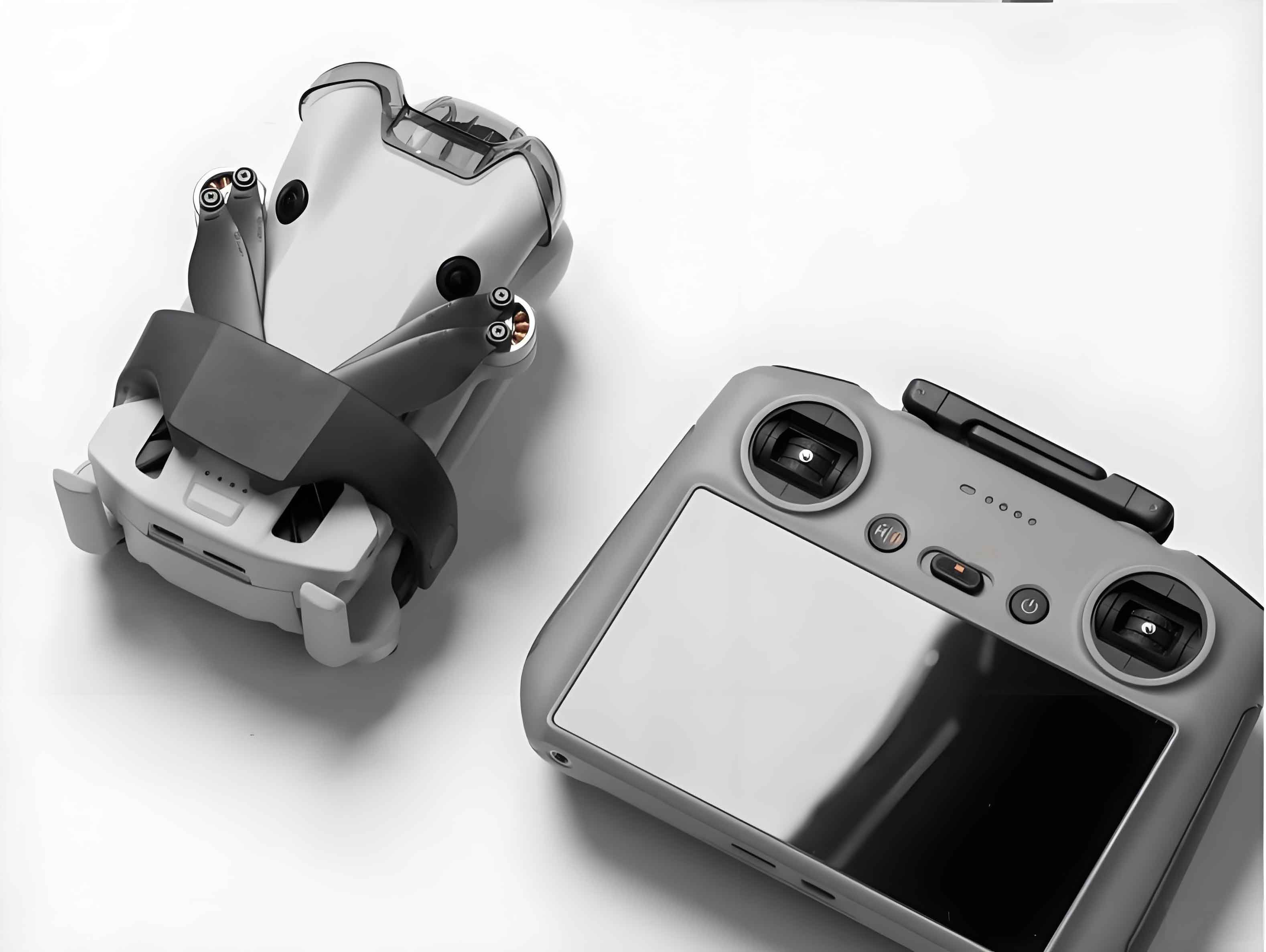
Three distinct low altitude drone swarm experiments were conducted:
| Experiment | Formation | Motion Profile | Spacing | UAV Count |
|---|---|---|---|---|
| 1 | Linear | Straight Flight (North) | 8 m | 20 |
| 2 | Linear | Rotation + Straight Flight | 30 m | 15 |
| 3 | Cross-shaped | Rotation + Straight Flight | Variable | 15 |
Data Acquisition and Processing
Raw radar echoes underwent specialized processing to generate target measurements:
- Step-Frequency Synthesis: Combined sub-pulses to achieve 1 GHz bandwidth:
$$B_{synth} = \sum_{i=1}^{10} B_i = 10 \times 125 \text{ MHz} = 1 \text{ GHz}$$ - High-Resolution Range Profile (HRRP): Generated 0.2 m resolution range profiles using Fourier transforms:
$$\Delta R = \frac{c}{2B_{synth} \cdot k_{\text{Hamming}} \approx 0.2 \text{ m}$$ - Target Detection: Applied adaptive VI-CFAR with static clutter mapping:
$$P_{fa} = \left[1 + \frac{T}{\alpha(N)}\right]^{-N}$$
Figure 1 illustrates typical HRRP outputs showing resolved low altitude UAV targets. Measurements were stored in MATLAB (.mat) files containing:
- 3×N matrix of target coordinates (x, y, z)
- Corresponding radar scan index
Dataset Composition
The dataset comprises three experiments capturing complex low altitude drone behaviors:
Experiment 1: Tight Linear Formation
Twenty low altitude UAVs flew northward at 200 m altitude in linear formation with 8 m spacing. Motion equations:
$$x(t) = x_0$$
$$y(t) = y_0 + v \cdot t \quad (v = 6 \text{ m/s})$$
$$z(t) = 200 \text{ m}$$
Experiment 2: Spaced Linear Formation
Fifteen UAVs executed coordinated maneuvers:
- Rotation Phase: 120-second circular motion around pivot UAV (0.5 rpm):
$$\theta(t) = \omega t \quad (\omega = \frac{\pi}{60} \text{ rad/s})$$
$$r = 30 \text{ m}$$ - Translation Phase: Northward linear flight at 6 m/s
Experiment 3: Cross Formation
Fifteen UAVs maintained cross-shaped patterns during:
- Rotation: 120-second circular motion around central UAV
- Translation: 240-second northward flight
Methodological Validation
We demonstrate dataset utility through swarm tracking using Random Matrix (GGIW) and Multi-Hypothesis Tracking (MHT).
Random Matrix Tracking
The group state $\varepsilon_k$ is characterized by:
$$\varepsilon_k = (\gamma_k, \mathbf{x}_k, \mathbf{X}_k)$$
where $\gamma_k$ is measurement rate, $\mathbf{x}_k$ is centroid state, and $\mathbf{X}_k$ is extent matrix. The motion model follows:
$$\mathbf{x}_k = \mathbf{\Phi}_k\mathbf{x}_{k-1} + \mathbf{w}_k \quad \mathbf{w}_k \sim \mathcal{N}(0,\mathbf{D}_k \otimes \mathbf{X}_k)$$
Measurement association and Bayesian updates enable robust low altitude UAV swarm tracking.
Multi-Hypothesis Tracking
MHT handles data association uncertainty through hypothesis management:
$$\mathcal{L}(\mathcal{H}_i) = \prod_{t=1}^T p(\mathbf{z}_t|\mathcal{H}_i) \cdot P(\mathcal{H}_i)$$
Figure 2 shows successful track maintenance during formation rotation.
Conclusion
This dataset provides high-resolution measurements of low altitude drone swarms executing coordinated maneuvers. It supports development of advanced tracking algorithms addressing challenges in group target monitoring. Future work will incorporate more complex formations and environmental conditions to further advance low altitude UAV detection capabilities.