
From my perspective as an observer of technological and industrial trends, the rapid evolution of drone technology has fundamentally reshaped modern warfare and civilian applications. The 2020 Nagorno-Karabakh conflict served as a stark demonstration, where unmanned aerial vehicles (UAVs) played a decisive role in precision strikes, highlighting the urgency for nations to master this domain. This event underscored that traditional air defense systems are often ill-equipped to counter low-cost, small, and slow-moving drones, thereby accelerating a global shift toward unmanned systems such as drone swarms, loyal wingmen, cargo UAVs, micro-drones, and solar-powered high-altitude platforms. China’s “14th Five-Year Plan” explicitly emphasizes advancing military theory and equipment modernization, focusing on independent innovation in defense technology and smart weaponry. Thus, strengthening the China drone ecosystem is not only vital for national security but also a critical step toward modernizing industrial chains and supply networks. In this article, I will delve into the global landscape, identify key challenges facing the China drone sector, and propose actionable strategies for its high-quality development.
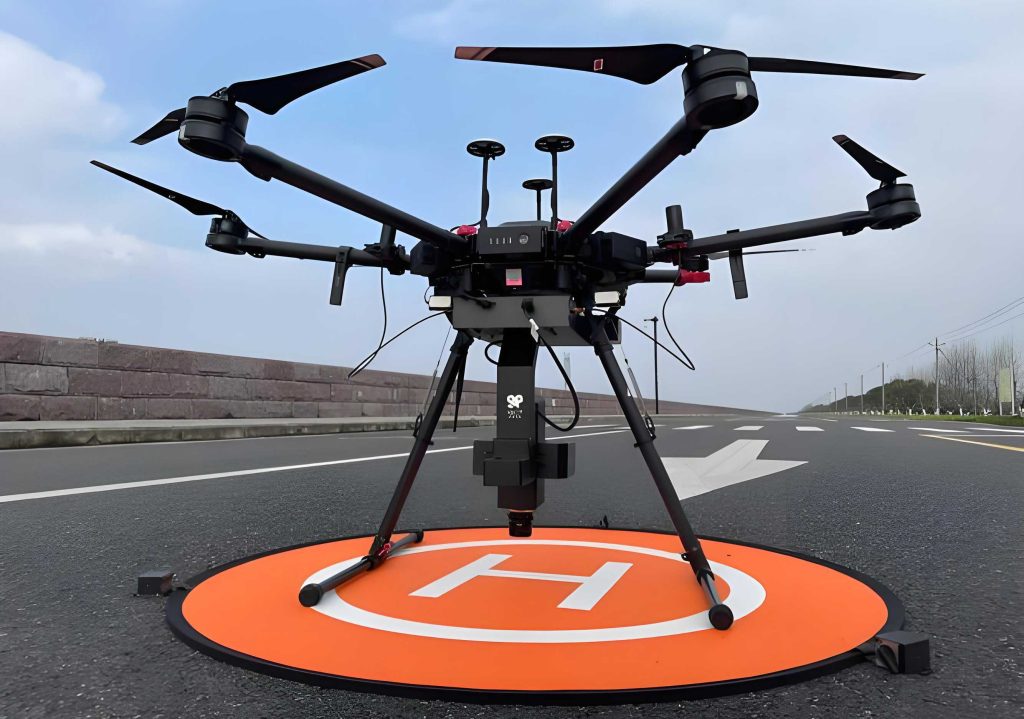
To understand the context, let us first examine the global drone industry’s current state. Drones, or unmanned aircraft systems, are categorized by use: military applications include reconnaissance-strike-integrated UAVs, surveillance drones, attack drones, and cargo carriers; civilian uses span production-oriented drones (e.g., for agriculture, logistics) and consumer drones (e.g., for photography). Globally, Western developed nations dominate the military segment. As shown in Table 1, the United States, the United Kingdom, and Israel form the first tier, with American firms like Northrop Grumman, General Atomics, and AAI collectively holding about 67% of the global military drone market share. In contrast, the China drone industry is a rising contender in this space, though it still lags in core technologies and market influence.
| Company/Country | Market Share | Notes |
|---|---|---|
| Northrop Grumman (U.S.) | 39% | Leader in high-altitude long-endurance drones |
| General Atomics (U.S.) | 25% | Producer of “Predator” and “Reaper” series |
| AAI (U.S.) | 3% | Specialized in tactical UAVs |
| Thales (U.K.) | 2% | European defense contractor |
| IAI (Israel) | 2% | Pioneer in drone technology |
| Others (including China, Russia, France) | 29% | Emerging players with growing investments |
In the civilian realm, the prospects are expansive. Drones are increasingly deployed for security monitoring, personal aerial photography, geological survey, urban traffic management, social governance, agricultural production, hydrological monitoring, and logistics. The convergence with air traffic management, swarm coordination, IoT, and 5G networks signals a trend toward cross-border integration. For instance, in logistics, global IoT company drone shipments reached 351,500 units in 2019, and projections suggest a surge to 1,271,600 units by 2023, reflecting a compound annual growth rate (CAGR) that can be modeled mathematically. If we denote the shipment volume at time \( t \) as \( S(t) \), with \( t = 0 \) for 2019, we can approximate this growth using an exponential function: $$ S(t) = S_0 e^{kt} $$ where \( S_0 = 351.5 \) (in thousands), \( k \) is the growth rate, and \( t \) is in years. Assuming a steady rise, the CAGR from 2019 to 2023 is approximately: $$ k = \frac{\ln(1271.6 / 351.5)}{4} \approx 0.377 \text{ or } 37.7\% $$ This underscores the booming demand for civilian drones. Notably, China’s DJI dominates the consumer market with a 70% share, annual revenue around 30 billion yuan, followed by Zero Zero Tech and XAG in niche segments. This success highlights the potential of the China drone sector in commercial applications.
China has prioritized drone development through policy frameworks. As summarized in Table 2, since 2017, authorities like the Civil Aviation Administration of China (CAAC), Ministry of Industry and Information Technology (MIIT), and Ministry of Agriculture and Rural Affairs have issued guidelines to standardize and promote UAV systems. These efforts align with the “14th Five-Year Plan” focus on frontier areas like artificial intelligence and aerospace technology. However, despite these strides, the China drone industry faces multifaceted challenges that hinder its global competitiveness.
| Release Time | Government Department | Policy Document |
|---|---|---|
| June 2017 | MIIT, Standardization Admin, etc. | Unmanned Aircraft System Standardization Construction Guide (2017-2018) |
| March 2018 | CAAC | Interim Measures for Civil UAV Operational Flight Activities |
| March 2018 | Ministry of Agriculture | Technical Specification for Quality Evaluation of Plant Protection UAVs |
| November 2018 | MIIT | Specifications for UAV Manufacturing Enterprises |
| May 2019 | CAAC | Guiding Opinions on Promoting Civil Unmanned Aircraft Development (Draft) |
From my analysis, the primary obstacles for the China drone industry can be distilled into six core issues. First, there is a deficiency in key core technologies with independent innovation capabilities. The manufacturing of drones relies heavily on critical components such as aero-engines, chips, sensors, communication modules, and composite materials—areas where China faces “bottleneck” constraints. This dependency creates security risks, akin to building a house on another’s foundation, and may worsen amid decoupling trends. To quantify this, consider the technology readiness level (TRL) for China drone components versus global leaders. If we define a capability index \( C \) ranging from 0 to 1, where 1 indicates parity with top-tier technology, China’s score in engines and chips might be: $$ C_{\text{engine}} \approx 0.6, \quad C_{\text{chip}} \approx 0.5 $$ reflecting significant gaps.
Second, institutional mechanisms are not fully adapted to new requirements. China’s defense industry, though comprehensive, has limited civilian-military integration, with private sector participation often restricted to basic parts rather than core R&D. In contrast, Western nations deeply involve private capital in defense projects. This stifles innovation in the China drone ecosystem. A simple model for integration efficiency \( I \) could be: $$ I = \alpha \cdot P + \beta \cdot G $$ where \( P \) represents private sector involvement, \( G \) government support, and \( \alpha, \beta \) are weights. Currently, \( \alpha \) is low for China, reducing overall \( I \).
Third, the breadth and depth of applications remain limited. While drones abroad are widely used in urban management, agriculture, mining, and logistics, China’s civilian drone adoption lags, with inadequate supporting measures. This restricts the economic impact of the China drone industry. For example, the penetration rate \( R \) in sectors like logistics can be expressed as: $$ R = \frac{N_{\text{drone applications}}}{N_{\text{total potential applications}}} $$ In China, \( R \) is estimated below 0.3, compared to over 0.5 in advanced economies.
Fourth, financing channels are relatively singular. Drone R&D is capital-intensive and lengthy, especially for SMEs. In China’s bank-dominated financial system, these asset-light startups struggle to secure loans, curbing growth. The financing gap \( F \) can be modeled as: $$ F = D – S $$ where \( D \) is demand for funds and \( S \) is supply from traditional banks. For China drone startups, \( F \) is often positive, indicating a shortfall.
Fifth, market development is in a rough phase. Due to regulatory gaps and coarse growth, substandard products flood the market, tarnishing the industry’s reputation. This undermines the sustainable development of the China drone sector. If we let \( Q \) represent product quality on a scale of 0 to 10, the market average \( \bar{Q} \) might be low, with high variance \( \sigma^2 \), signaling inconsistency.
Sixth, there is a lack of international discourse power in drone standards. Global standards are set by Western countries, forcing Chinese firms to comply passively, as seen in trade frictions. This absence of voice weakens the global positioning of the China drone industry. A power index \( P_d \) for standards influence could be near zero for China, whereas the U.S. scores high.
To address these challenges, I propose six strategic recommendations for fostering high-quality development in the China drone industry. First, intensify efforts in core technology攻关. Innovation is the primary driver; as emphasized, core technologies cannot be begged or borrowed. China must mobilize academia, research institutes, and enterprises to tackle “bottleneck” problems collaboratively. This can be framed as an optimization problem: maximize technological output \( T \) subject to resource constraints \( R \): $$ \max T = f(I, H, C) $$ where \( I \) is investment, \( H \) human capital, and \( C \) collaboration factors. For China drone tech, targeted R&D in engines and chips is crucial.
Second, moderately encourage private capital entry. Opening up stimulates progress; by allowing private enterprises into the drone sector, China can unleash innovation vitality. This aligns with building a modern economic system. A policy shift could increase \( \alpha \) in the integration model, boosting \( I \). The China drone industry would benefit from relaxed准入 barriers.
Third, actively promote venture capital investment. Venture capital, though imported, helps commercialize科技成果 and solves early-stage financing woes for SMEs. Encouraging VC firms to empower drone developers is a market-driven solution. The funding supply \( S \) can be enhanced via VC inflows, reducing \( F \). A VC participation rate \( V \) for China drone startups should be raised from current low levels.
Fourth, establish a self-controlled and secure industrial chain. Leveraging China’s comprehensive manufacturing base, we can build a seamless供应链 from raw materials to marketing. Creating high-end clusters and parks across regions, akin to historical “Third Front” construction but with reverse “flying land” models (R&D in coastal areas, production inland), optimizes resources. The resilience \( R_c \) of the China drone supply chain can be measured as: $$ R_c = 1 – \sum_{i=1}^n w_i \cdot d_i $$ where \( w_i \) is weight for component \( i \), and \( d_i \) is dependency on foreign sources. Lowering \( d_i \) increases \( R_c \).
Fifth, enrich a multi-tiered talent cultivation system. The drone industry demands both high-skilled researchers and skilled workers. China needs to balance vocational training with higher education to meet全产业链 needs. The talent pool \( H \) can be expanded via: $$ H = \sum_{j=1}^m E_j \cdot e_j $$ where \( E_j \) is enrollment in program \( j \), and \( e_j \) is effectiveness. Reforms should focus on aligning \( E_j \) with industry demands for China drone expertise.
Sixth, strengthen legal regulations and industry standard construction. To compete globally, China must develop robust laws and domestic standards, then internationalize them. This involves规范 market order and upgrading technologies to match global benchmarks. The standards influence \( P_d \) can be improved through active participation in international bodies, benefiting the China drone industry’s long-term credibility.
In conclusion, the China drone industry stands at a critical juncture, with immense potential tempered by significant hurdles. From my viewpoint, addressing technological gaps, reforming institutions, broadening applications, diversifying finance, refining markets, and boosting standards are imperative. By implementing these strategies, China can not only enhance its defense capabilities but also drive industrial modernization, ensuring that the China drone sector becomes a global leader. The journey requires sustained effort, but with concerted action, the future of China drone innovation is promising.