
In this extensive analysis, I will delve into the current state of China’s drone technology, with a particular focus on agricultural plant protection applications. The rapid evolution of unmanned aerial vehicles (UAVs) globally has positioned the China drone sector at a critical juncture, balancing immense potential with significant challenges. From military origins to civilian agro-industrial uses, the journey of the China drone is a testament to technological adaptation and innovation. This discussion will encompass historical context, technical classifications, operational advantages, systemic constraints, and future trajectories, all viewed through the lens of first-hand observation and synthesis of available data. I will employ numerous tables and mathematical formulations to encapsulate key metrics and relationships, ensuring a thorough and quantified perspective on the China drone phenomenon.
The advent of drone technology has revolutionized numerous sectors, but its impact on agriculture—a cornerstone of China’s economy—is particularly profound. The China drone, especially in its role as an agricultural plant protection UAV, promises to alleviate labor shortages, enhance precision, and reduce environmental footprints. However, the path forward is intertwined with technical hurdles, economic realities, and regulatory frameworks. As I explore these dimensions, the repeated emphasis on “China drone” will underscore the national context and specificity of this technological march.
Historical Trajectory of Agricultural Aviation and Drones
The narrative of using aircraft for agricultural purposes began overseas. In 1916, the United States constructed its first unmanned aircraft. By 1918, the U.S. pioneered crop dusting by spraying pesticides on cotton from an airplane. A similar crisis-driven adoption occurred in the Soviet Union around 1922, where aircraft were deployed to combat a massive locust plague. The dedicated pursuit of agricultural aviation intensified in 1949 when the U.S. initiated research into purpose-built agricultural aircraft. A pivotal moment arrived in 1990 when Japan’s Yamaha Corporation launched the world’s first dedicated plant protection drone, cementing Japan’s status as the pioneer in UAV-based crop spraying. The United States, with its vast farmlands, gradually embraced UAV technology to complement and eventually supplant manned agricultural aircraft, now boasting a substantial user base.
The history of the China drone in agriculture is more recent but equally significant. In 1951, China’s civil aviation authority, at the request of the Guangzhou municipal government, dispatched C-46 aircraft for 41 sorties to eliminate mosquitoes and flies, marking the prelude to China’s agricultural aviation. Decades later, the modern China drone era for plant protection began in earnest. Initial applications focused on pesticide spraying in rice-growing regions. The watershed year was 2010, when the first commercial plant protection drone entered the Chinese market, officially heralding the operational integration of UAVs into China’s agricultural fabric.
To crystallize this historical progression, I present a comparative timeline in Table 1.
| Year | Global/Regional Event | China Drone & Agricultural Aviation Event |
|---|---|---|
| 1916 | First unmanned aircraft built (USA) | — |
| 1918 | First aerial pesticide application on cotton (USA) | — |
| ~1922 | Aircraft used for locust control (USSR) | — |
| 1949 | Research on dedicated agricultural aircraft begins (USA) | — |
| 1951 | — | First recorded agricultural aviation mission (mosquito control) |
| 1990 | First dedicated plant protection drone launched (Japan) | — |
| 2010 | — | First commercial plant protection China drone enters market |
The socio-economic impetus for the China drone in agriculture is stark. China, as the world’s most populous agricultural nation, traditionally relied on manual labor for pesticide application, leading to frequent poisoning incidents. Statistics indicate approximately 100,000 poisoning cases annually, with a mortality rate as high as 20%. The China drone offers a paradigm shift, not only boosting operational efficiency but also drastically reducing human exposure to hazardous chemicals, saving labor, and reportedly cutting pesticide volume by up to 50%.
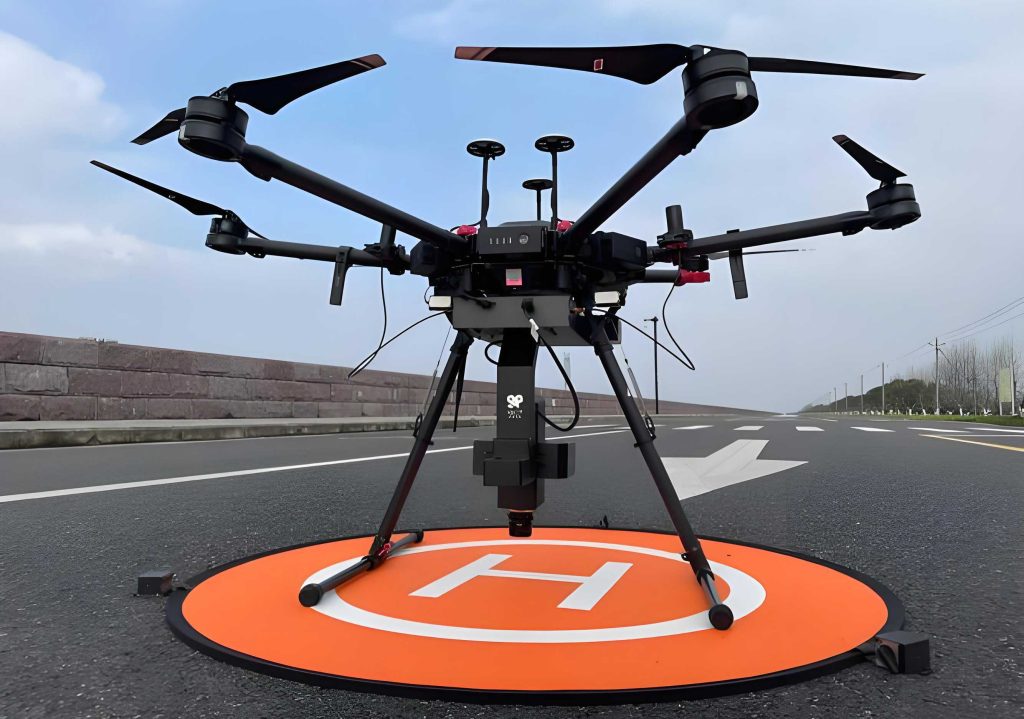
Technical Taxonomy of China Drone Platforms
The China drone market for plant protection is primarily categorized by wing configuration into three distinct types, each with unique aerodynamic principles and operational profiles.
1. Flapping-Wing (Ornithopter) Drones: These China drone models draw inspiration from biomimicry, mimicking the flapping motion of bird wings to generate lift and thrust. The oscillating wings produce aerodynamic forces for forward and upward motion, with directional control often managed by tail surfaces. The lift generation can be modeled by considering the unsteady aerodynamics of flapping wings. A simplified average lift force \( L_{fw} \) might be expressed as:
$$ L_{fw} = \frac{1}{2} \rho C_L(\alpha, f) A_{wing} V_{eff}^2 $$
where \( \rho \) is air density, \( C_L \) is a lift coefficient dependent on angle of attack \( \alpha \) and flapping frequency \( f \), \( A_{wing} \) is the wing area, and \( V_{eff} \) is the effective airflow velocity induced by flapping. While intriguing, this China drone variant remains less common in practical agriculture due to complexities in mechanical endurance and control.
2. Fixed-Wing Drones: These China drone units feature rigid, non-rotating wings. They require external assistance for launch, such as catapults or hand-throwing, and need a runway or specific recovery system (e.g., parachute, net) for landing. Their aerodynamic efficiency is high, enabling long endurance and coverage, but they cannot hover. The fundamental flight performance equation for a fixed-wing China drone in cruise can be related through the drag polar and power required:
$$ D = \frac{1}{2} \rho V^2 S C_D, \quad C_D = C_{D0} + K C_L^2 $$
$$ P_{req} = D \cdot V = \frac{1}{2} \rho V^3 S C_{D0} + \frac{2 K W^2}{\rho V S} $$
Here, \( D \) is drag, \( V \) is velocity, \( S \) is wing area, \( C_D \) is drag coefficient, \( C_{D0} \) is zero-lift drag coefficient, \( K \) is induced drag factor, \( C_L \) is lift coefficient, and \( W \) is weight. This China drone type excels in large, open fields.
3. Rotary-Wing Drones: This dominant category for China drone plant protection applications is subdivided into single-rotor and multi-rotor configurations. Single-rotor helicopters use one main rotor for lift and a tail rotor to counteract torque. They are predominantly fuel-powered (≈95%). Multi-rotor China drone systems, with four, six, eight, or more rotors, are electrically powered and have gained massive popularity. Their key advantage is vertical take-off and landing (VTOL) and precise hovering capability. The thrust \( T \) generated by a rotor can be approximated by momentum theory:
$$ T = 2 \rho A (\Omega R)^2 v_i $$
where \( A \) is rotor disk area, \( \Omega \) is angular speed, \( R \) is rotor radius, and \( v_i \) is induced velocity. For a multi-rotor China drone in hover, total thrust must equal weight: \( \sum_{i=1}^{N} T_i = W \). Their stability and control are achieved by differentially varying rotor speeds.
Table 2 provides a consolidated comparison of these China drone archetypes, highlighting their suitability for agricultural tasks.
| Drone Type | Propulsion & Control Mechanism | Key Advantages | Key Limitations | Typical Application Context in China |
|---|---|---|---|---|
| Flapping-Wing | Oscillating wings, tail for yaw | Biomimetic, potentially efficient at low Reynolds numbers | Mechanical complexity, low payload, limited maturity | Experimental/research stages |
| Fixed-Wing | Forward flight via fixed wings, elevator/aileron/rudder control | High speed, long endurance, large area coverage | Cannot hover, requires launch/recovery infrastructure | Large contiguous plains (Northeast China, Xinjiang) |
| Single-Rotor Helicopter | Main rotor + tail rotor, usually fuel engine | Good downwash effect, higher payload capacity than multi-rotors | Higher cost, complex maintenance, training intensive | Large farms where fuel logistics are viable |
| Multi-Rotor (e.g., Quadcopter) | Multiple fixed-pitch rotors, speed variation for control | VTOL, precise hovering, simple mechanics, ease of control | Limited flight time due to battery, lower payload relative to power | Predominant choice; versatile for small/medium fields, terraced hills |
Operational Advantages of the China Drone in Agriculture
The integration of China drone technology into plant protection confers multifaceted benefits, which I will quantify where possible.
1. Enhanced Application Efficacy: The China drone, especially rotary-wing models, operates at low altitudes (1-3 meters) and can hover. The rotor downwash creates a forced convection zone that improves droplet penetration into the crop canopy. This increases deposition uniformity and reduces drift. The effectiveness \( E \) can be conceptually tied to droplet deposition density \( \sigma_d \) and canopy penetration factor \( \phi \):
$$ E \propto \int_{0}^{T} \sigma_d(\vec{r}, t) \cdot \phi(\vec{r}, t) \, dA $$
where the integral is over the target area \( A \) and time \( T \). Field studies suggest the China drone can improve pesticide utilization by 30-50% compared to traditional methods.
2. Remarkable Operational Efficiency: The China drone dramatically outpaces manual labor. A typical multi-rotor plant protection China drone can cover 8-10 hectares (120-150 Chinese mu) per hour. Contrast this with manual knapsack spraying at about 0.1-0.2 hectares per hour. The efficiency multiplier \( M_{eff} \) is:
$$ M_{eff} = \frac{R_{drone}}{R_{manual}} \approx \frac{9 \, \text{ha/hr}}{0.15 \, \text{ha/hr}} = 60 $$
This hundred-fold efficiency gain (as often cited) alleviates acute rural labor shortages and enables timely interventions.
3. Economic and Safety Benefits: The China drone reduces direct human contact with pesticides, virtually eliminating poisoning risks for operators. The economic model includes savings on labor costs \( C_L \), pesticide costs \( C_P \) (due to reduced volume), and potential yield loss prevention \( Y \). The net benefit \( NB \) per unit area over a season might be:
$$ NB = \Delta Y \cdot P_y + (C_{L,manual} – C_{L,drone}) + (C_{P,manual} – C_{P,drone}) – C_{drone,op} $$
where \( P_y \) is crop price, and \( C_{drone,op} \) includes ownership/leasing, maintenance, and battery costs. The safety benefit, while non-monetary, is paramount for sustainable agriculture.
4. Accessibility and Terrain Versatility: The China drone, particularly multi-rotor VTOL systems, can access terraced fields, muddy plots, or uneven terrain where ground machinery is impractical. This expands the arable land that can be efficiently managed.
Systemic Constraints and Limiting Factors
Despite the promise, the China drone industry faces several intertwined constraints that moderate its adoption pace.
1. Cost and Affordability: The upfront purchase price of a capable agricultural China drone ranges from tens to hundreds of thousands of RMB. For the average Chinese farmer with limited capital, this is prohibitive. The leasing market is emerging but needs scale. The cost barrier can be expressed through an adoption rate model \( A(t) \):
$$ \frac{dA}{dt} = k \cdot (C_{max} – C(t)) \cdot A(t) \cdot (1 – \frac{A(t)}{N}) $$
where \( C(t) \) is the effective cost to the farmer (purchase or lease), \( C_{max} \) is a cost threshold, \( k \) is a diffusion constant, and \( N \) is the total potential adopters. Government subsidies and competitive leasing markets are crucial to drive \( C(t) \) down.
2. Payload Capacity and Flight Time: Payload \( m_{payload} \) directly dictates operational sortie duration and area covered per battery charge. For electric multi-rotor China drone, the fundamental energy constraint links battery energy density \( E_{bat} \) (Wh/kg), total mass \( m_{total} \), and hover time \( t_{hover} \):
$$ t_{hover} \approx \frac{\eta \cdot E_{bat} \cdot m_{bat}}{P_{hover}} $$
where \( \eta \) is overall powertrain efficiency, \( m_{bat} \) is battery mass, and \( P_{hover} \) is power required to hover, which scales as \( P_{hover} \propto \frac{(m_{total})^{3/2}}{\sqrt{2 \rho A}} \) under ideal conditions. Increasing \( m_{payload} \) increases \( m_{total} \), which disproportionately reduces \( t_{hover} \). This trade-off is a core engineering challenge for the China drone.
3. Battery Technology: As highlighted, battery specific energy is the pivotal bottleneck. State-of-the-art lithium-polymer batteries offer about 200-250 Wh/kg. For a China drone with a total mass of 25 kg (including 5 kg payload and 5 kg battery), the theoretical hover time is limited. Breakthroughs in battery chemistry (e.g., solid-state, lithium-sulfur) are eagerly anticipated. The progress in battery energy density \( E_{bat}(t) \) can be modeled as a technological learning curve:
$$ E_{bat}(t) = E_0 \cdot e^{\lambda t} $$
where \( \lambda \) is the growth rate. Accelerating \( \lambda \) is vital for the China drone industry.
4. Regulatory and Airspace Management: Clear, standardized regulations for low-altitude flight operations, pilot certification, and spray drift management are still evolving. Regulatory uncertainty can hinder commercial service expansion.
5. Service and Support Infrastructure: The ecosystem for China drone maintenance, repair, battery swapping stations, and skilled pilot training is underdeveloped in rural areas, affecting reliability and uptime.
To synthesize these constraints, Table 3 ranks and summarizes the key limiting factors for the China drone sector.
| Constraint Factor | Relative Severity (High/Medium/Low) | Primary Impact Dimension | Potential Mitigation Strategies |
|---|---|---|---|
| High Initial Cost / Affordability | High | Economic / Market Penetration | Subsidies, leasing models, cooperative ownership, mass production |
| Battery Energy Density & Flight Time | High | Technical / Operational Efficiency | R&D in advanced batteries, fast-charging networks, hybrid power systems |
| Payload Capacity | Medium-High | Technical / Operational Scope | Lightweight composite materials, optimized aerodynamic design, structural innovation |
| Regulatory Framework | Medium | Institutional / Market Certainty | Swift formulation of national UAV operation standards and licensing protocols |
| After-sales Service & Support | Medium | Operational / Reliability | Develop dealer networks, mobile service units, online support platforms |
| Farmer Awareness & Training | Medium | Human Capital / Adoption | Demonstration projects, simplified controls, government-led training programs |
Future Trajectories and Strategic Directions
Reflecting on the current landscape, the future of the China drone industry hinges on strategic choices and sustained innovation. I perceive several critical pathways.
1. Technological Diversification and Specialization: The China drone market should not seek a one-size-fits-all solution. Instead, a diversified portfolio matched to topography is optimal. We can formalize this with a terrain-drone matching function. Let terrain complexity index \( \tau \) range from 0 (flat plains) to 1 (highly fragmented hills). The recommended China drone type \( D_{rec} \) could be:
$$
D_{rec}(\tau) =
\begin{cases}
\text{Fixed-wing or Fuel Single-rotor} & \text{if } \tau \leq 0.2 \\
\text{Multi-rotor (Large Battery)} & \text{if } 0.2 < \tau \leq 0.6 \\
\text{Multi-rotor (Lightweight, Agile)} & \text{if } \tau > 0.6
\end{cases}
$$
This ensures appropriate technology deployment across the vast and varied Chinese countryside.
2. Core Technology Indigenization: Reducing dependency on imported components (e.g., high-performance motors, flight controllers, sensors) is vital for the China drone supply chain security and cost reduction. Investment in domestic R&D for these subsystems should follow a concentrated resource allocation model. If \( I_i \) is investment in subsystem \( i \), and its performance contribution to overall China drone capability is \( w_i \), the goal is to maximize a utility function \( U = \sum w_i \cdot \log(1 + \beta_i I_i) \) subject to a total budget constraint \( \sum I_i = B \).
3. Business Model Innovation: Beyond sales, “Drone-as-a-Service” (DaaS) models where service providers own and operate China drone fleets can lower farmer entry barriers. The service pricing \( P_{service} \) per unit area could be dynamically optimized based on demand density \( \rho_{demand} \), distance \( d \), and urgency \( u \):
$$ P_{service} = C_{base} + \alpha \cdot \frac{1}{\rho_{demand}} + \gamma \cdot d + \delta \cdot u $$
where \( C_{base} \) covers operational costs, and parameters \( \alpha, \gamma, \delta \) are calibrated.
4. Integration with Precision Agriculture: The China drone should evolve from a mere sprayer to a data acquisition and analysis node. Equipped with multispectral or hyperspectral cameras, it can collect data for normalized difference vegetation index (NDVI) maps, guiding variable-rate application. The information value \( V_{info} \) from such a China drone scouting flight can be quantified by the reduction in uncertainty about crop health status, potentially leading to optimized input use.
5. Policy and Standardization Drive: The government’s role in shaping a conducive environment is undeniable. Policies should encourage innovation while ensuring safety and environmental protection. A policy effectiveness score \( S_{policy} \) could be tracked, incorporating metrics like annual China drone adoption growth rate, incident rates, and farmer satisfaction indices.
Looking ahead, the vision for the China drone industry is ambitious but attainable. Within a decade, China has the potential to become the world’s largest producer and consumer of agricultural drones. The convergence of technological advances, business model evolution, and supportive policies can propel the China drone from a novel tool to a mainstream pillar of agricultural modernization. This will not only boost food security and farmer welfare but also position China as a global leader in this transformative technology domain. The journey of the China drone is a microcosm of China’s broader technological ascent, embodying both the challenges of innovation diffusion and the immense rewards of persistent, targeted effort.
In conclusion, my analysis affirms that the China drone sector, particularly in plant protection, stands at a dynamic inflection point. While lagging behind pioneers like Japan and the U.S. in maturity, the sheer scale of China’s agricultural need and its manufacturing prowess create a unique opportunity for accelerated catch-up and leapfrogging. By systematically addressing the constraints through engineering, economic, and policy lenses, the China drone ecosystem can achieve healthy, robust, and high-speed development. This will significantly contribute to realizing a modern, efficient, and sustainable agricultural system for the nation. The skies above China’s fields are poised to become busier and smarter, bearing witness to the silent revolution orchestrated by the ubiquitous China drone.