
In the era of deep mediatization, digital platforms have fundamentally transformed the mechanisms and possibilities for regional cultural expression to reach a global audience. The practice is evolving from traditional “cross-cultural” dissemination, often mediated by official channels, towards a more organic, networked, and participatory “trans-cultural” flow. This shift is driven by the very architecture and logic of platforms. While existing research on city branding and international communication has extensively documented strategic frameworks and symbolic representations, there remains a significant gap in revealing how platform mechanisms—their algorithms, affordances, and socio-technical ecosystems—synergistically drive this process. The viral global spread of short videos featuring Chongqing’s drone light shows on platforms like TikTok serves as a quintessential case for examining this paradigm. This phenomenon is not merely about a technologically spectacular event; it represents a complex process where a regional cultural “script” is translated, amplified, and re-embedded into global digital flows, ultimately constructing a potent cultural IP. This study, therefore, asks: how does a digital platform empower the generation and global diffusion of a regional cultural IP? What is the underlying media logic? And what dynamic mechanisms does it reveal?
To answer these questions, this analysis employs a multi-method approach. We collected and analyzed 34,673 valid user comments from 24 highly circulated TikTok short videos documenting Chongqing’s drone light shows. The methodology integrated Python-based textual analysis for keyword extraction and sentiment analysis, Latent Dirichlet Allocation (LDA) topic modeling to identify core audience perception themes, and grounded theory coding to inductively construct a dynamic model of cultural IP generation and diffusion.
I. Theoretical Framework: Cultural IP and the Composite Logic of the Platform Society
The concept of Cultural Intellectual Property (Cultural IP) provides a crucial lens. It refers to a distinctive cultural product formed through mediatization processes, characterized by unique cultural genes, brand essence, and creative transformation that carries intellectual property value. In the platform era, a successful Cultural IP exhibits high recognizability, inherent traffic (audience pull), strong penetration and monetization capabilities, a long lifecycle, and, crucially, the power to generate emotional resonance. It becomes a focal point for aggregating quality content, enabling multi-platform distribution, and facilitating secondary development. The drone light show of Chongqing, in this context, is not just a performance but the core of an emerging Cultural IP that aggregates the city’s imagery, technological prowess, and cultural symbols.
Understanding its propagation requires analyzing the “media logic” at play. In the context of the platform society, this logic is not monolithic but a composite of three intertwined dimensions:
- The Narrative Logic of Transmedia Translation: Platforms enable a city’s deep-seated “cultural script”—its historical, geographical, and social narratives—to be extracted, simplified, and reconfigured into culturally commensurate symbols. These symbols then travel across multiple media platforms (short videos, live streams, social media posts), with each platform contributing to a richer, networked storyworld. The logic here is one of connection and expansion.
- The Datafied Logic of Emotional Consumption: Platforms, as attention economies, meticulously capture, quantify, and operationalize user emotions. Algorithms detect emotional cues (through comments, shares, watch time) and feed content that maximizes engagement. Emotion becomes a form of capital—collected as data, analyzed for patterns, and leveraged to predict and guide user behavior. This creates an “affective economy” where emotional resonance directly fuels visibility and value creation.
- The Algorithmic Logic of Content Visibility: This is the infrastructural bedrock. Platform algorithms, governed by data and code, determine what is seen, by whom, and when. Visibility is not neutral but engineered through recommendation systems, trending tags, and creator incentives. This logic reconstructs the power dynamics of cultural production and distribution, making platform rules a primary force in shaping which cultural expressions “go global.”
The core argument is that the “going global” of Chongqing’s drone spectacle is driven by the synergistic operation of this techno-cultural composite logic: narrative elements are transmediated for platform consumption, which triggers datafied emotional responses, which in turn are amplified and disseminated by algorithmic systems, creating a feedback loop that propels the cultural IP across borders.
II. Decoding the Cross-Cultural Reception: Audience Perceptions of the Chongqing Drone Light Show IP
Our empirical analysis of TikTok comments reveals how overseas audiences decode and engage with this nascent Cultural IP, providing evidence for the composite logic described above.
A. Keyword and Sentiment Analysis: The Surface of Resonance
Textual analysis of comments highlights the primary signifiers associated with the drone light show. High-frequency keywords include: China, drones, amazing, beautiful, technology, magical, love, Chongqing, future, cool. This lexicon bridges the specific event (“drones”), the location (“Chongqing”), elevated emotional affect (“amazing,” “love”), and broader attributions to national capability (“China,” “technology”). The sentiment analysis further confirms a strongly positive reception, with approximately 39.8% of comments expressing clear positive sentiment, 49.5% being neutral (often descriptive or comparative), and only 10.7% expressing negative views (typically focused on technical or environmental concerns like noise or light pollution).
This demonstrates the initial success of the narrative translation: complex regional attributes are successfully condensed into positive, emotionally charged, and platform-friendly markers like “magical” and “technological.” The low percentage of negative sentiment suggests the narrative framing effectively minimizes cognitive friction for a global audience.
B. Thematic Modeling (LDA): Layered Audience Cognition
LDA topic modeling uncovered six coherent themes within the comment corpus, which can be categorized into Influencing Factors (how the platformed content affects perception) and Value Orientations (the deeper cognitive and axiological outcomes).
| Topic No. | Topic Name (Audience Perception) | Representative Keywords |
|---|---|---|
| 1 | Media Technology & Meaning (Influencing Factor) | drones, technology, fireworks, show, light, tech, swarm, sky, future, advanced |
| 2 | Positive Affect & Cultural Affinity (Influencing Factor) | amazing, beautiful, love, cool, awesome, great, fantastic, incredible, impressive |
| 3 | Image Display & Tourism Appeal (Influencing Factor) | China, Chongqing, city, visit, place, world, live, welcome, Beijing |
| 4 | International Comparison & Cultural Cognition (Value Orientation) | America, Germany, Chinese, Japan, Europe, country, vs, compared to |
| 5 | Economic Visibility & Value Assessment (Value Orientation) | money, investment, economy, development, cost, rich, business, infrastructure |
| 6 | Critical Perspectives & Concerns (Value Orientation) | pollution, noise, crazy, fake, waste, distraction |
The progression from Topics 1-3 to 4-6 illustrates the value chain of the Cultural IP. The platform delivers a technologically wondrous and emotionally positive spectacle (Factors), which then prompts audiences to engage in comparative cultural framing (“China is leading in this”), assess socio-economic implications (“this shows development”), and even voice critiques. This movement from sensory/emotional reaction to cognitive evaluation and value attribution is core to the IP’s depth and impact.
C. Grounded Analysis: The Dynamic Model of Cultural IP Generation and “Going Global”
Through inductive coding of comment texts, we identified four core selective coding dimensions that interact to form the Cultural IP. The relationships between these dimensions can be expressed as a dynamic model:
Let \( IP \) represent the Cultural IP. Its generation and strength are a function of its constitutive dimensions:
$$ IP = f(S, T, N, V) $$
Where:
- \( S \): Spatio-Temporal Attributes – The historical and geographical “cultural script” (e.g., Chongqing’s mountain-river topography, wartime history, modern rapid development).
- \( T \): Symbolic & Textual Attributes – The signs and narratives extracted and presented (e.g., drones forming a dragon, hotpot, mountain city skyline, light patterns of the Chaotianmen bridge).
- \( N \): Technological & Platform Attributes – The affordances of the platform (algorithmic recommendation, short-video format, interactive features) that mediate \( S \) and \( T \).
- \( V \): Value Orientation & Extension – The perceived and actualized value generated, from emotional resonance and image building to tourism and economic interest.
The model posits that the platform’s technological attributes (\( N \)) act as the crucial mediator and amplifier. It transforms the spatio-temporal and symbolic attributes (\( S + T \)) into a platform-optimized cultural product, which then generates multifaceted value (\( V \)). This value, particularly in the form of data (engagement metrics, sentiment), feeds back into the platform system (\( N \)), further optimizing the cycle. The process can be visualized as follows:
$$ S + T \xrightarrow[N]{\text{Transmediation}} IP_{platform} \rightarrow V (Emotion, Image, Action) \xrightarrow[Data]{\text{Feedback}} N’ $$
Here, \( N’ \) represents the algorithm refined by the data generated from the value outcomes. This creates a virtuous (or potentially vicious) cycle for the Cultural IP’s propagation.
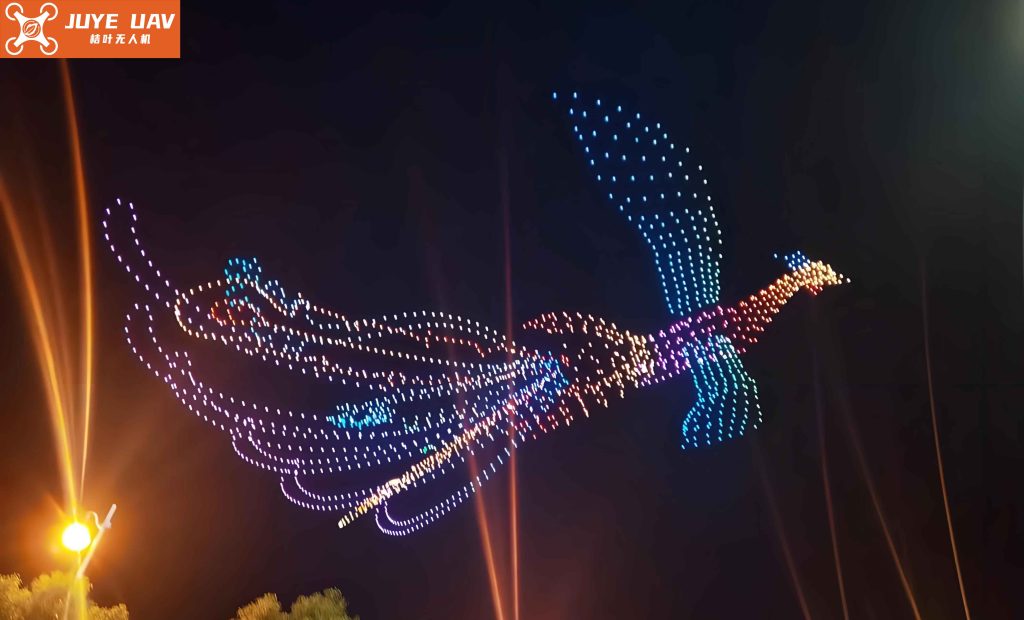
The image above perfectly encapsulates the \( T \) (Symbolic Attributes) and their mediation through \( N \) (Platform Attributes). The spectacular visual of the synchronized drone light show over a iconic urban landscape is a narrative translated for maximum visual impact, designed to be captured and shared via mobile short videos, thus triggering the value (\( V \)) of awe and shareability.
III. Findings: The Tripartite Media Logic of Cultural IP Generation and Diffusion
A. The Content Engine: The Narrative Logic of Visual Spectacle and Transmedia Translation
The drone light show serves as a perfect “content engine” for platforms. Its inherent characteristics align with platform logics:
- Visual Spectacle: Thousands of drones creating intricate, animated images against the night sky provide a ready-made, breathtaking visual that requires no linguistic translation. It fulfills the platform’s demand for “spectacle” that instantly grabs attention.
- Transmedia Storytelling: The core spectacle is a blank canvas for narrative attachment. The drones can form a giant panda, a Chinese dragon, a map of the Belt and Road, or the city’s flower, the camellia. Each formation connects the technological display (\( T \)) to a deeper cultural or geographical script (\( S \))—from ecological awareness to historical mythology to modern diplomacy. This allows the same core event to generate countless derivative narrative fragments (short videos, GIFs, photos) across platforms.
- Format Optimization: The event is perfectly suited for short-video formats: it’s dynamic, has a clear climax, and fits with popular music tracks. User-generated content (UGC) from attendees, using smartphone filters and cinematic angles, further democratizes the narrative production, enriching the transmedia storyworld.
This narrative logic is powerful but carries the risk of reductionism. The depth of the cultural script (\( S \)) can be sacrificed for the immediacy of the visual spectacle (\( T \)), leading to a “McDonaldization” of culture where only the most instantly recognizable and emotionally stimulating symbols survive.
B. The Kinetic Element: The Datafied Logic of Emotional Consumption
Emotion is the currency that fuels the platform’s dissemination engine. The drone light show is expertly engineered to produce high-arousal emotional responses: awe, pride, wonder, joy. These emotions are not incidental; they are the target.
- Emotion as Data: Comments like “This is breathtaking!” or “I love China!” are not just expressions; they are quantifiable data points. Natural Language Processing (NLP) algorithms categorize these as strong positive sentiment.
- Algorithmic Amplification: Content that triggers such high-engagement emotions is prioritized by recommendation algorithms. The system learns that the drone light show cluster generates shares, likes, and long watch times, and thus promotes it to wider, like-minded circles, creating emotional contagion within networked publics.
- From Affect to Action: This curated emotional journey is designed to convert into tangible value (\( V \)). The awe transforms into a desire to “visit Chongqing” (tourism value). The pride in Chinese technology morphs into positive national image building (soft power value). The emotional investment turns audiences into prosumers—both consuming and promoting the IP.
The danger here is the creation of an “affective filter bubble” or “emotional chrysalis.” Algorithms may endlessly feed users similar spectacular content, saturating them with superficial awe while discouraging deeper, more critical or nuanced engagement with the underlying culture.
C. The Foundational Force: The Algorithmic Logic of Engineered Visibility
Ultimately, the scale of diffusion is governed by the black box of algorithmic visibility. The drone light show‘s success on TikTok is a testament to its alignment with this logic.
- Optimization for Discovery: Creators and promoters use hashtags like #DroneShow, #ChinaTech, #Chongqing, #AerialPhotography. These act as metadata signals that help the algorithm categorize and route the content to interested user clusters.
- The Virality Formula: The content inherently possesses key virality metrics: Novelty (a massive synchronized swarm), Visual Complexity, and Emotional Appeal. The algorithm detects rapid early engagement (high velocity of likes/comments/shares) and catapults the video into broader recommendation feeds, creating a snowball effect.
- Platformed Cultural Production: The very planning of the event may now incorporate platform logic. The formations are designed to be “shareable.” The timing might consider peak platform activity hours. The event becomes a “platform-native” phenomenon from its inception.
This logic grants immense power to platforms as cultural gatekeepers. It can lead to a homogenization of visible cultural exports—only forms that fit the algorithmic preference for spectacle, novelty, and high-emotion engagement achieve massive global reach. This risks creating a new kind of “algorithmic cage” where diverse, subtle, or non-spectacular cultural expressions remain invisible on the global stage.
IV. Conclusion: Towards a Techno-Cultural Paradigm for Regional Cultural Globalization
The case of Chongqing’s drone light show “going global” illuminates a new paradigm for regional cultural diffusion in the platform society. It moves beyond traditional, sender-receiver models of international communication to reveal a complex, recursive system governed by a techno-cultural composite logic. This logic is characterized by the synergistic operation of:
- Narrative Transmediation for platform compatibility.
- Emotional Consumption as a datafied driver.
- Algorithmic Engineering of visibility and reach.
These three forces interact dynamically, as modeled in the function \( IP = f(S, T, N, V) \), to generate and propel a cultural IP across borders, converting online resonance into offline value like tourism and investment.
This paradigm offers both opportunities and significant risks. The opportunity lies in the democratizing potential for regions to craft and share their narratives on a global stage, bypassing traditional media gatekeepers. The risks involve cultural flattening (“McDonaldization”), the manipulation of emotional engagement, and an over-reliance on opaque algorithmic systems that may privilege certain cultural forms over others.
Future strategies for cultural “going global” must navigate this new landscape thoughtfully:
- Narrative Deepening: Move beyond spectacle to embed richer, more contextual stories within platform-optimized formats.
- Ethical Algorithmic Stewardship: Advocate for transparency and diversity in platform recommendation systems to ensure a wider range of cultural expressions gain visibility.
- Collaborative Governance: Foster collaboration between cultural creators, platform companies, and policymakers to develop frameworks that support sustainable and authentic cultural exchange.
In conclusion, the platform does not merely transmit culture; it actively shapes its form, channels its emotional resonance, and governs its global visibility. Understanding this composite media logic is essential for any region aiming to share its story with the world in the digital age. The soaring lights of Chongqing’s drones are not just in the sky; they are meticulously orchestrated within the coded architectures of the platform society, illuminating a new pathway for cultural globalization.