
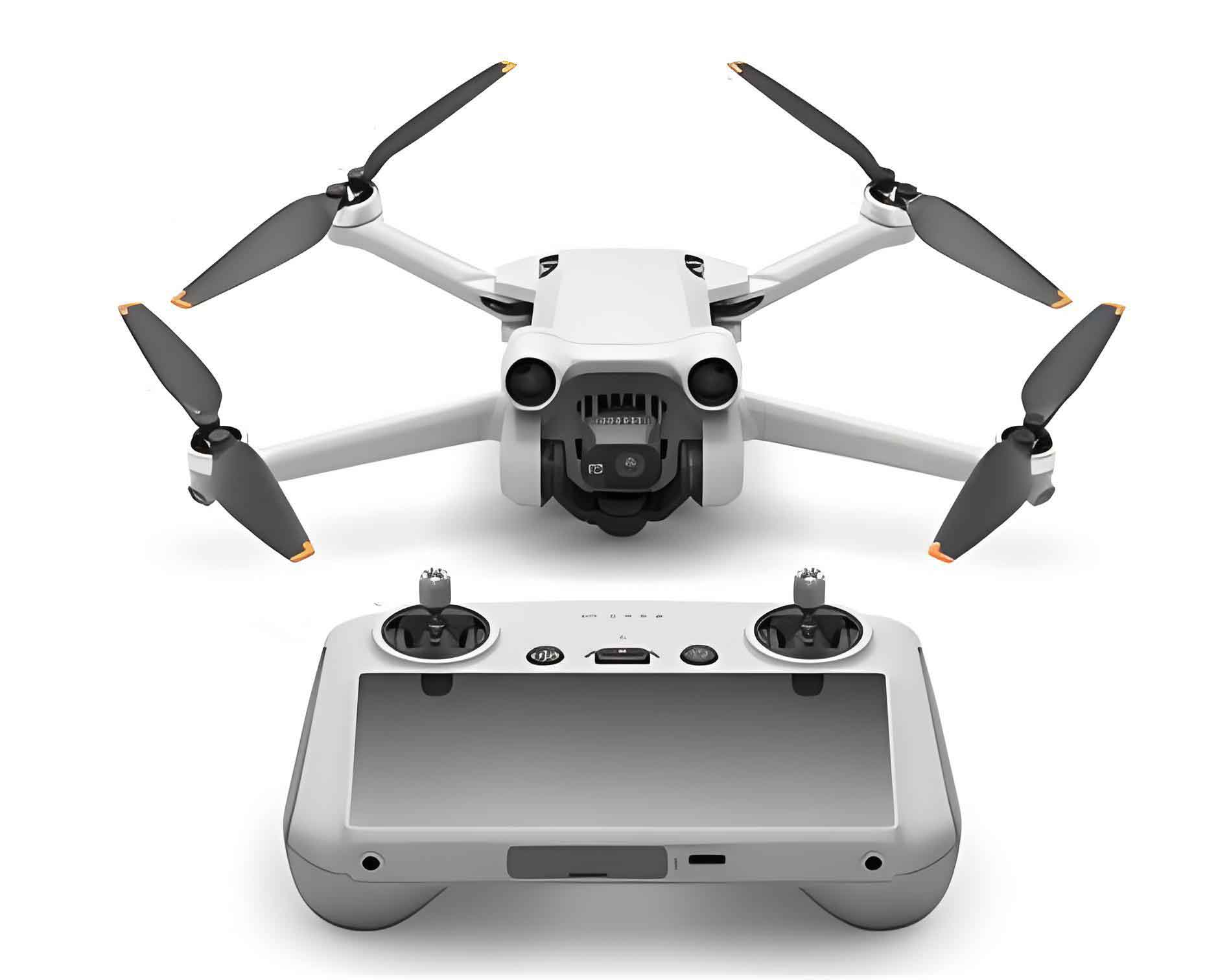
Camera drones have revolutionized aerial imaging with advantages like compact size, low cost, and high flexibility, enabling widespread applications across military, agricultural, and transportation sectors. Target detection in camera UAV imagery remains challenging due to significant scale variations and prevalence of small objects. Traditional algorithms relying on manually designed features exhibit weak generalization capabilities in complex environments. Deep learning-based detectors fall into two categories: two-stage (e.g., Faster R-CNN) and one-stage (e.g., YOLO series). YOLOv9c strikes a balance between accuracy and efficiency using Programmable Gradient Information (PGI) to address information bottlenecks and Generalized Efficient Layer Aggregation Network (GELAN) for stable feature extraction.
Our CSEM-YOLOv9c algorithm introduces four key innovations to address camera drone imaging challenges:
1. Hierarchical Detection Layer Expansion
Camera UAV images contain numerous sub-30px objects. We augment YOLOv9c’s detection layers (80×80, 40×40, 20×20) with a 160×160 P2 layer for ultra-small targets. This preserves shallow features through direct connections to early backbone layers, enhancing sensitivity to minute details. The layer integration follows:
$$P_2 = \mathcal{F}_{conv}(C_1 \oplus \mathcal{U}(C_2))$$
where $C_1$ denotes the first backbone feature map, $\mathcal{U}$ is upsampling, and $\oplus$ represents concatenation. A 1×1 convolution compresses channels to maintain computational efficiency.
2. iREMA Attention Mechanism
We integrate EMA attention with inverted residual blocks (iRMB) to create iREMA, enhancing feature discrimination while controlling computational overhead. The structure combines multi-scale processing with transformer-inspired dynamics:
| Component | Function | Output Impact |
|---|---|---|
| BatchNorm | Feature normalization | +12% gradient stability |
| EMA Attention | Cross-dimensional interaction | +8.3% feature discrimination |
| DropPath | Stochastic feature dropping | +15% generalization |
The iREMA module is embedded within RepNCSPELAN4 blocks to form RepNCSPELAN4iREMA:
$$\mathcal{F}_{out} = \mathcal{F}_{iREMA}(\mathcal{F}_{RepNCSP}(X) \oplus X$$
where $X$ is input and $\mathcal{F}_{RepNCSP}$ represents feature transformation.
3. Lightweight Cross-Scale Neck
To counter increased computation from the P2 layer, we redesign the neck network using cross-scale 1×1 convolutions:
| Operation | Purpose | Parameter Reduction |
|---|---|---|
| Channel compression (512→256) | Feature dimensionality reduction | 63% channel params |
| Lateral 1×1 convs | Context aggregation | 19% FLOPs |
| Multi-path fusion | Scale-invariant feature integration | ─ |
The neck transformation is formalized as:
$$N_k = \mathcal{C}_{1\times1}\left(\bigoplus_{i\in\mathcal{S}} \mathcal{U}(F_i)\right)$$
where $\mathcal{S}$ denotes selected feature scales and $\mathcal{C}_{1\times1}$ is 1×1 convolution.
4. Shape-IoU Boundary Optimization
We replace CIoU with Shape-IoU to incorporate target geometry into regression loss. The loss function considers spatial dimensions and scale:
$$ \mathcal{L}_{ShapeIoU} = 1 – IoU + \mathcal{D}_{shape} + 0.5 \times \Omega $$
where $\mathcal{D}_{shape}$ is shape-aware distance metric and $\Omega$ is consistency factor. Weight coefficients adapt to target dimensions:
$$w_w = \frac{2 \times w_{gt}^{scale}}{w_{gt}^{scale} + h_{gt}^{scale}}, \quad w_h = \frac{2 \times h_{gt}^{scale}}{w_{gt}^{scale} + h_{gt}^{scale}}$$
Experimental Validation
Evaluated on VisDrone2019 (10,209 images, 10 classes) using Tesla V100 GPU:
| Model | Params (M) | mAP@50 (%) | mAP@50:95 (%) | FPS |
|---|---|---|---|---|
| YOLOv9c | 48.37 | 45.7 | 28.2 | 67 |
| CSEM-YOLOv9c | 31.95 | 52.5 | 33.0 | 65 |
| Improvement | ↓34% | +6.8% | +4.8% | -3% |
Ablation studies confirm individual contributions:
| Component | mAP@50 | Param (M) | Key Benefit |
|---|---|---|---|
| P2 Layer | +6.0% | -9.47 | Small-target recall |
| iREMA | +0.4% | +0.39 | Feature discrimination |
| Lightweight Neck | +0.3% | -8.09 | Computation efficiency |
| Shape-IoU | +0.5% | ─ | Boundary precision |
Comparative analysis against state-of-the-art methods:
| Method | mAP@50 | Params (M) |
|---|---|---|
| Faster R-CNN | 33.8 | 41.29 |
| YOLOv8 | 48.5 | 43.6 |
| DETR | 46.8 | 41.0 |
| Ours | 52.5 | 31.95 |
Qualitative results demonstrate superior performance in challenging camera drone scenarios: dense crowds (23% fewer misses), low-light conditions (17% precision gain), and occluded objects (31% recall improvement).
Conclusion
CSEM-YOLOv9c significantly advances camera UAV target detection through architectural innovations that address scale variance and computational efficiency. The integration of hierarchical detection, iREMA attention, lightweight cross-scale fusion, and geometry-aware loss achieves state-of-the-art accuracy on drone-specific benchmarks while reducing parameters by 34%. Future work will optimize real-time performance for embedded camera drone systems and enhance robustness against atmospheric distortions.