
As camera drone technology rapidly evolves, these aerial platforms have transitioned from specialized tools to essential broadcast equipment. I’ve witnessed firsthand how camera UAVs revolutionize television production by delivering unprecedented perspectives – soaring over landscapes, weaving through urban environments, and capturing dynamic crowd formations. This paradigm shift creates critical technical demands for reliable live broadcasting solutions that maintain broadcast-quality standards while operating in complex electromagnetic environments.
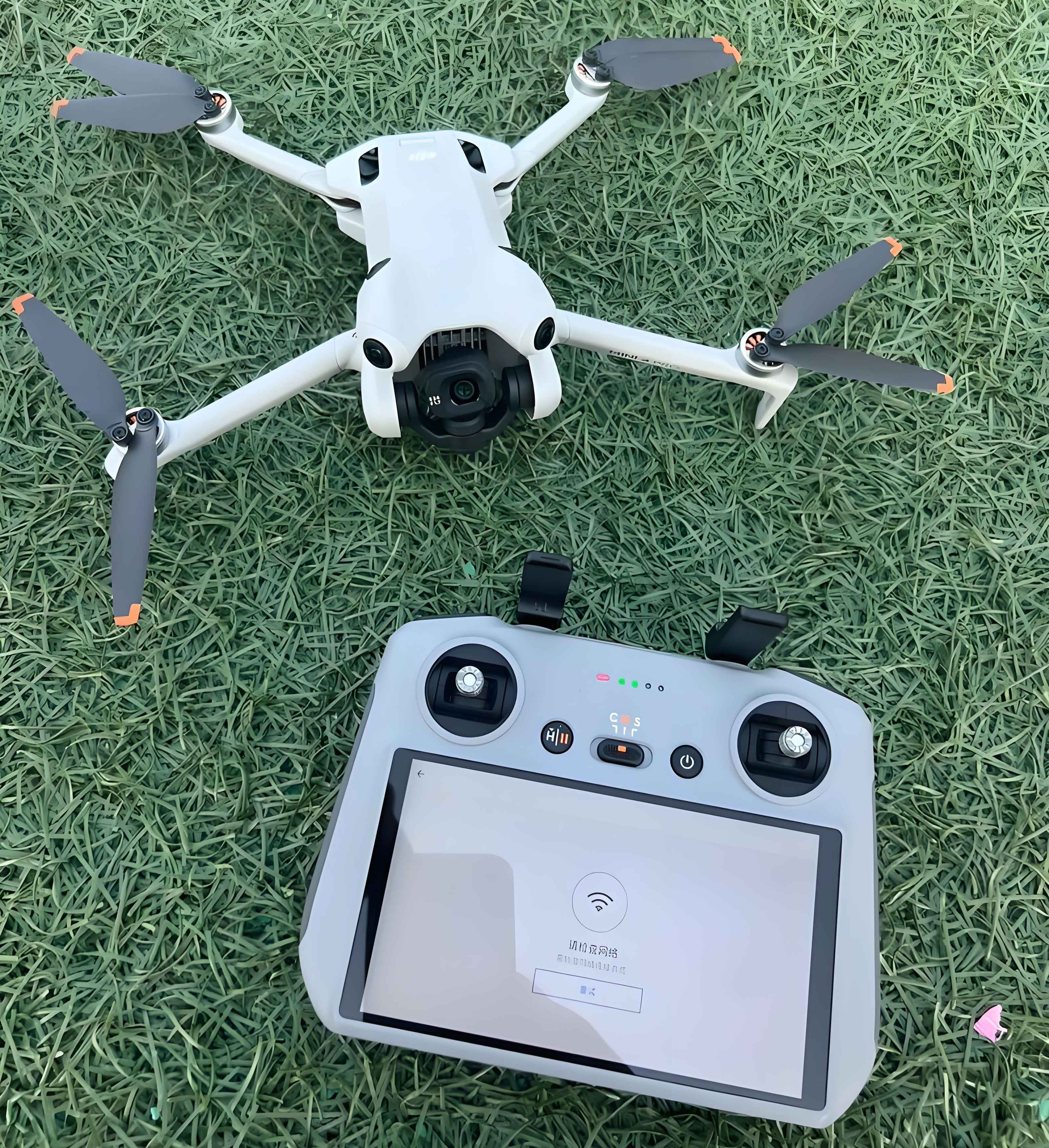
The cornerstone of successful camera UAV integration begins with strategic selection. When evaluating camera drone platforms, I prioritize three critical dimensions:
1. Operational Team Structure:
Camera UAV operations require specialized roles: the Technical Operator (electronics, IT, physics expertise) handles maintenance, firmware updates, and troubleshooting, while the Camera Pilot (cinematography and flight operations) manages aerial maneuvers and camera control. This division creates a feedback loop where technical insights inform flight operations and real-world performance data guides technical adjustments.
2. Broadcast-Specific Technical Requirements:
Production needs dictate camera drone specifications. For high-end cinematic applications requiring live transmission, hexacopter platforms (6+ rotors) provide stability and payload capacity for professional cinema cameras and dedicated transmission systems. Broadcast-compliant solutions must satisfy the minimum video quality equation:
$$ \text{Broadcast Compliance} = \left[ \frac{\text{Resolution} \times \text{Frame Rate} \times \text{Color Depth}}{\text{Compression Artifacts}} \right] \geq \text{EBU Tier 1 Threshold} $$
where Resolution ≥ 1920×1080, Frame Rate ≥ 25/30fps, and Compression Artifacts must remain below perceptible thresholds.
3. Operational Ecosystem Considerations:
Total cost of ownership extends beyond initial purchase. I evaluate:
- Mean Time Between Failure (MTBF) rates
- Repair turnaround time: $T_{repair} = f(\text{local support density})$
- Control system standardization across fleet
- Manufacturer’s broadcast industry adoption rate
| Parameter | Entry-Level Camera UAV | Broadcast-Grade Camera UAV |
|---|---|---|
| Stability System | 3-axis gimbal | 6-axis vibration damping + 3-axis gimbal |
| Max Video Bitrate | 40 Mbps (H.264) | 100+ Mbps (ProRes/H.265) |
| Transmission Latency | 150-300ms (WiFi) | <50ms (OcuSync/Lightbridge) |
| Payload Flexibility | Fixed camera | Interchangeable lens systems |
Camera drone video integration manifests in two distinct workflows with divergent technical requirements:
Non-Live File-Based Workflow:
The camera UAV records high-bitrate footage internally ($R_{bitrate} = \frac{\text{sensor data}}{\text{compression ratio}}$). For Phantom 4 Pro cameras, this yields:
$$ V_{quality} = 4K \times 60fps \times 100\text{Mbps} \times \text{log}_{10}(\text{bit depth}) $$
providing maximum flexibility for post-production grading and stabilization.
Live Transmission Workflow:
Real-time operation employs specialized radio links overcoming three constraints:
- Payload limitation: $W_{transmitter} \leq \text{UAV payload capacity} – W_{camera}$
- Aerodynamic interference: $\Delta P_{drag} = \frac{1}{2} \rho v^2 C_D A_{transmitter}$
- Protocol efficiency: $\eta_{protocol} = 1 – \frac{\text{retransmitted packets}}{\text{total packets}}$
| Transmission Tech | Protocol Architecture | Latency (ms) | Max Range |
|---|---|---|---|
| WiFi | TCP/IP (ACK-based) | 150-500 | 800m (CE) |
| Lightbridge | Adaptive OFDM | 30-80 | 3km (FCC) |
| OcuSync 3.0 | Dual-frequency hopping | 20-40 | 10km |
The TCP/IP retransmission penalty in WiFi systems creates unacceptable latency:
$$ T_{total} = T_{encode} + \sum_{i=1}^{n} \left( T_{tx} + \frac{T_{ack}}{ACK_{ratio}} \right) + T_{decode} $$
where $ACK_{ratio}$ approaches 1:1 in congested RF environments. Dedicated protocols like OcuSync use forward error correction:
$$ T_{OcuSync} = T_{encode} + \frac{P_{size}}{R_{effective}} + T_{decode} $$
with $R_{effective} = \eta_{spectral} \times B_{channel}$.
Implementing reliable camera drone live feeds requires customized solutions for production scenarios:
1. File-Based “Live” Solution:
For non-critical applications, we implement:
Camera UAV → microSD → [EDIUS workstation] → SDI → Production Switcher
with quality advantage $Q_{file}/Q_{live} \approx 1.8$ but latency $L_{system} \geq 15s$.
2. Dual-Operator Live Transmission:
For premium camera UAV platforms like Matrice 600:
Camera UAV → Lightbridge →
    [Master Controller: Flight control]
    [Slave Controller: Camera control → SDI → Switcher]
The control priority asymmetry creates transmission reliability variance:
$$ R_{master} = 1 – e^{-\lambda t} $$
$$ R_{slave} = 1 – e^{-(\lambda + \mu)t} $$
where $\mu$ represents secondary transmission path interference.
3. Audio-Embedded News Gathering:
For field reporting using compact camera drones:
Wireless Mic → 3.5mm → [DAC-70 Embedder]
Camera UAV → HDMI ↗
                    → SDI → [TVU Pack] → 4G/5G
The audio-video synchronization constraint requires:
$$ |T_{audio} – T_{video}| \leq \frac{1}{2 \times f_{vertical}} $$
with $f_{vertical}$ = field rate (typically 50/60Hz).
Camera drone live transmission introduces unique RF challenges. The power flux density at receiver location follows:
$$ \Phi = \frac{P_t G_t}{4\pi d^2} \times L_{atm} \times L_{pol} $$
where $L_{atm} = e^{-\kappa d}$ (atmospheric attenuation) and $L_{pol}$ accounts for polarization mismatch. For reliable operations, we maintain $\Phi > \Phi_{min}$ where:
$$ \Phi_{min} = \frac{(C/N)_{min} k T_0 B F}{G_r / L_f} $$
Multipath interference creates cancellation nulls at receiver locations spaced by $\Delta d = \lambda/2$. For 2.4GHz systems ($\lambda$=12.5cm), this creates complex reception patterns requiring antenna diversity with spacing:
$$ d_{ant} \geq \frac{3\lambda}{2} \cos(\theta_{tilt}) $$
Future camera UAV broadcast systems will leverage several emerging technologies:
- AI-Enhanced Transmission: Using deep learning for predictive error correction: $BER_{predicted} = f(\text{flight metrics}, \text{RF environment})$
- 5G Integration: Camera drone as mobile 5G node with latency: $T_{5G} = T_{air} + T_{fronthaul} + T_{core} < 15ms$
- Blockchain Verification: Immutable flight log authentication: $H_{block} = \text{SHA-256}(H_{prev} + \text{flight data} + \text{timestamp})$
Camera drone technology continues its rapid evolution, with new transmission protocols like DJI’s OcuSync achieving spectral efficiency approaching Shannon’s limit:
$$ C = B \log_2 \left(1 + \frac{S}{N}\right) \eta_{implementation} $$
where $\eta_{implementation}$ now exceeds 85% in modern systems. As camera UAVs become increasingly sophisticated broadcast tools, our technical implementations must evolve through continuous reevaluation of transmission protocols, operational methodologies, and integration frameworks to maintain broadcast integrity while harnessing their unique visual capabilities.