
The contemporary Chinese UAV sector is experiencing unprecedented growth, with camera drones demonstrating exceptional versatility across civilian domains including agricultural plant protection, aerial photography, disaster relief, and power line inspections. Despite this expansion, commercial camera UAVs exhibit two critical limitations:
- Inability to transmit real-time footage during aerial photography operations, significantly compromising operational efficiency
- Extremely limited flight durations (typically ≤15 minutes), creating substantial safety risks from potential mid-air power failures
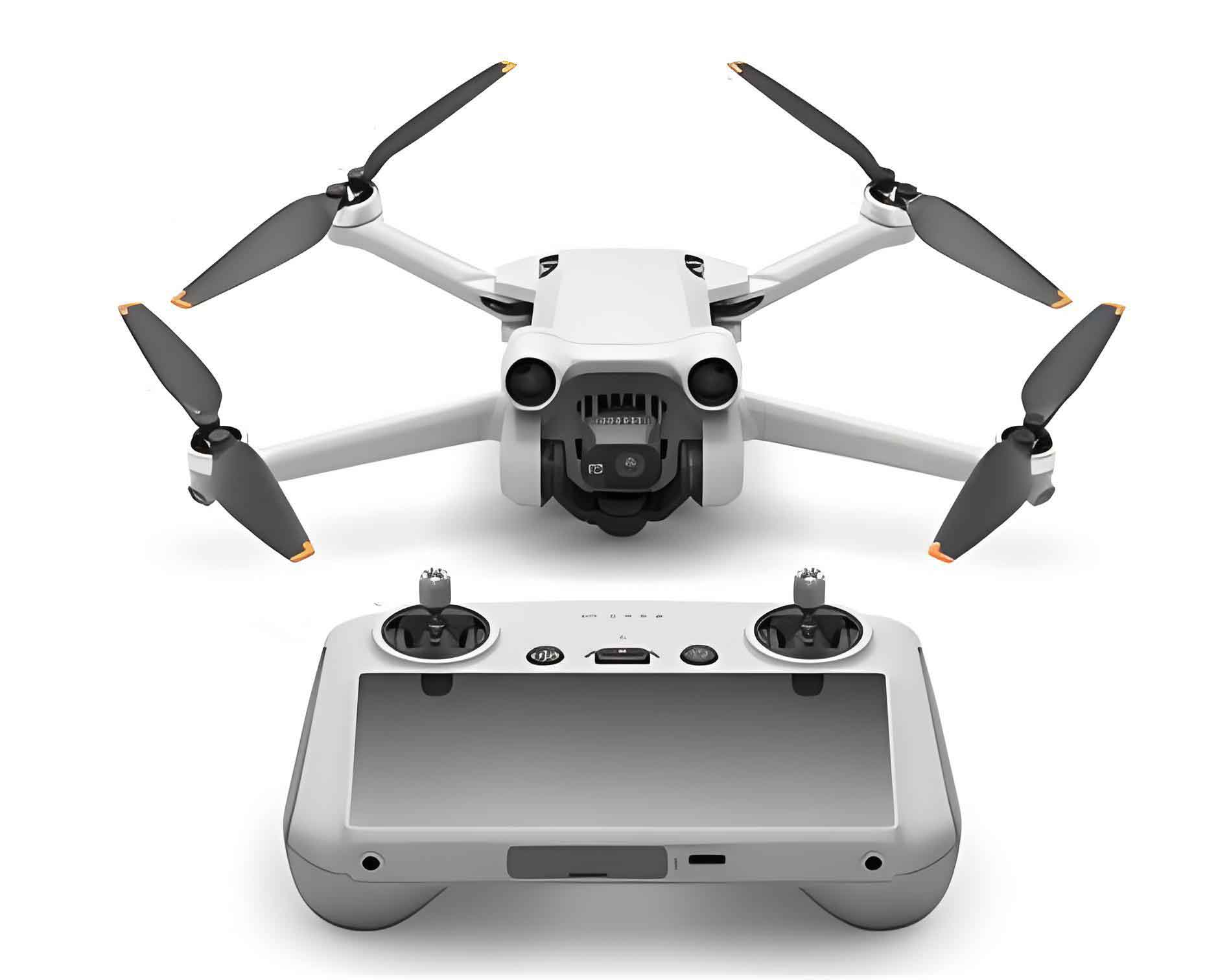
Design Architecture for Solar Camera UAVs
Our integrated solution employs these key technological innovations:
| System | Functionality | Technical Specification |
|---|---|---|
| Hybrid Power System | Solar-Lithium integration | Converts solar energy to DC current via photovoltaic cells |
| Energy Storage System | Power buffer mechanism | Stores surplus solar energy for operational deployment |
| Smartphone Control | Mobile flight management | WiFi-enabled trajectory planning & real-time telemetry |
Operational Workflow
Airframe Fabrication
Structural engineering prioritizes weight distribution and aerodynamic efficiency:
$$m_{frame} = \rho \cdot V_{composite} + \epsilon_{safety}$$
Where $\rho$ represents composite material density, $V_{composite}$ denotes structural volume, and $\epsilon_{safety}$ incorporates mechanical redundancy factors.
Electronics Integration
Critical subsystems include:
- Information acquisition module
- Brushless DC motors
- Electronic speed controllers
Power allocation follows the optimization principle:
$$P_{alloc} = \min\left(\sum_{i=1}^{n} P_{module_i}, \ 0.85 \cdot P_{max}\right)$$
Flight Testing Protocol
Iterative refinement process incorporating real-time parameter adjustment:
| Phase | Parameters Monitored | Acceptance Threshold |
|---|---|---|
| Stability | Roll/pitch/yaw variance | ≤ ±2.5° |
| Power Transfer | Solar→battery efficiency | ≥ 82% |
| Transmission | Video latency | ≤ 120ms |
Technical Core Parameters
Fundamental performance metrics for solar camera UAVs:
$$m = \frac{1}{2} \rho v^2 S C_t \quad \text{(Lift equation)}$$
$$F = D = \frac{mg}{k} \quad \text{(Thrust requirement)}$$
Energy balance equations govern continuous operation:
$$W_y = (P_d + P_z)t \quad \text{(Nocturnal energy)}$$
$$P_d = \frac{m v g}{k \eta_d} \quad \text{(Propulsion power)}$$
$$W_s = \frac{W_y}{\eta_{c}^2} + P(24 – t) \quad \text{(Solar requirement)}$$
Solar panel dimensioning follows:
$$S_t = \frac{W_s}{\pi P_t \eta_t (24 – t)}$$
| Symbol | Parameter | Unit |
|---|---|---|
| $m$ | Camera UAV mass | kg |
| $S$ | Wing area | m² |
| $\eta_d$ | Propulsion efficiency | – |
| $\eta_t$ | Solar conversion rate | – |
Control System Architecture
Advanced fuzzy-PID algorithms maintain stability during aerial photography:
$$u(t) = K_p e(t) + K_i \int_0^t e(\tau) d\tau + K_d \frac{de(t)}{dt} + \Phi_{fuzzy}(\Delta e)$$
Roll angle tracking demonstrates superior disturbance rejection:
Figure: Fuzzy PID roll angle tracking with wind disturbance at t=10s
Root-mean-square error analysis confirms controller efficacy:
Figure: Roll angle RMSE comparison
Energy Management System
Power architecture integrates multiple conversion stages:
| Component | Function | Efficiency Target |
|---|---|---|
| MPPT Circuit | Solar peak power tracking | ≥ 97% |
| DC-DC Converter | Voltage regulation | ≥ 93% |
| Battery Management | Charge/discharge control | ≥ 99% |
Optical isolation in MPPT circuits prevents ground loop interference during camera drone operations.
Innovation Analysis
This solar camera UAV implementation demonstrates:
- Sustainable Aviation: Solar supplementation extends flight duration by 40-60% while reducing carbon footprint
- Mobile Integration: Smartphone control platform enables intuitive operation with real-time HD video feedback
Concluding Perspectives
Solar-hybrid camera UAVs represent the convergence of ecological sustainability and technological advancement. As photovoltaic efficiency approaches 30% and composite materials achieve strength-to-weight ratios exceeding 5 GPa/(g/cm³), solar-powered camera drones will dominate extended-duration aerial imaging applications. The integration of mobile control platforms aligns perfectly with ubiquitous computing trends, positioning these camera UAVs as indispensable tools across industrial, agricultural, and emergency response domains.