
Visual line-of-sight (VLOS) camera drones represent a specialized category of unmanned aerial vehicles (UAVs) designed for aerial photography, videography, and reconnaissance missions within direct visual range. These camera UAVs integrate propulsion systems, stabilization technology, and imaging payloads while eliminating traditional cockpit structures. This research focuses on developing a hexacopter configuration camera drone optimized for stability, flight duration, and high-resolution imaging capabilities.
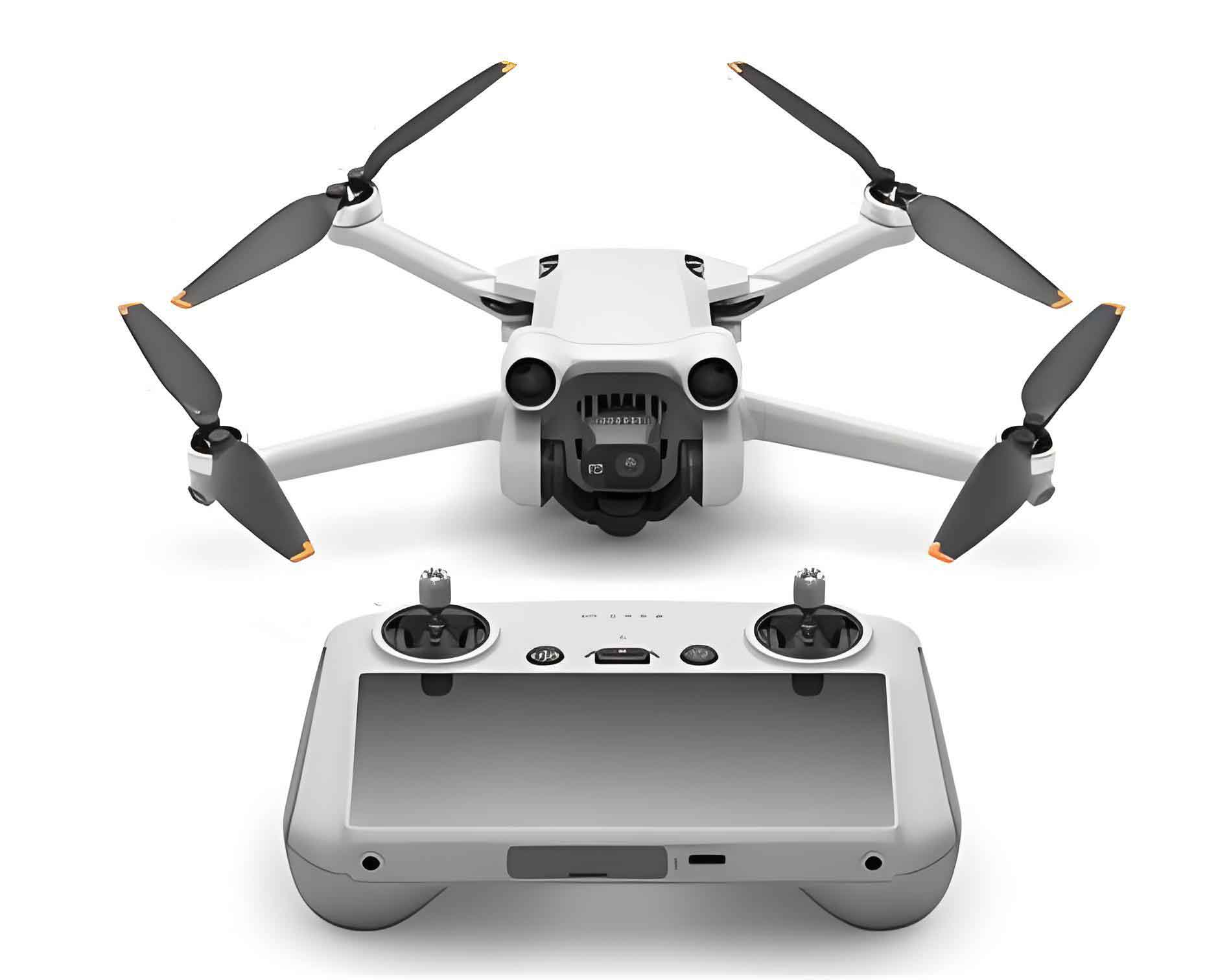
The design methodology follows a three-phase approach:
- Preliminary Design: Configuration selection and requirements analysis
- Detailed Design: Component specification and system integration
- Prototyping: Fabrication and flight testing with optimization
For hexacopter camera drones, the thrust-to-weight ratio is critical for stability and payload capacity. The total thrust $T_{total}$ is calculated as:
$$T_{total} = 6 \times (K_t \times \omega^2)$$
Where $K_t$ is the thrust coefficient and $\omega$ represents motor angular velocity. The payload capacity $P_{max}$ relates to total thrust by:
$$P_{max} = \frac{T_{total}}{1.5} – W_{frame}$$
where $W_{frame}$ denotes the drone’s structural weight.
Structural Components and Specifications
The camera UAV’s frame utilizes lightweight carbon fiber composites with hexagonal symmetry. Key specifications include:
| Parameter | Value | Unit |
|---|---|---|
| Frame Diameter | 550 | mm |
| Total Weight (w/o payload) | 1390 | g |
| Max Payload Capacity | 4.5 | kg |
| Operational Height | 34 | cm |
Stabilization and Imaging Systems
The 3-axis gimbal system maintains camera stability using PID controllers that compensate for aerial disturbances. The correction torque $\tau$ is calculated as:
$$\tau = K_p e(t) + K_i \int_0^t e(\tau) d\tau + K_d \frac{de}{dt}$$
where $e(t)$ represents positional error, and $K_p$, $K_i$, $K_d$ are tuning constants.
The imaging system employs a 4K resolution camera with these capabilities:
- Sensor: 16MP Sony BSI CMOS
- Video: 4K@24fps (MP4 format)
- Lens: f/2.87 aperture with 170° FOV
Flight Control Architecture
The autopilot system operates in three distinct modes with the following transition conditions:
| Mode | Activation Condition | Stabilization Method |
|---|---|---|
| GPS Attitude | P ≥ 8 satellites | GPS + IMU fusion |
| Barometric Altitude Hold | GPS signal loss | Pressure sensors |
| Manual | Operator override | Direct control |
Motor control utilizes electronic speed controllers (ESCs) governed by:
$$\text{ESC}_{output} = K \times \text{PWM}_{signal} + \Delta V_{comp}$$
where $K$ is the motor constant and $\Delta V_{comp}$ compensates for voltage fluctuations.
Power and Endurance Analysis
Flight duration $t_{flight}$ depends on battery capacity and power consumption:
$$t_{flight} = \frac{C_{bat} \times V_{sys} \times \eta}{P_{avg}}$$
Where $C_{bat}$ is battery capacity (Ah), $V_{sys}$ the system voltage, $\eta$ efficiency factor (0.85), and $P_{avg}$ average power consumption. With 1000mAh LiPo batteries:
| Payload (kg) | Flight Time (min) |
|---|---|
| 0.5 | 62 |
| 2.0 | 47 |
| 4.5 | 40 |
Electromagnetic Interference Mitigation
To prevent GPS signal disruption, electromagnetic absorption materials are applied to electronic components. The shielding effectiveness (SE) in dB is calculated as:
$$SE = 10 \log_{10} \left( \frac{P_i}{P_t} \right)$$
where $P_i$ is incident power and $P_t$ transmitted power. Our implementation achieves SE ≥ 25dB across 1-6GHz frequencies.
Performance Metrics
The developed camera UAV demonstrates these operational characteristics:
- Wind resistance: Stable operation in 8m/s gusts
- Positional hold accuracy: ±0.5m horizontal, ±0.2m vertical
- Maximum transmission range: 1.2km (FCC compliant)
- Image stabilization: < 0.01° residual vibration
This camera drone platform enables diverse applications including precision aerial photography, industrial inspection, agricultural monitoring, and emergency response operations. The hexacopter configuration provides redundant lift capability, allowing safe operation during single-motor failures. Future development will integrate AI-based object tracking and automated mission planning for complex cinematography applications.