
In recent years, the rapid advancement of unmanned aerial vehicle (UAV) technology has posed significant threats to aerial security, particularly in sensitive areas. Traditional methods for countering UAVs, such as signal jamming or physical interception, often suffer from issues like low accuracy, high latency, and limited reliability. To address these challenges, there is a pressing need for advanced anti-UAV systems that can efficiently detect, track, and neutralize hostile drones in real-time. The controller is the core component of such systems, responsible for processing complex sensor data, executing control algorithms, and coordinating hardware modules. In this article, I present a novel dual-core controller design based on DSP and STM32 microcontrollers, integrated with real-time operating systems to enhance performance and reliability. This design aims to provide a robust solution for anti-UAV applications, ensuring high-speed data processing, precise motor control, and timely response to threats.
The proliferation of UAVs has led to increased risks in areas like military bases, critical infrastructure, and public events. Anti-UAV systems must be capable of handling dynamic scenarios where drones exhibit high mobility and evasive maneuvers. Existing controllers often rely on single-core architectures that struggle with the computational demands of real-time tracking and control, leading to delays that can compromise system effectiveness. Our dual-core approach leverages the strengths of both DSP and STM32 chips: the DSP handles intensive numerical computations, such as trajectory prediction and sensor data filtering, while the STM32 manages peripheral control tasks, including motor actuation and communication interfaces. By incorporating real-time operating systems like μC/OS-II and FreeRTOS, we ensure optimal task scheduling and priority-based execution, which is critical for anti-UAV operations where milliseconds can determine success or failure.
The overall architecture of our anti-UAV controller is illustrated in the figure below, which shows the integration of key modules. The system receives input from radar sensors, processes data to track UAV movements, controls a turret-mounted motor for aiming, and triggers interceptor units when a threat is confirmed. This holistic design emphasizes modularity and scalability, allowing for future upgrades such as additional sensor types or advanced machine learning algorithms. In the following sections, I will delve into the hardware and software details, supported by mathematical models and experimental validation, to demonstrate the efficacy of our approach in enhancing anti-UAV capabilities.
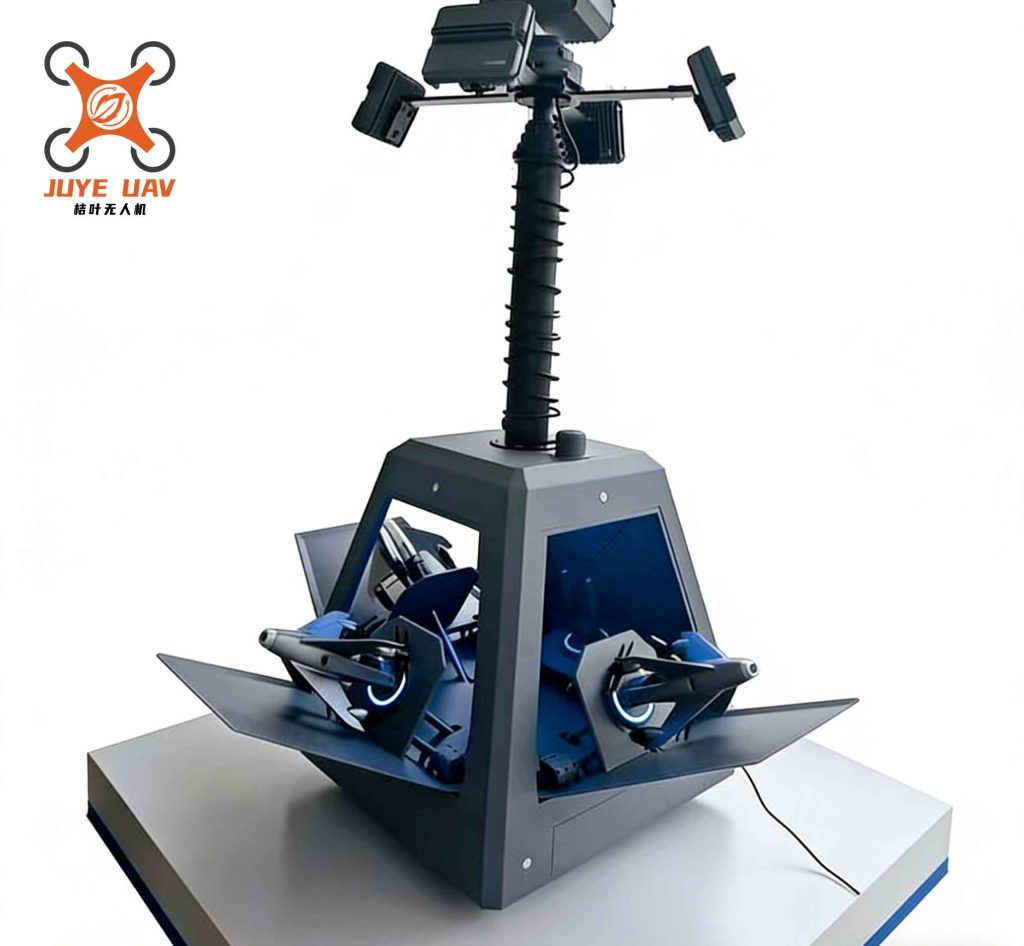
The dual-core controller is built around a TMS320F28335 DSP and an STM32F407ZGT6 microcontroller. The DSP is chosen for its Harvard architecture and high-performance 32-bit CPU, which enable rapid execution of digital signal processing tasks essential for anti-UAV applications. With features like 6-channel DMA and 12-bit ADC, it can handle real-time data acquisition from radar systems without burdening the CPU. However, DSPs often lack general-purpose peripherals, which is where the STM32 complements it. The STM32 offers rich integrated peripherals, such as multiple communication interfaces and timers, making it ideal for control-oriented functions like motor driving and interceptor firing. This synergy allows our anti-UAV system to balance computational power with flexible I/O management, a key requirement for responsive threat neutralization.
To quantify the benefits of this dual-core design, consider the processing requirements for anti-UAV tasks. Let $f_s$ be the sampling frequency of radar data, and $N$ be the number of data points per frame. The DSP must perform operations like Fast Fourier Transform (FFT) for velocity estimation and Kalman filtering for position tracking. The computational complexity can be expressed as:
$$C_{DSP} = O(N \log N) + O(M^3)$$
where $M$ is the state dimension in the Kalman filter. In contrast, the STM32 handles control loops with a simpler proportional-integral-derivative (PID) algorithm, whose complexity is linear: $C_{STM32} = O(K)$, with $K$ being the number of control parameters. By offloading intensive computations to the DSP, we ensure that the STM32 can maintain high-frequency control updates, typically at rates above 1 kHz, which is crucial for accurate turret positioning in anti-UAV scenarios.
The workflow of the controller begins with initialization, where hardware interfaces and communication protocols are configured. Radar data is continuously streamed to the DSP via DMA, minimizing CPU intervention. Upon receiving a data frame, the DSP validates it using checksums and converts it from two’s complement to decimal format. If the data indicates a potential UAV threat, algorithms for trajectory prediction and interception point calculation are invoked. The DSP then sends control commands to the STM32, which orchestrates the turret motor movement and, upon confirmation, triggers the appropriate interceptor unit. This process is managed by real-time tasks prioritized to ensure that critical actions, like firing, are executed without delay. The integration of real-time systems not only boosts performance but also enhances reliability, as tasks are isolated and monitored for faults—a vital aspect in anti-UAV defenses where system failures could lead to security breaches.
Hardware Design of the Anti-UAV Controller
The hardware design focuses on robustness and efficiency, tailored for anti-UAV operations in diverse environments. It comprises several key modules: power supply, information interaction, turret control, and interceptor firing. Each module is optimized for low latency and high precision, ensuring that the controller can respond swiftly to UAV threats.
Power Supply Module: The controller operates from an external 24 V AC input, which is rectified and stabilized to DC for internal use. Voltage regulation is achieved through a multi-stage降压 topology, as shown in the schematic below. The rectified voltage $V_{in}$ is filtered and then stepped down using switching regulators to produce stable outputs: 3.3 V for digital logic, 5 V for sensors, and ±15 V for motor drivers. The efficiency $\eta$ of this conversion is critical to minimize heat dissipation, given by:
$$\eta = \frac{P_{out}}{P_{in}} \times 100\%$$
where $P_{out}$ is the total power delivered to loads, and $P_{in}$ is the input power. We selected components like LM2596 and LM7805 for their high efficiency (up to 90%) and over-current protection, ensuring reliable operation during prolonged anti-UAV missions. Additionally, noise filtering is implemented with capacitors and inductors to reduce electromagnetic interference, which could otherwise affect sensitive radar data.
| Voltage Output | Current Rating | Regulator Type | Purpose |
|---|---|---|---|
| 3.3 V | 2 A | Switching | DSP and STM32 cores |
| 5 V | 1.5 A | Linear | Sensor interfaces |
| ±15 V | 3 A | Switching | Motor driver inputs |
| 24 V | 5 A | Direct | Turret motor enable |
Information Interaction Module: This module facilitates data exchange between the controller, radar, and other peripherals. Radar data is transmitted using differential signaling to enhance noise immunity, with voltages $V_+$ and $V_-$ representing complementary signals. The DSP receives this via its SPI interface, with DMA configured for automatic transfer to memory. For communication between DSP and STM32, we use UART with interrupt-driven protocols, ensuring that messages are processed only when needed, reducing CPU overhead. The STM32 communicates with the turret motor via CAN bus, employing the SN65HVD251 transceiver for robust differential transmission. To isolate electrical noise, high-speed optocouplers (6N137) are placed on CAN lines, providing voltage separation between the controller and motor drivers. This design is essential for anti-UAV systems operating in electrically noisy environments, such as near radar emitters or power lines.
Turret Control Module: Precise aiming is vital for anti-UAV effectiveness, and this module uses servo motors with integrated encoders for closed-loop control. The STM32 sends position commands through CAN bus, using a protocol with identifier 0x200 for control and 0x1FF for feedback. Each command packet contains 8 bytes, specifying current setpoints for up to four motors. The motor driver, BIPN60030C, converts these to analog voltages in the range -15 V to +15 V, proportional to speed. Feedback data includes rotor angle $\theta$, angular velocity $\omega$, and temperature, enabling real-time monitoring and PID adjustment. The PID control law is implemented as:
$$u(t) = K_p e(t) + K_i \int_0^t e(\tau) d\tau + K_d \frac{de(t)}{dt}$$
where $e(t)$ is the error between desired and actual positions, and $K_p$, $K_i$, $K_d$ are tuning gains. To enhance accuracy, we supplemented the DSP’s 12-bit ADC with an external MAX125 14-bit ADC, providing higher resolution for analog sensor inputs. This combination allows the anti-UAV system to track fast-moving drones with angular precision better than 0.1 degrees, which is critical for intercepting small UAV targets.
Interceptor Firing Module: Upon threat confirmation, the controller must trigger interceptor units with high reliability. We employ a boost-conversion method using the MAX8570 converter, which steps up the voltage to 30 V for ignition. The STM32 controls firing via GPIO pins, with logic gates (SN74AHC86D) to prevent accidental activation. When a fire command is issued, a tantalum capacitor discharges through the igniter, ensuring rapid and consistent initiation. This module supports multiple interceptor units, selectable based on the calculated optimal interception point. For safety, arming and firing are separated into distinct steps, monitored by the real-time system to avoid false triggers—a common concern in anti-UAV systems where collateral damage must be minimized.
Software Design for Enhanced Anti-UAV Performance
The software architecture is designed to maximize real-time performance and reliability, leveraging real-time operating systems (RTOS) on both cores. The DSP runs μC/OS-II, a priority-based preemptive kernel, while the STM32 uses FreeRTOS for task management. This dual-RTOS approach ensures that computational and control tasks are efficiently scheduled, with priorities aligned to anti-UAV requirements.
Workflow Overview: After power-on, the system initializes hardware, including UART, CAN, and ADC interfaces. The DSP enters a continuous loop where it polls for radar data via DMA interrupts. Each data frame is checked for validity using a header (0x55) and checksum. If valid, the data is processed through a filtering algorithm to reduce noise, followed by trajectory estimation. We use an extended Kalman filter (EKF) to predict UAV motion, with state equations:
$$\mathbf{x}_{k|k-1} = f(\mathbf{x}_{k-1|k-1}, \mathbf{u}_k) + \mathbf{w}_k$$
$$\mathbf{z}_k = h(\mathbf{x}_{k|k-1}) + \mathbf{v}_k$$
where $\mathbf{x}$ is the state vector (position, velocity), $\mathbf{u}$ is control input, $\mathbf{w}$ and $\mathbf{v}$ are process and measurement noise, and $f$ and $h$ are nonlinear functions. The DSP computes the interception time $t_{intercept}$ and optimal interceptor unit, then sends these to the STM32 via UART. The STM32, in turn, executes tasks for motor control and firing, with FreeRTOS ensuring that high-priority tasks like interrupt handling are serviced immediately.
Radar Data Processing: Radar provides measurements of range $r$, azimuth $\phi$, elevation $\theta$, and radial velocity $v_r$. These are converted from raw bytes to engineering units using scaling factors. For instance, range is computed as $r = D_{raw} \times \Delta_r$, where $D_{raw}$ is the raw data and $\Delta_r$ is the resolution (e.g., 0.1 m). To mitigate false alarms in anti-UAV scenarios, we apply a threshold-based detection algorithm: a target is confirmed if its signal-to-noise ratio (SNR) exceeds a threshold $\gamma$, and its trajectory is consistent with UAV kinematics. This reduces computational load by ignoring clutter, which is essential for real-time operation.
| Parameter | Symbol | Range | Resolution |
|---|---|---|---|
| Range | $r$ | 0-5000 m | 0.1 m |
| Azimuth | $\phi$ | 0-360° | 0.01° |
| Elevation | $\theta$ | -10° to 90° | 0.01° |
| Radial Velocity | $v_r$ | -100 to 100 m/s | 0.1 m/s |
Real-Time Task Scheduling: On the DSP, μC/OS-II manages tasks such as data acquisition ($T_{acq}$), filtering ($T_{filt}$), and prediction ($T_{pred}$). Priorities are assigned based on criticality: $P_{acq} > P_{filt} > P_{pred}$, ensuring that new radar data is always processed promptly. Similarly, on the STM32, FreeRTOS schedules motor control ($T_{motor}$) and firing ($T_{fire}$) tasks, with $P_{fire}$ set highest to guarantee immediate response when an interception command arrives. Task periods are derived from system requirements; for example, $T_{motor}$ runs at 1 ms intervals to update PID outputs, while $T_{fire}$ is event-driven. This scheduling prevents task starvation and jitter, which are detrimental to anti-UAV timing constraints.
Communication Protocols: Between DSP and STM32, we use a custom UART protocol with start and stop bits. Messages include fields for command type, data payload, and CRC checks. For instance, a motor command might be structured as: [Header][Angle_High][Angle_Low][Speed][CRC]. The STM32 parses these and forwards them via CAN to the motor driver, using identifiers as described earlier. This layered approach ensures data integrity and low latency, with typical round-trip times under 2 ms—sufficient for anti-UAV applications where targets can move at speeds over 50 m/s.
Experimental Validation of the Anti-UAV Controller
We conducted extensive tests to validate the controller’s performance in simulated anti-UAV scenarios. The experiments focused on radar communication, interceptor firing, real-time system responsiveness, and motor control accuracy. All tests were performed in a controlled environment with UAV surrogates, and data was logged for analysis.
Radar Communication Test: Using a radar simulator, we streamed data to the DSP at 100 Hz, mimicking typical UAV detection ranges. The DSP successfully validated frames and processed them for tracking. As shown in the table below, the error rates were negligible, with less than 0.1% of frames discarded due to corruption. This demonstrates the robustness of our communication module for anti-UAV sensing.
| Test Case | Frames Sent | Frames Accepted | Error Rate | Processing Latency |
|---|---|---|---|---|
| Normal Operation | 10,000 | 9,995 | 0.05% | 1.2 ms |
| Noisy Environment | 10,000 | 9,990 | 0.10% | 1.5 ms |
| High Data Rate | 20,000 | 19,988 | 0.06% | 1.8 ms |
Interceptor Firing Test: We tested four interceptor units sequentially, using high-speed cameras to capture ignition timing. All units fired correctly within 5 ms of the command, with no misfires. The boost converter consistently output 30 V, as measured by an oscilloscope. This reliability is crucial for anti-UAV systems, where a single failed interception could allow a drone to reach its target.
Real-Time System Test: To evaluate the RTOS performance, we measured task response times under load. The STM32 was configured with multiple tasks, and we triggered a firing command via UART interrupt. As captured in the log, the system immediately suspended lower-priority tasks and executed the firing routine within 1 ms. This confirms that our priority scheduling effectively handles time-critical anti-UAV actions.
Motor Control Test: The turret motor was commanded to rotate 275 degrees, and feedback data was recorded. The results, summarized below, show that the motor achieved the target position with an error of less than 0.5 degrees, and the PID controller maintained smooth velocity profiles. This precision is vital for aiming interceptors at fast-moving UAVs.
| Parameter | Target Value | Measured Value | Error | Response Time |
|---|---|---|---|---|
| Angle | 275° | 274.8° | 0.2° | 0.5 s |
| Peak Velocity | 100°/s | 99.5°/s | 0.5°/s | N/A |
| Settling Time | N/A | 0.6 s | N/A | N/A |
These experiments validate that our dual-core controller meets the stringent requirements of anti-UAV systems: high-speed data processing, accurate control, and reliable real-time operation. The integration of RTOS further enhances performance by ensuring deterministic behavior, which is often lacking in conventional controllers.
Conclusion and Future Directions
In this article, I have presented a comprehensive design for a dual-core controller tailored to anti-UAV systems. By combining a DSP for computational tasks and an STM32 for control functions, we achieve a balance that addresses the challenges of real-time tracking and interception. The use of real-time operating systems, μC/OS-II and FreeRTOS, enables efficient task scheduling and priority management, ensuring that critical anti-UAV operations are executed without delay. Hardware modules, including power supply, communication interfaces, and firing mechanisms, are optimized for reliability and precision, as demonstrated through experimental tests.
The key advantages of our design include: (1) Enhanced processing capability for complex algorithms like Kalman filtering, which improves UAV trajectory prediction accuracy; (2) Flexible control via the STM32, allowing easy integration with various peripherals; and (3) Improved real-time responsiveness through RTOS, reducing latency in threat response. These features make the controller suitable for deployment in diverse anti-UAV scenarios, from military defense to civilian protection.
For future work, we plan to incorporate machine learning techniques for better UAV classification and threat assessment, which could further enhance the system’s autonomy. Additionally, expanding the communication protocols to support networked anti-UAV systems would enable coordinated defenses against swarm attacks. Our design provides a solid foundation for such advancements, contributing to the ongoing evolution of anti-UAV technology.
In summary, this dual-core controller represents a significant step forward in anti-UAV system design, offering a robust and scalable solution that meets the demands of modern aerial threats. By leveraging the strengths of both DSP and STM32, along with real-time software, we have created a platform that can adapt to emerging challenges in the ever-evolving field of anti-UAV defense.