
The rapid proliferation of unmanned aerial vehicles (UAVs) in contemporary conflicts, such as the Russia-Ukraine war and the Israel-Hamas clashes, has fundamentally altered battlefield dynamics. UAVs have transitioned from niche reconnaissance tools to core combat assets, driving an urgent and escalating demand for effective anti-UAV technologies. As a countermeasure, the development and deployment of anti-UAV systems have become a critical priority for military forces worldwide. This article delves into the current state and future trajectories of anti-UAV equipment, analyzing their operational principles, evaluating emerging innovations, and proposing strategic frameworks for countering the ever-evolving drone threat. The focus remains on synthesizing a comprehensive understanding of how anti-UAV capabilities are being reshaped by technological advancements and real-world combat lessons.
At its core, any anti-UAV system follows a sequential workflow encompassing detection, identification, and suppression. Detection involves the initial sensing of a potential aerial target using a suite of sensors. These can include radar systems for long-range tracking, radio frequency (RF) detectors to pick up communication and navigation signals, acoustic sensors to capture propeller noise, and electro-optical/infrared (EO/IR) cameras for visual confirmation. The effectiveness of this phase is often mathematically modeled by the probability of detection (\(P_d\)), which is a function of the signal-to-noise ratio (SNR) and a predefined threshold. A common representation is derived from statistical decision theory:
$$ P_d = \int_{\theta}^{\infty} f(x|H_1) \, dx $$
where \( \theta \) is the detection threshold, and \( f(x|H_1) \) is the probability density function of the observed signal under the hypothesis \( H_1 \) that a UAV is present. Following detection, the identification phase discriminates UAVs from clutter objects like birds or insects. This often employs signal processing and machine learning algorithms to analyze RF signatures, flight patterns, or visual features. Finally, the suppression phase employs a chosen method to neutralize the threat. The choice of suppression technology dictates the system’s characteristics, cost, and suitability for different operational scenarios. A comparative analysis of primary anti-UAV suppression modalities reveals distinct trade-offs.
| Suppression Modality | Primary Mechanism | Typical Range | Advantages | Disadvantages | Representative Systems |
|---|---|---|---|---|---|
| Kinetic Hard-Kill | Physical destruction via projectile, missile, or interceptor drone. | 1 km to 10+ km | High single-shot kill probability (PK), proven technology, long range. | High cost per engagement, risk of collateral damage, limited magazine depth against swarms. | LPWS (Phalanx), “Coyote” Block 2, M-LIDS. |
| Directed Energy – Laser | Thermal ablation or sensor dazzling using focused light energy. | 1 km to 5 km | Precise engagement, low cost per shot (after system investment), deep magazine. | Line-of-sight required, atmospheric attenuation, high power demands, system maturity. | HELWS, HELIOS, “Athena”. |
| Directed Energy – High-Power Microwave (HPM) | Overwhelming electronic circuits with broad-area electromagnetic pulses. | 500 m to 2 km | Effective against swarms, low cost per pulse, rapid engagement. | Limited range, potential for fratricide on friendly electronics, platform integration challenges. | “Leonidas”, “Thor”, “Morpheus”. |
| Electronic Attack (Soft-Kill) | Jamming or spoofing of command, control, and navigation signals (GPS, GNSS, datalinks). | 1 km to 10+ km | Mature technology, low cost, can capture UAVs intact, low collateral damage. | Requires knowledge of enemy UAV protocols, continuous power for jamming, may be countered. | “Sickle-VS6”, “DroneDefender”, “Hijack” system. |
| Physical Entanglement | Capture via nets, projectiles, or other physical barriers. | < 100 m to 1 km | Low cost, reusable components, definitive neutralization. | Very short range, requires precise targeting, single-target engagement. | “SkyNet”, “DroneHunter”, “Barrier” aerostat system. |
The mathematical expression for the overall effectiveness (\(E\)) of a kinetic system against a single target often hinges on the lethal radius and hit probability. For area-effect systems like HPM against a swarm, the probability of neutralizing at least one UAV in a group of \(n\) is:
$$ P_{swarm} = 1 – (1 – P_{single})^n $$
where \(P_{single}\) is the probability of defeating a single UAV within the effect area. This formula highlights the challenge swarm threats pose to single-shot systems and underscores the value of area-denial weapons in anti-UAV defense.
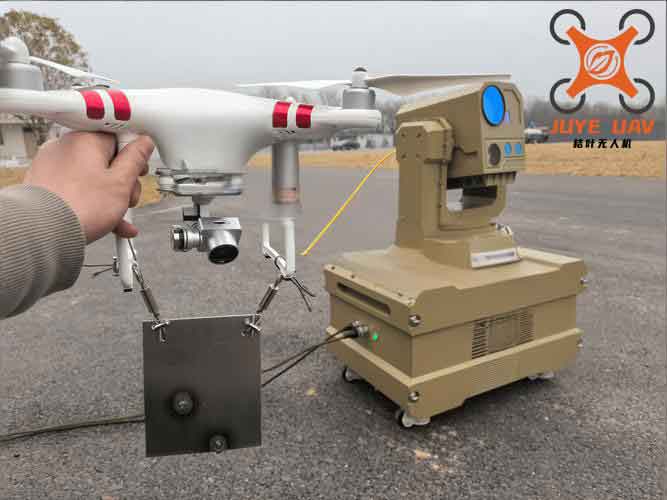
The integration of Artificial Intelligence (AI) and Machine Learning (ML) is revolutionizing anti-UAV capabilities, particularly in the detection and identification phases. AI algorithms can process vast, multi-sensor data streams in real-time, dramatically improving classification accuracy and reducing false alarms. For instance, convolutional neural networks (CNNs) trained on extensive datasets of RF spectrograms and EO/IR imagery can distinguish between specific UAV models, birds, and background noise with high confidence. The decision function for such a classifier can be represented as:
$$ \hat{y} = \arg\max_{c \in C} f_{CNN}(x; \theta) $$
where \(x\) is the input sensor data, \(\theta\) are the learned network parameters, \(C\) is the set of possible classes (e.g., friend, foe, bird), and \(\hat{y}\) is the predicted class. Beyond sensing, AI is being used for predictive threat assessment and automated response orchestration. Systems like the upgraded EnforceAir2 use AI to recommend the optimal suppression tactic—be it jamming a specific frequency or engaging with a kinetic effector—based on the identified UAV type, flight path, and mission context. This transforms the operator’s role from active controller to mission supervisor, enabling faster and more effective countermeasures against complex, simultaneous threats. The future of AI in anti-UAV systems points towards fully autonomous “sense-and-act” cycles, where the time between detection and suppression is minimized to milliseconds, a critical factor against high-speed attack drones.
A novel and crucial development in reducing fratricide and enhancing targeting efficiency is the adaptation of Identification Friend or Foe (IFF) systems for the UAV domain. The core idea is to equip authorized or friendly UAVs with lightweight, low-power transponders that respond to cryptographic queries from battlefield interrogation systems. Any aerial contact not providing the correct IFF response is automatically classified as a potential hostile target, streamlining the engagement decision loop. The technical challenge lies in miniaturizing robust IFF modules for small UAVs. Recent advancements, as demonstrated by Russian developers, have produced transponders weighing under 150 grams with power consumption as low as 100 mW, enabling integration even on small commercial-grade drones. The operational benefit is quantified by a reduction in the probability of false engagement (\(P_{FE}\)). If \(P_{ID}\) is the probability of correctly identifying a hostile UAV through traditional means, and \(P_{IFF}\) is the reliability of the IFF system, the combined identification confidence for a non-responsive target becomes:
$$ P_{Hostile} = 1 – [(1 – P_{ID}) \cdot P_{IFF}] $$
This approach not only safeguards friendly assets but also allows defending forces to employ more aggressive area-effect anti-UAV weapons with greater confidence, knowing that “tagged” friendly UAVs will be spared. As UAV traffic in battlespace increases, such cooperative identification will become indispensable for effective and safe airspace management.
The utilization of aerostats—tethered balloons or airships—as persistent surveillance and interception platforms presents a cost-effective anti-UAV solution for area defense of static, high-value targets. Systems like the “Barrier” employ a simple yet effective concept: a tethered balloon equipped with a net payload loiters at altitude, creating a physical barrier. Upon detection of a low-altitude UAV intrusion, the system can either deploy the net directly or maneuver the balloon to entangle the threat. The primary advantage is persistence; an aerostat can remain on station for days or weeks, providing continuous coverage without the fuel consumption of rotary or fixed-wing assets. The effectiveness of such a system can be modeled as a function of the protected volume. If the aerostat’s net sweeps an area \(A\) at an altitude \(h\), the probability of intercepting a drone flying through that volume depends on the drone’s cross-section and the net’s deployment kinematics. While limited in range and mobility, aerostat-based anti-UAV systems fill a specific niche in layered defense, particularly against low-cost, low-speed reconnaissance or kamikaze drones, adding an affordable and persistent layer to the overall anti-UAV architecture.
Perhaps the most dynamic evolution in counter-drone tactics is the concept of using UAVs to hunt and defeat other UAVs. This UAV-on-UAV or “drone dogfighting” approach offers unique advantages, including the ability to reach altitudes and locations inaccessible to ground-based systems, to engage threats beyond the line-of-sight, and to employ tactics like pursuit and physical collision. The engagement dynamics can be analyzed using pursuit-evasion differential equations. For a defending interceptor drone (\(D\)) trying to collide with a hostile drone (\(H\)), their relative motion in 2D can be simplified as:
$$ \frac{dr}{dt} = v_H \cos(\phi – \theta) – v_D \cos(\psi – \theta) $$
$$ r \frac{d\theta}{dt} = v_H \sin(\phi – \theta) – v_D \sin(\psi – \theta) $$
where \(r\) is the range between them, \(\theta\) is the line-of-sight angle, \(v\) denotes speeds, and \(\phi\), \(\psi\) are their respective heading angles. Advanced interceptor drones, like the “Coyote” Block 3, go beyond kinetic kill and are equipped with electronic warfare payloads, allowing them to fly close to a hostile swarm and emit targeted jamming or HPM pulses, effectively acting as a mobile, stand-in soft-kill platform. This blurs the line between kinetic and electronic anti-UAV measures and provides unparalleled flexibility. The development of anti-UAV drones is a clear response to the need for scalable, adaptable, and deployable countermeasures that can operate across the full spectrum of the battlespace, from forward operating bases to rear-area critical infrastructure.
Given the diverse and adaptable nature of UAV threats, no single anti-UAV technology constitutes a silver bullet. The most robust defense strategy is a layered, integrated approach that combines multiple sensing and effector types. This concept, often referred to as “defense-in-depth,” creates overlapping rings of protection around a valued asset. A notional layered anti-UAV architecture might consist of: a long-range radar layer for early warning (e.g., 10-20 km), an intermediate layer of RF sensors and electronic attack systems (e.g., 5-10 km), a close-in layer of directed energy and kinetic effectors (e.g., 1-5 km), and a final point-defense layer of nets, small interceptors, or small arms (e.g., <1 km). The overall system resilience (\(R\)) can be conceptualized as the product of the probabilities that each layer fails to stop a threat:
$$ R = 1 – \prod_{i=1}^{N} (1 – P_{K_i}) $$
where \(P_{K_i}\) is the kill probability of the \(i\)-th layer, and \(N\) is the number of layers. This multiplicative effect means that even if one layer is defeated or saturated, subsequent layers provide backup. The integration challenge lies in sensor fusion and battle management. A common operational picture (COP) must be created by fusing data from radars, RF detectors, and cameras. Bayesian fusion provides a mathematical framework for this:
$$ P(H|D_1, D_2) = \frac{P(D_1|H) P(D_2|H) P(H)}{P(D_1, D_2)} $$
where \(H\) is the hypothesis (e.g., “hostile UAV present”), and \(D_1, D_2\) are data from two different sensors. This fused picture drives a command and control (C2) system that dynamically allocates effectors based on threat priority, weapon status, and rules of engagement. The synergy between different anti-UAV modalities—where EW soft-kill systems degrade a swarm, making it vulnerable to focused kinetic or laser engagement—maximizes the overall defensive outcome while conserving costly resources.
Within this layered paradigm, electronic warfare (EW) retains a foundational and increasingly vital role. EW-based anti-UAV systems offer several compelling advantages: they are often the fastest to engage (at the speed of light), have a very low cost per engagement, can neutralize threats without explosive fragmentation (reducing collateral damage), and are effective against a wide variety of UAVs that rely on commercial RF links and GNSS. The effectiveness of a jamming system is governed by the jamming-to-signal ratio (J/S) at the victim receiver:
$$ J/S = \frac{P_j G_j R_s^2 L_s}{P_s G_s R_j^2 L_j} $$
where \(P\) denotes power, \(G\) antenna gain, \(R\) range, and \(L\) losses, with subscripts \(j\) for jammer and \(s\) for signal. Modern anti-UAV EW systems are evolving from broad-band barrage jammers to sophisticated, cognitive systems. These systems can rapidly scan the spectrum, identify and characterize UAV control and navigation signals, and then apply tailored, low-power jamming or precise spoofing—such as injecting false GPS coordinates to command a drone to land or return to its point of origin. The trend is towards multifunctional, agile EW pods that can be deployed on ground vehicles, naval ships, aircraft, and even other drones, creating a pervasive electronic shield. As future UAVs begin to employ AI for autonomous navigation and low-probability-of-intercept (LPI) datalinks, the EW fight will shift towards exploiting other vulnerabilities, such as radar or lidar signatures, ensuring that the electronic dimension remains a decisive arena in the anti-UAV contest.
In conclusion, the domain of anti-UAV defense is experiencing unprecedented innovation driven by operational necessity. The convergence of AI for intelligent sensing and decision-making, the extension of IFF principles to the drone sphere, the creative use of persistent aerostat platforms, and the advent of interceptor drones are collectively expanding the toolkit available to defenders. However, technology alone is insufficient. Success hinges on the doctrinal adoption of a layered defense philosophy that thoughtfully integrates kinetic, directed energy, and electronic means into a resilient, networked system. Continuous investment in research, rigorous testing in realistic environments, and cross-disciplinary collaboration between engineers, tacticians, and operators are imperative. The ultimate goal of any anti-UAV system is to achieve a favorable cost-exchange ratio and to decisively negate the adversary’s ability to use the air domain for reconnaissance, targeting, or attack. As UAV technology continues to advance towards greater autonomy, stealth, and swarm intelligence, so too must the sophistication and adaptability of the anti-UAV systems designed to counter them. The lessons from current conflicts make it clear that dominance in the anti-UAV fight is not optional; it is a fundamental prerequisite for operational success and force protection in the 21st-century battlespace.