
The proliferation of inexpensive, capable unmanned aerial vehicles (UAVs) has fundamentally altered the security landscape for both military and civilian domains. From intelligence gathering and precision strikes to illicit surveillance and infrastructure disruption, the threat posed by hostile or unauthorized drones is multifaceted and evolving rapidly. In response, the field of Counter-Unmanned Aerial Systems (C-UAS) has emerged as a critical area of technological development. While ground-based solutions—including jammers, directed-energy weapons, and traditional air defense missiles—form the backbone of many systems, aerial anti-UAV platforms offer unique and complementary advantages. These platforms promise greater flexibility, the ability to engage threats beyond the line-of-sight of fixed ground systems, and often, a more cost-effective and less collateral-damage-prone solution compared to kinetic missiles. This analysis systematically examines the current state of foreign aerial anti-UAV equipment, categorizing primary technological approaches, dissecting their operational principles, and projecting future trajectories to inform strategic development in this crucial field.
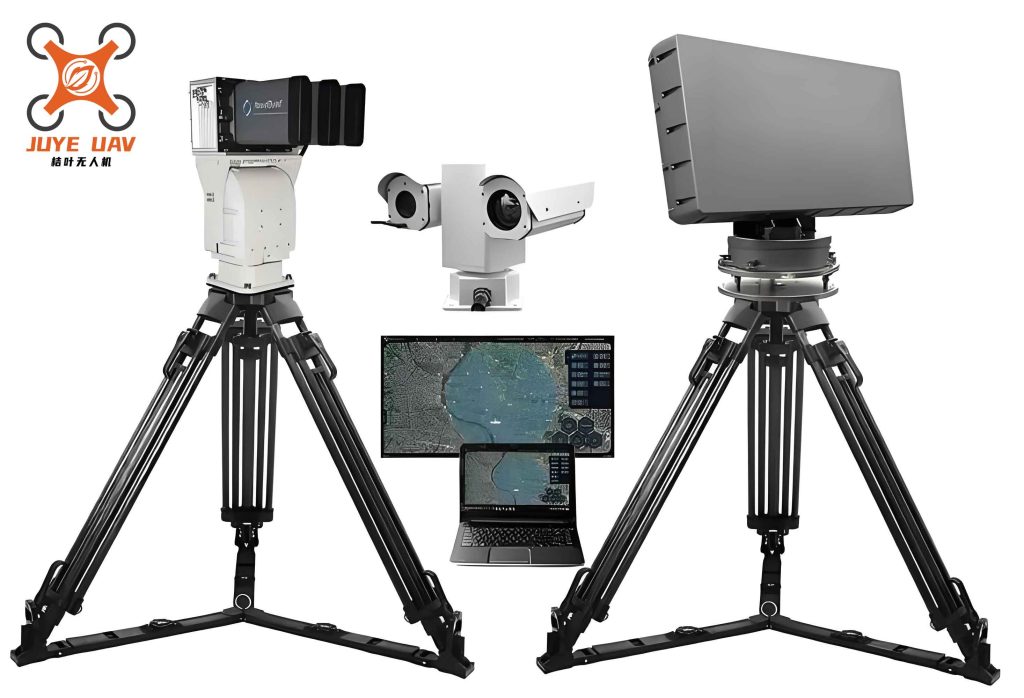
The contemporary development of aerial anti-UAV systems is characterized by a diversification of intercept methodologies, moving beyond the paradigm of simply shooting down a target. Current prominent technical paths can be classified into four distinct categories: Collision/Kinetic Interception, Net Capture, Vertical Take-off and Landing (VTOL) Interceptors, and Aerial Microwave Delivery. Each path embodies different trade-offs between cost, reusability, engagement range, and operational context.
1. Analysis of Dominant Technical Paths
1.1 Collision/Kinetic Interception
This approach represents the most direct form of hard-kill anti-UAV warfare. It involves a dedicated interceptor drone, often streamlined for high speed, deliberately colliding with the target UAV to destroy it through kinetic energy. The key advantage is the elimination of complex, expensive payloads like explosives; the interceptor itself is the weapon. This can dramatically lower the cost-per-engagement, making it suitable for countering low-cost threat drones. A representative example is the interceptor developed by the German company TYTAN. Designed to reach speeds up to 300 km/h, it relies on computer vision for target detection and employs artificial intelligence for terminal guidance and aim-point selection. The final engagement is a direct, high-speed impact. The effectiveness of this method hinges on the interceptor’s speed, maneuverability, and the robustness of its guidance, navigation, and control (GNC) system to ensure a successful hit against an evading target. The fundamental engagement equation often simplifies to a pursuit-curve or proportional navigation problem. For a head-on or near head-on intercept, the closing velocity $v_c$ is critical for destructive kinetic energy $E_k$:
$$E_k = \frac{1}{2} m_i v_c^2$$
where $m_i$ is the mass of the interceptor. The required lateral acceleration $a_{req}$ for the interceptor to maintain an intercept course can be modeled using proportional navigation:
$$a_{req} = N’ v_c \dot{\lambda}$$
where $N’$ is the effective navigation ratio (a constant typically between 3-5) and $\dot{\lambda}$ is the line-of-sight rate to the target. The system must ensure its available acceleration exceeds $a_{req}$ throughout the engagement.
1.2 Net Capture
Net capture systems offer a “soft-kill” alternative aimed at physically entangling and securing the threat UAV without destroying it mid-air. This allows for forensic examination of the captured drone and significantly reduces the risk of ground damage from falling debris. The American system Fortem DroneHunter 700 exemplifies this approach. It is a multi-rotor UAV equipped with a net-launching device. Upon closing with the target, it fires a net, often equipped with trailing filaments or “burrs” that entangle the target’s rotors and structure. For smaller drones, the hunter can reel in the net and transport the captured drone to a safe location. For larger threats, a net connected to a parachute can be deployed to force a controlled descent. The system integrates a sophisticated onboard radar (Fortem TrueView) for all-weather detection and tracking, and uses edge-AI for autonomous pursuit decision-making within a networked command system (SkyDome) that can coordinate multiple hunter drones. The dynamics of net capture involve complex fluid-structure interactions. A simplified model for the net’s spread and drag can be considered. The radial expansion force of the net when launched can be related to the initial kinetic energy imparted to its perimeter weights. The subsequent drag force $F_d$ on the captured drone-net system is crucial for deceleration:
$$F_d = \frac{1}{2} \rho C_d A v^2$$
where $\rho$ is air density, $C_d$ is the combined drag coefficient of the entangled system, $A$ is the characteristic frontal area, and $v$ is the velocity. The system must generate sufficient drag to overwhelm the threat drone’s thrust.
1.3 VTOL & Reusable Interceptors
This category blends attributes of traditional missiles and reusable drones. These interceptors are characterized by vertical take-off and landing capability, high speed (often transonic), and are designed to be recovered and reused multiple times. The American “Roadrunner” by Anduril Industries is a prime example. Powered by twin turbojet engines, it can loiter on standby in a designated airspace, providing a persistent, rapid-response anti-UAV capability. Upon threat detection, it can compute an optimal intercept path using AI and engage the target. Its key innovation is reusability; if a threat does not materialize, or after a successful non-destructive mission, it can return to base, be refueled, and rapidly re-deployed. This dramatically lowers the lifetime operational cost compared to single-use missiles. It also employs a modular payload bay, allowing it to switch between kinetic warheads, electronic warfare suites, or surveillance packages. The loiter endurance and rapid response are its main tactical advantages. The cost-effectiveness can be modeled over $N$ engagements:
$$C_{total} = C_{acquisition} + N \cdot (C_{recovery/refurb} + C_{fuel})$$
This contrasts with $N$ single-use interceptors: $C’_{total} = N \cdot C_{missile}$. The VTOL interceptor becomes advantageous when $C_{acquisition} + N \cdot C_{recovery} < N \cdot (C_{missile} – C_{fuel})$.
1.4 Aerial Microwave (High-Power Microwave) Delivery
This path involves mounting a High-Power Microwave (HPM) effector on a UAV platform. Instead of using ground-based HPM systems with limited range and line-of-sight issues, an aerial carrier can forward-deploy the effector, getting closer to the threat to increase energy density on target and circumvent terrain obstacles. The “Morfius” system, developed by Lockheed Martin using the Altius-600 UAV as a platform, demonstrates this concept. The UAV patrols an area, uses its sensors to identify drone threats, then closes in and emits a focused, high-power microwave pulse. This pulse can fry the electronic components of one or multiple drones in a swarm simultaneously, offering a potential area-effect, “soft-kill” against groups. The major challenge is power generation and thermal management on a small aerial platform. The power density $S$ at a distance $r$ from the antenna on the interceptor UAV is given by the far-field equation:
$$S = \frac{P_t G_t}{4 \pi r^2}$$
where $P_t$ is the transmitted power and $G_t$ is the antenna gain. The energy delivered to a target drone’s electronics is a function of $S$, exposure time, and the target’s effective receiving cross-section. By flying closer ($\downarrow r$), the interceptor can achieve a disabling power density with a smaller, more feasible onboard $P_t$.
| Technical Path | Kill Mechanism | Key Advantages | Primary Challenges | Representative System |
|---|---|---|---|---|
| Collision/Kinetic | Kinetic Impact | Low cost per kill, simple warhead, high speed. | Requires high-precision guidance, single-use (typically), risk of debris. | TYTAN Interceptor |
| Net Capture | Physical Entanglement & Capture | Minimal collateral damage, allows for drone recovery/reuse, scalable net size. | Limited range of net gun, requires close proximity, effectiveness vs. high-speed targets. | Fortem DroneHunter 700 |
| VTOL/Reusable Interceptor | Kinetic or Electronic (Modular) | Rapid response from loiter, recoverable/reusable, lower cost per engagement over life cycle. | High acquisition cost, complex logistics for recovery/refurbishment, limited loiter time vs. fuel. | Anduril “Roadrunner” |
| Aerial Microwave (HPM) | Electromagnetic Pulse (Soft-kill) | Potential swarm engagement, speed-of-light effect, minimal physical debris. | Extreme power/thermal requirements on UAV, potential fratricide risk, line-of-sight needed. | Lockheed Martin “Morfius” |
2. Enabling Technologies and Core Capabilities
The operational success of any aerial anti-UAV system is predicated on a suite of advanced enabling technologies that function before, during, and after the engagement.
2.1 Detection, Tracking, and Classification
This is the foundational layer. Aerial interceptors often rely on off-board cueing from wider-area surveillance networks (ground radar, RF detectors) but require their own robust onboard sensors for terminal guidance. This typically involves a multi-sensor fusion approach:
- Radar: Small, lightweight active electronically scanned array (AESA) radars, like the Fortem TrueView, provide all-weather detection and tracking. Key metrics include update rate, angular resolution (e.g., ±2°), and resistance to clutter.
- Electro-Optical/Infrared (EO/IR): Provide high-resolution imagery for positive visual identification (PID), classification of drone type, and precise aim-point selection. Computer Vision (CV) algorithms are essential here.
- RF Sensing: Passive detection of control and video transmission signals helps with early warning, classification, and can guide EO/IR systems.
The fusion of these data streams creates a composite track. Advanced algorithms, including those based on convex optimization for sparse target scenes (as seen in related patents), are employed to distinguish small, low-radar-cross-section drones from birds and clutter in dense environments. The probability of detection $P_d$ in a cluttered environment is a function of signal-to-clutter ratio (SCR) and the discrimination algorithm’s efficacy.
2.2 Autonomous Guidance and AI-Driven Decision Making
Given the short timelines involved in countering small, agile UAVs, full human-in-the-loop control is often impractical. Modern systems embed significant autonomy:
- Path Planning & Intercept Geometry: AI algorithms calculate optimal intercept trajectories in real-time, considering the interceptor’s dynamics, the target’s predicted flight path, and no-fly zones. This goes beyond classic proportional navigation to include energy-maneuvering optimization.
- Behavioral Selection: Systems like the DroneHunter’s AI decide between pursuit, attack, or defensive maneuvers based on the threat’s behavior and the operational context (e.g., over a crowded urban area vs. a military base).
- Swarm Coordination: Command systems (e.g., SkyDome) can autonomously task multiple, heterogeneous anti-UAV assets, de-conflicting their engagement zones and orchestrating collaborative tactics against drone swarms. This involves distributed decision-making algorithms.
A simplified objective function for an autonomous interceptor’s decision engine might be:
$$\max_{a(t)} \left[ w_1 \cdot P_{kill}(a(t)) – w_2 \cdot C_{collateral}(a(t)) – w_3 \cdot E_{fuel}(a(t)) \right]$$
where $a(t)$ represents the chosen action trajectory, $P_{kill}$ is the probability of successful neutralization, $C_{collateral}$ is an estimated collateral damage risk, $E_{fuel}$ is the fuel/energy cost, and $w_i$ are mission-dependent weighting factors.
2.3 Modularity and Payload Flexibility
The trend is towards “plug-and-play” payload architectures. A single interceptor airframe, like the Roadrunner, can be configured for different missions:
- Kinetic Warhead Module: For direct destruction.
- Net Capture Module: For non-destructive capture.
- Electronic Attack (EA) Module: Jammers or spoofers for soft-kill.
- ISR Module: High-resolution cameras or signals intelligence (SIGINT) payloads, allowing the platform to also perform persistent surveillance when not in an anti-UAV role.
This modularity enhances cost-effectiveness and operational flexibility, allowing forces to adapt the tool to the specific threat and rules of engagement.
3. Developmental Trends and Future Trajectories
The analysis of current systems points toward several converging trends that will define the next generation of aerial anti-UAV capabilities.
3.1 Deep Integration of AI and Advanced Sensors
The future lies in fully autonomous “hunter-killer” teams. AI will move from assisting in tracking to managing the entire observe-orient-decide-act (OODA) loop. This includes:
- Predictive Threat Assessment: AI analyzing drone flight patterns in real-time to predict intent (e.g., surveillance run vs. attack profile) and prioritize threats.
- Counter-Swarm Tactics: Developing cooperative algorithms where multiple lower-cost interceptors autonomously coordinate to isolate and eliminate individual drones within a swarm, exploiting numerical and tactical superiority.
- Resilient Perception: Fusing data from disparate sources (quantum sensing, acoustic arrays, multi-spectral imaging) with AI to maintain tracking even under severe adversarial conditions like GPS jamming, visual obscurants, or low-probability-of-intercept communications.
3.2 Proliferation of Low-Cost, Attritable Systems
Inspired by the cost asymmetry problem (using a $100,000 missile against a $1,000 drone), the drive is towards scalable, affordable systems. This aligns with initiatives like the U.S. Department of Defense’s “Replicator” program, which aims for mass production of autonomous systems. Future aerial anti-UAV assets will increasingly be:
- Manufactured at scale using commercial off-the-shelf (COTS) components and additive manufacturing.
- Designed as “attritable”—not as expensive as reusable platforms but potentially recoverable if possible, accepting loss as a calculated risk in high-threat scenarios.
- Deployable in large numbers to create defensive “mesh” networks over critical assets.
3.3 Heterogeneous and Collaborative Engagement
The future anti-UAV fight will not be won by a single silver-bullet system but by a layered, networked ensemble. Aerial interceptors will be one node in a system-of-systems that includes:
- Ground-based EW and HPM for area denial and early disruption.
- Ground-based sensors for wide-area cueing.
- Other aerial platforms (manned and unmanned) providing elevated sensors or effectors.
Aerial anti-UAV platforms will seamlessly receive tracks from ground radars, hand off engagements between each other, and provide terminal kill assessment back to the network. Standardized battle management interfaces (e.g., based on the U.S. C-UAS Joint Capability Standardization) will be crucial.
3.4 Expansion into Non-Kinetic and Reversible Effects
While kinetic solutions remain vital, operational demands—especially in civilian airspace or permissive environments—will drive growth in reversible effects. This includes:
- Advanced Aerial EW: More sophisticated, miniaturized jammers and cyber-takeover systems deployed on UAVs to spoof or seize control of threat drones.
- Directed Energy at Scale: Continued miniaturization of laser and HPM technologies will make them more feasible for larger UAVs, offering deep magazine, low-cost-per-shot engagement.
- Non-Cooperative Capture: Beyond nets, research into other physical capture mechanisms (e.g., firing tethered restraints, deploying sticky or entangling filaments) will advance.
4. Conclusion
The development of aerial anti-UAV equipment is progressing rapidly along multiple, parallel technological tracks. From high-speed kinetic interceptors and delicate net-capture systems to reusable VTOL platforms and forward-deployed microwave weapons, each approach addresses specific operational needs and threat profiles. The common thread weaving through all these systems is an increasing reliance on artificial intelligence for perception and decision-making, modularity for flexibility, and a relentless push towards greater cost-effectiveness to counter the proliferating drone threat. As drone technology itself advances—becoming faster, stealthier, and more autonomous—the anti-UAV systems must evolve even faster. The future points towards intelligent, collaborative swarms of defensive drones operating as an integrated layer within a broader, multi-domain anti-UAV architecture. The nation or entity that successfully masters the integration of advanced sensors, resilient autonomy, and scalable manufacturing for these systems will hold a significant defensive advantage in the increasingly crowded and contested skies of tomorrow. The era of the autonomous aerial defender has unequivocally begun.